


Review: STOMP Celebrates 30 Years with a Dynamic Run in Vancouver
From matchboxes to kitchen sinks, the show finds music in unexpected places
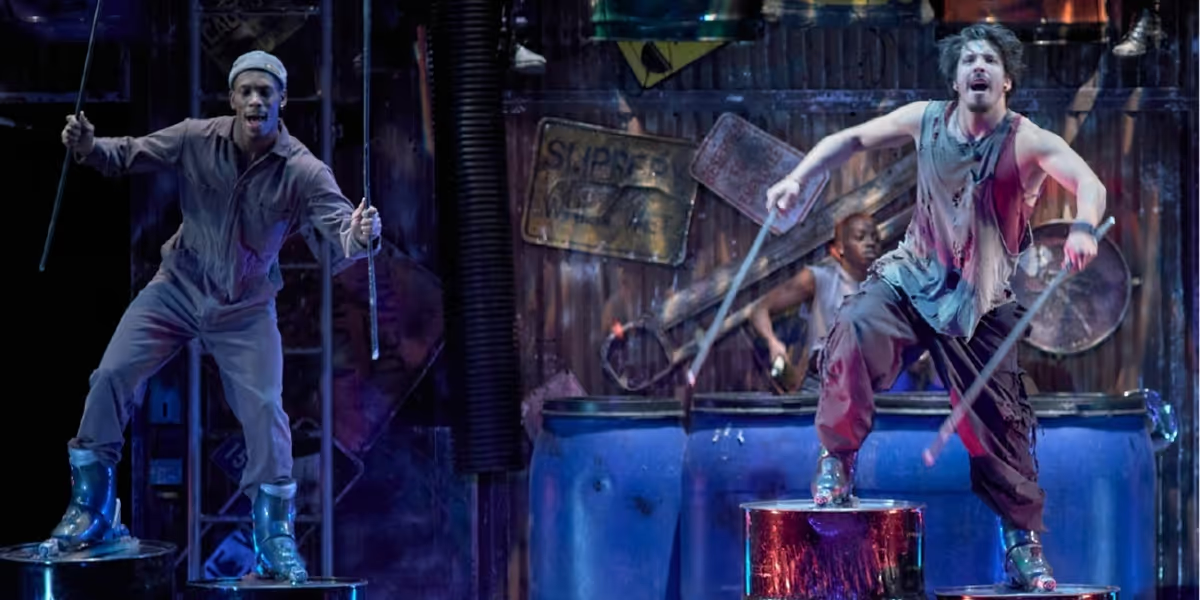
STOMP brought a burst of rhythm to Vancouver as the 30th anniversary tour landed at Queen Elizabeth Theatre from November 14 to 16. The production blends percussion, movement, and physical theatre into a fast-paced performance built from everyday objects. Shopping carts, matchboxes, metal bins, and even plumbing fixtures become sources of rhythm in the hands of a cast trained to use sound, timing, and comedy in equal measure. The result is an experience that feels direct, bold, and built for a live audience.
The show began in Brighton, England, when creators Luke Cresswell and Steve McNicholas started experimenting with body percussion and found objects. Their early work grew out of street performance, where rhythm and physical movement had to capture attention without spoken text. The first full version of the show premiered at the Edinburgh Fringe Festival in the early 1990s. From there, STOMP expanded quickly across the UK and the rest of Europe.
STOMP grew from street performance into long-running theatre productions, including 15 years in London’s West End and a 29-year run at New York’s Orpheum Theatre with more than 11,000 performances. The show later settled into extended engagements in San Francisco, Boston, and Las Vegas, building a global identity rooted in rhythm, movement, and visual comedy. Over three decades, the company has toured more than 50 countries and reached more than 28 million people. Major appearances at the London 2012 Olympic closing ceremony, the Academy Awards, and an Emmy-winning HBO special expanded its profile even further. The production has also earned awards such as an Olivier Award for Best Choreography, a New York Obie, and a Drama Desk Award for Unique Theatre Experience.
The 30th anniversary tour continues this legacy with a mix of new material and familiar routines. Household objects and industrial items take on musical roles, supported by tight timing and strong physical performance. The show relies on rhythm, movement, and wordless storytelling, which keeps it accessible for audiences of all ages. This approach shaped the experience in Vancouver. The Queen Elizabeth Theatre run showed how these elements work in a live setting, where small details and sharp timing become even more noticeable from the audience’s perspective.
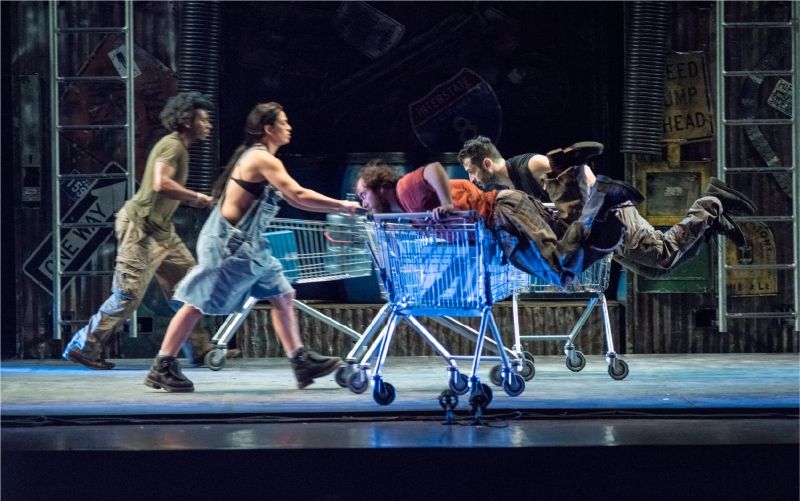
Photo Credit: STOMP
Overall, the show kept a tight pace across its one hour and forty-five minute run. The opening set the tone with an understated entrance. A single cast member walked onstage and began sweeping. The sound was soft at first, almost easy to miss if you were not watching closely. More performers joined in, layering small rhythms until the stage came alive. The casual start fit the production’s style. STOMP never announces itself with fanfare. It builds through sound, movement, and timing.
The layout of the stage added surprises of its own. A two-tiered structure sat in the background, but its full purpose did not reveal itself until performers began climbing onto the upper level for later numbers. The physical design paired well with the show’s focus on detail. Sitting close to the stage made a difference. Softer textures, including the matchbox sequence, felt sharper and more atmospheric from the front row. Microphones were present to project the sound throughout Queen Elizabeth Theatre, but the performers relied on the natural tone of each object. The show worked hard to protect the raw quality of every beat.
The objects themselves reinforced that approach. Nothing looked polished or new. The brooms, metal lids, garbage cans, and hoses showed natural wear. Even the matchboxes behaved as real matchboxes do, with pieces slipping out during the routine. That rough texture helped the production feel grounded. At times the stage looked like a workshop or a scrapyard, which suited the soundscape built from everyday material.
Body percussion remained one of the strongest elements of the night. Micah Cowher delivered standout work with sequences that required precision, stamina, and control. His timing anchored several group numbers. Each strike, stomp, and clap felt measured and assertive, creating a pulse that drove the cast forward. Watching him lead without speaking showed how much communication in STOMP happens through rhythm and presence.
The absence of dialogue became more noticeable as the show progressed. Instead of speech, the cast used gesture, posture, and musical cues to interact with each other and with the audience. The crowd followed every shift with full attention because the performers made the rhythm itself the language. This made the moments of synchronization stronger, especially in sections where one missed beat would have broken the entire pattern. The cast never slipped. Props entered and exited at sharp intervals, supported by tight control and clear internal communication.
Small design choices showed the ensemble’s attention to sound. A thin layer of sand across the stage created texture under the stiff-bristle brooms, giving them more bite. Garbage cans used in a high-intensity percussive number had a bright, hollow tone that carried well. These details revealed how closely the creators study the acoustic potential of everyday items.
Humour played a larger part than expected. The cast balanced the heavy rhythmic sequences with clean, comedic beats, both as individuals and as an ensemble. Timing was key here too. A look, a pause, or a misdirected gesture became genuine laughs for the audience. This helped break up the intensity and made the show feel light without losing its focus.
One of the most memorable sections involved real kitchen sinks filled with water. The sound of splashing, tapping, and draining added a new texture to the show. The sequence ended with the cast lifting the sinks and letting water pour out into buckets. It was simple but satisfying and earned a strong reaction from the audience. Other numbers brought in shopping carts, newspapers, and an entire wall of objects used like a percussive playground. Each reveal came with its own surprise, and the constant variation kept the crowd alert.
By the final number, the sound hit a peak. The last sequence was the loudest and most intense of the night. The cast ended with full force and complete synchronization. The last number pushed the energy to its peak and delivered a strong finish.
STOMP’s return to Vancouver showed why the production has held its place for three decades. The cast delivered a clear demonstration of how rhythm, movement, and attention to detail can shape a full evening without a single spoken line. The show felt confident and purposeful, driven by objects that most people overlook in daily life. The mix of precision, humour, and surprise kept the audience focused from the first sweep of the broom to the final burst of sound. The 30th anniversary tour proved that STOMP continues to grow while staying true to the core idea that made it stand out. It remains a strong example of performance built from creativity, discipline, and a sharp sense of rhythm.
STOMP’s 30th anniversary tour played in Vancouver, BC at the Queen Elizabeth Theatre for three days from November 14 to 16. The tour continues next in Boise, ID at the Morrison Center for Performing Arts on November 24 and 25. For more information about the show and to purchase tickets, visit the link below.
Top Photo Credit: STOMP



|
Murder for Two Anvil Theatre (10/02-10/04) |
|
Sister Act and Disney’s The Little Mermaid Theatre Under the Stars (7/03-8/22) |
|
Lord Of The Rings: The Fellowship of the Ring In Concert at Queen Elizabeth Theatre Queen Elizabeth Theatre (8/28-8/29) |
|
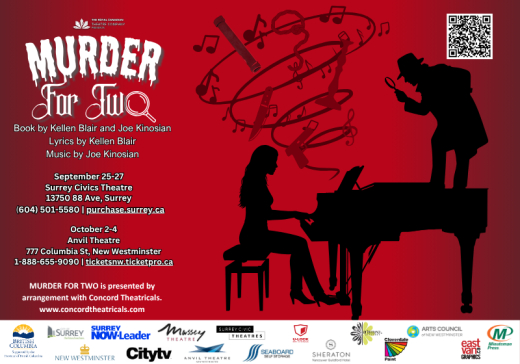
Murder for Two Surrey Arts Centre (9/25-9/27) |

|
That''s Dirty Dancing Destination Dinner Stage (8/06-10/18) |
|
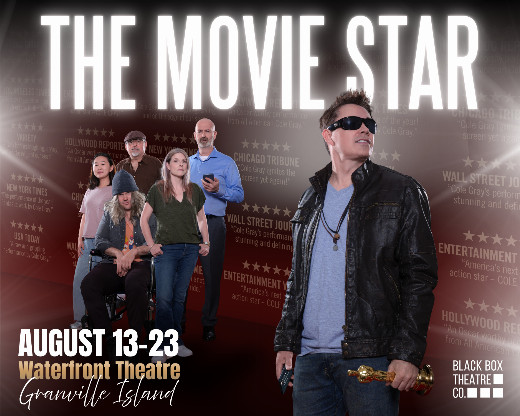
The Movie Star Black Box Theatre Co. (8/13-8/23) |

|
Disney's Beauty and the Beast Queen Elizabeth Theatre (11/24-11/29) |
|
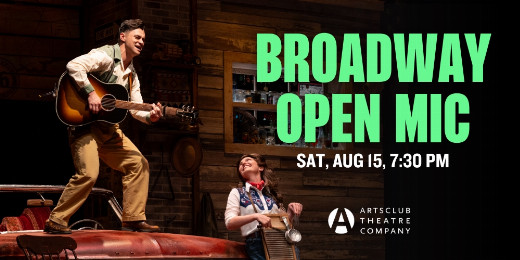
Broadway Open Mic Olympic Village Stage at the BMO Theatre Centre (8/15-8/15) |

|
An Evening of Comedy & Hypnosis with Jonathan Mangum & Asad Mecci Sagebush Theatre (9/05-9/05) |
|
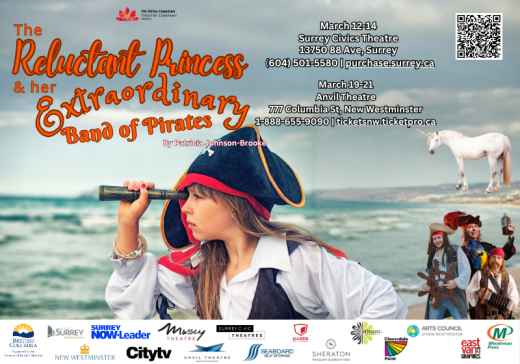
The Reluctant Princess & Her Extraordinary Band of Pirates Surrey Arts Centre (3/12-3/14) |
Reader Reviews
To post a comment, you must register and login.