


MOA to Debut TUPANANCHISKAMA Exhibition Exploring Ancient Andean Beliefs
World premiere exhibition features artifacts from MOA's ancient Andean collection, including items dating back over 2,500 years.

The Museum of Anthropology at UBC (MOA) will present the world premiere of Tupananchiskama: Ancient Andean Cosmovision, on display from March 19, 2026–January 3, 2027.
Guest curated by Luis Manuel González, Adjunct Professor in UBC Department of Anthropology, the bilingual (English and Spanish) exhibition offers a glimpse into Andean cosmovision–a holistic and spiritual framework that explains the structure of the universe–through an exploration of MOA's collection of ancient Andean artifacts. Featuring nearly 100 items crafted from ceramic, textile, bone, shell, and wood, the exhibition considers the ancestral understandings of a world where life and death coexist in a continuous cycle, or “Tupananchiskama” in the Indigenous language of Quechua, which translates to “until life brings us together again.”
“Tupananchiskama is rich in circular symbolism–a salutation that carries within it an assurance that the person bidding farewell will see that person or being again,” says González. “I hope to bring this same sentiment to the exhibition itself. As a Peruvian, I was enacting the promise of Tupananchiskama when coming to these ancient belongings–meeting my ancestors and reanimating their lived experience through the curation of this collection. As a conduit for learning and connection, the exhibition invites visitors from Vancouver and beyond to reflect on the teachings of their own ancestors. I believe there is hope, beauty, and stillness in this form of connection to our past. Three things we are in desperate need of in our fractured and fast-paced world today.”
Tupananchiskama: Ancient Andean Cosmovision draws from MOA's collection of ancient Andean artifacts, donated to the museum by American art historian, curator, and collector Alan R. Sawyer. The exhibition features works from various Andean cultures located in different geographical areas (coast and highlands) and from different periods (hunter-gatherers to the Inka). The majority of the pieces on display are ceramics from Peruvian cultures: the Moche on the northern coast and the Nasca on the southern coast.
While ancient Andean culture is not a monolith, the exhibition highlights some of the common elements that are shared across cultures and eras. From the chakana–also known as the Southern Cross, a geometric shape that depicts cosmological motifs and mirrors the Southern Cross (Crux) constellation in the southern hemisphere–to the Staff God–a deity archetype associated with creation and cosmic order–these symbols represent similar yet distinct ideas of how people viewed the world and passed on their ancestral knowledge. Each civilization left its mark on various materials, and this collection of artifacts highlights the Andes' unified essence passed down through generations, but also how ideas, concepts, and beliefs shifted and transformed over time and within each community.
One exhibition highlight includes the display of ancient wind instruments, including a trumpet crafted from a conch shell, panpipes, and ocarinas–a whistling vessel crafted from clay. In Andean cosmology, wind holds deep symbolic and spiritual significance–a powerful force that connects the physical and spiritual realms, and was often invoked during ancient rituals to cleanse spaces, purify individuals, or call upon spiritual allies.
Tupananchiskama: Ancient Andean Cosmovision will also include an animated projection of an oil painting by contemporary Peruvian artist Miguel Araoz Cartagena of the Milky Way, which highlights the Inka's belief in a dual constellation system. Along with the more commonly recognized light constellations–star groupings that resemble animals, gods, and heroes–the Inkas also recognized dark constellations–shapes identified within the dark patches of the Milky Way, made out of shadows.
This exhibition is supported by Curatorial Liaison Nuno Porto, MOA Curator, Africa + South America and Associate Professor, UBC Department of Art History, Visual Art & Theory.
MOA will celebrate Tupananchiskama: Ancient Andean Cosmovision's opening night on Thursday, March 19, 2026, from 6pm to 9pm, with free museum admission for all. To learn more about the exhibition, as well as ancillary events, visit moa.ubc.ca
Sign up for all the news on the Summer season, discounts & more...
|
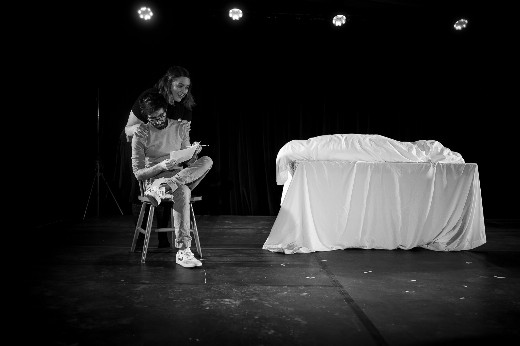
A Curated Exit The NEST (9/24-9/27) |
|
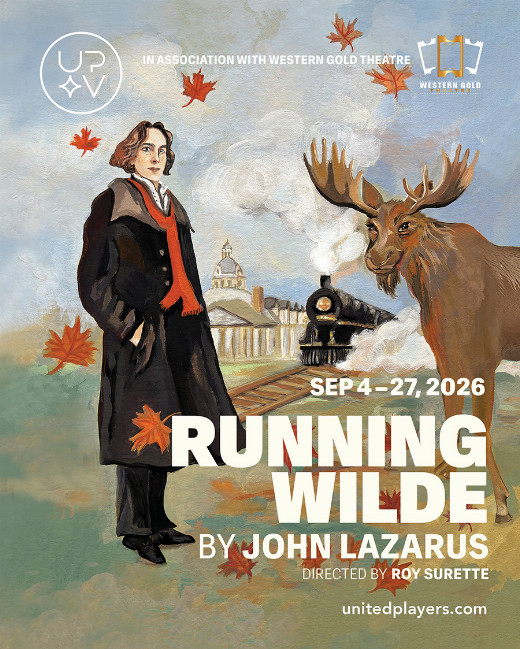
Running Wilde Jericho Arts Centre (9/04-9/27) |
|
Ruby: The 40th Anniversary Concert Good Shepherd Church (5/16-5/16) |
|
Reading Session of New Compositions Pacific Spirit United Church (10/19-10/19) |
|
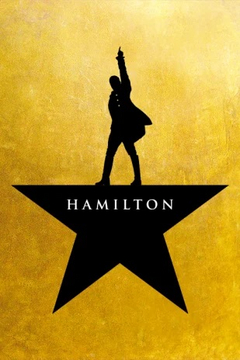
Hamilton (Angelica Company) Queen Elizabeth Theatre (5/26-6/13) |

|
Murder for Two Surrey Arts Centre (9/25-9/27) |
|
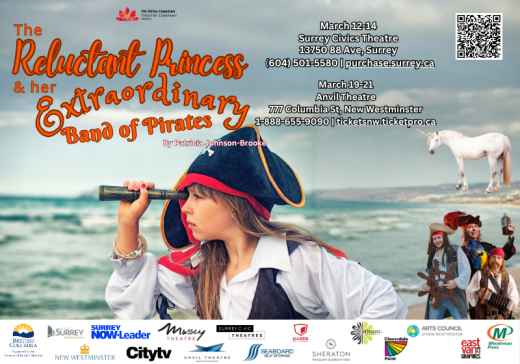
The Reluctant Princess & Her Extraordinary Band of Pirates Surrey Arts Centre (3/12-3/14) |
|
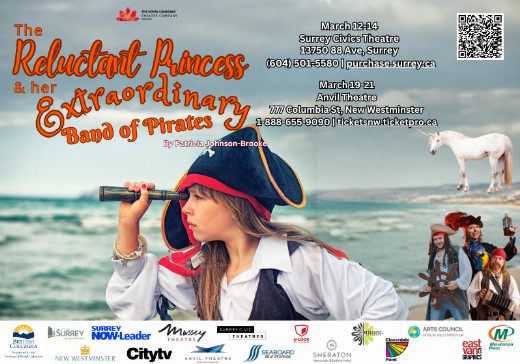
The Reluctant Princess & Her Extraordinary Band of Pirates Anvil Theatre (3/19-3/21) |
|
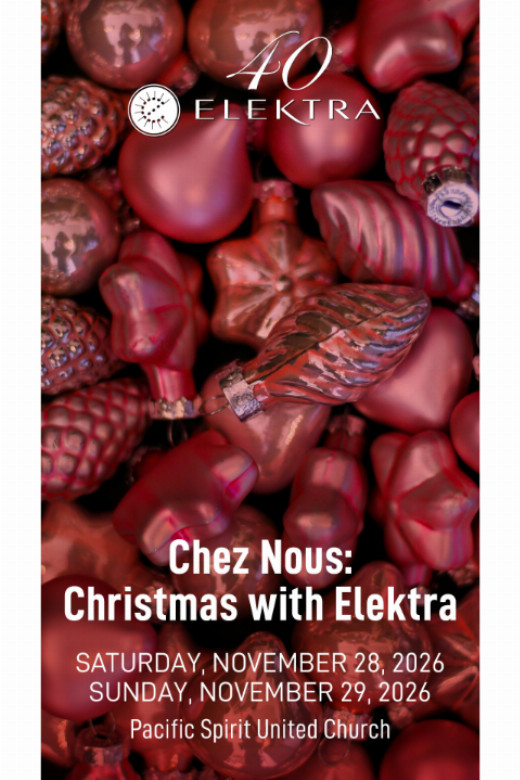
Chez Nous: Christmas with Elektra Pacific Spirit United Church (11/28-11/29) |

|
rhymes with rain Morrow (9/16-9/27) |
