


Review: ROMEO A JULIET, Shakespeare's Globe
This version of Shakespeare's tragedy is performed in a mixture of English and Welsh
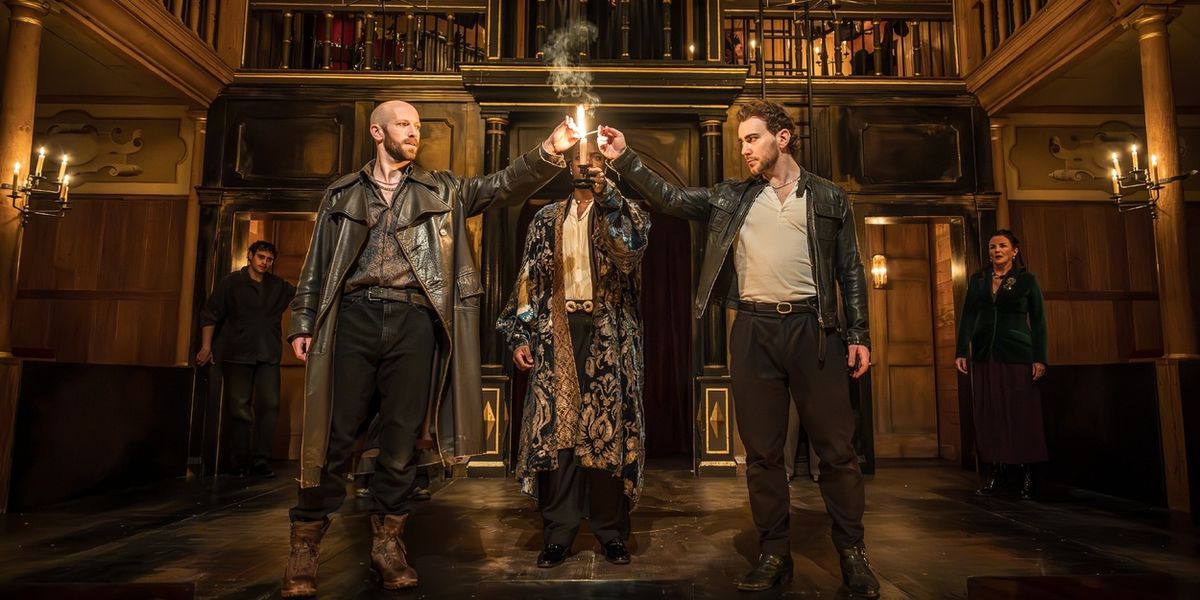
 At first, all seems familiar, as we lay our scene in fair Verona. However, a new type of tension is about to be unleashed, when the Prince’s foreboding prologue is interrupted mid-line by Mercutio, who’s speaking entirely in Welsh.
Theatr Cymru’s take on Shakespeare’s star-crossed lovers is fully bilingual, with the Montagues and their associates performing primarily in Welsh, and the Capulets primarily in English (though Juliet has learned Welsh from her Nurse, played here with maternal knowingness by Llinor ap Gwynedd).
Non-Welsh speakers (and indeed non-English speakers) are signposted to an app called Sibwrd which provides live captioning for both languages. However, on press night I don’t find myself glancing down at the translations on my phone screen all too often – a SparkNotes-level understanding of the plot is enough to follow what’s going on onstage.
A good thing, because Romeo a Juliet works best if you don’t try to decipher every word. Every character is constantly code-switching based on the situations they find themselves in; in this rendering of the balcony scene, the chemistry between Steffan Cennydd’s Romeo and Isabella Colby Browne’s Juliet feels all the more intimate as they flit between languages, instantly understanding each other in a way that transcends the spoken word.
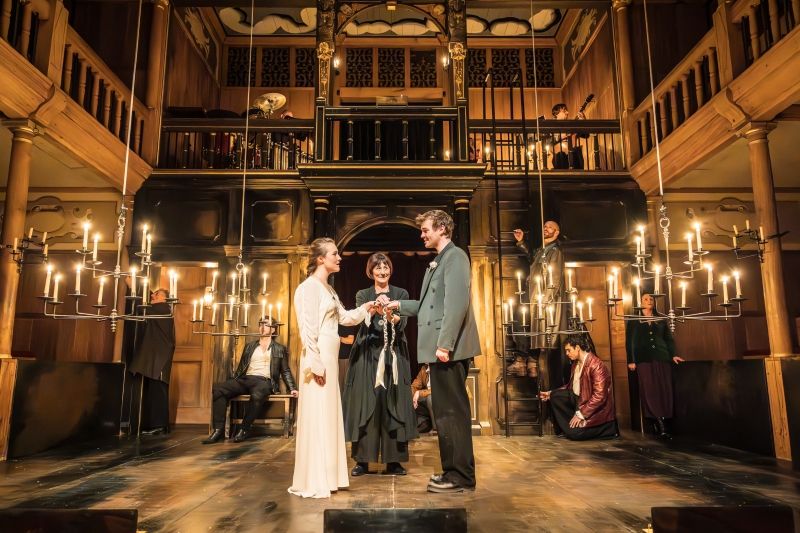
Photo credit: Marc Brenner
This translation – by J.T. Jones, a prominent Welsh translator of Shakespeare who died in 1975 – also lends new meanings to some of Shakespeare’s most famous speeches. Mercutio’s Celtic mythology-inspired dream of Queen Mab, for instance, takes on a particularly mystical tone when translated into Welsh, and performed with a dose of menace by Owain Gwynn.
Language aside, this is a fairly pedestrian classical staging, with contemporary takes on Elizabethan costuming, everything doused in hazy candlelight, and the Sam Wanamaker balcony used in the obvious way. This simplicity, though, helps bring the acting performances to the forefront. Cennydd’s Romeo leans into the character’s dreamy aloofness, floating worlds apart from the more practical Mercutio and Benvolio (Siôn Eifion).
Browne’s take on Juliet, meanwhile, lends her an unusual, adolescent-feeling sense of bluntness and almost petulance. When Juliet switches to Welsh more frequently in the second act, it reads as Juliet abandoning propriety and displaying her emotions more freely. This subtle performance is made all the more impressive when you learn that Browne only learned Welsh after moving to Cardiff as an adult.
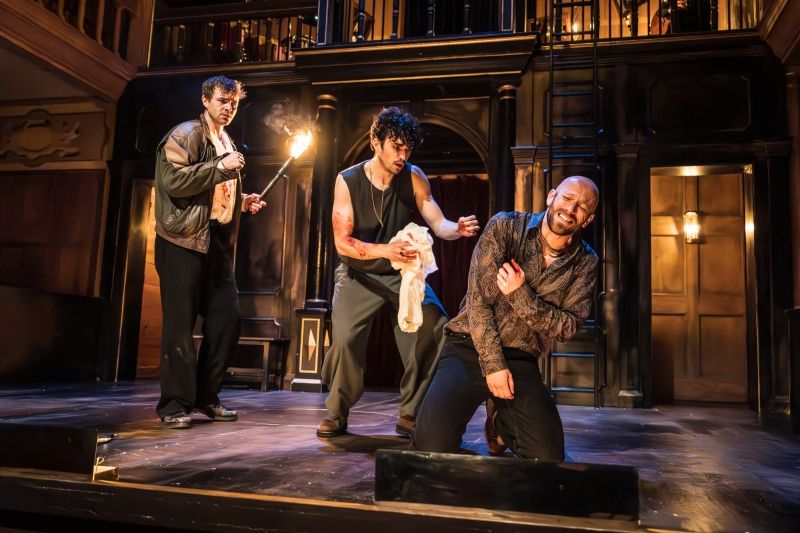
Photo credit: Marc Brenner
Steffan Donnelly’s direction is expansive, and sometimes feels overcrowded on a stage as small as the Sam Wanamaker. Highly choreographed fight scenes, dance numbers and musical accompaniment can threaten to overwhelm the production’s intimacy, and key moments like Romeo and Juliet’s first meeting at the ball can feel lost amid the background noise.
While Juliet’s tomb is an elegant set piece, lurking ominously just offstage throughout the show, its size and grandiose design threaten to overwhelm the space, and in turn the tenderness of Romeo and other characters reacting to Juliet’s ‘death’. Conversely, the direction finds its footing in the quieter moments, including a beautifully choreographed sexual scene between the lovers (fine work from intimacy coordinator Ruth Cooper-Brown).
Romeo a Juliet does not make any of its political points overtly, and this is an occasion where some things are better left unsaid, without cheap gimmicks. With nothing made explicit, the audience comes away reflecting on their own use of language and dialect in their daily life, as well as on how over 500 years later, new eyes on Shakespeare can still make desperately overdone texts feel brand new.
Romeo a Juliet plays at the Sam Wanamaker Playhouse at Shakespeare's Globe until 8 November
Photo credits: Marc Brenner







Reader Reviews
To post a comment, you must register and login.