


LCMF Concert at Wigmore Hall to Chart Composers' Use of 'AI' in Music History
The concert will take place on 20 November 7.30pm.
 In this one-off event, the London Contemporary Music Festival will return to the Wigmore Hall with another provocative evening of music, which will chart the way composers have engaged with AI-adjacent ideas over the centuries.
What was the first AI composition? In 1792, a year after Mozart's death, a work titled Musikalisches Würfelspiel – ‘A Musical Dice-game' – appeared with Mozart's name on it. ‘Instructions for composing as many waltzes as one pleases by means of two dice, without knowing anything of music or composition,' proclaimed the front page.
An original Mozart? Or was a canny publisher cashing in on a star's demise and ushering in some clever fan fiction? All that is certain is that here – some 230 years before the advent of AI as we know it – a work of art was being fashioned through the application of a set of commands.
AI composition is far older than AI. The use of rules, instructions and mathematics to determine the shape and sound of music is in fact as old as music itself.
Moving from the age of Mozart to the modern day, this evening's concert – featuring four world premières and the first documented public performances of works by Mozart and C.P.E. Bach – shows how startling, amusing, mesmerising and even moving music can be when composers throw the dice and embrace the algorithmic.
'The advent of AI is seen as an apocalyptic threat to music. Yet since at least the age of Mozart, composers have used the tools that underpin Artificial Intelligence – mathematical, algorithmic and procedural rules and instructions – to create astonishing work. LCMF has always been about uncovering artistic traditions that today's dominant narratives have forced us to overlook. This concert will demonstrate the myriad ways that algorithmic processes have been brought into play by some of the greatest composers in order to show how creatively AI could be deployed in the future.' Igor Toronyi-Lalic, artistic co-director of LCMF
‘LCMF concerts can always be relied on to surprise, provoke and often delight. We look forward to going on yet another adventure with LCMF to discover how the past continues to inform the future.' John Gilhooly, Director of Wigmore Hall
That Mozart would jump on this Enlightenment craze was perhaps inevitable. The composer was an obsessive gamer. When he wasn't composing or performing, he was inventing secret languages, talking backwards, or beating his friends at billiards. In 1787 it was noted that he would constantly play skittles while working on Don Giovanni. That same year, on the back of the score to his G minor Quintet, he sketched out an authentic Music Dice-Game, K516f.
But he was not the first one to try their hand at this novel form. Two students of J.S. Bach had invented the game in 1757: Johann Philipp Kirnberger and Bach's son Carl Philipp Emanuel. All of these worked on similar principles. They presented the would-be composer with a table of numbers, each of which would correspond to a bar of music. The new work would be constructed, algorithmically, by rolling the dice, singling out, and ordering the bars that the dice instructed you to pick. Kirnberger's system offered 400 trillion permutations of the piece. A selection of these 18th century rarities will be performed at the 20 November event.
Alongside them will be some of the peaks of the algorithmic instinct within compositions from the 20th century. The acclaimed new-music specialists Explore Ensemble and percussionist George Barton will showcase a pair of extraordinary, epic works by two cult figures from the world of computational art and music: Im Januar am Nil (1981-84) by composer Clarence Barlow (1945-2023) and Opus 17a (1984), in a new version for drum kit, by the artist Hanne Darboven (1941-2009).
Composer Dominic Murcott will present several wild, firecracker contrapuntal postwar works for player piano (self-playing piano) by one of the towering figures of the 20th century avant-garde Conlon Nancarrow (1912-1997), performed on a replica of the composer's own player piano.
Finally, following her blistering Wigmore Hall performances with Russolo's pioneering noise-instruments as part of LCMF 2024, one of the world's leading theorists of artificial intelligence, Professor Jennifer Walshe, will return with a world première new commission for voice and ensemble, plus works by two mysterious Irish composers, Eyleif Mullen-White
|
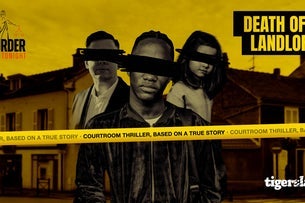
Murder Trial Tonight V - Death in the Family Scarborough Spa Grand Hall (4/23-4/23) |
|
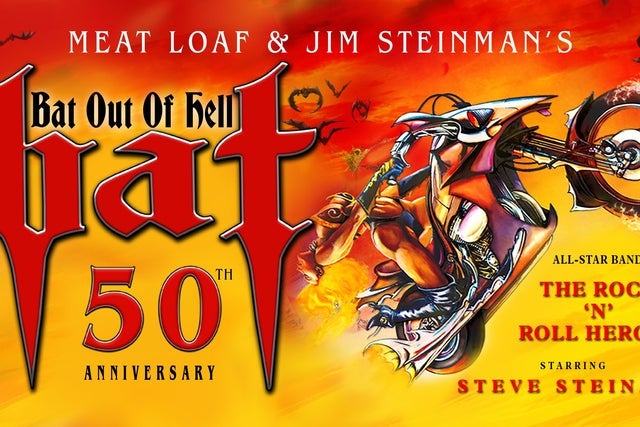
BAT! The Bat Out Of Hell 50th Anniversary Concert Sheffield City Hall Oval Hall (10/06-10/06) |
|
|
Count Arthur Strong - And Its Goodnight From Me! Northcott Theatre (5/01-5/01) |

|
The Haunting of Widow's Leap Farm Victoria Theatre Halifax (11/08-11/08) |
|
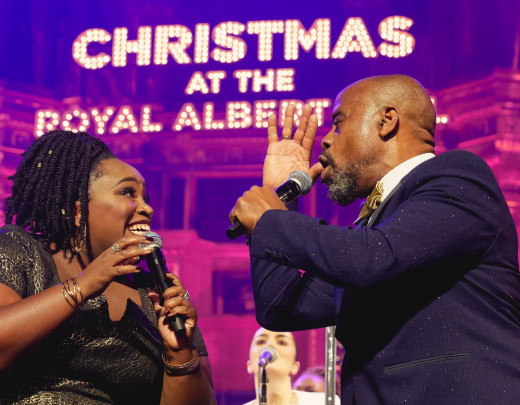
London Community Gospel Choir at Christmas The Royal Albert Hall (12/16-12/16) |

|
Vasthy and Friends: Sing, Dance, Play The Gilded Ballon (8/05-8/31) |
|
|
Count Arthur Strong - And Its Goodnight From Me! The Fire Station (2/28-2/28) |
|
|
Count Arthur Strong - And Its Goodnight From Me! Bristol Beacon (3/19-3/19) |
|
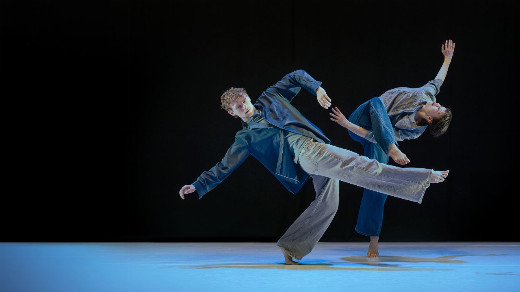
Blue | Glas Pavillion Dance South West (11/13-11/13) |
|
|
Murder Trial Tonight V - Death in the Family Vaillant Live, Derby (2/06-2/06) |