


The Istanbul Tiyatro Festivali Presents ISTANBUL MON AMOUR: PERA’NIN KARANLIK ODASI By Kumbaracı50
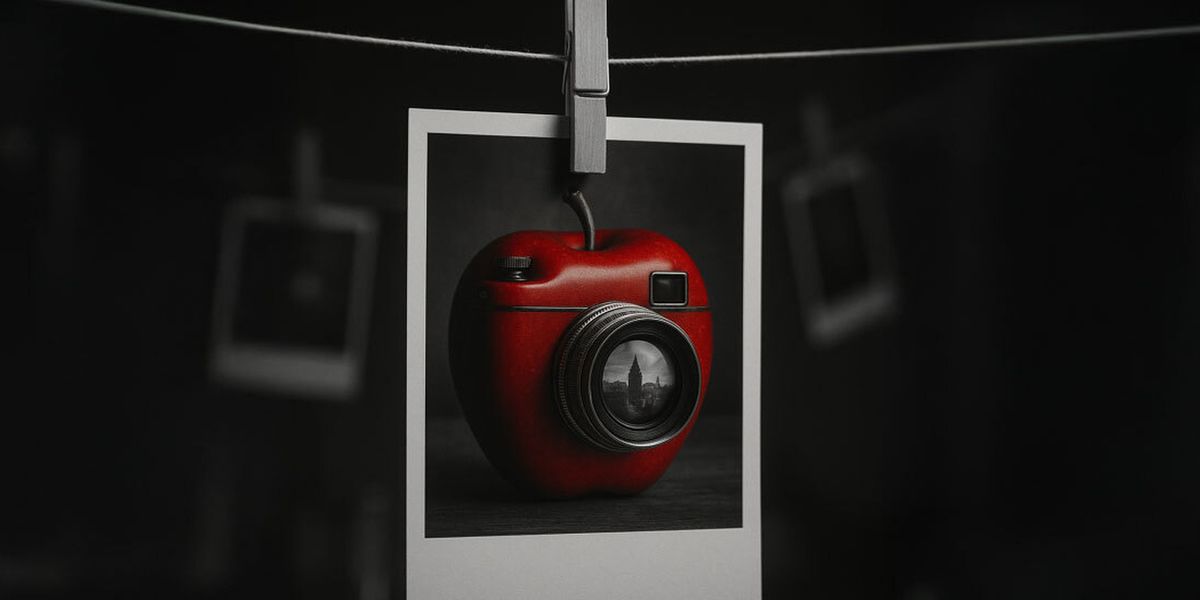
Few neighborhoods possess the historical layering of Istanbul’s Beyoğlu. It has existed as a heterotopic space within the Eastern Roman Empire, the Ottoman Empire, and the Turkish Republic. Cosmopolitan by nature, it has long been home to Italians, Greeks, Armenians, Jews, and Turks. It is less a neighborhood than a city within the city, the Ottoman Empire’s Little Europe. It's relative cultural freedom rendered it a haven for expression and innovation. In the 20th century, this meant that Beyoğlu became the site of numerous modern milestones, including the world’s second underground railway (after London) and Europe’s second elevator (after the Eiffel Tower). In Istanbul Mon Amour: Pera’nın Karanlık Odası (Istanbul My Love: Pera’s Darkroom), Kumbaracı50 offers a site-specific triptych that explores the history of modern Beyoğlu through the life and work of one of its most iconic artists, photographer Maryam Şahinyan.
Armenian photographer Maryam Şahinyan (1911–96) was Türkiye’s first female studio photographer. Her artistic career spans the breadth of 20th-century Turkish political culture, from the 1930s through her retirement in the 1980s. Her images depict Türkiye not through its architecture, but through the intimate complexities of its inhabitants. Her portraits capture the joy of performance (dancers, boxers, actors) and the fluidity of gender expression, including homoerotic and gender-nonconforming relationships rendered with a tenderness that pushes her work beyond the boudoir and toward intimate authenticities. Fluent in four languages and working with a strikingly diverse array of subjects, Şahinyan stands as a living embodiment of Beyoğlu’s ethos.
To express the eclecticism of modern Beyoğlu, Kumbaracı50, under the direction of Yiğit Sertdemir, divides this epic portrait into three one-act plays across three different performance spaces in the neighborhood. The first, Bozmayın Çekiyorum (Don’t Move, I’m Taking the Shot), is an enchanting dance-theatre piece. The second, Gaybubet Şehri (Absence City), offers three historically anchored narratives, each marking a key moment in the district’s modern history. The third, DEN (FROM), is a surreal immersive gathering of Şahinyan’s former studio subjects. Together, the pieces form a Proustian journey of collapsed histories, suffused with a nostalgia for a Beyoğlu that once existed and, walking through its crowded streets, feels poised to reappear.
This first piece, staged in a small proscenium theatre inside the Beyoğlu Spor Kulübü, unfolds in front of the stage in a cubist exploration of Şahinyan’s studio. Performers enter one by one, wearing large black-and-white masks representing the photographer, alongside alternating black-and-white 1930s–40s costumes. Each figure enters the studio and touches a record player, gently altering the lilting waltz score. The various “Şahinyans” prepare the space and position themselves behind a large studio camera, complete with curtain, behind which the dancers hide as they manipulate the lens.
The sequence reacquaints us with photography not only as an art, but as a strange modern technology. A performer then brings in a screen downstage, behind which performers play with shadow and colored gels. Gradually, the masks come off, while recreations of Şahinyan’s intimate portraits are staged and projected. The screen is then removed as performers trade their masks for isolated facial features, eyes, ears, noses, assembling themselves into shifting visages.
Candan Seda Balaban’s staging and masks embody both the immediacy of Şahinyan’s intimacy and her role as an innovator. Her work was strange, not just in its output, but in its very method. This piece presents her artistic vision, her courage, and her play with gendered performance. What could have felt awkward instead reads as tender. Burçak Çöllü’s music sustains a “silent-film” mood, giving the work an almost French-cinema sensibility. Lighting designer Yiğit Sertdemir brings both the utilitarian studio and its delicate artistic output to life. The result is a love letter to Şahinyan and a venture into aesthetic unknowns.
The second piece, written by Burçak Çöllü and directed by Sanem Öge, takes place in a Beyoğlu cinema. While waiting in the lobby, I found myself reading the venue’s exhibition on the history of cinema in the district, a reminder that, like the underground and the elevator, cinema first entered Istanbul through Beyoğlu. Staging this work here feels fitting, situating it within the district’s long relationship to modernity.
Actors Ceyda Ake, Gülhan Kadim, and Özlem Türkad each perform a monologue as an acquaintance of Şahinyan, speaking from three turning points in the neighborhood’s history: the 1930s, the 1955 Istanbul Pogrom, and the years leading up to the 1980 military coup. These monologues both mourn the neighborhood’s struggle to maintain its multivalent identity and celebrate the resilience of figures like Şahinyan who shaped it.
Çöllü’s writing adopts a clean, interview-style cadence, full of nostalgia tempered by apprehension and lifted by wit. Ake plays an "awe-shucks" young fruit seller smitten with Şahinyan. Kadim portrays a chemist who supplies the studio, asserting her freedom and professional space while acknowledging that the chemicals she works with may be killing her. Türkad is an older tailor who is somewhat bewildered by the queer milieu that surrounds her; nevertheless, she insists that it is home. Together, they reveal Beyoğlu’s reliance on both its cosmopolitanism and the professional might of its women, brought to life by three compelling performers.
The final work, DEM, written by Tarık Yüce and directed by Yiğit Sertdemir, is staged in a new performance venue above the historic Tünel, the funicular that carries passengers from Karaköy to İstiklal Caddesi. Conceived as an immersive piece, the work features musicians (Çağlar Fidan, Nikos Papageorgiou, and Erhan Bayram) on a raised platform behind a banquet table. Around the table gather several of Şahinyan’s former subjects, reminiscing about their time with her. Their reunion is interrupted by the arrival of one subject’s daughter, someone never photographed, who kills the mood. Still, the memories continue.
One performer, a queer artist, recounts running for his life through Beyoğlu, a story that transforms into a surreal guided tour of the neighborhood. He laments that his portrait was torn in half. Before departing, the unphotographed daughter presents him with the missing half. This conclusion provides us with the confluence of dream and quotidian experience that marks these photos and the cultural memory that Şahinyan captured.
Four and a half hours after the first performance began, the triptych comes to an end. What could have been a marathon becomes a gentle promenade, a love letter to the city, to what it was, what it is, and what it might be again. Like Şahinyan’s photography, the piece is not architectural but interpersonal. Beyoğlu is more than a crossroads; it is Istanbul’s promise as a “Refuge of Strangers.” Walking through the neighborhood with my friend afterward, I remarked that it was a shame this framing had been lost. She replied, “Give it time. It comes back.”
|
Sommerkonsert med Vamp Biologen (8/21-8/21) |
|
ASKIMHALLEN - Oktoberfest med Karlstadpojkarna Askimhallen (10/10-10/10) |
|
|
ANDERS MATTHESEN inkl. 4-retters middag Musik i Haveselskabets Have (5/13-8/14) |
|
|
women in emotion - Vepsestikk Rathaus Stuhr (9/19-9/19) |
|
|
NØTTEKNEKKEREN - EN JULEMUSICAL Mjøndalen Samfunnshus (11/20-11/22) |