Interview: Mara Lieberman's Immersive DIRTY BOOKS Explores Underground Erotic Fiction and Censorship
BroadwayWorld spoke with Lieberman about artistic resistance, how immersive theatre "is the future of robust American theatre," and more.
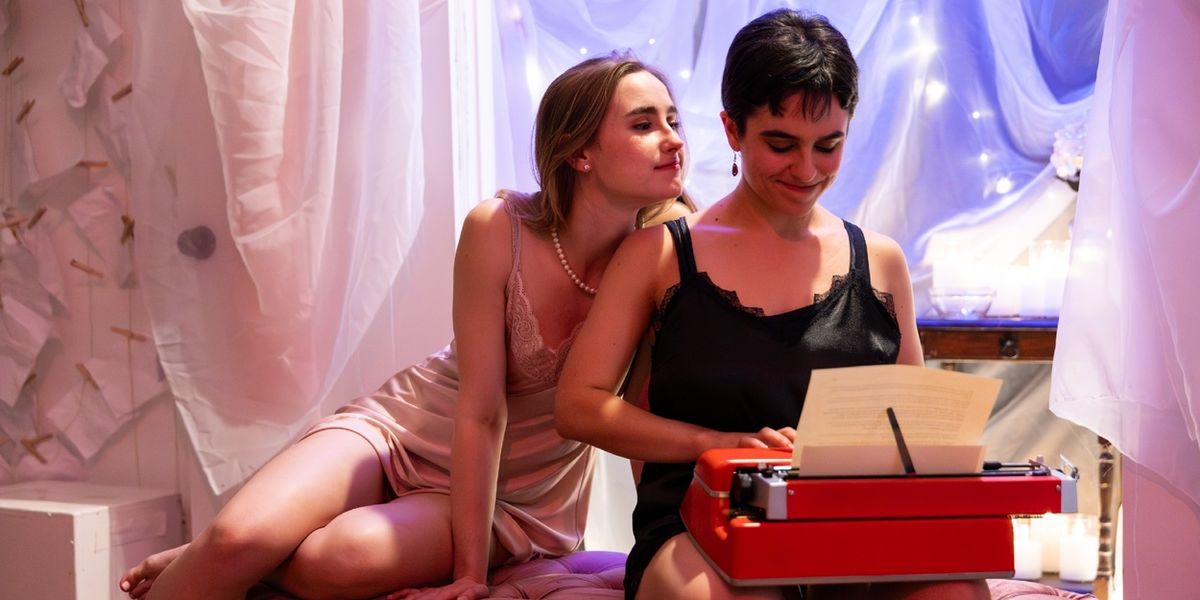
Mara Lieberman, Executive Artistic Director of Bated Breath Theatre Company, is at the forefront of immersive theatre in New York. The writer of Voyeur: The Windows of Toulouse-Lautrec, Chasing Andy Warhol, and Beneath the Gavel, Lieberman is also the writer and director of the world premiere of Dirty Books, currently in performances at Bated Breath Theater.
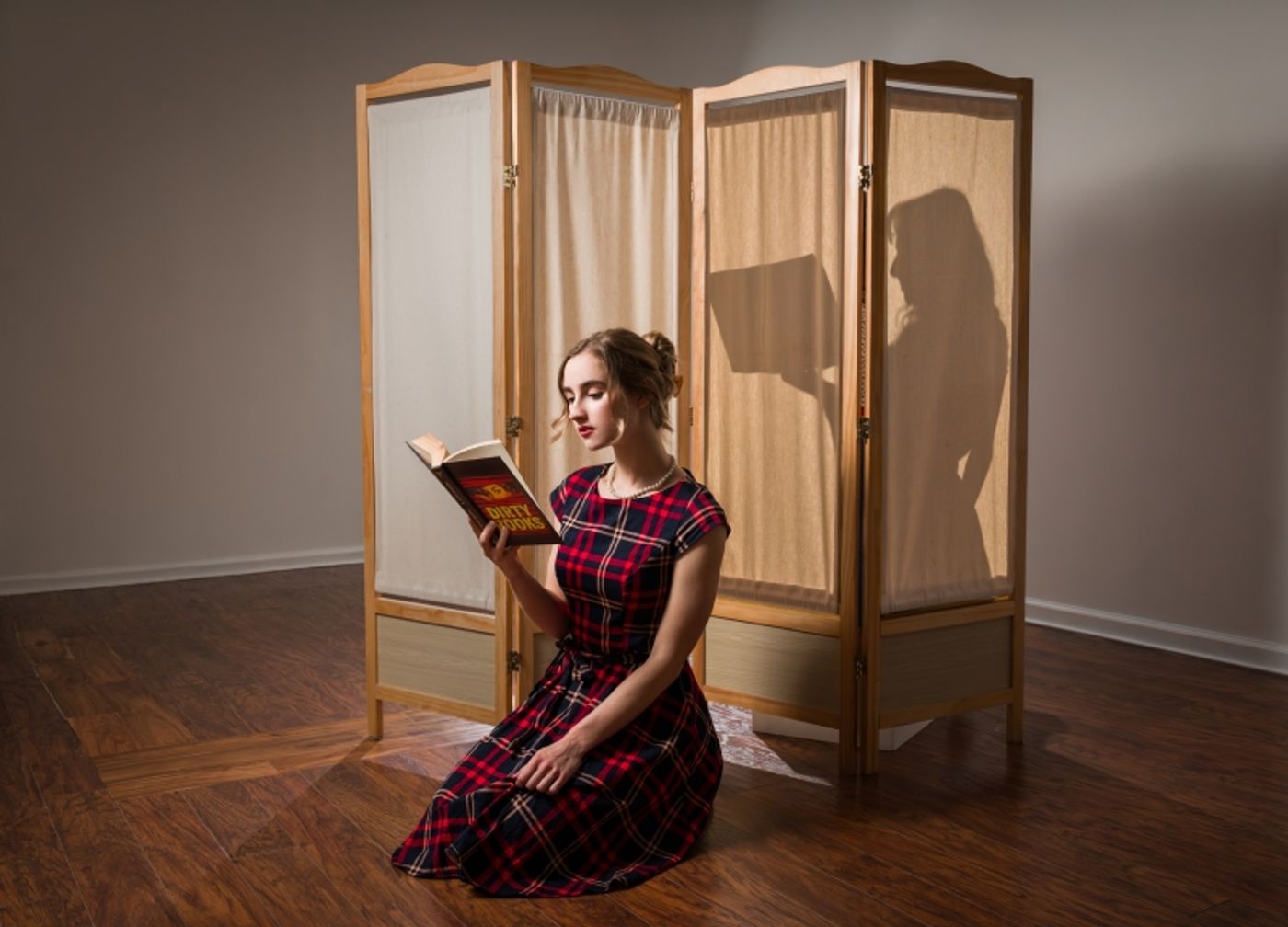
Inspired by true stories, Dirty Books brings audiences into the world of censorship, book banning, and underground erotic publishing in the 1960’s, and invites audience members to collaborate with the company to write an erotic story.
BroadwayWorld spoke with Lieberman about artistic resistance, how immersive theatre "is the future of robust American theatre," and how she hopes that Dirty Books will make audience members feel like they are a part of something bigger than themselves.
Dirty Books dives into the world of 1960s anti-obscenity laws and underground publishing. I’m curious what first drew you to this topic, and how you translated these real stories into immersive theatrical form?
I’m happy to talk about it! I think the first thing is that I say that I make boring things sexy. And I get kind of nerdy about things and want to figure out how to make it really exciting for an audience. And so, I had a friend who is in his 80s, and he used to write these books in the 60s! And we were talking one day, and he was telling me about how the guys would sit around the table, they’d be drinking and talking, and then they’d all go to the typewriter, they’d each take ten minutes, and by the end of the evening there would be a book! And they’d send it off to the publisher etcetera. But I think what is so interesting is they’d have to write around all these anti-obscenity laws, and so, it really forces you to be creative. And how do you elicit lust, and passion, and how do you talk around it?
So, I am really interested in audience participatory theatre, and I had this idea, 'What if the audience writes an erotic story together?' I am obsessed with the story of how these books came to be, and got published, and the evolution of the sex and erotica industry, and also the nerdy part is the courts, and the laws. There’s a man named Anthony Comstock, who basically was the censor extraordinaire in this country- his laws lasted for over 100 years. And he was just a puritanical man who was given a badge, a gun, and control of the US Postal service in the 1800s, and basically controlled the flow of mail, and that includes obscene, quote-unquote, literature.
So that’s the history-nerdy part, and then there's the participation part, which I’m very interested in exploring, and then there’s a beautiful love story at the center of it as well.
.jpg?format=auto&width=1400)
The immersive part of it- what inspires you to want to place audiences inside the act of creation?
That’s a great question, and I’m going to be a little theoretical for a second and say since I was in my twenties, I had this feeling that I think American theatre can be more alive. I, many times, felt really distant with the traditional theatrical audience configuration, the way the audience is really far away from the actors and the action, and they’re sitting in the dark, and they’re kind of passively consuming the experience. And I have been in search of ways to reignite, for myself, the theatrical experience. And I think immersive theater has really hit on something, because people want to feel seen, and they want to feel involved, and they want to feel like something happened in the room that night and if they weren’t there it couldn’t have been the same thing. That it is a co-creation.
And so, I do immersive theatre because I think in some ways it is the future of robust American theatre. And because people in this age of screens and anonymity, they want to feel seen, and they want to feel like they matter. And I feel like in these kinds of pieces they feel like that. And I’m always trying to figure out how to balance that with something that is narratively and physically really tight, and articulated—because I do a lot of physical theatre, which means a lot of choreography—and I’m always trying to balance a very clear structure with these moments of audience participation, or improvisation.
Jumping back to what you said before about Anthony Comstock having a badge, and a gun, and being puritanical, and amidst that rising a subversive culture... I think that what's interesting, now the world that we’re living in, we have returned to a sort of puritanical state- at least in this country- and I think that there is something to be said for the rise in erotic fiction now. I think that correlation is interesting. What do you think that says, that the more that human beings are restricted, the more they want to break out of it?
That is such a great thing to notice. Part of me feels like this experience is inviting people in a room to be bad. You can say a dirty word, you can say a dirty thought. The more restrictive society is, the more people are going to have to release that oppression. And so, given our current climate, it feels so apt to have a bunch of people come into a room and create something together that is erotic, that is also about censorship and free speech, and expression, and do this together, and then also write. And there are also lots of writing prompts around the room that people respond to, and then those things get used in the play later.
I feel like this room, this space, it’s a little bit of a site of resistance in a way, that we sit in a room, and we read passages from erotic literature, from D.H. Lawrence, and Henry Miller, and celebrate the loosening of anti-obscenity laws in a time in history when they were overturned. And it’s important for us to look at that because history is not linear, it just keeps going around and around, and keeps repeating itself. So there’s something about this that feels timely.
.jpg?format=auto&width=1400)
The play, inspired by the true stories of erotic fiction writers of the 1960's, uses Supreme Court-inspired transcripts combined with a fictional narrative. Can you walk me through your writing process and how you wove these elements together? And then how much space is left open for the audience to create something too?
When I do these participatory things, and I know that things need to be really scripted, and really structured, but there are these elements of play, and invitation, I call them pockets. In the middle of a very defined script, there’s a pocket that opens up, and we invite the audience into that pocket, but we also have to have plan A., B., C., D., E, ‘What if this goes off the rails?’ We have to anticipate that things won’t go as planned.
I work in a devising process. So I come up with the idea, maybe I write some scenes, I do a bunch of research, and then I get into a room with actors, and this is inspired by my work with Tina Landau and Anne Bogart- they call it composition. But basically they’re given 20 minutes to make a whole theatre piece about this particular topic. So, maybe it’s about, ‘We’re going to look at this puritanical censor in the 1800s and we’re going to explore his relationship to the women that tried to advance birth control, and educational literature. So, I give the actors 20 minutes to make a whole theater piece, and they do it, and I watch it, and video it. And then after some time doing this, I go away, and I write, inspired by these improvisations.
And sometimes nothing in the improvisation gets used, or sometimes- oftentimes- it’s a little bit like a mysterious soup. ‘I really loved the way she looked over her shoulder in this minute, and I could put this against this song that I found, and then put this against this text.' It really is like a recipe with all these ingredients. And it’s narrative in that I go back to the actors with the things that I write, and we try it, and then I go away and I write. This time we had a nice devising period, and then I basically went away to the Berkshires for three days and I wrote the whole script.
I think your process is so interesting. You have an idea of what you’d like, and then you give it to the actors, and then the actors inspire your writing, and then your writing inspires the actors. I feel like that is achieving what you set out to do in the immersive space. Your goal was to have everybody be more involved with each other, and that starts from your process. Even your process is immersive.
It is! I didn’t think about it that way but it really is, yeah! I’m not the kind of writer that sits at a computer at first. The way that writers often think about their process is really different from what I do.
How has creating Dirty Books expanded or reshaped your own understanding of artistic resistance?
There is a moment where the audience is encouraged to read a short passage that is a letter to a banned book author. The audience the night before writes these slips, and then the audience the next day-the current audience- gets these slips to read. And it feels sacred to me that we are sitting in a room, and we are talking about people’s stories that have been denied readership, and denied reality, and we are looking at the history of this restrictive, ‘We’re going to make sure everybody has a homogenous experience, and we don’t want to hear from people who have been under-voiced, and we’re going to make everything so conforming.’
It is resistance because we are in the room, we are talking about the history of censorship, we are kind of nodding and winking to what is happening today, and we are making work together. We are pushing forward. And doing it in a communal way makes us feel less alone, and powerless. For me, just sitting in this room every night with 30 people writing, talking about writing, and censorship, and culture. It’s like, ‘Yeah, that’s what we need to do right now!’ Because so many of us don’t know what to do.
What do you ultimately hope audiences take away from the production when they leave their seats?
I think the moments of participation are done with a kind of delicacy and sensitivity, but really creatively. And I hope they feel like they have been seen and they matter. I know I’m talking about a lot of serious things right now, but it’s not! It’s fun, it’s frivolous, we’re saying bad words together, we’re invoking film noir style, and it’s playful. I want people to have that sense of, theatre can be surprising, and playful, and revelatory, and, ‘I matter. I made that happen.’ And just to feel part of something bigger.
I have lots of hopes for the play, but the feeling that you’re a part of something bigger than just yourself is the gift that theatre offers us anyway. And to come out of there and be like, Wow! What the hell was that? We called it a play, but it was an experience, and I will be forever changed.’ I know that’s high hopes!