


Interview: Ellen Geer on STRIFE at Theatricum Botanicum
The show will run through October 4.
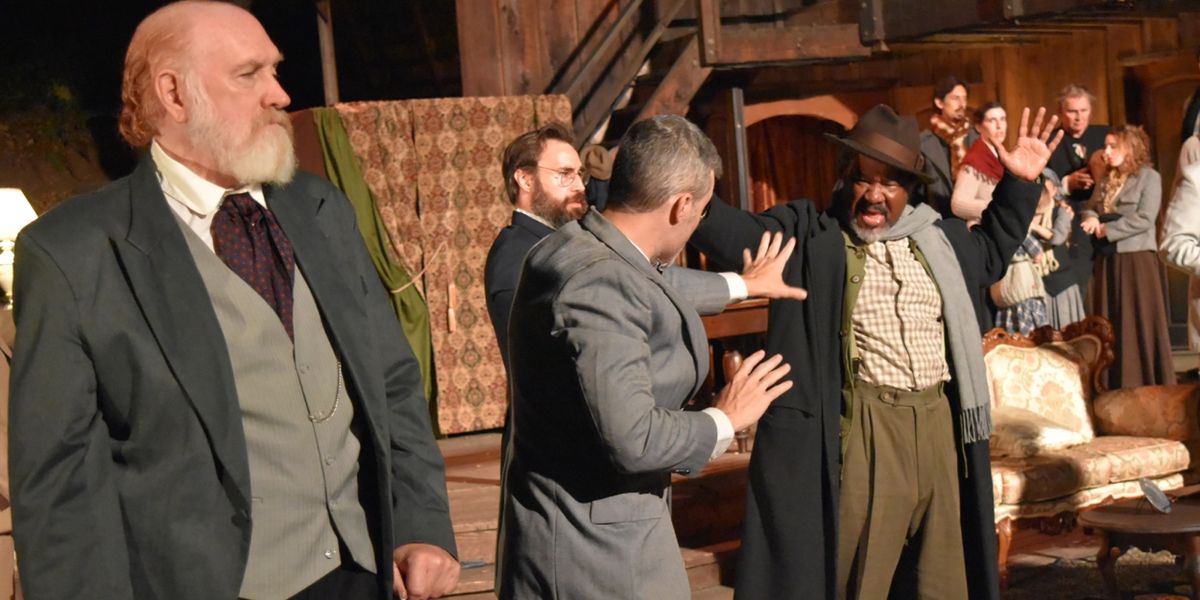
Will Geer Theatricum Botanicum is presenting a new production of Strife, a rarely produced play by Nobel Prize-winning writer and social activist John Galsworthy who wrote the play in 1909 to explore the complexities of labor relations, a theme that resonated with both Galsworthy and the Geer family of actors and theater directors.
Co-directed by Theatricum artistic director Ellen Geer and associate artistic director Willow Geer, the play’s emphasis on the often-overlooked human consequences of these struggles - particularly the voices of women and families who endure the brunt of the turmoil - highlights how easily leaders on both sides get so caught up in their arguments that sometimes they forget for whom they are fighting. And what compromise is possible when human dignity and health are on the line, along with a business’s survival and the economy it supports?
I decided to speak with Ellen Geer about her motivation to present the play and how Galsworthy’s even-handed treatment invites audiences to grapple with the intricacies of negotiation and resolution while considering the costs of extremism on both sides.
Thanks for speaking with me, Ellen. Since Strife is rarely produced, despite being written by a Nobel Prize-winning author, what drew you to bring this play to Theatricum’s stage this summer?
Galsworthy's plays are true to whatever life situation he cared to write a play about. I think of him like I do of Ibsen, O'Neill, or Williams. He lets you climb inside the characters’ hearts and their story. He captures an audience. Never forces you, or tricks you, and so believable you never feel an author’s message. Every generation deals with class, boss and worker issues, fair pay and survival. To see a strike rage, desires, success, sometimes futile compromise and fallout happen before your eyes, can actually give courage to resist and continue the fight for justice in one’s own era. Everyone can recognize themselves and their shifting concerns in this play.
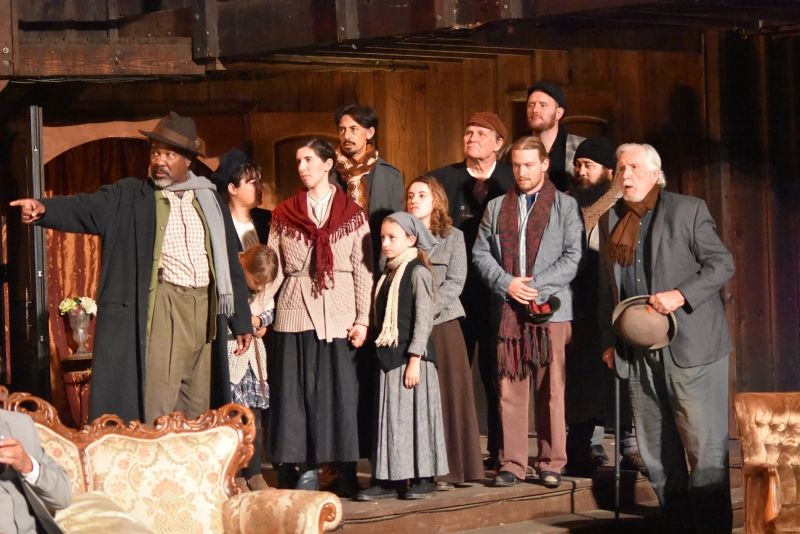
The Strife Ensemble
You and Willow Geer chose to relocate the story from England to 1890s Pennsylvania during America’s Gilded Age. What inspired that shift, and how does it change the impact of the play?
We felt this shift in country would bring the conflicts closer to an American audience. In Britain it was a tin factory, in America we chose a steel strike outside of Pittsburgh. Worker unions were just gathering strength. So many immigrants in the late 1800s had passed by the Statue of Liberty and were working in steel mills, all searching for a new home. As children, we learn of this time in school. Today is really no different. The battle for fair wages and union support in a corporate society is ongoing.
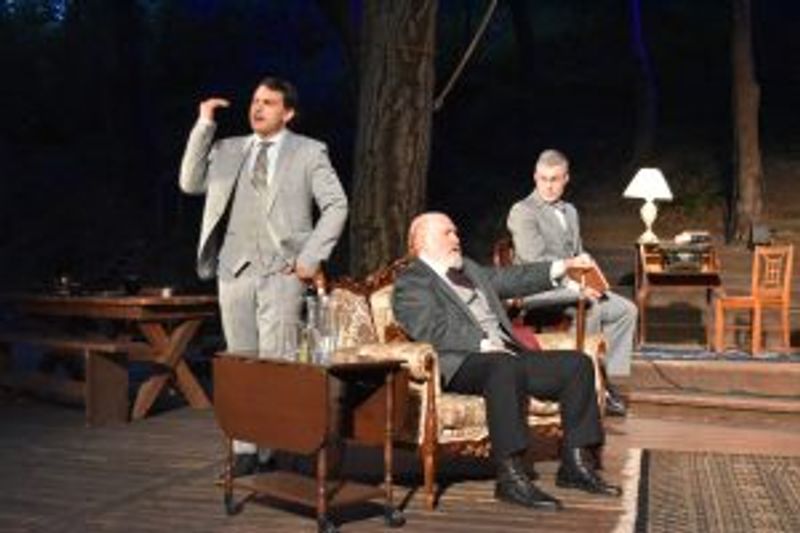
Roman Guastaferro, Franc Ross, Andy Stokan
The play deals with labor disputes, corporate responsibility, and the human cost of ideological battles. How do you see these themes resonating with audiences in 2025?
Your question is the play. How does the worker exist fairly within American corporate life so there is equality, justice, and care for women, all races and classes? And then there is the business desire for gaining more profit. How do we care for moral life? The play is today.
Galsworthy avoids moralizing, instead showing nuance on both sides of the conflict. As a director, how do you approach balancing that even-handedness while still engaging the audience emotionally?
Truthfully. Whether it’s an overbearing parent, teacher, boss, everyone has felt suppression and lack of freedom in their life. Even the ones who are wielding the power have faced obstacles getting ahead. We all need classes in empathy.
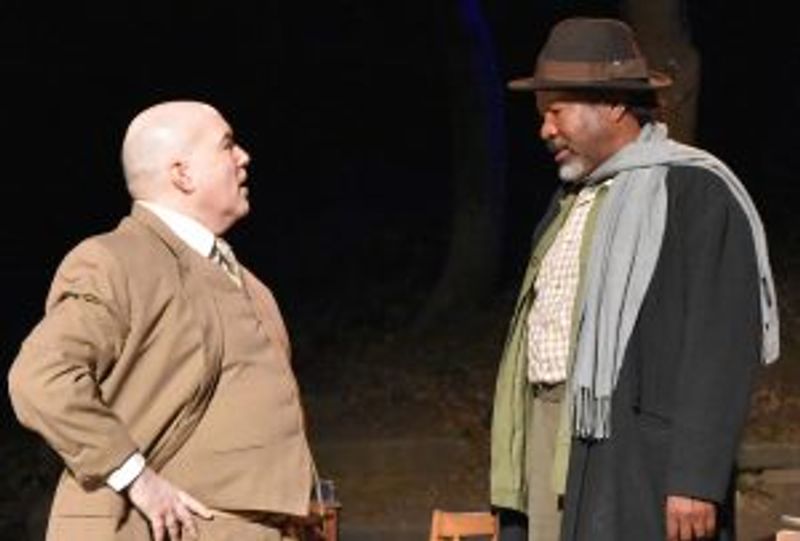
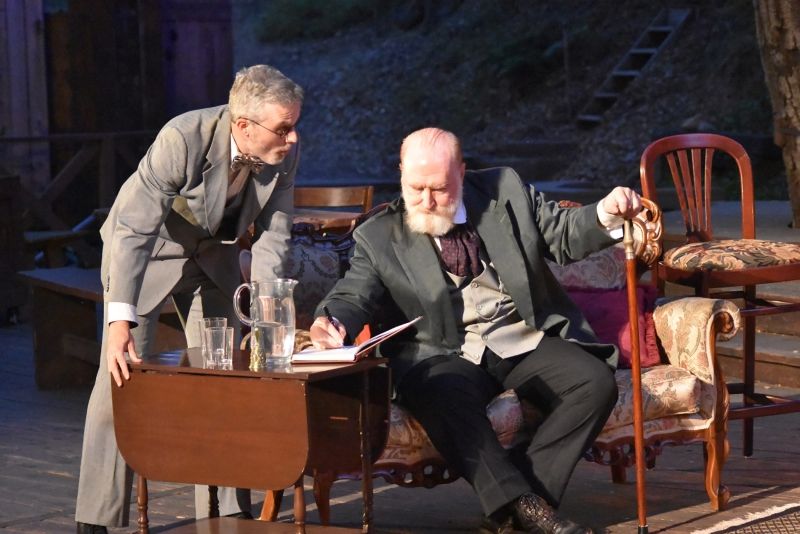
Brian Wallace and Gerald C. Rivers
How does this production bring the overlooked voices of women and families to the forefront during its labor struggles?
Galsworthy knew how to write women and understood the dynamics in families. He had an innate understanding of the deepest internal struggles in a society and expressed them in his characters and plays. The women’s scene is powerful as he shows all classes and ages expressing their place in society, their needs and the deathly consequences in the struggle for justice.
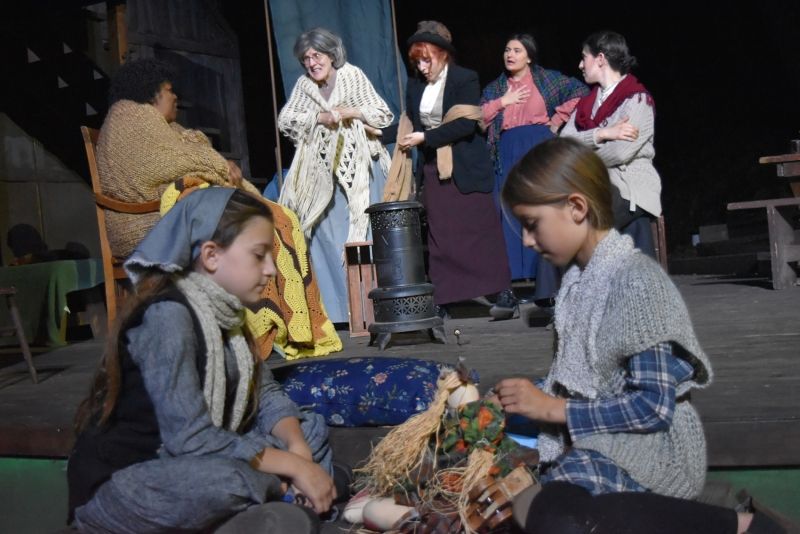
Foreground: Aralyn Wilson, Georgiana Swanson
Background: Earnestine Phillips, Susan Stangl, Annie Reznik, Rebecca Oca-Nussbaum,
and Aubrey Sage
The play explores the tension between justice and compromise. What do you hope audiences take away about that fragile balance in today’s world?
That when it becomes only about “which side are you on,” negotiation takes longer and, invariably, it’s those who don't have money who suffer. All sides need each other, and hopefully you have leaders who have empathy and understand this.
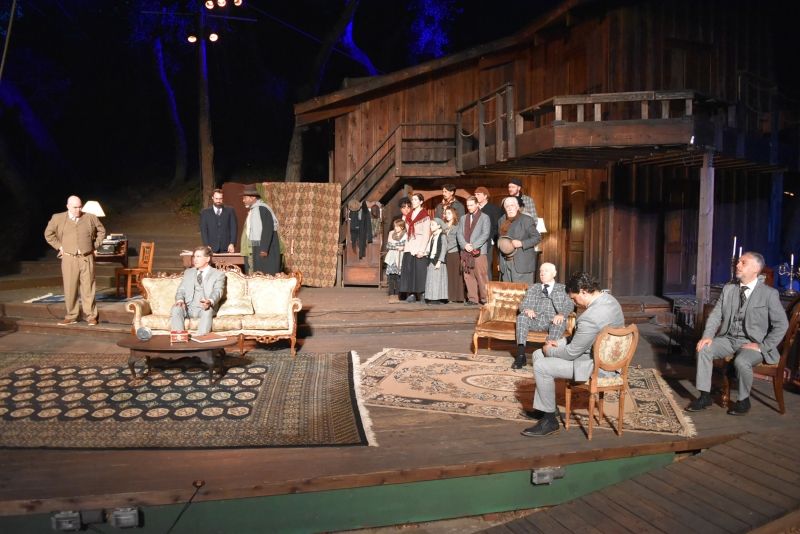
The large ensemble features both veteran Theatricum actors and younger performers. How did you approach working with such a wide-ranging cast for a story of this scale?
Let them create the world of the capitalist and the worker beginning to embrace what a union meant at the end of an exhausting strike. The rehearsal periods were about sharing on the part of the older character actors, and the birthing of the younger actors’ understanding of what it means to taking a stand in community, for justice and equality. It was a wonderful process. It took the two of us. I usually worked with the character actors, and my daughter had a direct line to the younger members. What we can afford for rehearsal time is short for a play of this scale. Working together made this possible.
Theatricum has a long tradition of socially conscious productions, rooted in your father, Will Geer’s legacy. How does Strife connect to that history of art and activism?
Our family understands being ostracized and kept from work and struggling for survival because we lived through the American blacklist of the late '40s early '50s. That experience creates a caring and understanding of humanity and a deep desire for equality. For the joy of sharing stories and showing the next generation how theatre and song teach and help even the darkest soul.
.jpg?format=auto&width=800)
Andy Stokan, Franc Ross, Brian Wallace, Gerald C. Rivers, and Sam Cowan
Performing in repertory is demanding on actors and audiences alike. What unique opportunities does that structure provide for a play like Strife compared to a traditional single-run production?
Repertory theatre that includes education for all ages creates community. Community encourages empathy and care about others. Rep theatre is more expensive, and that is why there aren't more today. I long for the time when patrons existed — in other words, you gave because it was embedded in society that theatre creates community.
Have you worked with most cast members before at Theatricum? If not, how did you hold auditions?
We have open auditions every spring with the directors for all the selected plays. We are under a union contract with Actor's Equity. We have apprentice programs for those starting out. We train up in staff, crew, technical, acting to give Theatricum longevity. We serve.
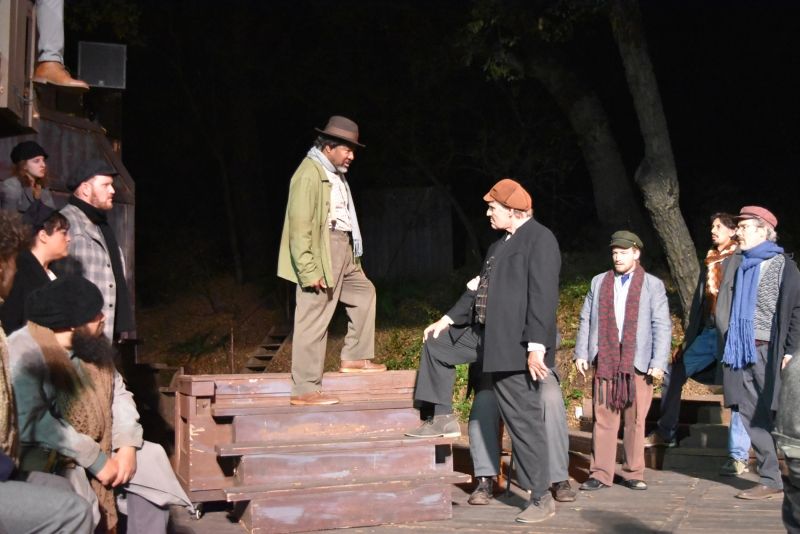
Gerald C. Rivers, Tom Allard, and Ensemble
If John Galsworthy could see this production, reimagined in America’s industrial past but speaking to today’s struggles, what do you think he would say?
He might be shocked that humanity hasn't gotten any farther in the labor negotiation arena! Steps are taken in every generation, but oh so slowly! Two steps forward and one step back! Still amazed women don't have equal rights in the U.S.A. I know women's values within the government could help this generatio
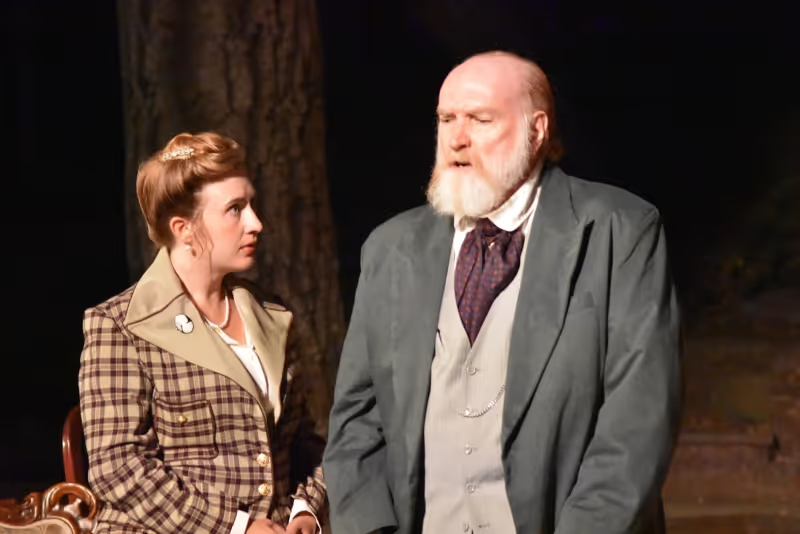
What do you hope audiences walk away thinking about regarding the financial strife being faced by women and families today?
We live in a country that doesn't have equal pay for women. or equality for immigrants and races other than white. We have a country that does not give health or equal education for all. We say with bells on that, “family is the most important thing in a person's life.” We say, “that’s all one realizes when at deaths door.” These thoughts are real. When our great nation acts on these basic values, things could get better. Galsworthy's play, “Strife,” recognizes life and resilience.
Thanks so much Ellen!
Thank you, Shari.
Strife is running in rotation every weekend with Shakespeare’s Much Ado About Nothing and A Midsummer Night’s Dream, along with The Seagull: Malibu, a free adaptation of Chekhov’s classic play, and Wine in the Wilderness by celebrated writer Alice Childress. Unlike most theaters in the L.A. area that stage continuous runs of a single play, Theatricum performs all five plays in repertory, making it possible to see all five in a single weekend. For more information and to purchase tickets, call (310) 455-3723 or visit theatricum.com
Strife continues to run in repertory through October 4 at Will Geer Theatricum Botanicum, located at 1419 North Topanga Canyon Blvd. in Topanga, midway between Malibu and the San Fernando Valley. Tickets to performances range from $15 to $51 with premium seating available for $64 ($60 cash at the door, subject to availability). The performance on Friday, Sept. 5 is Pay-What-You-Will (available online the week of the performance or pay cash at the door), and will also feature a 30-minute Prologue (pre-show) discussion beginning at 6:30 p.m.
Click for the calendar to all shows: https://app.arts-people.com/index.php?calendar=wgtb
Please note: The amphitheater is terraced into the hillside, so audience members are advised to dress casually (warmly for evenings) and bring cushions for bench seating. Patrons are welcome to arrive early to picnic in the gardens before a performance.
Photo Credit: Ian Flanders
Prefer BroadwayWorld in Google Search?


|
Good Night, Oscar North Coast Repertory (9/16-10/11) |
|
Catch Me If You Can Colony Theatre (9/17-10/18) |

|
Comics Reading Comics Dynasty Typewriter (9/13-9/13) |

|
Gershwin and the Golden Age The Soraya (10/11-10/11) |
|
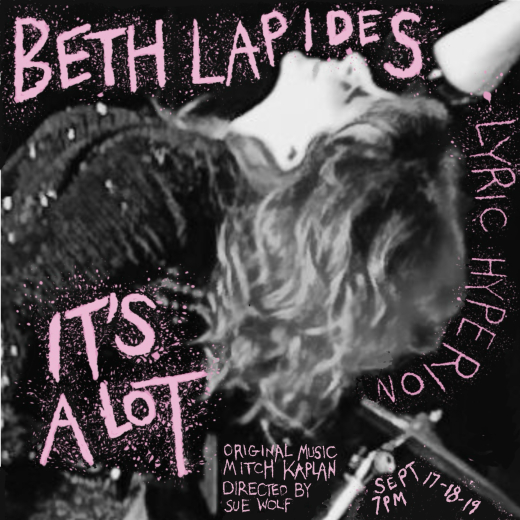
It's A Lot Lyric Hyperion Theater & Cafe (9/17-9/19) |
|
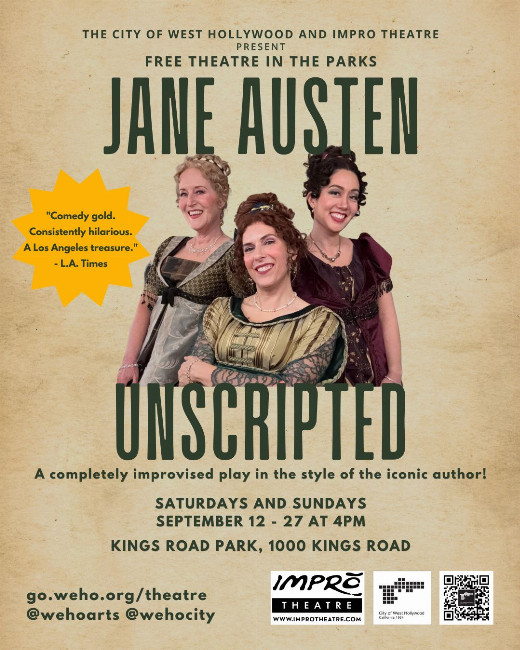
Jane Austen UnScripted Kings Road Park (9/12-9/27) |
|
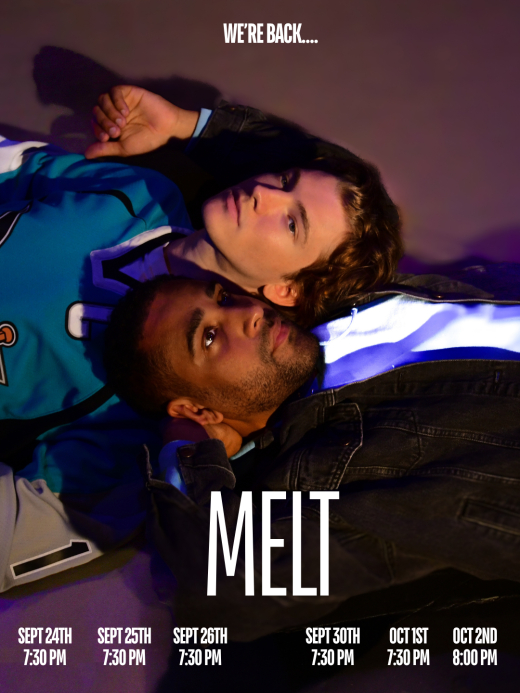
Melt : The Play The Marilyn Theatre at the Lee Strasberg Institute (9/24-10/02) |
|
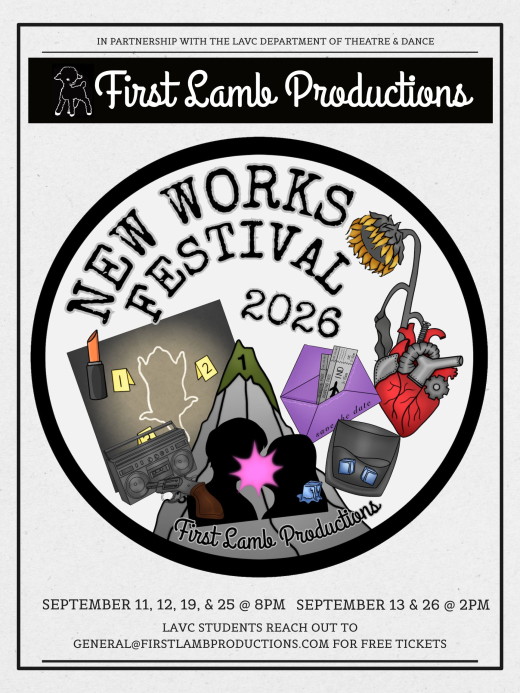
New Works Festival Shoebox Theatre (9/11-9/26) |
|
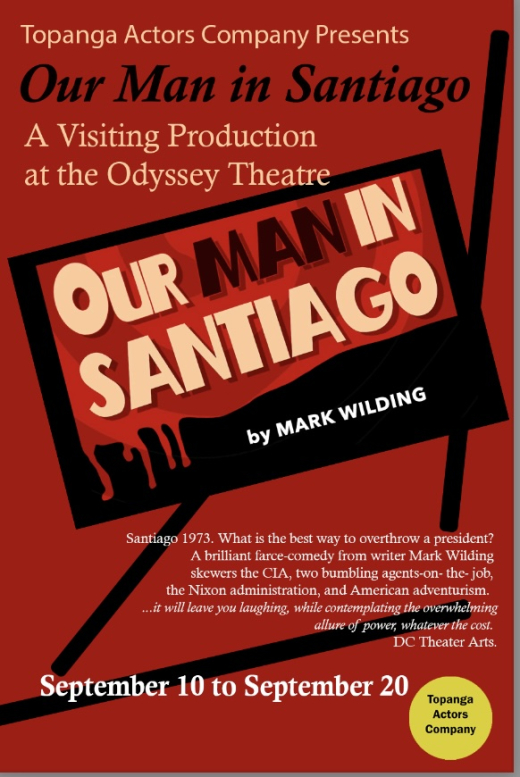
Our Man in Santiago by Mark Wilding Odyssey Theatre Ensemble (9/10-9/20) |

|
Worthy The Un-Erasable Solo Festival - Willie Agee Playhouse (9/12-9/25) |