


Interview: Dietrich Smith on AMERIKA OR, THE MAN WHO DISAPPEARED
by Open Fist Theatre Company at Atwater Village Theatre 10/17-11/22
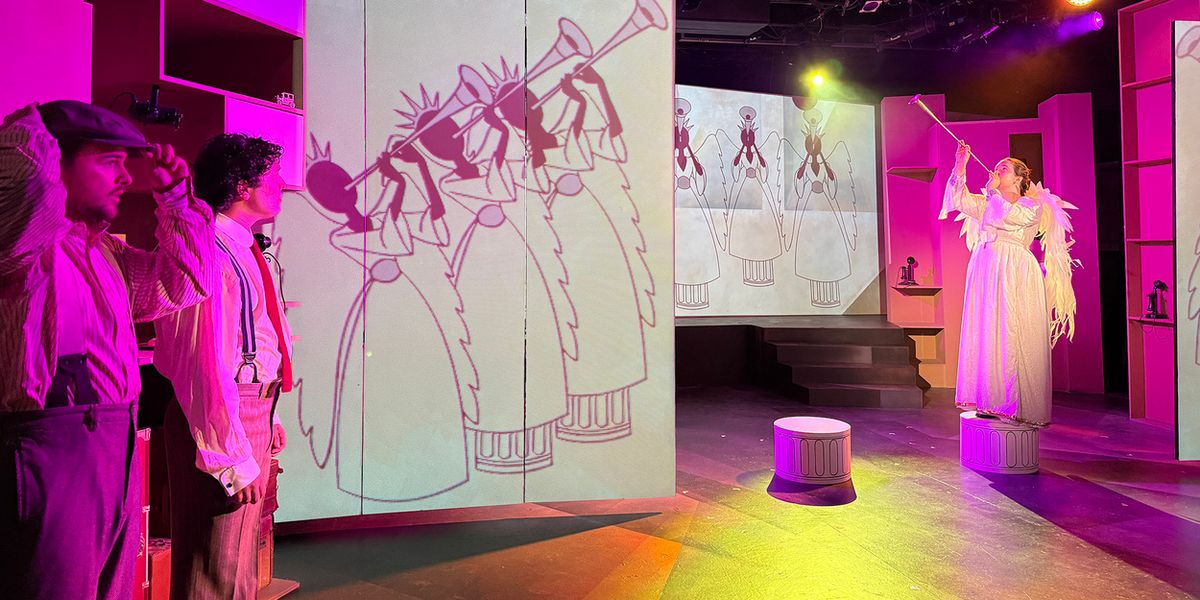
Open Fist Theatre Company presents the world premiere of Amerika or, The Man Who Disappeared, adapted from the novel by Franz Kafka by Dietrich Smith, who also directs. Arriving in New York City on a steamer after his parents banish him from Germany following a family scandal, 17-year-old Karl Rossmann strives to make his own way, even as he encounters a series of increasingly strange and bewildering experiences that turn his world upside-down.

I decided to speak with Dietrich Smith (pictured, courtesy of Open Fist Theatre Company) about his journey to adapt and direct the play, as well as his interest in Franz Kafka’s story.
Thanks for taking the time to speak with me, Dietrich. First, tell me about your educational journey that led you into the world of theatre.
I didn’t start working in the theater until the age of 40, after various stints in the worlds of film and television (film editor, screenwriter, television writer). I grew up in a small town on the Big Island and didn’t see my first professional play until I was a freshman in college (the original 1976 production of Pacific Overtures at the Dorothy Chandler Pavilion – I count myself lucky) and the hook was set. I spent the next 20 years a devoted theater junkie and when I found myself tired of the television treadmill, I threw off my shackles and ran away with the circus (that is, took some acting classes and joined Open Fist in its original home on La Brea). The next eight years as a member of that group were perhaps the happiest and most fulfilling of my life, acting in plays, directing plays, and programming seasons (I was the literary manager). The seemingly impossible dream of being part of a collective working toward a common artistic goal was finally achieved.
This is the world premiere of your own stage adaptation of Kafka’s Amerika. What drew you to adapt this particular novel? And how much time did it take?
I first picked up the book 35 years ago and was stunned to find out how funny Kafka was and how narratively inventive. I expected unrelenting grimness and instead found myself tumbling down an exhilarating rabbit hole. I instantly planted it in my memory bank as something to adapt into some dramatic form. When I became literary manager at Open Fist, I had two projects I wanted to realize – a Faulkner adaptation (which came to fruition when we produced Edward Kemp’s adaptation of As I Lay Dying in 2003) and Amerika. I never got around to Amerika then, but years later, when I had a little time on my hands, I realized I had to put up or shut up and wrote the first draft. I wasn’t able to return to it until years later, but finally got to a workable draft three years ago. We had a successful staged reading and now here we are.
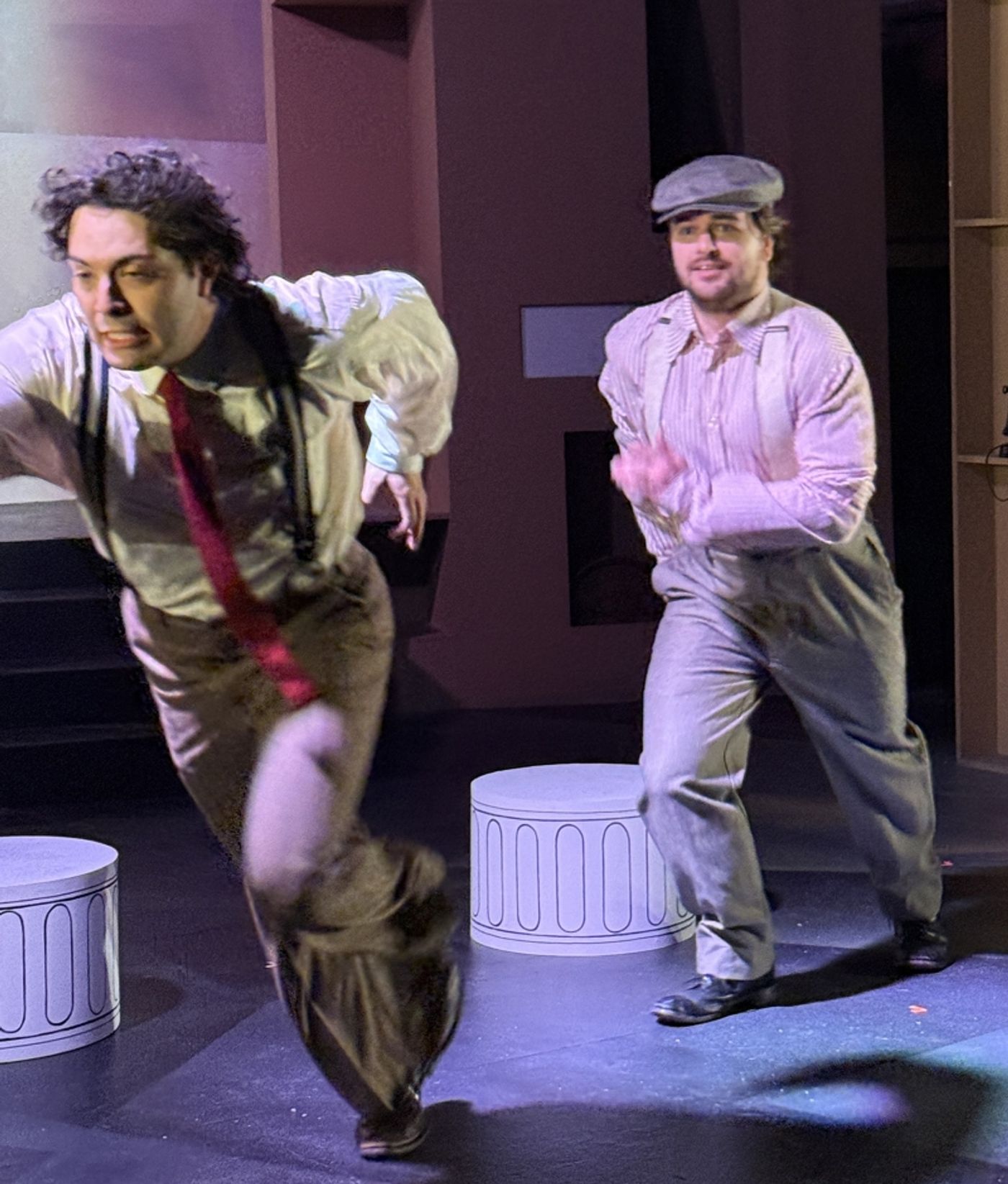
Ethan Remez-Cott and Matthew Goodrich
Photo by Amanda Weier
Since you’ve said Amerika was the first Kafka work you ever read, what about it hooked you and stayed with you over the years?
While I initially responded mainly to its humor and inventiveness, the story of a young man trying to navigate a strange land that lifts him up and then crushes him over and over again acquired even more resonance as I got older. The book came to seem not just a young man’s (mis)adventure story, but in fact the story of a full human life compressed allegorically into a few short months. All of us find ourselves navigating similarly unpredictable terrain as we make our way through adulthood and beyond. The world is an unforgiving place.
Yes, it certainly can be. Since Kafka never visited America, why do you think he set his novel in New York City?
Well, New York is sort of the epicenter of America, isn’t it? I know that may seem strange to say now when populations and centers of commerce and culture are distributed so widely across the country, but in some mythic way New York has always been its Emerald City. And at the time, it was the point of entry for all immigrants – the home of Ellis Island and the Statue of Liberty. And the novel is not limited to New York. Karl leaves the city pretty early in the story.
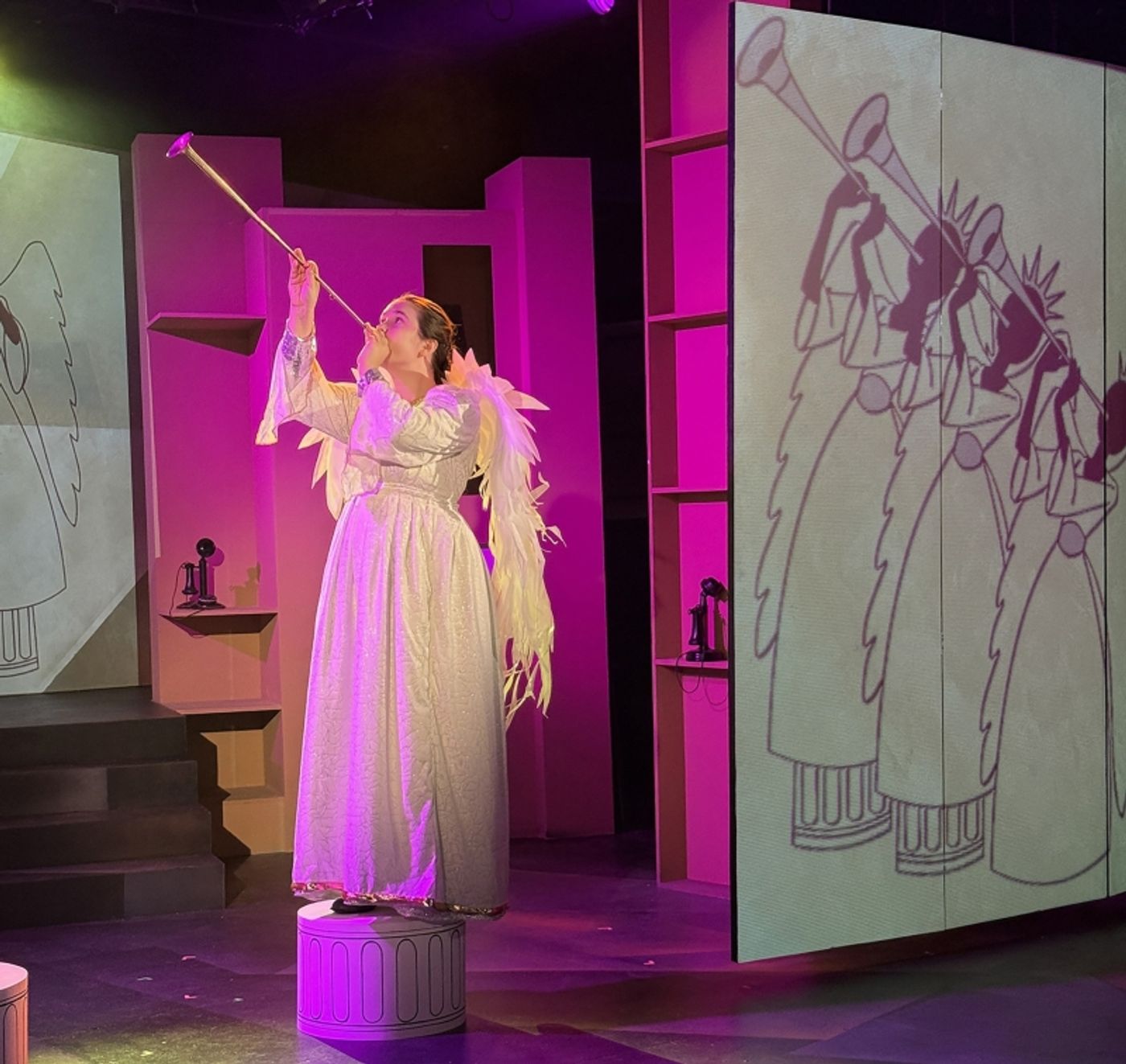
Grace Soens
Photo by Amanda Weier
How do you approach staging his imagined version of America for today’s audiences?
I suppose the same way I would have staged it decades ago. It traverses a lot of locations and demands a versatile performance style and the ability to change place and time on a dime. The story cannot slow down for a second, it needs to continually move forward. So the scene setting is minimal, the telling of the tale depending primarily on the actors and a few visual and sound cues. It’s not a “realistic” story anyway, so one is liberated from treating it as such.
You’ve described the book’s “youthful, adventurous, comedic spirit.” How did you balance that energy with the darker allegorical undertones of Kafka’s writing?
I chose to emphasize the comedic element up front and let the darker undertones swirl around and emerge when they could no longer be contained. Which is not so different from the way it’s handled in the novel.
Dickens was one of Kafka’s inspirations for this story. How does that Dickensian style show up in your adaptation and direction?
The approach to performance style is definitely in the Dickensian vein. I told the cast to approach their roles the same way they would if they were acting in Nicholas Nickleby or Oliver Twist – as people who were absurdly larger than life.
The play follows Karl Rossmann, a 17-year-old immigrant. How does his journey resonate with contemporary conversations around immigration?
The theme of immigration (or anti-immigration) is not a new one. We are now in a feverish moment of collective insanity about immigrants, it’s true, and the immigrant experience has become particularly harrowing. But this country has always had an undercurrent of resentment towards migrants that occasionally erupts into full fury when someone in or desirous of power feels like stirring it up. (I remember a mania about immigration back in the early 90s, when I first read the book.) Karl is a German Jew from Prague, and in the 19th century and on into the 20th, German immigrants (and Italians and Irish, etc.) were irrationally resented about as much as Latinos and Muslims are now.
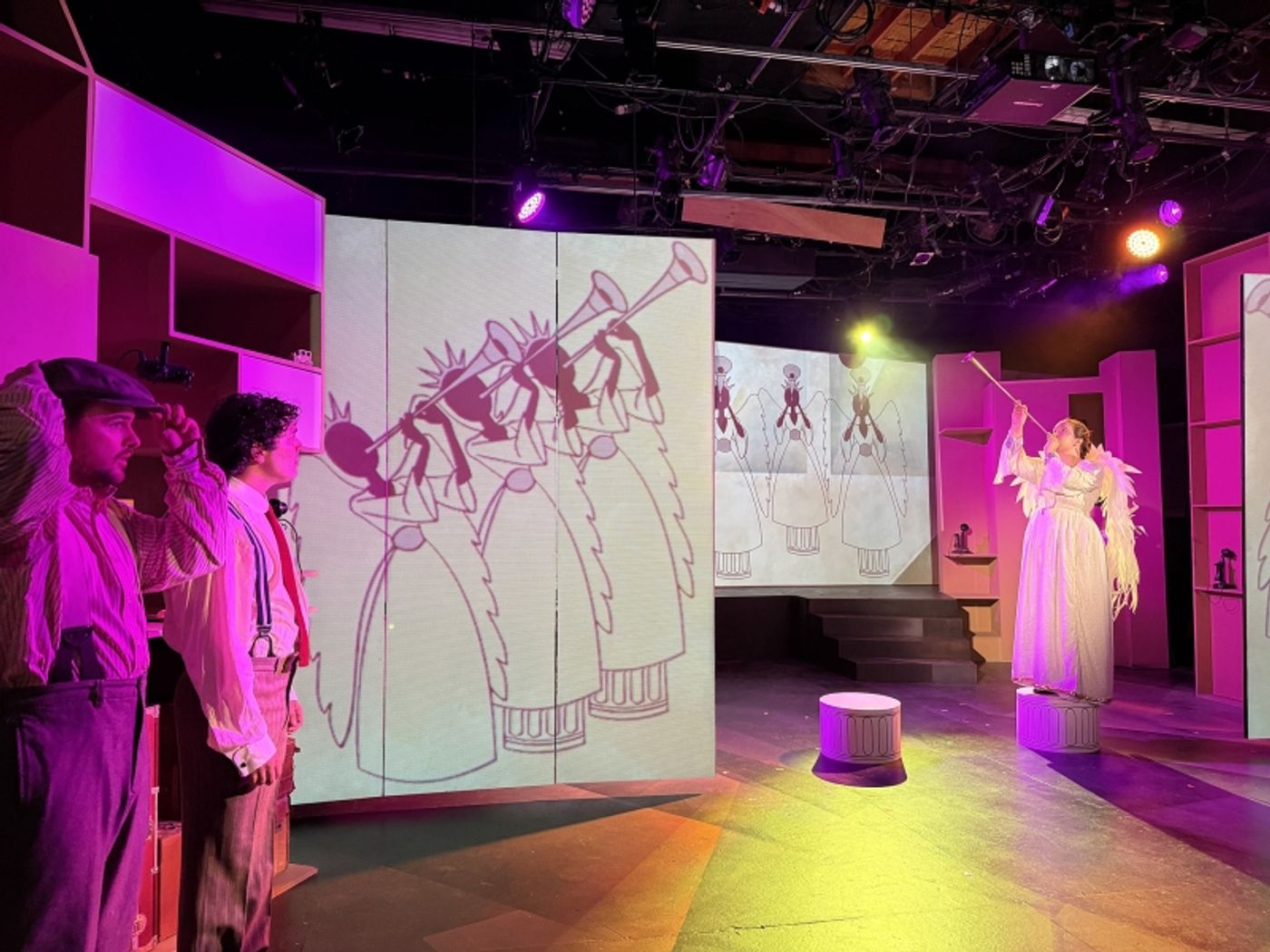
Matthew Goodrich, Ethan Remez-Cott, and Grace Soens. Photo by Amanda Weier
Karl’s journey follows its own idiosyncratic track but is no less rocky than that of any other American throughout history. And even though I do not think immigration was at the forefront of Kafka’s mind when writing the novel (whose impetus seems to me to have been much more personal), his choice to put a sword rather than a torch in the hand of the Statue of Liberty is revealing...and it gives what commentary there is on the subject prescience and timelessness.
Your production brings together a large ensemble cast who portray several characters, with Ethan Remez-Cott portraying Karl Rossmann. How did you decide which actor in the ensemble would take on which characters? (Tambrie Allsup, Matthew Goodrich, Marc Jablon, Kelsey Kusinitz, Jeremy Reiter II, Debba Rofheart, Chima Rok, Jade Santana, Jack David Sharpe, Grace Soens and Jeremy Thompson)
The same way I’ve always cast. They auditioned for various roles, and then I distributed the parts based on what I thought each could play best.
Have you worked with any of them previously. If so, where and when?
I am returning to theater after a long hiatus, so no. While most of these actors are members of Open Fist and have worked together on multiple occasions and know each other well, I am new to this particular fold. So, I’m discovering what they’re all capable of for the first time, which is also a joy.
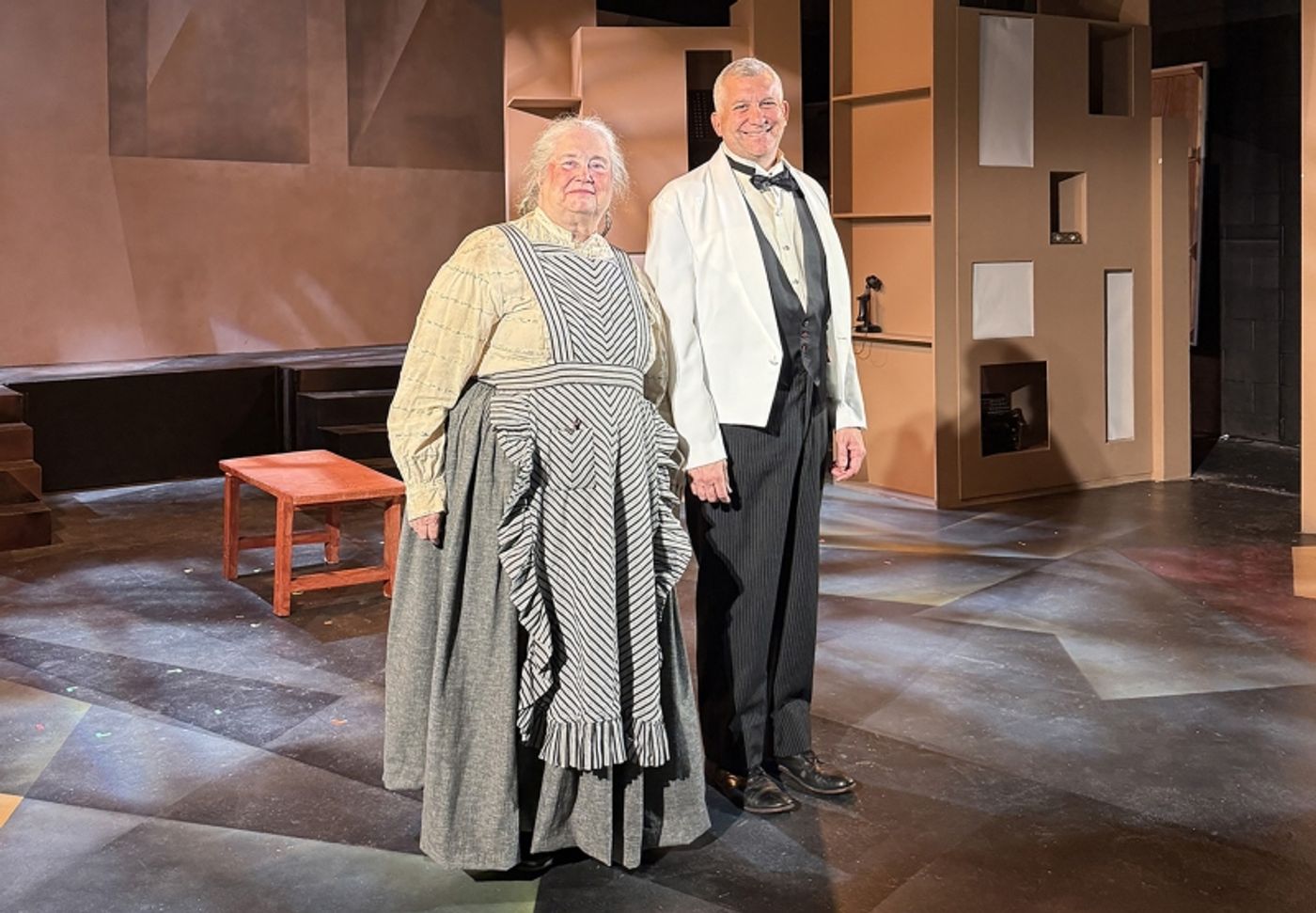
Debba Rofheart and Marc Jablon
Photo by Amanda Weier
Amerika features a soundscape by seven-time Academy Award-winning sound designer Gary Rydstrom and animation sequences by John R. Dilworth. How did those artistic partnerships shape the world of this play?
Gary and I talked very early on about how we were going to sonically portray the many, many locations and psychological states traversed in the story – he broke the script down into the smallest of pieces and wrote pages of ideas for what sounds could achieve those ends, and often not sounds you would expect. It forced us both to very specifically imagine what each of these places were, how they were connected, and how they affected Karl.
It wasn’t just a design approach, it was a storytelling approach, and it had a huge impact on the staging concept. And on the less ethereal side, he created some stuff that is just a hell of a lot of fun – there is a sequence set in a row of elevators that is accompanied by one of the most astonishing matrixes of God knows how many intricately layered sounds I have ever heard. It is a wonder.
And John found himself immediately drawn to Kafka’s own sketches, insisting that we use them as the basis for the animation (which serve as bridges between locations). Like the drawings, they are black and white and simple in design – though in John’s own inimitable style. We obviously had to begin planning these sequences long before rehearsals began, and so a large part of the show’s design took off from how best to display and mirror the playfulness of the animated sequences as they started coming over the transom. Without these, it would be a very different production.
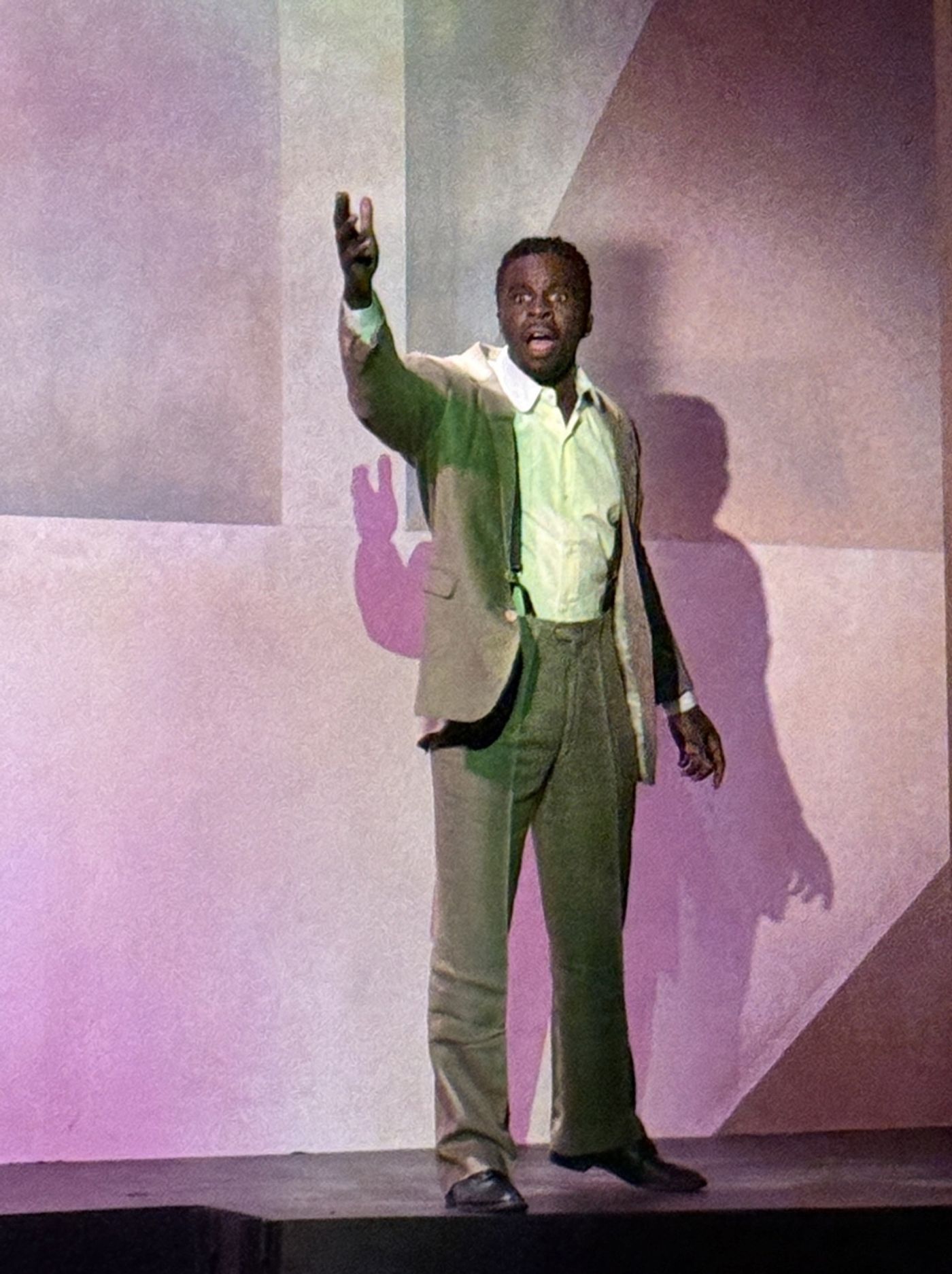
Chima Rok
Photo by Amanda Weier
Kafka left Amerika unfinished. How did you decide where and how to end your adaptation?
That was indeed the challenge. Who am I to “finish” a Kafka story? At first I didn’t dare, but it became clear with subsequent drafts that I was going to have to conclude it somehow. And finally, once I had spent a good amount of time with the material, I came up with something that seemed to carry the story’s themes forward without violating them – that was true to the rest of his canon and yet expressed what, to me, is the unstated trajectory of the book. I cannot with any confidence say that Kafka would have approved of it, but this play builds to a climax and has a very definite ending.
Open Fist Theatre Company is known for bold, socially aware work. How does this adaptation fit into the company’s mission?
When I was helping to program seasons as Open Fist’s literary manager long ago, our approach was typically: 1) Does the play, no matter when it was written, have current relevance; 2) Does it have depth and breadth; 3) Does it have humor. My own preference was for novelistic works – and by that, I don’t mean literal adaptations of novels, but simply works that had a large group of characters, some psychological heft, a variety of tones and colors, and a story with meat on its bones. It would be a little hubristic of me to declare that my own play fits those criteria, but it was certainly my intention and it has seemed to resonate with people so far. Let’s hope it does for our audiences.
What do you hope audiences carry with them after seeing Amerika or, The Man Who Disappeared?
I always have a hard time answering these sorts of questions about my own work. I feel like playing the Harold Pinter card and just saying, “I don’t know.” My own personal approach to the story, beyond its humor, was Karl’s obsession with justice – a sense, instilled in him he says by his (cruel) father, to carefully parse every situation in order to determine where the guilt truly lies, a guilt he often concludes lies in himself. I took this more from Kafka’s own life, his diaries and his other works – it is only dimly present in the novel itself, but it is what propels Karl’s narrative in the play and what gives it a conclusion. I don’t know if that answers the question, but it’s what I carry away from it.
Anything else you would like to share about yourself or the play?
It’s been a long damn road.
Many thanks!
Thank you, Shari.

Amerika or, The Man Who Disappeared runs October 17 through November 22 on Fridays at 7:30 p.m., Saturdays at 7 p.m., and Sundays at 2 p.m. There will be one additional performance, on Monday, Oct. 20 at 7:30 p.m. Tickets range from $26 to $45. Atwater Village Theatre is located at 3269 Casitas Ave., Los Angeles, CA 90039. Parking is free is in the ATX (Atwater Crossing) parking lot one block south of the theater. To purchase tickets and for more information call (323) 882-6912 or go to https://openfist.org/


|
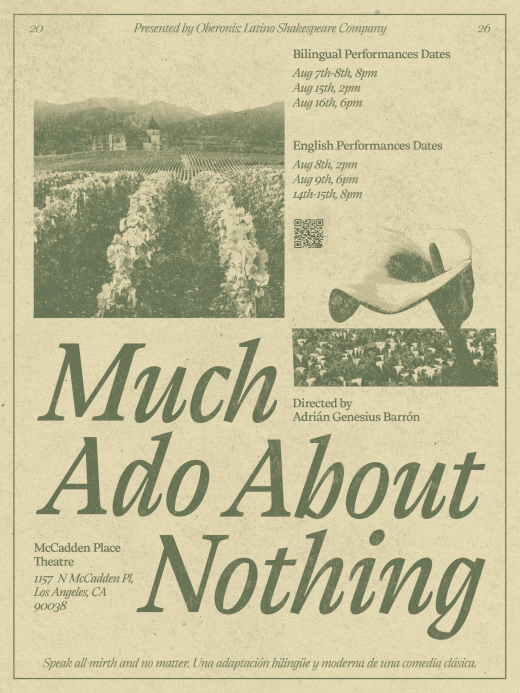
Much Ado About Nothing McCadden Place Theatre (8/07-8/16) |
|
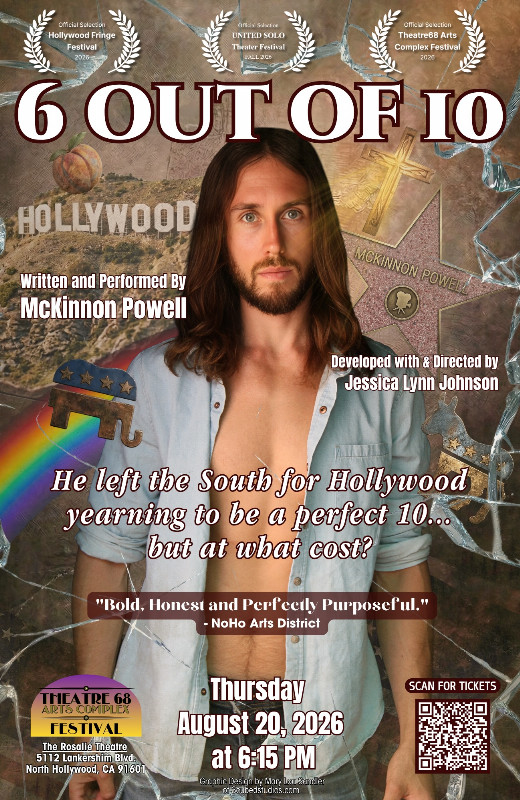
6 Out of 10 Theatre 68 (8/20-8/20) |

|
After the Blast The Broadwater Second Stage (8/05-8/13) |

|
Catch Me If You Can Colony Theatre (9/17-10/18) |
|
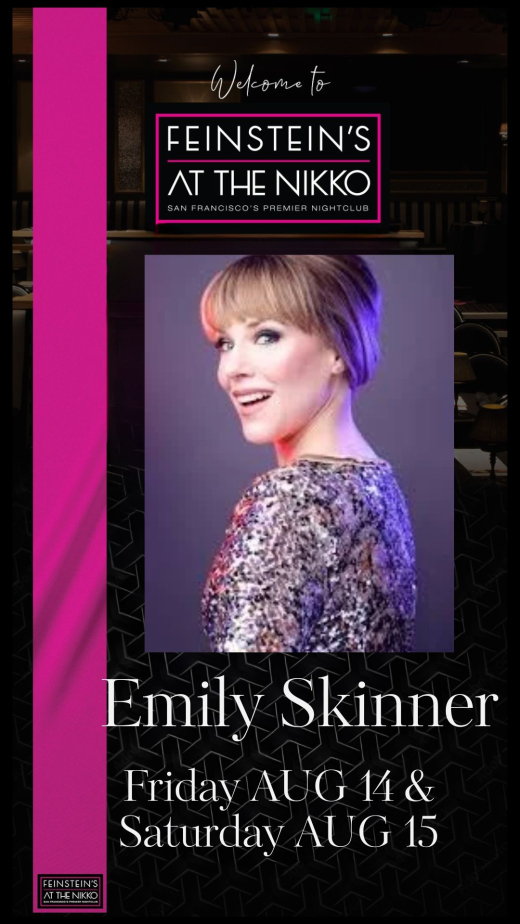
Emily Skinner: In Concert Feinstein's at the Nikko (8/14-8/15) |

|
Gershwin and the Golden Age Younes and Soraya Nazarian Center for the Performing Arts (The Soraya) (10/11-10/11) |

|
John Lloyd Young Feinstein's at the Nikko (8/21-8/22) |

|
Love, Loss and What I Wore Sawyer's Playhouse (8/08-8/30) |
|
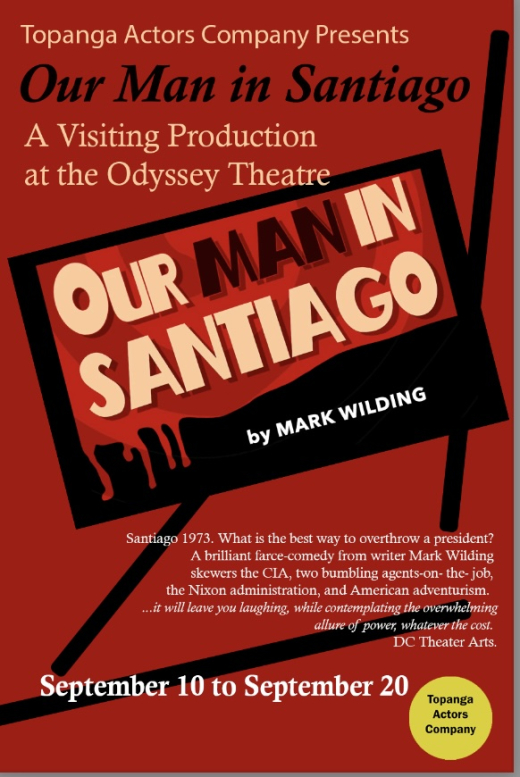
Our Man in Santiago by Mark Wilding Odyssey Theatre Ensemble (9/10-9/20) |

|
OTR: A New Play OTR: A New Play (11/23-11/27) |