


Interview: Christopher William Johnson of HELLAS at Broadwater Main Stage
A two-part saga about the birth of western civilization and democracy
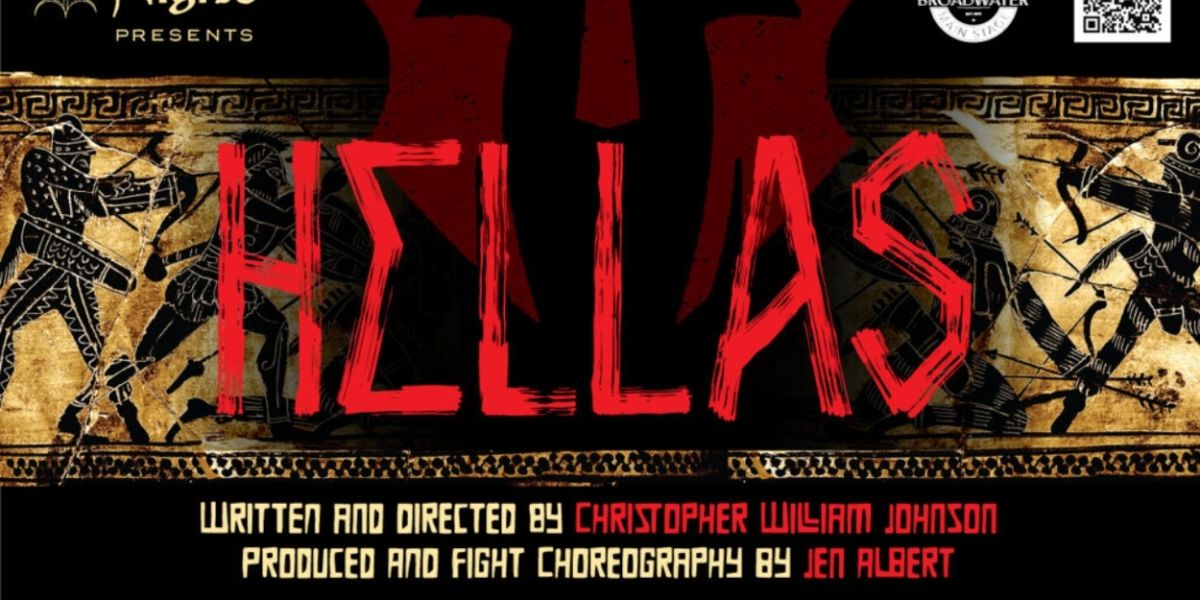
Spanning decades and centering over a single day, the birth of western civilization and democracy takes form in the Greek epic, Hellas. The story is vast, split into two parts, told in verse, mask, rhythm, dance, and stage combat. Produced by School of Night, this sweeping, visceral production with a cast of twenty-three is set in early fifth-century B.C. when a tiny, backward, and disunited region faced invasion by the mightiest empire the world had ever known ... and triumphed.
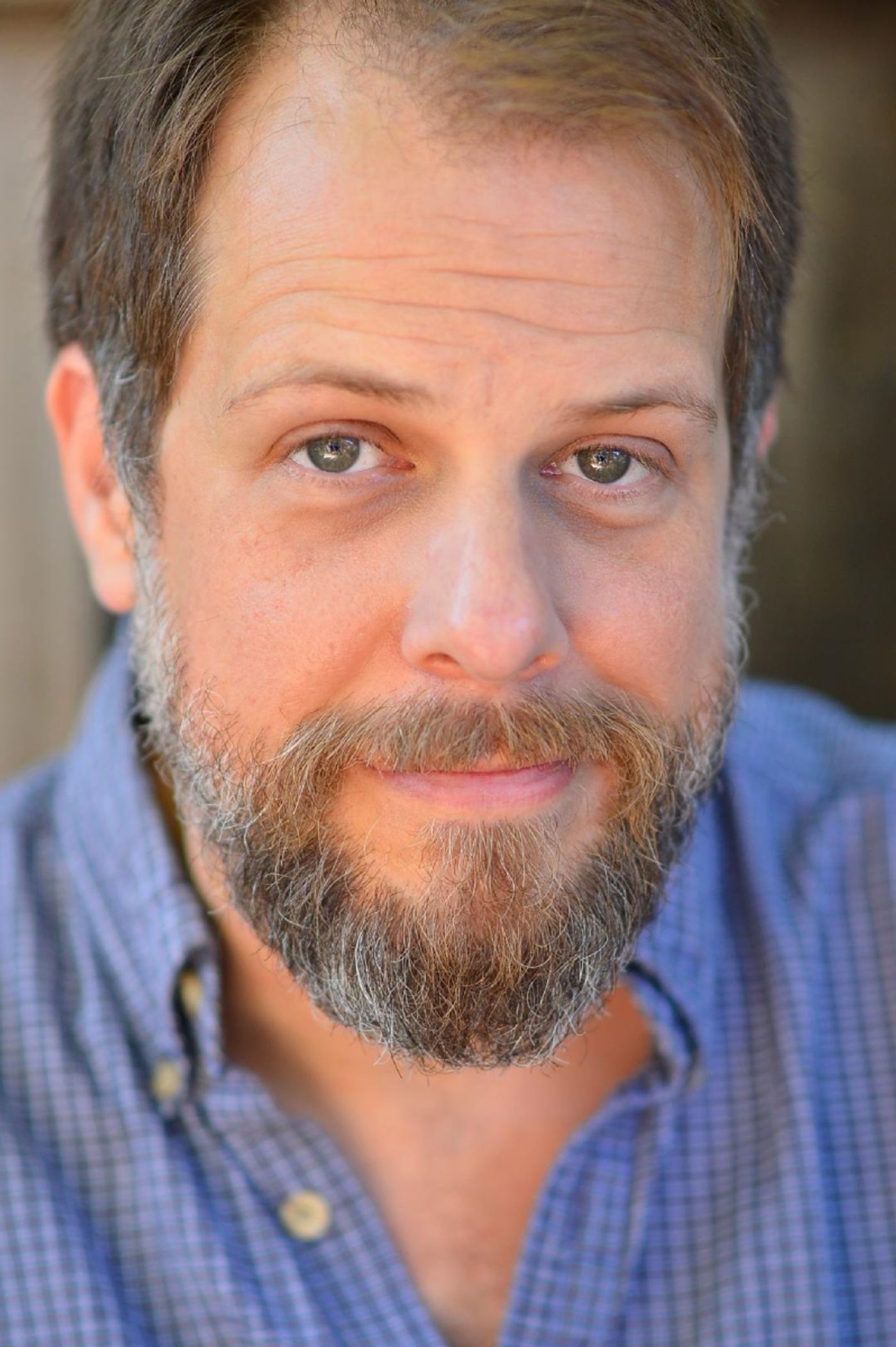 I decided to speak with Christopher William Johnson (pictured), the playwright and director of Hellas, about his epic creation process and challenges of presenting the complete saga (with three intermissions) on weekends at the Broadwater Main Stage theater through May 11.
Hello Christopher, and thanks for speaking with me about Hellas. First, please tell me about your theatrical experience within the Los Angeles theatre world.
First off, both Jen Albert (my wife and School of Night co-founder) are veterans of the Chicago off-Loop theatre scene which we credit with having instilled our work-ethic and high artistic standards. I was the founding artistic director of Chicago’s Defiant Theatre (1993-2004) and Jen was a founding company member of Babes with Blades, the renowned all-female fight company. When we moved to LA both she and I spent a few years dipping our toes in the local theatrical waters, her acting and me stage managing around town.
Our first collaboration as director and fight choreographer was on the Production Company’s Henry VI Part I (still the biggest fight show that we’ve ever done with roughly a dozen battles total). Jen and I also collaborated on Theatre of Note’s Entropy and Marion or the True Tale of Robin Hood. In 2016 Jen and I started producing as the The School of Night with our Hollywood Fringe production of Punch and Judy. That was almost a decade ago and we’ve done roughly one show a year ever since, progressively expanding in size and scope each time we produce.
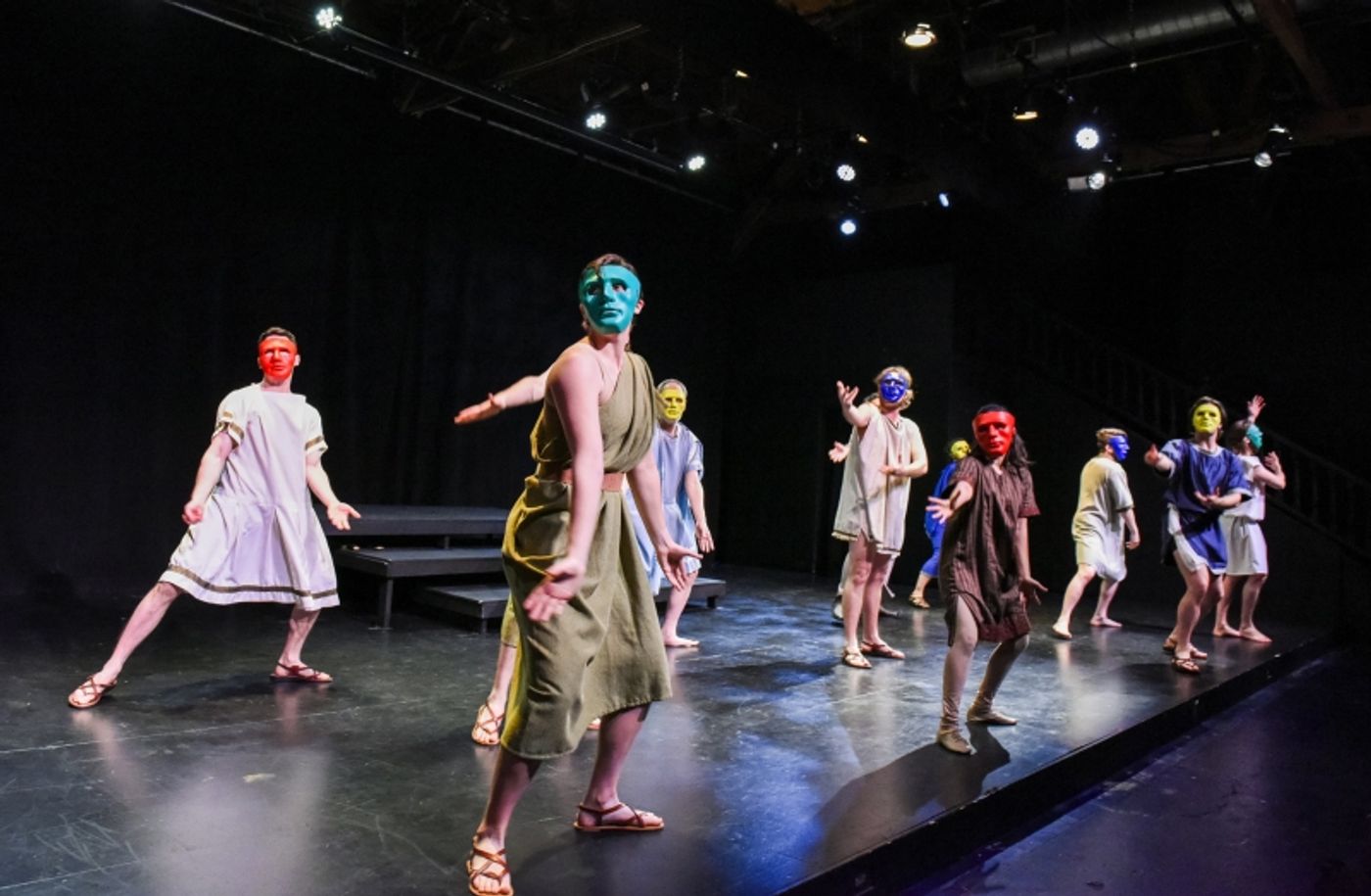
Aeschylus choral ode
What drew you to make the huge commitment to create and direct such an epic stage production?
Jen and I have been talking for several years about doing an ancient style all-day theatre event. We were discussing a complete Shakespeare Wars of the Roses cycle (Henry VI Parts 1, 2 and 3 plus Richard III), but that always remained a bit daunting in terms of the rehearsal time that would be required and the logistics of performing it. I’d guestimate the run time on that at around 8 hours.
How long did you take to write it? And what was the most challenging part of its creation?
It took about a year from very start of writing to the beginning of rehearsals. The hardest part was, as it always is, slogging on through the early stages of writing when it all feels like a giant mess that will never be finished.
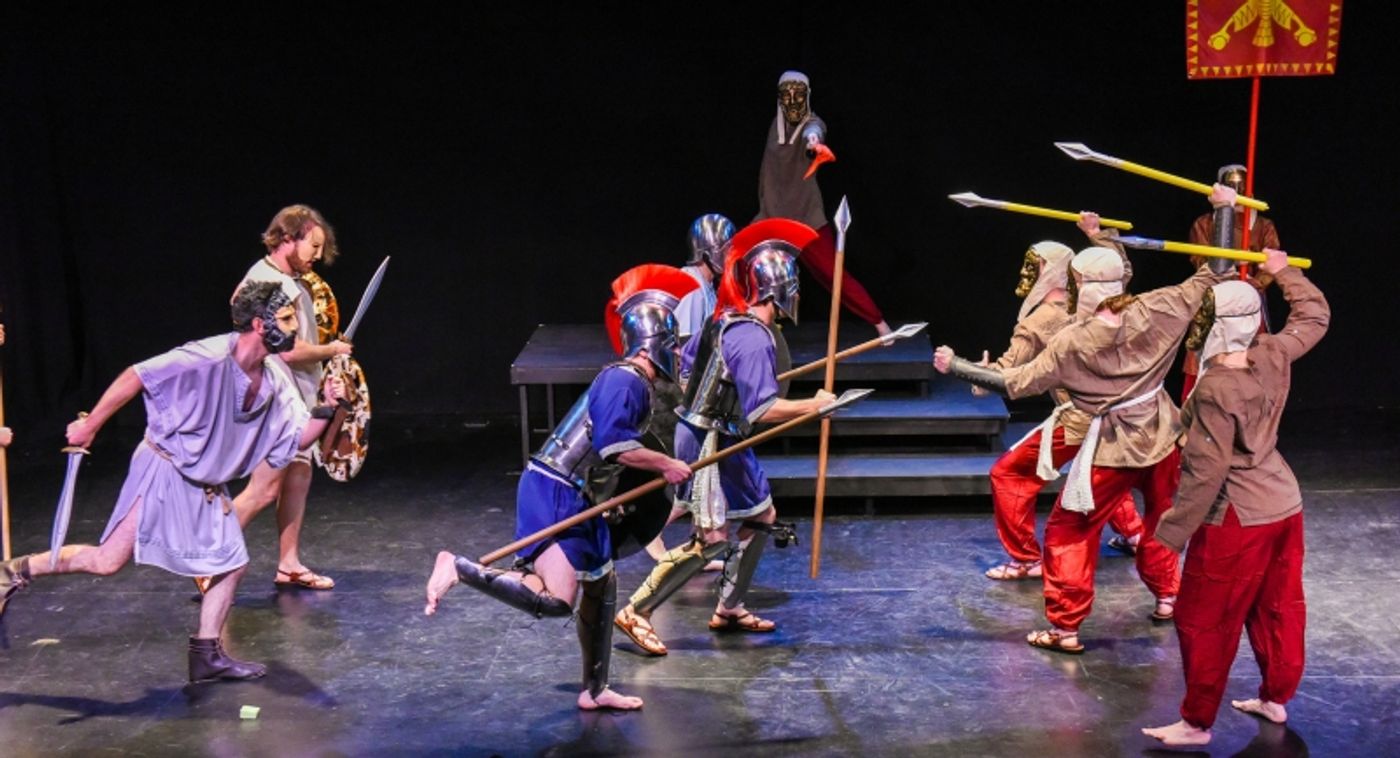
Athenians vs Persians in Battle of Marathon
Did you know from the beginning how long the production would run?
It runs five-and-a-half-hours. But yes, we always knew it was going to clock in somewhere in that neighborhood.
Was there any discussion of lessening its length while being written?
I did cut it down from its final and current length. But whereas scripts usually tighten as they shorten, this one didn’t. As I cut stuff, it made it feel less rich. The connections and the themes/situations that return at intervals throughout the show really do pay off. And the amount of detail made possible by the longer length enriches the experience. Ultimately, I ended up restoring a bunch of what I had cut, and I have no doubt it was the right decision since it plays better at its full length. It feels really and truly epic, like history, and you really get to see the characters grow and evolve.Daniel Adomian and Colin Borden
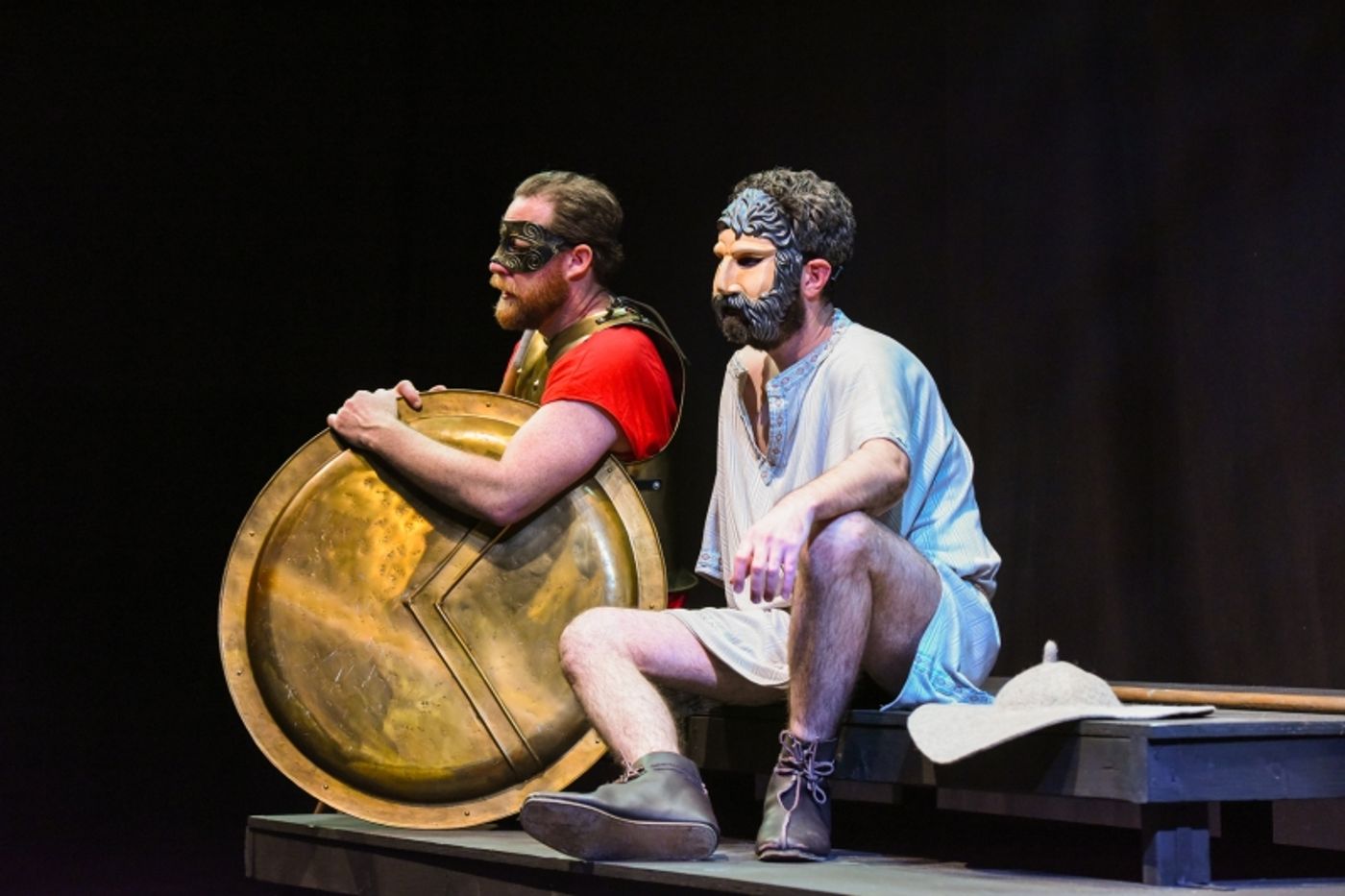
Daniel Adomian and Colin Borden
What is the basic storyline theme?
Hellas is a drama exploring flawed but resilient humanity, of vendetta and great battles fought upon land and sea, of oaths and betrayals, familial trauma and struggle, friendship, loyalty, love, and sacrifice. It’s also a tale of the invention of theatre itself by a firsthand witness and participant, the Athenian playwright Aeschylus, while encompassing the evolution of societal structures, revenge along with unlikely alliances, and an emerging system of justice.
When (or why) did you decide to present it in two parts instead of just offering the complete saga in one day?
The story is vast, split into two parts of compelling entertainment offered in different formats to better please audiences. Weekend performances offer the complete saga (with three intermissions), and Friday night performances offer viewing choices of Part I or Part II on alternating weeks. Hellas is a marathon theatrical epic, presented as in ancient Greece, depicting the story over a single day, illustrating both the strength and fragility of democracy.
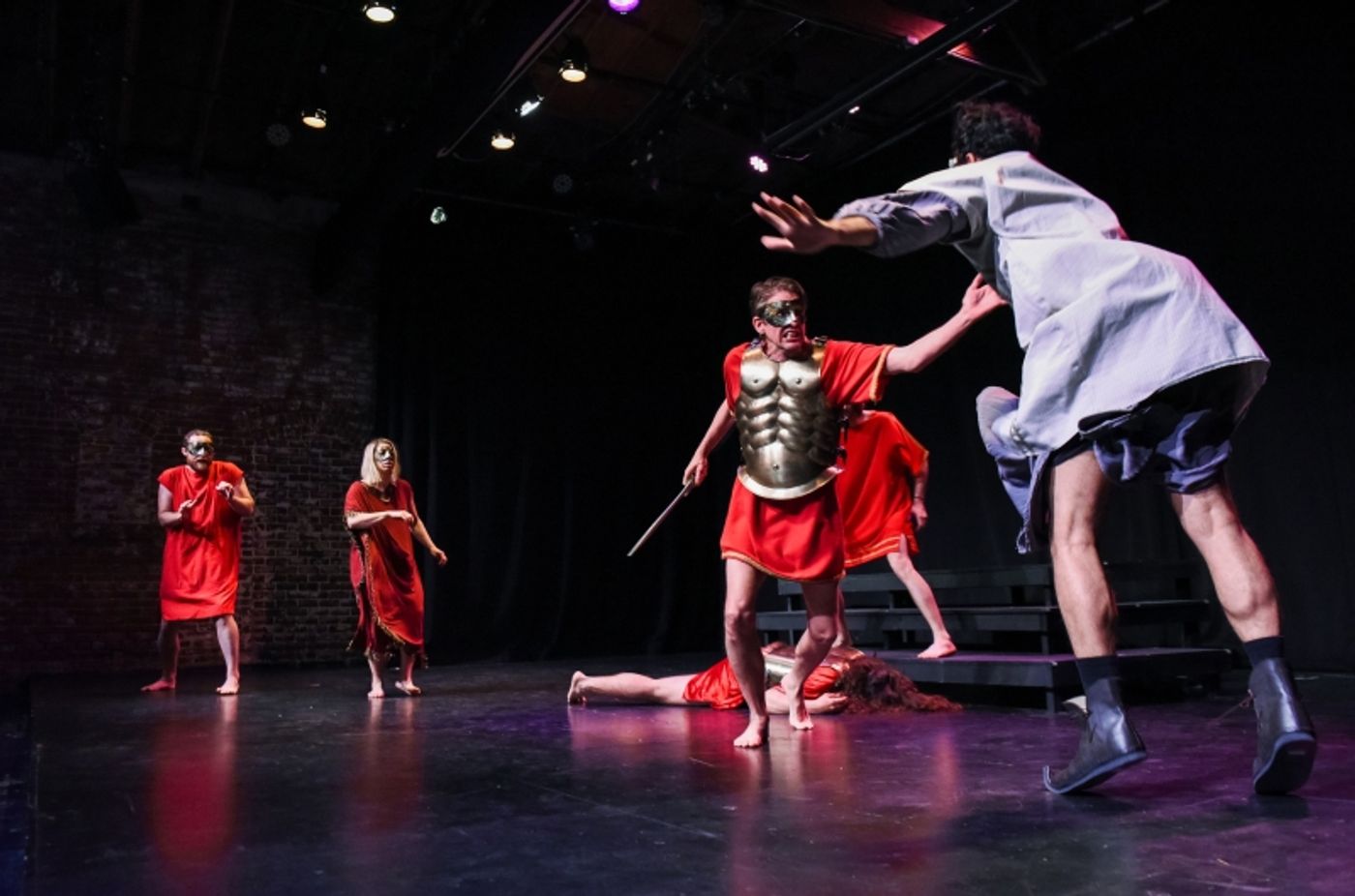
Daniel Adomian, Sara Gorsky, Sebastian Sage, on the ground Rich Dally lll, Anand Mahalingam
Tell me about the major characters involved in telling the story.
Basically, the major characters from Herodotus’s History. On the Greek side it’s Athenian grifter-turned-politician Themistokles, the privateer-turned-General Miltiades, the Spartan King Leonidas and his wife Queen Gorgo. On the Persian side it’s King Darius and his heir Xerxes, the scheming Queen Atossa and the female Admiral Artemisia.
Who are the actors portraying those roles and have you worked with them before?
Colin Borden is Themistokles, Jordan Liebowitz is Miltiades, Daniel Adomian is Leonidas, Sarah Gorsky is Queen Gorgo, Thomas Bigley is Darius, Scott Bartling is Xerxes, Sam Dawn Alden is Atossa and Jen Albert is Artemisia. Three of these are first-timers with us (Jordan, Thomas, and Scott) and the rest are returning veterans of previous School of Night shows. Our casts usually break out that way, about half returning vets and half newbies.
With a cast of twenty-three actors, what became the most challenging part in staging Hellas?
Scheduling rehearsals that everyone could make.
How did you go about casting so many parts?
First, we contacted the veteran actors from our previous shows who we wanted to get involved, some over a year out as schedules are difficult to square away in LA. We started auditioning a few months before the start of rehearsals and kept auditioning until all the roles were cast. In this case, we were still casting roles about a month into the three-month rehearsal process. Finding dedicated stage actors with classical chops is harder in LA then you would think (and that it ought to be).
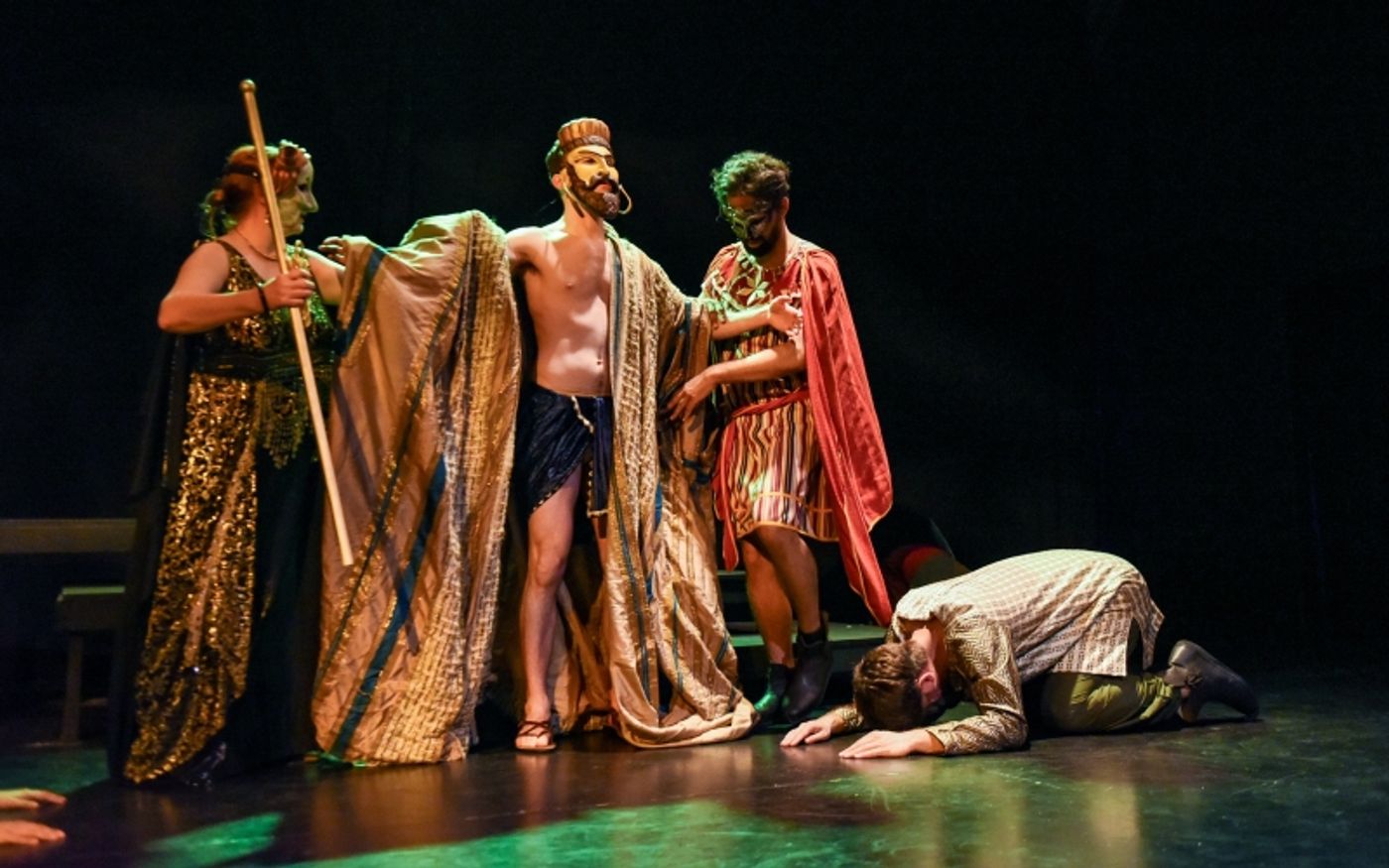
Dawn Alden, Scott Bartling, Anand Mahalingam, Tristan Rewald
Tell me about working closely with a choreographer and/or fight director to stage the battle scenes.
Jen has been my fight choreographer ever since we started producing in LA. Being married and long-time collaborators, we have managed to develop an efficient and effective shorthand. She knows what I like and am looking for. Basically, I design the overall storyline and physical flow of the fight or battle and Jen fills in the specific fight choreography to tell that story. She also takes into account whatever tone or aesthetic I’m going for. In the case of Hellas, we wanted both to convey a sense of actual Greek phalanx combat while evoking the angles and imagery found in the battle depictions on ancient Greek black figure vases – thus the battles staged in profile with large stylized poses and movements.
Let’s talk about the costumes needed for such a large cast and sweeping saga. Who deigned and created the costumes, and how did they go about combining historical accuracy as well as the ability to move well onstage?
I designed the costumes from the School of Night’s inventory. We already had a decent collection of armor and ancient garments collected for previous shows from which to pull. And earlier this year, the large costume rental house Valentino’s went out of business and sold off their inventory. I knew we were doing this show, so I bought up as much of their Greek and Biblical era costuming as I could. I wound up having very good options for every character. We had to obtain a few new helmets and some simple tunics for the Persian Infantrymen. But owing to the Valentino’s sale, I wound up with a design I could never have afforded to rent or buy under normal circumstances. Alterations were made by our costumer Cat Morrison to suit the specific actors and make sure the costumes worked for their bodies and for the required level of mobility,

Keegan Gray Hughes, Sebastian Sage, Rich Dally lll
Did you feel any push-pull between fidelity to historical accuracy and creative license in any other way while directing the play? And how did you deal with it?
Very much so. The balance I ultimately struck was to hew as close to historical truth as possible while maintaining drama and flow. Thus, lots of literally true (and truthy) material is included. But the interpersonal melodrama is heightened much like Game of Thrones to maintain interest and certain elements of reality condensed for dramatic flow. The best example is the Athenian citizens voting by show of hands rather than the historically accurate counting of secret ballots. A show of hands can be portrayed quickly and performed with a wide variety of dramatic tones, whereas a ballot count would take a very long, pace-killing time and convey little in the way of character intention or conflict.
Who designed the weaponry used in the battle scenes?
The weapons are polypropylene training replicas, chosen for their fidelity to the specs of the historically correct weapons. They come in a flat black and I paint them to look more realistic. They’re much lighter and safer (and cheaper!) than steel but, being virtually indestructible, still allow for strong, solid fight choreography.
How would you describe your perspective of stylistic framing/staging the production?
I would characterize the style as experimental neo-classical derived from ancient practice. The idea is to make maximum use of the theatrical medium by employing all the creative elements found in classical theatre – live music, dance, mask work, a broad and stylized physicality, and the employment of spectacle (fights, acrobatics, puppetry, illusion, etc.).
How do you think contemporary audiences will benefit from techniques and stories drawn from the past?
Classical techniques are broader and far less subtle than contemporary Stanislavski based techniques, but they afford opportunity for far more nuance. The actor employing the broadly physical masked techniques of the ancient world can convey more information more clearly then can the realistic actor who works with the camera close-up more in mind than a wide, deep classical stage.
I am sure you see parallels in the story from what’s going on in our world today. Care to share any of those perspectives?
It’s an identical story to one we’ve seen played out in the last several decades. A large, self-proclaimed civilized and superior empire picks a fight with a small, uncivilized backwater and gets their asses handed to them. In the case of Hellas, however, the roles are reversed from our experience and expectation. The middle-easterners are the great civilization and military power while the western nations are the disorganized and backward savages. It reverses our conventional perspective and forces us to contemplate the humanity of our civilizational adversaries (and ourselves).
Anything else you would like to share about yourself or the play?
Owing to contributions of the two-dozen-plus artists involved, we have created what I consider to be a truly interesting and great work of art. I think anyone coming to see it is going to be gripped and engaged by it and feel their investment of time has been well rewarded.
Lastly, what’s up next for you?
A few weeks off and getting some sleep.
I completely understand. Thanks so much!
* * * *
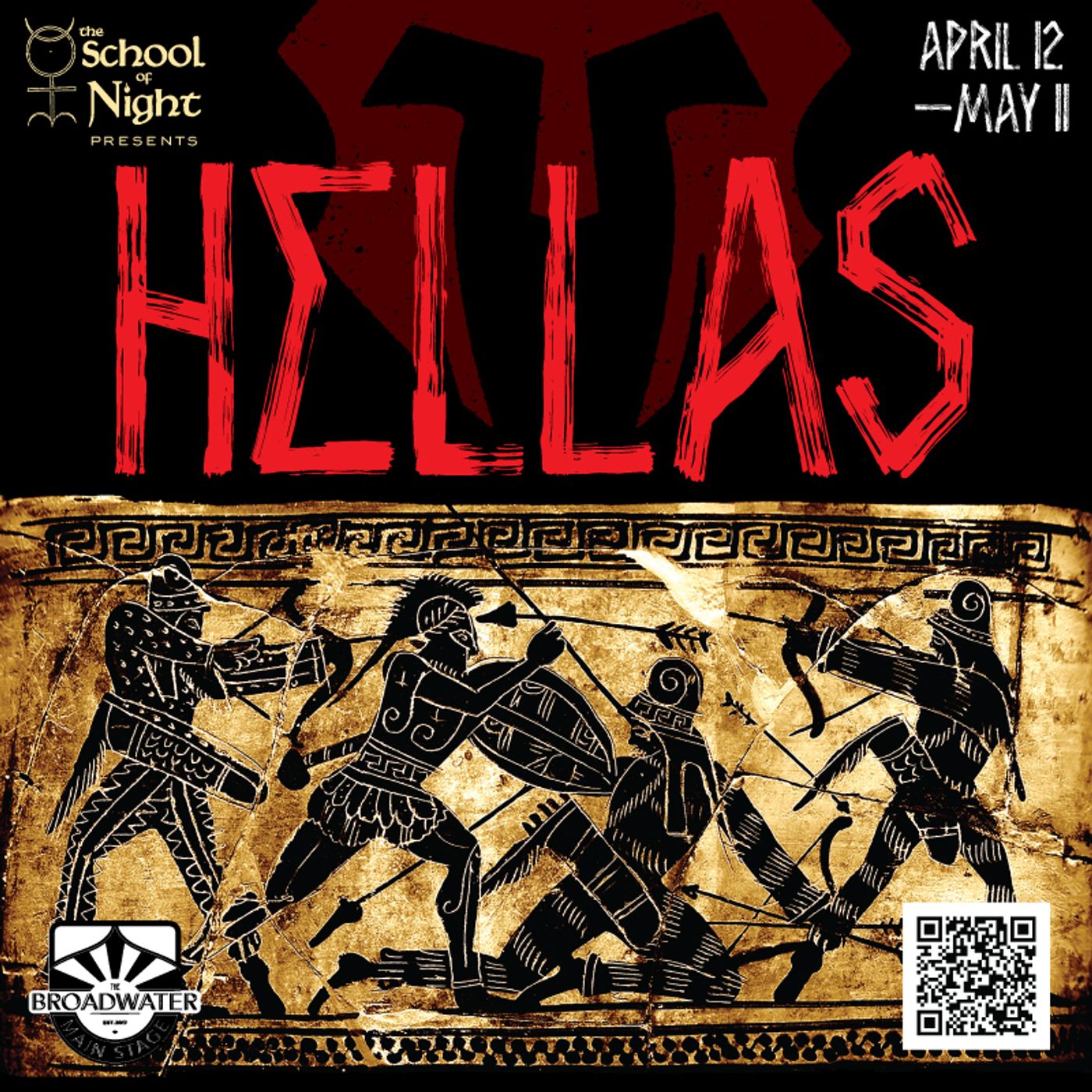 Hellas runs through May 11, 2025 on Fridays at 7:30pm with performances of Part I on 4/18 and 5/2; Part II on 4/25 and 5/9, each with one intermission. Saturday and Sundays at 2pm offer the complete saga with Parts I and II presented back-to-back with 3 intermissions. The Broadwater Main Stage is located at 1076 Lillian Way, Los Angeles, CA 90038. Tickets are $25 - $30; $5 off for students with ID. Group discounts available. Reservations are available at https://www.ticketleap.events/tickets/school-of-night/hellas with available tickets sold at the door.
Photos by Jessica Sherman
|
Much Ado About Nothing McCadden Place Theatre (8/07-8/16) |
|
6 Out of 10 Theatre 68 (8/20-8/20) |
|
After the Blast The Broadwater Second Stage (8/05-8/13) |
|
Catch Me If You Can Colony Theatre (9/17-10/18) |
|
Emily Skinner: In Concert Feinstein's at the Nikko (8/14-8/15) |

|
Gershwin and the Golden Age Younes and Soraya Nazarian Center for the Performing Arts (The Soraya) (10/11-10/11) |
|
John Lloyd Young Feinstein's at the Nikko (8/21-8/22) |
|
Love, Loss and What I Wore Sawyer's Playhouse (8/08-8/30) |
|
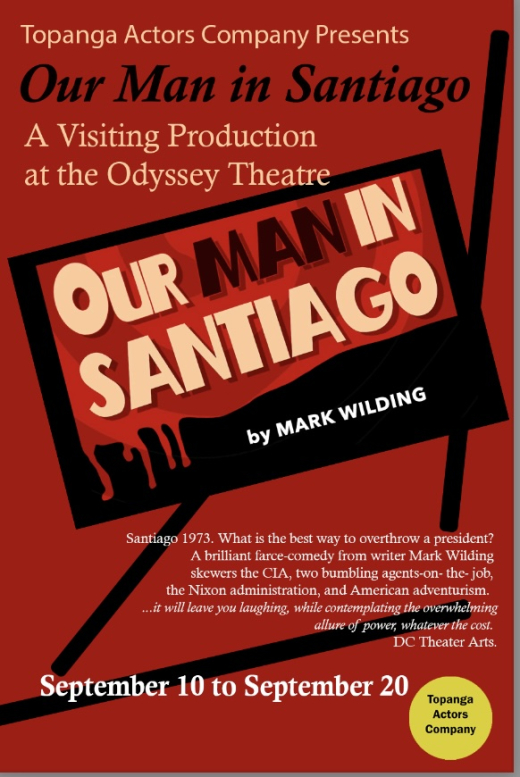
Our Man in Santiago by Mark Wilding Odyssey Theatre Ensemble (9/10-9/20) |
|
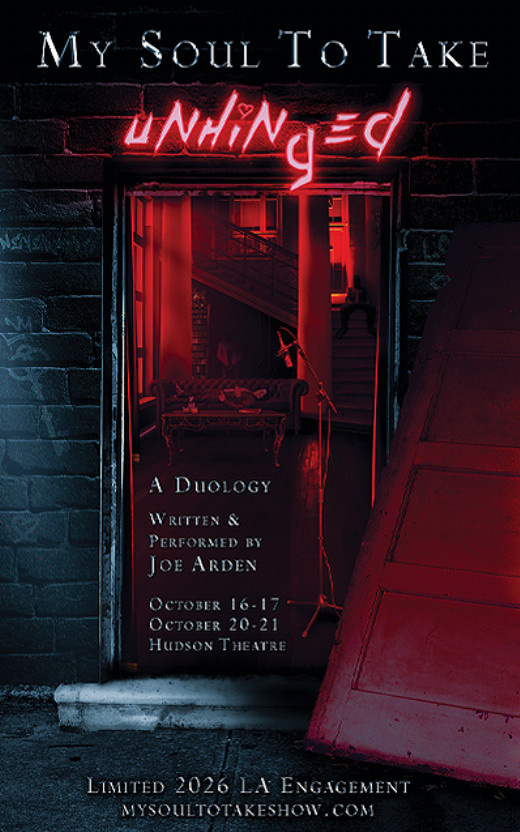
My Soul To Take: Unhinged The Hudson Theatres (10/16-10/21) |