


Review: THE SUNSET LIMITED at The Arts Factory
Watch for the Closing Door at CAST’s Sunset Limited thru 9/27
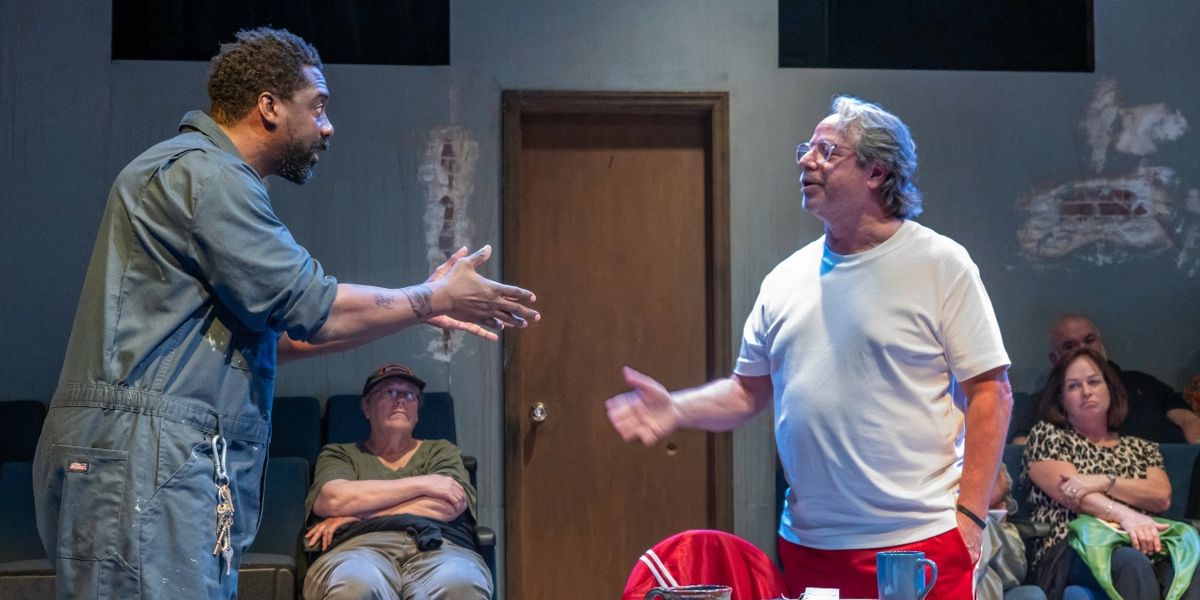
Would it rub you the wrong way to be solicited by a beggar selling candies outside your favorite theater? What if we add a tramp handing you your tickets, then a drunk, a druggie, a streetwalker, and a guy hawking fake Rolexes for six bucks lining the path to your seats? Welcome to experiential theatre at the Arts Factory on West Trade, where Cormac McCarthy’s THE SUNSET LIMITED is rounding the bend into its second weekend.
Or if you’re already fondly familiar with how Carolina Actors Studio Theatre means to do things, welcome back to the good old days.
CAST artistic director Michael Simmons doesn’t merely content himself with just these genial Skid Row stereotypes. No, no, no, for then your experience would normalize as soon you entered the theater.
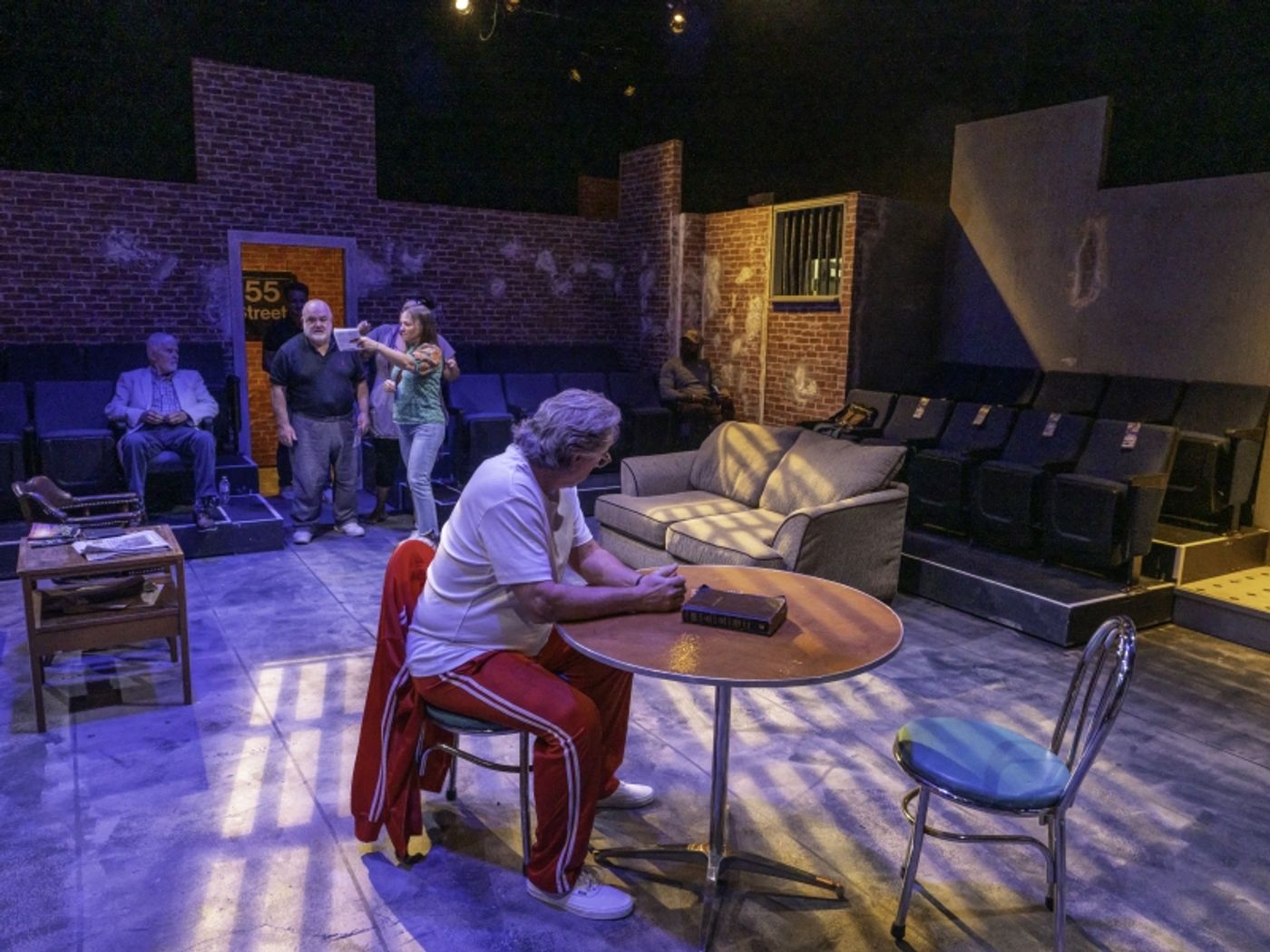
Not so fast, for Simmons’ rather fiendish set design has at least six walls. After you enter the theater doorway, you need to wind around a cruddy corridor to reach another doorway that leads into the shithole apartment where McCarthy’s action takes place. This is absolute brilliance from Simmons, since the seediness of our host’s life helps to balance the to-be-or-not-to-be debates to come.
This point gets double-underlined when our host, a hulking Black ex-con, triple locks his front door behind his reluctant – and relatively puny – white guest. Subtly, something may click instinctively in us as we hear the clank of the locks. We are locked in this space for the duration of this debate, and the longer we linger, the more forceful White’s arguments become that Black’s life is cramped, sordid, and futile. We’ve gotten a taste.
It’s director Dee Abdullah who layers this emphatic entrance for Zach Humphrey onto the script, a nice touch. McCarthy also tips the balance of the debate in this harrowing direction, for Thom Tonetti as White is armed with more age, experience, education, wealth, and endowed with a professorial intellect.
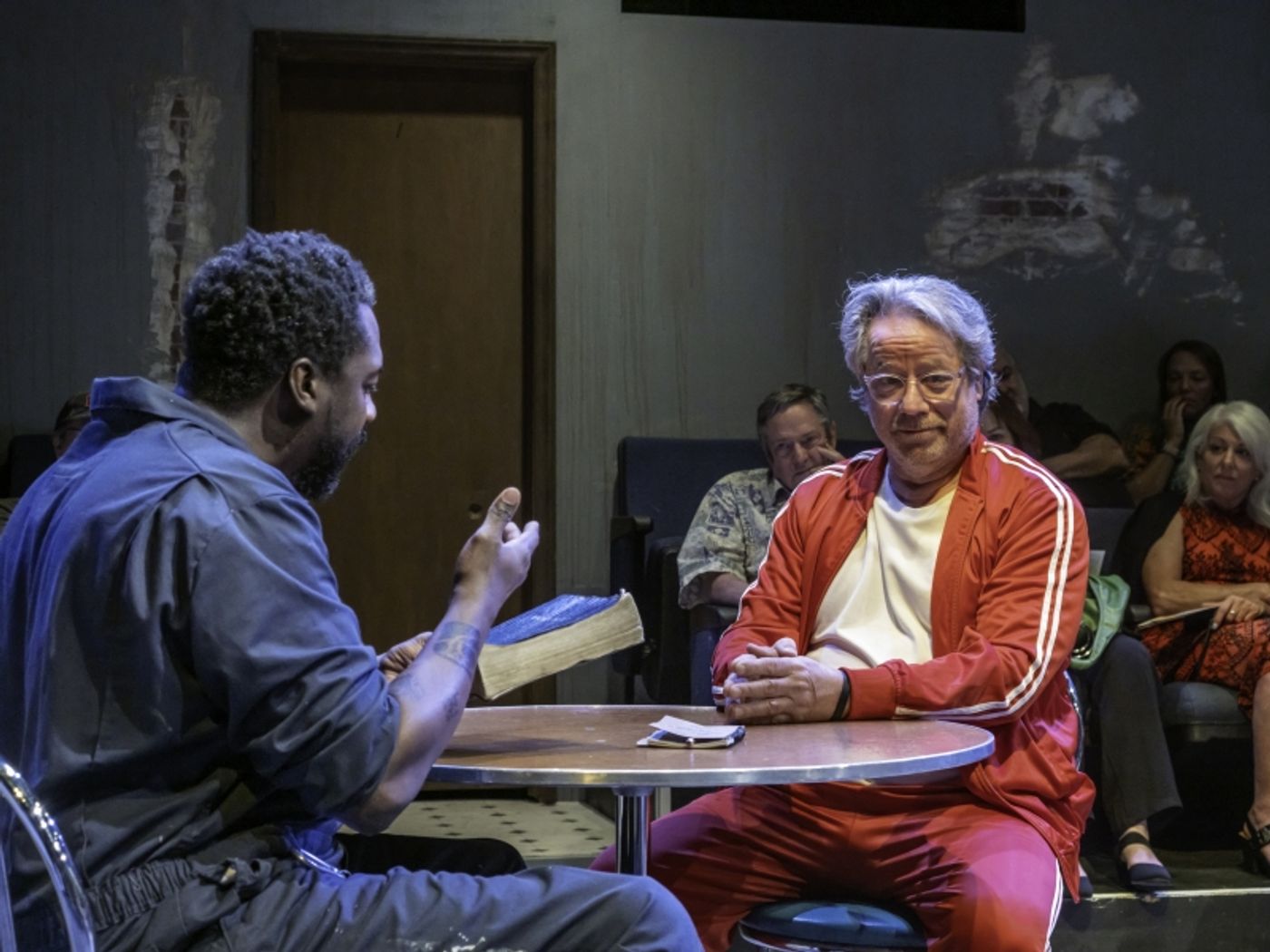
In a jumpsuit designed by Abdullah, Humphrey appears to have more keys and tools dangling from him than locks on his doors – as if he’s a janitor or a subway worker. That’s where Humphrey saved Tonetti from jumping in the path of an oncoming train, catching him and carrying him home.
If Tonetti stays too long, his rescue becomes a kidnapping, and Humphrey seems to understand there’s a time limit on how long he can hold his suicidal guest against his will. His main intellectual artillery is the Holy Bible, bolstered by his faith, which he frequently brandishes if he’s not thumbing through it. Trying to preach this book to the local drunks, derelicts, and druggies hasn’t yielded any positive results – and he’s been at it long enough that The Greatest Book Ever Written engraving has worn off its cover.
Without a doubt, Humphrey has the more urgent, desperate, and anguished role, especially when Tonetti rubs his nose in his past and present failures – and the squalor surrounding them both. At his most fragile moments, we see Humphrey processing the devastating irony that he has admirably served his time, licked his wounds, and freed himself from one prison only to lock himself in another.
(McCarthy called his players Black and White in his 2006 script, subtitled “A Novel in Dramatic Form,” but those names are absent from the actual dialogue and the CAST playbill.)
One of the reasons we manage to like Humphrey more is his ability to admit, no offense to Jesus or Scripture, that he is intellectually overmatched. Teaching should trump preaching since it’s fortified with facts and knowledge. Won’t it simply hurt horribly when the Sunset Limited rams into him? No, Tonetti calmly responds, at 70mph, the train would outspeed his neurons.
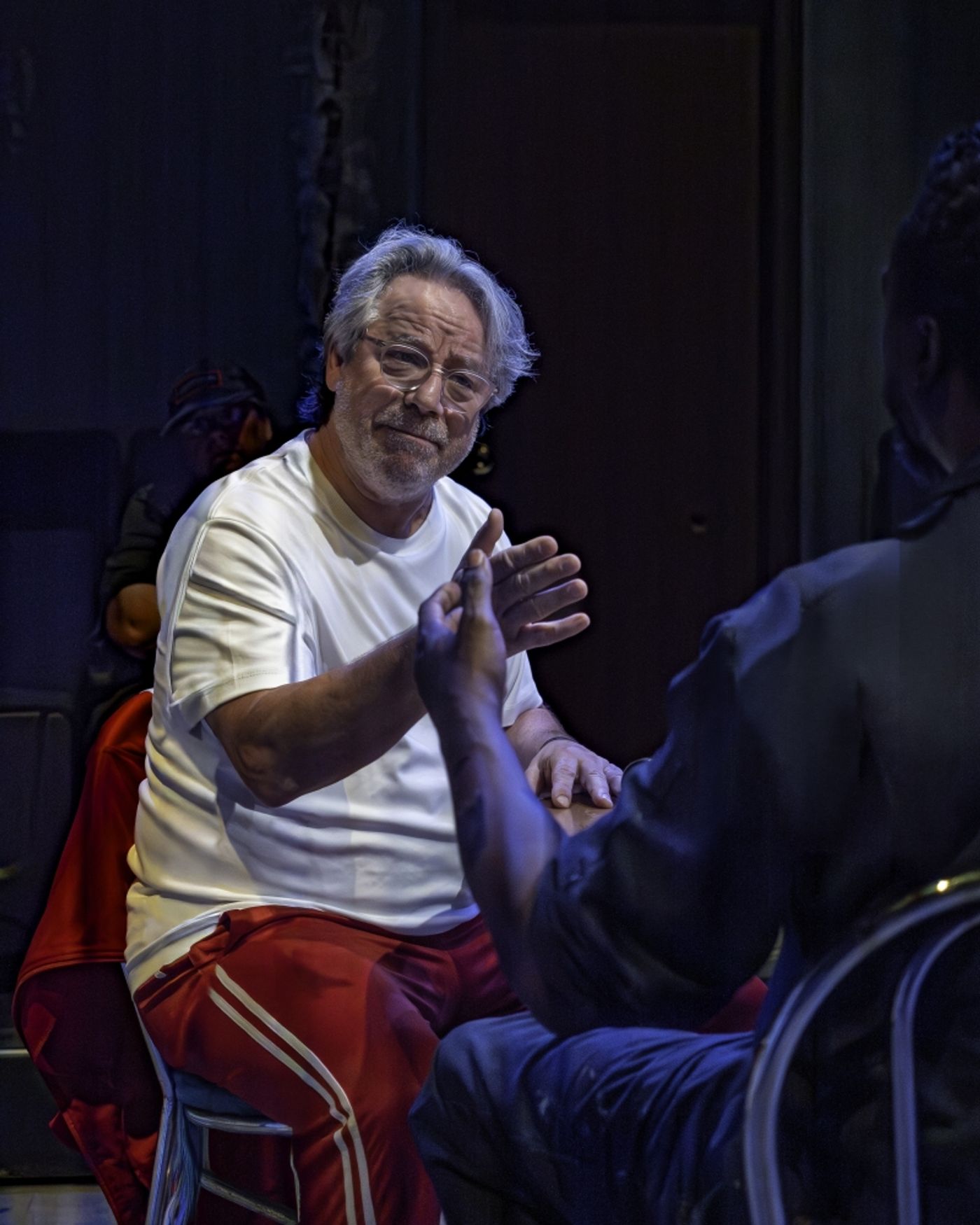
If we press the pause button here, we can scrutinize a telling moment, for Tonetti – (and maybe McCarthy) has miscalculated. Trains don’t ever speed past train platforms at 70mph, needing to decelerate and accelerate before they’re gone. And if McCarthy had only had the luxury of a Google Hub a couple of decades ago, he could have ascertained that the max speed for MTA subway cars is 55mph.
So Tonetti has an extra psychological advantage: when he starts spouting facts – real, imagined, or fabricated – Humphrey will not contradict him. Yes, he does have all the time in the world to throw himself in front of the Sunset Limited, so he can remain calm and keep his cards close to the vest. If he maintains his resolve, whether combatively or cordially, he will prevail. He even realizes that he can spare the time for a cup coffee of and a bite to eat.
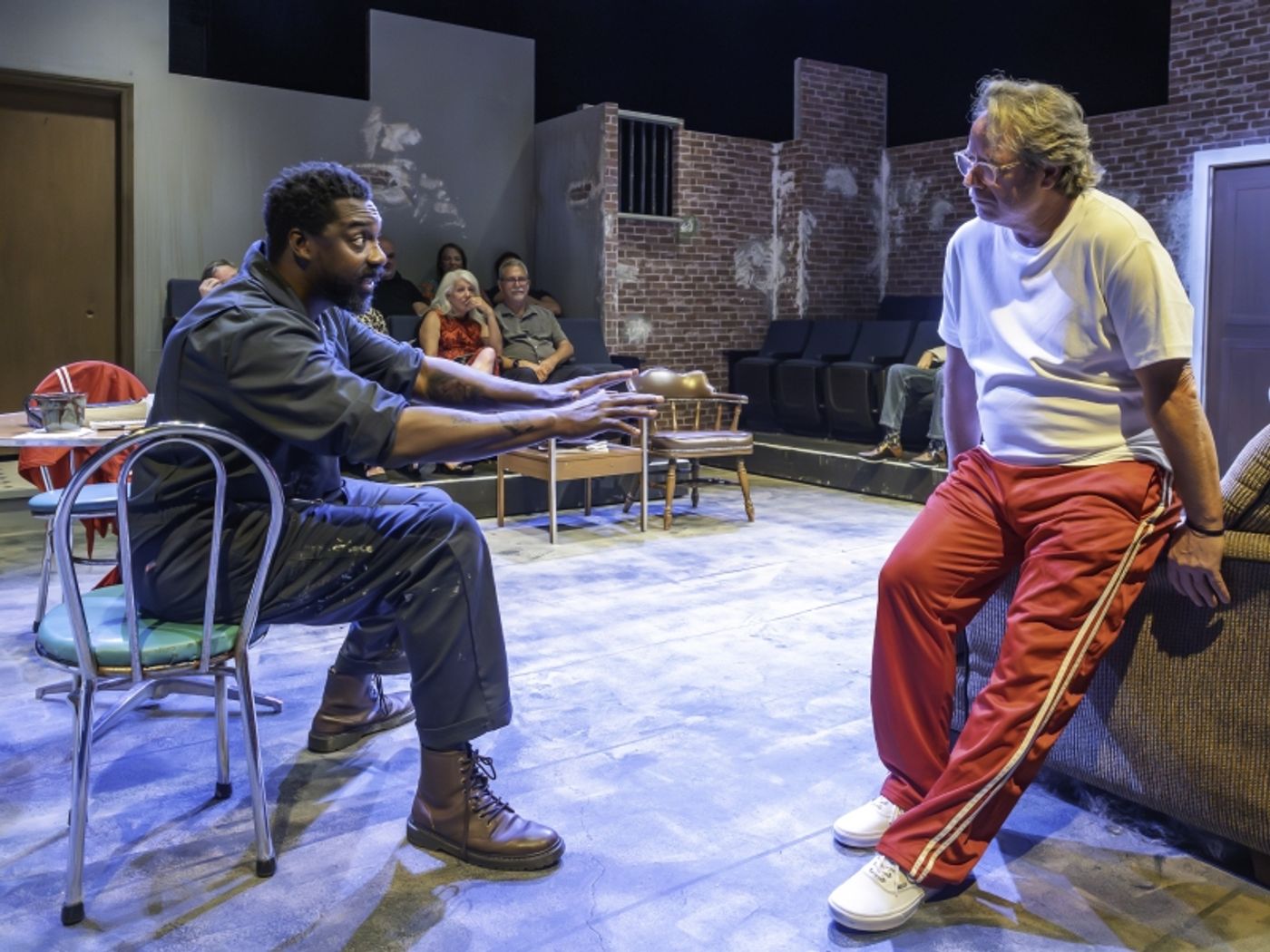
Heightened emotions from Tonetti spill out when he is most tellingly challenged and when he swerves to the counterattack. We may be hoping that Humphrey goads him sufficiently to spew out all the venom, hatred, resentment, and bitterness that lurks inside him, resulting in some sort of cleansing purgation. Or exorcism, since a dilapidated bible is ready-to-hand.
As it turns out, Tonetti has had too little connection with other humans for oceans of accumulated bile to come cascading out of him. Maybe he’s only metaphorically a professor! There is an enervated numbness to Tonetti that makes his sudden outbursts all the mightier.
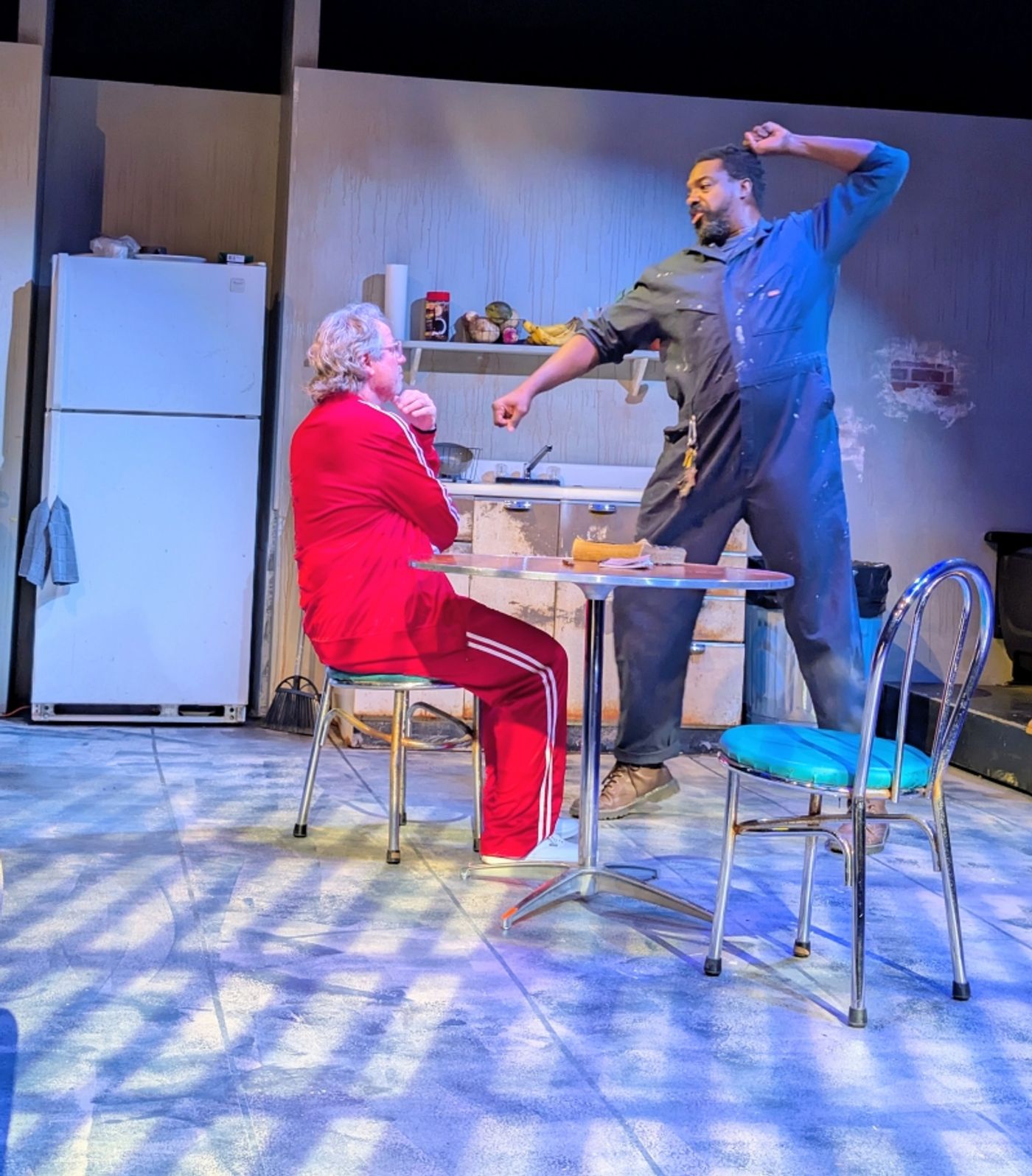
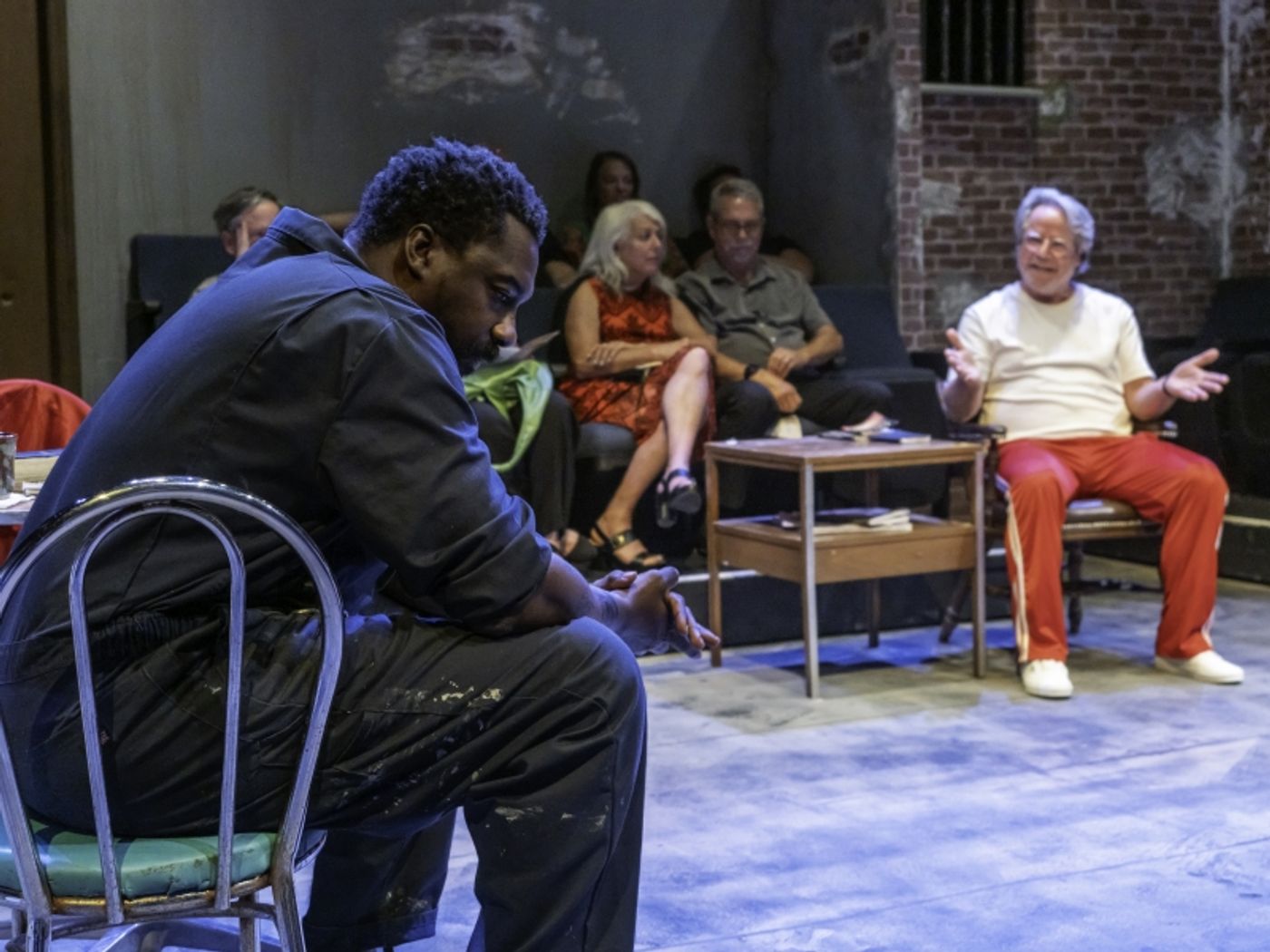
It’s all a conspiracy, for we must factor in how Simmons has configured his black box into a thrust staging. The thrust of the compacted performance space, extending from Humphrey’s kitchen to his triple-locked door, implicates us all as it heightens our involvement.
When telling his gory prison tale of intense violence and grim survival, he was looking straight at Tonetti… and me right behind his left shoulder! And when I viewed both men sitting close to me in profile, I couldn’t help glimpsing how audience members in two other sections were reacting.
Yeah, it’s intense but sometimes a little comical. Face it, since the days of Socrates and Plato, any philosophical or existential dialogue will have its circular, tedious, or repetitive patches. You’ll be seeing smiles from other people across the way, some deeply pondering expressions, and the occasional blank wearied stare.
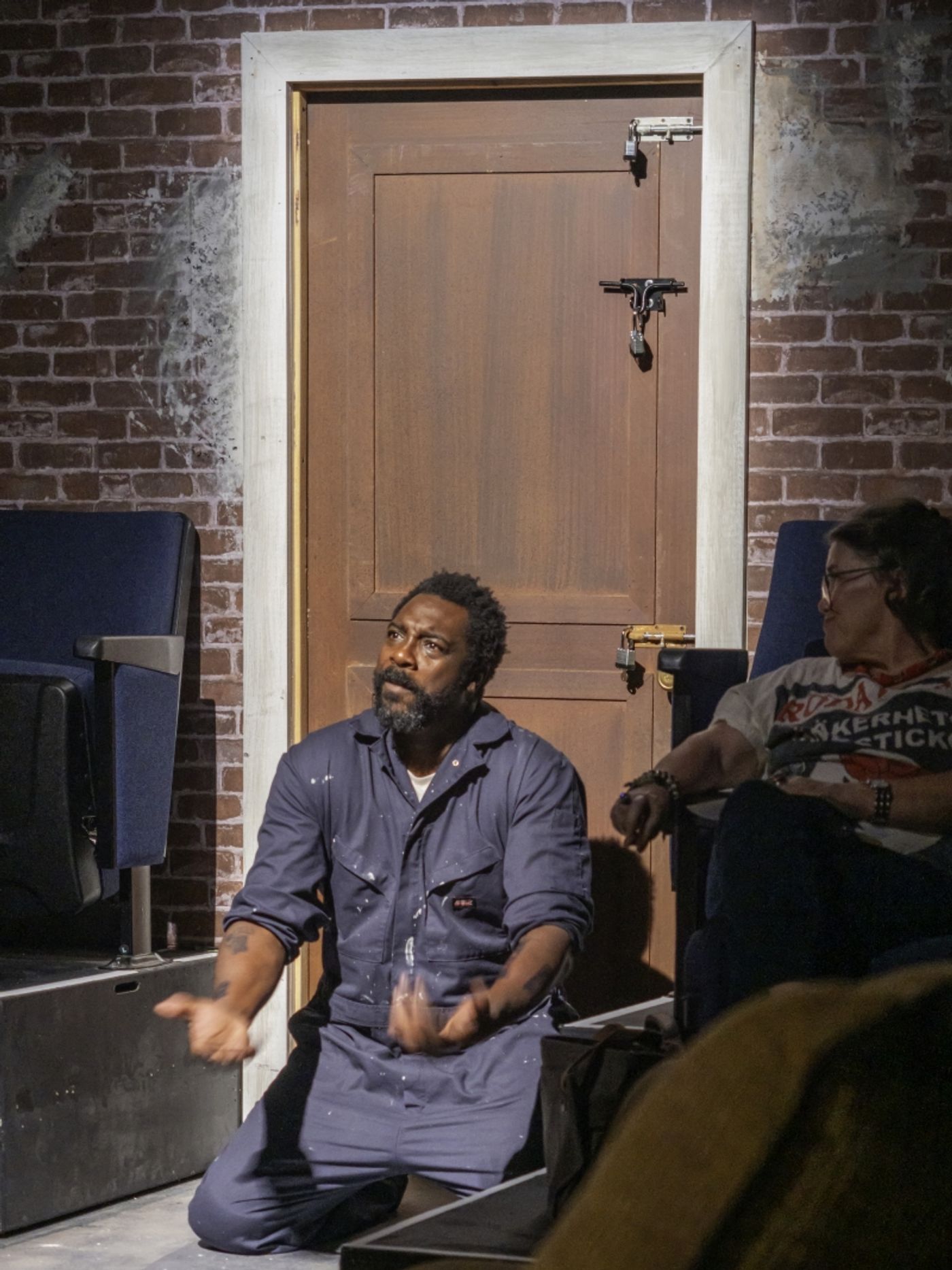
For me, that added to the experiential realism of my evening and enhanced my involvement.
|
Sister Act Flat Rock Playhouse (10/02-10/25) |
|
Tim McGraw & 49 Winchester Truliant Amphitheater (8/14-8/14) |

|
Rumpelstiltskin Flat Rock Playhouse (11/12-11/15) |
|
2026-27 First Bank Broadway Season - Friday Night Plan Steven Tanger Center for the Performing Arts (8/20-8/20) |
|
Maytag Virgin by Audrey Cefaly Carolina Actors Studio Theatre (10/16-10/31) |
|
|
2026-27 First Bank Broadway Season - Saturday Matinee Plan Steven Tanger Center for the Performing Arts (8/21-8/21) |

|
& Juliet Blumenthal Performing Arts Center: Belk Theater (8/11-8/16) |
|
2026-27 First Bank Broadway Season - Sunday Matinee Plan Steven Tanger Center for the Performing Arts (8/22-8/22) |
|
|
2026-27 First Bank Broadway Season - Wednesday Night Plan Steven Tanger Center for the Performing Arts (8/18-8/18) |
|
SHOWSTOPPERS! Mountain Theatre Company (8/12-8/30) |
Reader Reviews
To post a comment, you must register and login.