


Review: AND THEN THERE WERE NONE at Fulton Theatre
Guest contribution by Grace Kahmer.
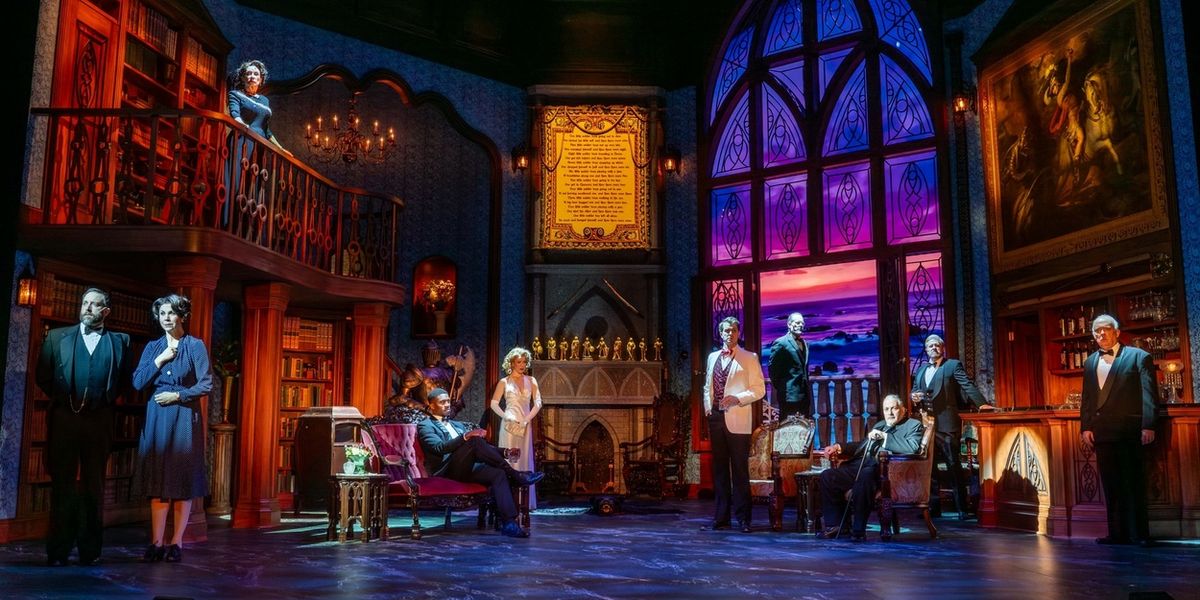
There’s a murderer loose at the Fulton Theatre, and in their current production of Agatha Christie’s And Then There Were None, everyone’s a suspect. This “whodunit” mystery features ten strangers, brought together on a remote island to be accused of past murders (and to be murdered themselves). The cold-blooded group includes: Philip Lombard (Joel Ashur), Sir Lawrence Wargrave (Jim Ballard), Vera Claythorne (Bailey Blaise), Emily Brent (Susan Cella), Dr. Armstrong (Eddie Curry), Anthony Marston (Gabriel Elmore), General Mackenzie (michael iannucci), William Blore (Will Ray), Mrs. Rogers (Katie Sina), and Rogers (Peter Matthew Smith).
The show is fairly engaging as a result of the dramatic irony featured just before and after each of the murders, which keeps the audience laughing and gasping throughout the performance. The mystery figure that repeatedly stalks around the set seems to be a favorite among the house, balancing between comical at times and sinister at others.
Another engaging aspect of this production is the melodramatic effect created by a combination of lighting, music, and drawn-out deaths. It is unclear whether some of these choices were intended to have this effect, but, regardless, they encourage the audience to solve the murder, rather than getting lost in the details of character backstories and relationships. The show further presents itself as a mystery game with its blocking, which is often unnatural and stagnant, particularly in Act I, as the actors appear to move around the stage like pieces in a board game.
These actors each have the opportunity to connect with the audience through expositional monologues and subtle breakings of the fourth wall. michael iannucci, playing General Mackenzie, presents a comical elderly man who is easy to empathize with, winning over the audiences’ hearts. Susan Cella, as Emily Brent, perfectly elicits a response of the opposite extreme, acting as an unlikeable, snobbish woman who nails the comedic timing of her brutally judgemental lines.
As fans have come to expect from the Fulton Theatre, the set of And Then There Were None, designed by William James Mohney, is impressive. There are multiple entrance/exit opportunities, as well as different dimensions that add depth to the show’s highly realistic appearance. This is further supported by the subtle use of the video screen just behind the large glass doors and the differentiation of lighting at various times of the day, beautifully designed by Colin Riebel and George Horrocks, respectively.
For those who enjoy the suspense and satisfaction of solving a murder mystery, Fulton Theatre’s And Then There Were None is the show to see. The production skews the norms of traditional theatre, presenting audiences with a game to be played rather than a story to be experienced. And Then There Were None runs through March 8th, giving audiences plenty of chances to catch the killer before the final curtain!
Sign up for all the news on the Fall season, discounts & more...

|
Twas the Night Before Christmas Fulton Theatre (11/28-12/26) |

|
Little Acts @ LTM Little Theatre of Mechanicsburg (1/22-2/07) |
|
Night of The Living Dead Live Openstage (10/09-10/31) |

|
Glamour Puss AFA Gallery (10/08-10/10) |

|
She Kill Monsters Lebanon Community Theatre (10/15-10/25) |
|
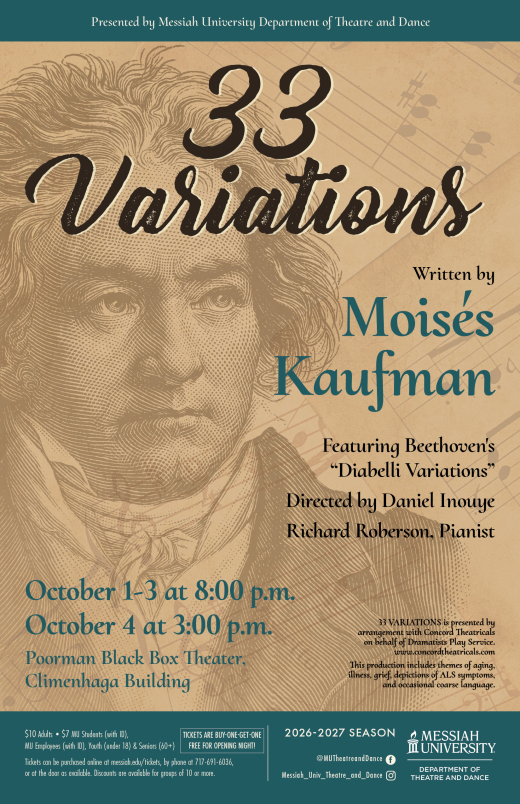
33 Variations Messiah University Department of Theatre and Dance (10/01-10/04) |
|
|
Count Arthur Strong - And Its Goodnight From Me! York Barbican (5/08-5/08) |

|
The Stinky Cheese Man and Other Fairly Stupid Tales Messiah University Department of Theatre and Dance (2/25-2/28) |
|
A Christmas Carol Totem Pole Playhouse (12/04-12/13) |
|
THE DROWSY CHAPERONE Little Theatre of Mechanicsburg (5/14-5/30) |

Reader Reviews
To post a comment, you must register and login.