Exclusive: Choreographer John Carrafa on Crafting Authentic Movement in THE GILDED AGE
Season 3 of The Gilded Age is now streaming on HBO Max.
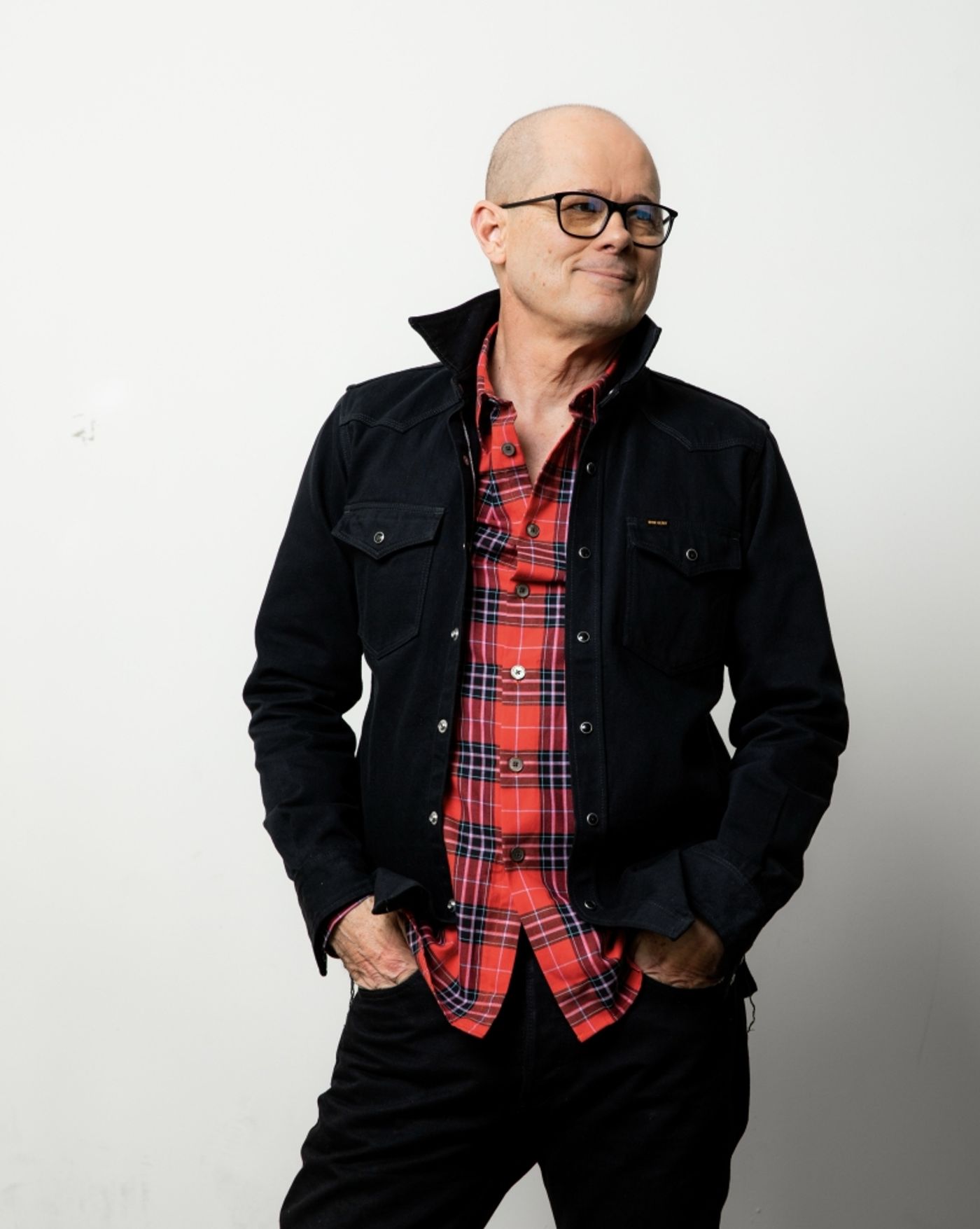 John Carrafa knows a thing or two about movement. After all, the Tony nominee has choreographed across nearly every medium- from musicals like Urinetown and Into the Woods to TV shows such as The Penguin and Only Murders in the Building, the latter of which earned him an Emmy nomination.
One of his other ongoing projects is HBO's The Gilded Age. Across its three seasons, viewers have seen many a grand ball come to life, with Carrafa labouring behind the scenes to recreate the traditional quadrilles and waltzes of the period. For the task, he works alongside an accomplished team of choreographers, all of whom also have Broadway experience.
Following the conclusion of Season 3, we spoke to Carrafa about the challenges of working on a period piece, the casting process for the dancers, and his experience bringing Mrs. Russell's most recent ball to life, as seen in the finale.
This interview has been condensed for clarity and length.
What were your earliest conversations like with the creative team about how dance could function within the storytelling?
It started with Season 1, and that's when most of my initial research was done. I've done a lot of historical recreations. I worked with Twyla Tharp on Amadeus and Ragtime, which was 1911, and did The Knick with Steven Soderbergh, which was 1901.
For this era, there's no video, so the question was how to recreate those dances. The most important thing to know is that the social rules and etiquette of the time were so strict, and dance was how you showed that you belonged in upper-class society. You kind of have to think of it as a constant game of one-upsmanship: Who is the most deserving to be there? Who is the most proper? Who is the most polite? Who's the most refined? And, obviously, in the course of the story, Mrs. Astor sort of represents the pinnacle of proper social etiquette.
Dance is a really important part of that because how you danced showed that you belonged. All of the young people in the society would've been sent to a dance teacher to learn not only dance, but also the proper etiquette. Which side of the woman does the man stand on when you walk down the street? Who offers their arm first?
In those times, teachers were called dancing masters, and there was one named Alan Dodsworth who published a long book describing the dances in great detail. There was the quadrille, which we did in season one. Gladys and any of the other young people would've gone and learned these dances. At the balls, there would sometimes be a caller, and if they said, "Now we're going to do The Lancers quadrille," everybody knew what that was. And if you don't know the dance, then you don't belong. It provides a structure within the show for people to behave properly.
You mentioned the Dancing Master, who you played in a scene in Season 1. Is there a logical reason for having you as a costumed cast member in a scene like that?
It wasn't for me so much, but I think for them it showed who the person who taught them was and what that would be like. Obviously Bertha has more money, so she brings the Dancing Master to her home instead of having them go to his school, which was on 53rd and Fifth.
So many of the dancers in the show come from Broadway. What does the casting process look like? What’s a quality you are looking for in a dancer?
Nancy Braun is my associate choreographer, and she's the resident choreographer on both The Outsiders and Moulin Rouge. Taeler Cyrus is my assistant, and she was the dance captain on Sweeney Todd. They know a lot of people, and I knew a lot of the people from my work on Broadway.
The waltz itself is a really hard dance. Because the dresses are so long, the waltz of the Gilded Age was built so that the women would never step behind them. They're always going forward or they're standing in place. They had to do that; otherwise, they'd trip over their dresses. People come into the audition and say, "Oh, yeah I can waltz," and I'm like, "Yeah, but this waltz?"
I wanted to find people who were really great actors, and who would embrace the idea of becoming one of Mrs. Astor's Four Hundred. We did the first auditions before Season 1, and we've used pretty much the same dancers the whole time. There's a big ball at the end of Season 1, and the dancers created characters for themselves and their relationships and character names. They have this whole elaborate scheme, and that's what I was hoping would happen with them, so they wouldn't stick out. We also had to make sure that the way they carried themselves wasn't contemporary, which is more about acting than just showing me the steps.
We did the same thing with the Kirkland Ball this season, and that was a whole new group of dancers. The Black community at that time was even tougher on paying attention to the rules. They were tougher on people who didn't follow the etiquette and weren't really great at the dancing. So I had to almost make them better dancers than the people who had been doing it for three seasons. It had to look like they were just incredibly proper and comfortable and killing it.
The big question everybody always had, and I had right from the beginning, is "What would be the difference in the dancing? Would they do something different?" But everything we looked at said no, they would've been using the same resources and the same influences as the other ball. They would've done exactly the same thing.
In addition to your collaborators on the dance team, how closely do you work with directors, cinematographers, and editors to shape the way these sequences appear on screen? How much input do you have on which shots are highlighted?
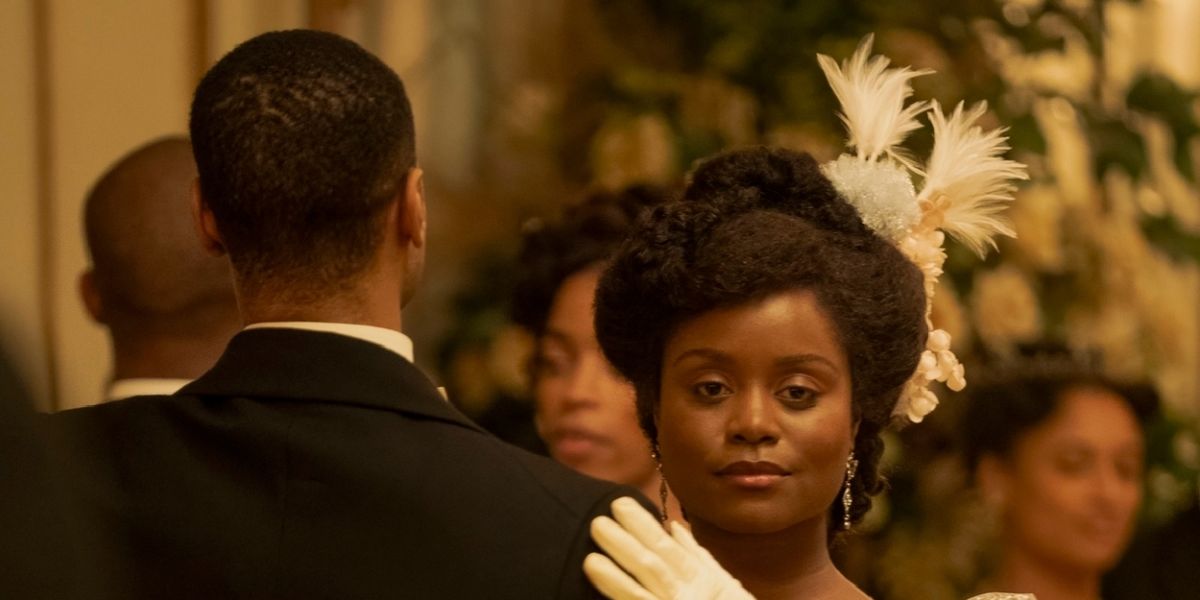
The first important thing is that I build the dance out from the story. The best example of that is the ball when Dr. Kirkland proposes to Peggy in the finale. That's the important story beat that I have to build everything else around.
For that, we needed Peggy to see Dr. Kirkland entering the ball before he came all the way up to her. I built that moment into the dance and made it so that as she's still dancing, she sees him, and the camera sees that. So in the episode, she and all the other dancers turn under his arm in a way that she can look back and see him come to her. I think it makes that moment even more powerful because you know it's coming. And then she comes back around, and there's a close-up of her face. Everybody at the monitors burst into tears when we saw that. Denée Benton's acting was just so affecting in that moment.
We did rehearsals to build that moment in a studio before we got to the set. When we get on the set, I show the director and the cinematographer what I've built, and then they figure out where to put the camera and how to shoot it. Because I've done so much film and TV, I can often guess what they're going to do and I can build it in that direction. I always film it with an iPhone during rehearsal to sort of give them an idea and I teach the dancers many versions of every step, so that they can be really flexible when the camera comes in.
How long do you have for rehearsals with the dancers and actors?
The way it works in film and TV is different from Broadway. On Broadway, you hire dancers on a weekly contract and you can work on a dance and evolve it and change it as the script changes over weeks. In film and television, the script could also be changing, but you hire dancers by the day. The dancers in both balls were hired for a day of rehearsal. One thing that helps me a bit is when we go to Newport, they have to pay the dancers for a travel day. This means that the travel day can also be a day of rehearsal because they're paying the dancers anyway, and I can use them anytime I want.
With the actors, there are periods when they are on contract. If you look at my Instagram, you can see Oscar and Mrs. Winterton dancing in the parking lot outside of the trailers because I grabbed them between scenes. That's often how it works with the lead actors. With the Duke and Gladys, I worked with them between shooting their scenes that were supposedly in England. So they'll go and do something super dramatic, and then they'll walk out with me to dance for a little while. But with the primary core of dancers, it's a day or two.
I imagine a huge part of the movement and physicality comes from wearing the costumes. Are costumes already there for those rehearsals? Is that something that they're rehearsing with?
We have rehearsal skirts, and everybody gets their shoes for rehearsal. Same thing with the principal actors. The rehearsal skirts somewhat approximate the motion of the dresses. For season one, we actually had full costume rehearsals just to see how it would work. I always end up being the closest with the Costume Designer. We have such common interests in terms of those scenes, and so Kasia Walicka Maimone came and watched rehearsal. We talked about the dresses, their length, how they move.
What's really helpful for the actors is that the corsets and the men's suits are built in a way that it's almost impossible not to stand up properrly. It sort of puts your body in that position. They always say they feel like they're in the era when they put the clothes on.
Is there something that the series has offered you as a choreographer that's been totally different from other projects or something you've learned that was surprising?
I had a big ballroom sequence in The Knick, and so this is very similar to that. As I've done this more, I've gotten more comfortable with it not being a documentary and being able to put my own personal spin on these dances. When I first started, I spent all my time in the Lincoln Center library researching exactly what the dancing was. But once I feel like I've stepped into the period in my head and I can feel it, I have gone off and started to play with a vocabulary that feels like the period.
These balls were way more regimented than we do on the show. There was a very strict order; they had dance cards, and who you danced with was all programmed. That's loosened up in general in the whole show. For example, I played with patterns within the waltzes that would be like patterns in the quadrilles. So I sort of melded the two dance forms together.
I always say that it would be great to see the downstairs people dancing. It's a little bit like the steerage on the Titanic. Let's see what the downstairs crowd does at their balls and parties.
All three seasons of The Gilded Age are now available on HBO Max. The show is created, written, and executive produced by Julian Fellowes (Downton Abbey) and stars many Broadway and theater performers, including Audra McDonald, Kelli O'Hara, Donna Murphy, Nathan Lane, and more.
This season, more Broadway alums join the series, including Victoria Clark, Brian Stokes Mitchell, Phylicia Rashad, Kate Baldwin, and Andrea Martin, to name a few. Take a look here to learn about all of the Broadway stars this season and check out BroadwayWorld's exclusive conversation about Season 3 with actor Ben Ahlers, who plays Jack Trotter in the series.
Gilded Age photo credit: Karolina Wojtasik/HBO
John Carrafa photo credit: Matthew Murphy