


|
Theatre World 1994-1995, Vol. 51
(1/1/2000) Theatre World, the statistical and pictorial record of the Broadway and off-Broadway season, touring companies, and professional regional companies throughout the United States, has become a classic in its field. The book is complete with cast listings, replacement producers, directors, authors, composers, opening and closing dates, song titles, and much, much more. There are special sections with biographical data, obituary information, listings of annual Shakespeare festivals and major drama a... |
 |
|
Theatre World 1993-1994, Vol. 50
(1/1/2000) Theatre World, the statistical and pictorial record of the Broadway and off-Broadway season, touring companies, and professional regional companies throughout the United States, has become a classic in its field. The book is complete with cast listings, replacement producers, directors, authors, composers, opening and closing dates, song titles, and much, much more. There are special sections with biographical data, obituary information, listings of annual Shakespeare festivals and major drama a... |
 |
|
The Social Significance of Modern Drama
(1/1/2000) Out of print virtually since its completion in 1914, Emma Goldman's pioneer work Social Significance in Modern Drama bridges modern drama and political philosophy, pointing out the road that remains to be travelled toward a theatre of social empowerment. Activist, feminist, philosopher and anarchist, Emma Goldman was a passionate thinker about all things modern when the 20th century was still raw and new. The emergence of her treatise on the theatre after years of obscurity is certain to arouse ... |
 |
|
Into the Woods
(12/31/1969) The Tony Award-winning musical, now adapted into a lavishly illustrated book Into the Woods is the imaginative account of what happens when the lives of new and old fairy-tale characters dramatically and humorously come together. Cinderella, Jack (of bean-stalk fame), Little Red Ridinghood, and the Baker and his Wife set out for the forest on a quest to find "happily ever after." Along the way they meet Rapunzel, a Wicked Witch, a lascivious Wolf, vengeful Giants, a couple of charming Princes... |
 |
|
The Theater and Its Double
(12/31/1969) A collection of manifestos originally published in 1938, The Theater and Its Double is the fullest statement of the ideas of Antonin Artaud. “We cannot go on prostituting the idea of the theater, the only value of which is in its excruciating, magical relation to reality and danger,” he wrote. He fought vigorously against an encroaching conventionalism he found anathema to the very concept of theater. He sought to use theater to transcend writing, “to break through the language in order to... |
 |
|
Three Uses of the Knife: On the Nature and Purpose of Drama
(12/31/1969) Three Uses of the Knife: On the Nature and Purpose of Drama is a book by David Mamet that discusses playwriting. In it, Mamet discusses the conscious and unconscious processes that go on in developing a work of art. |
 |
|
The Lieutenant of Inishmore
(12/31/1969) A farcical look at political violence as it's played out during The Troubles in Northern Ireland against the drab backdrop of a bare, rustic Irish cottage and unending boredom in an inhospitable environment in which a mutilated cat sets off a murderous cycle of revenge. |
 |
|
Games for Actors and Non-Actors
(12/31/1969) Games for Actors and Non-Actors is a valuable handbook of methods, techniques, games, and exercises, and is a genuinely inspiring work by the world-famous author of Theatre of the Oppressed. It is designed to help anyone - whether actor on non-actor - rehearse for real life: make the fictional real. |
 |
|
Les Miserables: Vocal / Piano Selections
(12/31/1969) This terrific songbook features 14 vocal selections from the beloved Broadway musical: At the End of the Day * Bring Him Home * Castle on a Cloud * Do You Hear the People Sing? * Drink with Me (To Days Gone By) * Empty Chairs at Empty Tables * A Heart Full of Love * I Dreamed a Dream * In My Life * A Little Fall of Rain * Master of the House * On My Own * Stars * Who Am I?. Also includes beautiful full-color photos from the production. |
 |
|
Galileo
(12/31/1969) Considered by many to be one of Brecht's masterpieces, Galileo explores the question of a scientist's social and ethical responsibility, as the brilliant Galileo must choose between his life and his life's work when confronted with the demands of the Inquisition. Through the dramatic characterization of the famous physicist, Brecht examines the issues of scientific morality and the difficult relationship between the intellectual and authority. This version of the play is the famous one that was ... |
 |
|
Me: Stories of My Life
(12/31/1969) Admired and beloved by movie audiences for over sixty years, four-time Academy Award-winner Katharine Hepburn is an American classic. Now Miss Hepburn breaks her long-kept silence about her private life in this absorbing and provocative memoir. |
 |
|
Theater Games for the Classroom: A Teacher's Handbook
(12/31/1969) Based on the best-selling book by Viola Spolin, this new CD-ROM of Theater Games for the Classroom offers the most comprehensive theater instruction for all types of students, from small children to young adults. It includes over 130 theater games and exercises, instructional strategies, video examples, a lesson planning section, alignment to other curricular areas, and alignment to California Theatre Arts standards. First developed by Spolin, the originator of modern improvisational theater tec... |
 |
|
The Sound of Music: Vocal Selections
(12/31/1969) 11 songs: Climb Ev'ry Mountain * Do-Re-Mi * Edelweiss * I Have Confidence * The Lonely Goatherd * Maria * My Favorite Things * Sixteen Going on Seventeen * So Long, Farewell * Something Good * The Sound of Music. |
 |
|
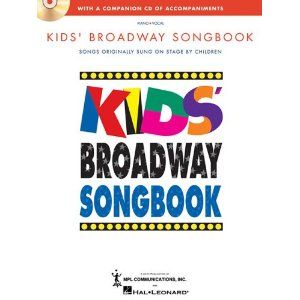
Kids' Broadway Songbook
(12/31/1969) This landmark collection of music originally sung onstage by children was released in 1993, and has become the most used collection of theatre music for kids. Now this same collection is available with a much needed companion CD of piano accompaniments. Child singers can practice with the recording as many times as they like ... until they drive Mom and Dad crazy! Includes: Castle on a Cloud * Gary, Indiana * I Whistle a Happy Tune * It's the Hard-Knock Life * Let Me Entertain You * Tomorrow * W... |
 |
|
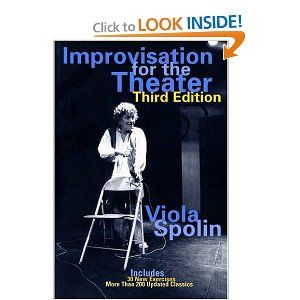
Improvisation for the Theater 3E: A Handbook of Teaching and Directing Techniques
(12/31/1969) This new edition of a highly acclaimed handbook, last published in 1983 and widely used by theater teachers and directors, is sure to be welcomed by members of the theater profession. Spolin, who died in 1994, developed her improvisational techniques of using "game" exercises while teaching with the WPA Recreational Project in Chicago. Editor Sills, her son and founder of the Second City Theater, here updates over 200 classic exercises and adds 30 new ones. The creative group work and games, whi... |
 |
|
Brecht on Theatre: The Development of an Aesthetic
(12/31/1969) This volume offers a major selection of Bertolt Brecht's groundbreaking critical writing. Here, arranged in chronological order, are essays from 1918 to 1956, in which Brecht explores his definition of the Epic Theatre and his theory of alienation-effects in directing, acting, and writing, and discusses, among other works, The Threepenny Opera, Mahagonny, Mother Courage, Puntila, and Galileo. Also included is "A Short Organum for the Theatre," Brecht's most complete exposition of his revolutiona... |
 |
|
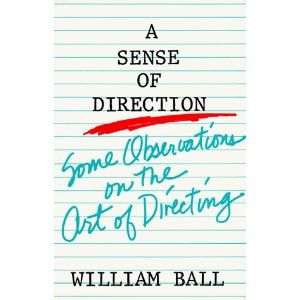
Sense of Direction: Some Observations on the Art of Directing
(12/31/1969) By the founder of the famous American Conservatory Theatre (A.C.T.) in San Francisco - a candid account of his working method as a director. A Sense of Direction represents a life's work in directing. William Ball engages his audience in a wide-ranging discussion of the director's process, from first read-through to opening night. An informative, insightful, and often astonishingly clear look at the the process of making theatre. |
 |
|
Amadeus
(12/31/1969) 0riginating at the National Theatre of Great Britain, Amadeus was the recipient of both the Evening Standard Drama Award and the Theatre Critics Award. In the United States, the play won the coveted Tony Award and went on to become a critically acclaimed major motion picture winning eight Oscars, including Best Picture. Now, this extraordinary work about the life of Wolfgang Amadeus Mozart is available with a new preface by Peter Shaffer and a new introduction by the director of the 1998 Broa... |
 |
|
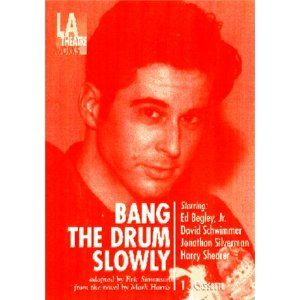
Bang The Drum Slowly
(12/31/1969) Sure, Harris's most acclaimed novel, the second of his Henry Wiggen books, centers around a pair of ballplayers for the fictionally fabled New York Mammoths--the novel's narrator, pitcher Wiggen, and Bruce Pearson, his tag-along catcher and best friend. And sure, on one level, it's the conventional tale of a disparate dugout population cohering over the course of a season and marching ineluctably toward the World Series. But convention, like a 55-foot curveball, ends there and then scoots off i... |
 |
|
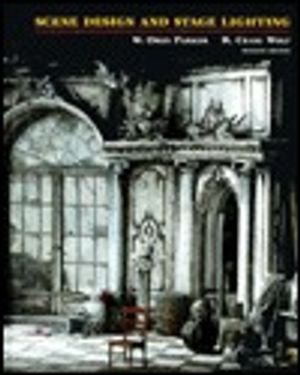
Scene Design and Stage Lighting
(12/31/1969) Stressing recent innovations in stage lighting, the authors reveal the techniques and skills involved in designing sets for theatrical productions. |
 |
|
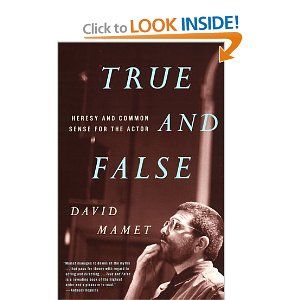
True and False: Heresy and Common Sense for the Actor
(12/31/1969) True and False: Heresy and Common Sense for the Actor by David Mamet is an instructional book on acting, and the life and habits of the successful actor. In it, Mamet outlines his thoughts on acting, and gives advice for those practicing the craft and for aspiring practitioners. In the book, Mamet derides the practice of teaching drama students the system of Constantin Stanislavski or method acting of Lee Strasberg. In Mamet's opinion, time spent searching for emotion memory or considering cha... |
 |
|
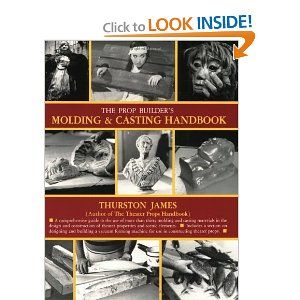
The Prop Builder's Molding & Casting Handbook
(12/31/1969) Demonstrates how to work with molds, castings, and vacuum forming equipment, stresses safety precautions, and discusses materials from paper-mache to breakaway glass. |
 |
|
Stage Makeup: The Actor's Complete Guide to Today's Techniques and Materials
(12/31/1969) Whether you are an actor in a summer-stock or regional theater, an acting conservatory program, a high-school or college production, a community theater, a local holiday pageant...or anywhere else, this is the best all-purpose "how-to" guide to makeup for the theater. Besides period makeup, age makeup, and special-effects applications, the book delves into fantasy makeup, animal faces, and other kinds of stylization found on the contemporary stageand with the use of the most up-to-date materials... |
 |
|
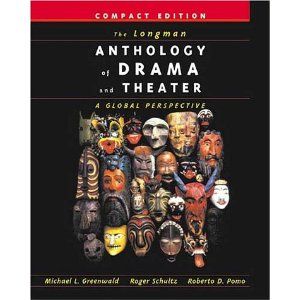
The Longman Anthology of Drama and Theater: A Global Perspective
(12/31/1969) Divided into three parts, this brief, chronologically-organized, fully-integrated drama anthology offers a global emphasis and extensive critical and historical material of 23 indispensable plays. No other anthology offers such a richly varied selection from the traditional Western canon, Asia, Africa, Latin America, and the Caribbean. This anthology contains many examples of rituals, ceremonies, and folk customs. The role of the storyteller is examined and chronicled to illustrate the impulses ... |
 |
|
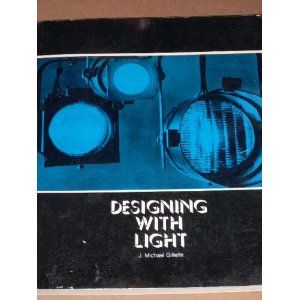
Designing with Light: An Introduction to Stage Lighting
(12/31/1969) This comprehensive survey of the practical and aesthetic aspects of basic stage lighting design treats its subject as an art closely integrated with that of the director, actor, and playwright, and as a craft that provides practical solutions for the manipulation of stage space. An eight-page color section provides a discussion of the practical applications of color theory as well as an analysis of the color choices for the lighting design of an actual production. Numerous illustrations of techn... |
 |
|
The Pot of Gold and Other Plays
(12/31/1969) One of the supreme comic writers of the Roman world, Plautus (c.254–184 BC), skilfully adapted classic Greek comic models to the manners and customs of his day. This collection features a varied selection of his finest plays, from the light-hearted comedy Pseudolus, in which the lovesick Calidorus and his slave try to liberate his lover from her pimp, to the more subversive The Prisoners, which raises serious questions about the role of slavery. Also included are The Brothers Menaechmus, which... |
 |
|
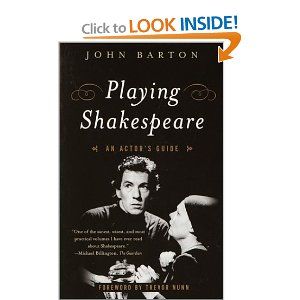
Playing Shakespeare: An Actor's Guide
(12/31/1969) Walking the boards in a play by the Bard can be one of the most rewarding and frightening experiences of an actor's life. Drawing on 35 years' experience as associate director of the Royal Shakespeare Company (RSC), Barton here offers advice on tackling Shakespeare as a performer. Along with assistance from fellow RSC players, including Ian McKellan, Judi Dench, Ben Kingsley, and Patrick Stewart, Barton offers tips on replicating the often tongue-twisting prose, exploring the characters, underst... |
 |
|
The Threepenny Opera
(12/31/1969) Brutal, scandalous, perverted, yet humorous, hummable, and with a happy ending- Bertolt Brecht's revolutionary masterpiece The Threepenny Opera is a landmark of modern drama that has become embedded in the Western cultural imagination. Through the love story of Polly Peachum and "Mack the Knife" Macheath, the play satirizes the bourgeois of the Weimar Republic, revealing a society at the height of decadence and on the verge of chaos. Complemented with music by Kurt Weill, it was one of the earli... |
 |
|
A Director Prepares: Seven Essays on Art and Theatre
(12/31/1969) Bogart (directing, Columbia Univ.) is the artistic director of the SITI Company, an ensemble-based theater company that she founded with Tadshi Suzuki. Her book is aimed at the practitioner but has value for the avid theater goer as well. What we see on stage, as a whole, is a culmination of bits and pieces, steps forward and backward, as a work of "art" is created and then presented. In each essay, Bogart discusses one of seven concepts violence, memory, terror, eroticism, stereotype, embarras... |
 |
|
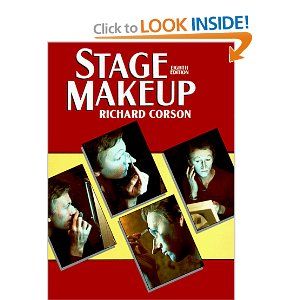
Stage Makeup
(12/31/1969) Key Benefit: A classic in the field, this book helps makeup artists and actors learn the proper technique when applying stage makeup. Key Topics: This easy, step-by-step guide is comprised of 20 comprehensive chapters covering all aspects of stage makeup application. Topics include: basic techniques as well as new methods and materials for all types of stage makeup; updated information on hairstyles and fashions. Revered as the stage makeup bible, this book includes listings of makeup colors fro... |
 |
|
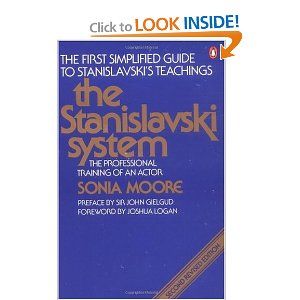
The Stanislavski System: The Professional Training of an Actor
(12/31/1969) This clearly written guide to the Stanislavski method has long been a favorite among students and teachers of acting. Now, in light of books and articles recently published in the Soviet Union, Sonia Moore has made revisions that include a new section on the subtext of a role. She provides detailed explanations of all the methods that actors in training have found indispensable for more than twenty years. Designed to create better actors, this guide will put individuals in touch with themselves... |
 |
|
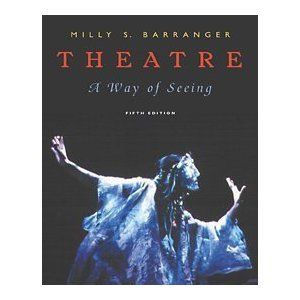
Theatre: A Way of Seeing
(12/31/1969) Consistently praised for being "streamlined" and "clear and student friendly," this text offers the beginning theatre student an exciting, full-color introduction to all aspects of theatre. It presents the experience of theatre, who sees, what is seen, where and how it is seen largely from the viewpoint of audiences exposed to a complex, living art that involves people, spaces, plays, designs, staging, forms, language, and productions. The book includes the appropriate coverage of the history, d... |
 |
|
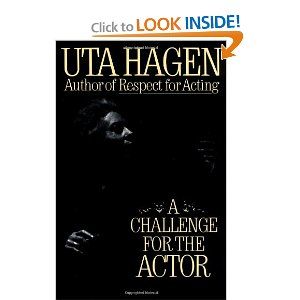
A Challenge for the Actor
(12/31/1969) This volume completes Hagen's earlier classic, Respect for Acting (Macmillan, 1973). The beliefs, professionalism, and standards of training and performance that make Respect required reading for all actors are explored in this acting textbook that represents a lifetime of performance and teaching. Unlike the more academic texts, Hagen's study reflects exercises, insights, and techniques that have been taught and practiced in acting studios and on stages for many years. Readers should not be pu... |
 |
|
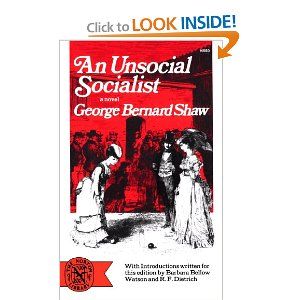
An Unsocial Socialist
(12/31/1969) An Unsocial Socialist was published in 1887, having been written in 1883. The tale begins with a humorous description of student antics at a girl's school then changes focus to a seemingly uncouth laborer who, it soon develops, is really a wealthy gentleman in hiding from his overly affectionate wife. He needs the freedom gained by matrimonial truancy to promote the socialistic cause, to which he is an active convert. Once the subject of socialism emerges, it dominates the story, allowing only ... |
 |
|
Bacchae
(12/31/1969) Euripides' classic drama about the often mortifying consequences of the unbridled--and frequently hysterical--celebration of the feast of Dionysus, the God of wine. |
 |
|
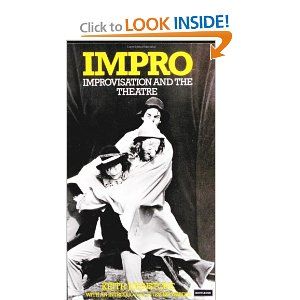
Impro: Improvisation and the Theatre
(12/31/1969) Impro ought to be required reading not only for theatre people generally but also for teachers, educators, and students of all kinds and persuasions. Readers of this book are not going to agree with everything in it; but if they are not challenged by it, if they do not ultimately succumb to its wisdom and whimsicality, they are in a very sad state indeed . . . .Johnstone seeks to liberate the imagination, to cultivate in the adult the creative power of the child . . . .Deserves to be widely read... |
 |
|
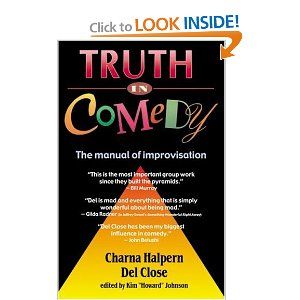
Truth in Comedy: The Manual of Improvisation
(12/31/1969) Who would have ever thought that learning the finer points of improvisation could be such fun? The "Harold," an innovative improvisational tool, helped Saturday Night Live's Mike Myers and Chris Farley, George Wendt (Norm on "Cheers") and many other actors on the road to TV and film stardom. Now it is described fully in this new book for the benefit of other would-be actors and comics. The "Harold" is a form of competitive improv involving six or seven players. They take a theme suggestion from... |
 |
|
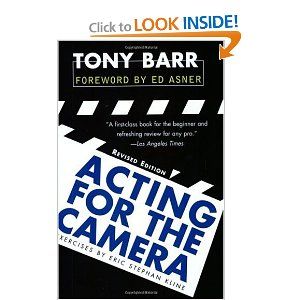
Acting for the Camera
(12/31/1969) Culled from Tony Barr's 40 years' experience as a performer, director and acting teacher in Hollywood, this highly praised handbook provides readers with the practical knowledge they needwhen performing in front of the camera. This updated edition includes plenty of new exercises for honing on-camera skills; additional chapters on imagination and movement; and fresh material on character development, monologues, visual focus, playing comedy and working with directors. Inside tips on the studio s... |
 |
|
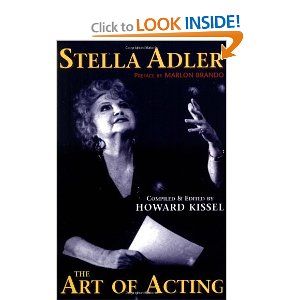
The Art of Acting
(12/31/1969) This second collection of Adler's papers precedes the material found in the previous collection (Stella Adler on Ibsen, Strindberg and Chekov, LJ 4/15/99), ending as she begins text analysis. Here Kissel (David Merrick) has taken tapes, transcriptions, notebooks, and other sources to reconstruct an acting course in 22 lessons. What results is Adler at her strongest. Coming from a theatrical family and having studied with Stanislavsky, she became an old-fashioned autocratic teacher determined to ... |
 |
|
The Empty Space: A Book About the Theatre: Deadly, Holy, Rough, Immediate
(12/31/1969) In The Empty Space, groundbreaking director Peter Brook draws on a life in love with the stage to explore the issues facing any theatrical performance. Here he describes important developments in theatre from the last century, as well as smaller scale events, from productions by Stanislavsky to the rise of Method Acting, from Brecht's revolutionary alienation technique to the free form Happenings of the 1960s, and from the different styles of such great Shakespearean actors as John Gielgud and ... |
 |
|
Acting One
(12/31/1969) Used to teach beginning acting on more campuses than any other text, Acting One contains twenty-eight lessons based on experiential exercises. The text covers basic skills such as talking, listening, tactical interplay, physicalizing, building scenes, and making good choices. |
 |
|
Zoot Suit and Other Plays
(12/31/1969) This collection contains three of playwright and screenwriter Luis Valdez's most important and recognized plays: Zoot Suit, Bandido! and I Don't Have to Show You No Stinking Badges. The anthology also includes an introduction by noted theater critic Dr. Jorge Huerta of the University of California-San Diego. Luis Valdez, the most recognized and celebrated Hispanic playwright of our times, is the director of the famous farm-worker theater, El Teatro Campesino. |
 |
|
The Taming of the Shrew
(12/31/1969) If there has ever been a groundbreaking edition that likewise returns the reader to the original Shakespeare text, it will be THE APPLAUSE FOLIO TEXTS. If there has ever been an accessible version of the Folio, it is this edition, set for the first time in modern fonts. The Folio is the source of all other editions. The Folio text forces us to re-examine the assumptions and prejudices which have encumbered over four hundred years of scholarship and performance. Notes refer the reader to subseque... |
 |
|
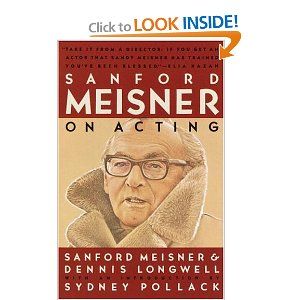
Sanford Meisner on Acting
(12/31/1969) Meisner, a member of the Theater Guild and the Group Theater, has devoted most of 50 years to teaching acting and is one of the great unsung resources in American theater. This book is not an acting text, but a journal of a 15-month course taken by 16 adult actors. We follow them as they progress from early exercises through preparation to detailed scene work. Meisner emphasizes emotional truth and acting as the reality of doing. His students find the course difficult, but most improve markedly.... |
 |
|
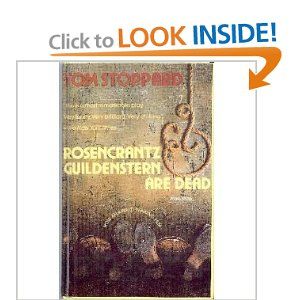
Rosencrantz and Guildenstern Are Dead
(12/31/1969) Rosencrantz and Guildenstern Are Dead is an absurdist, existentialist tragicomedy by Tom Stoppard, first staged at the Edinburgh Festival Fringe in 1966. The play expands upon the exploits of two minor characters from Shakespeare's Hamlet, the courtiers Rosencrantz and Guildenstern. The action of Stoppard's play takes place mainly "in the wings" of Shakespeare's, with brief appearances of major characters from Hamlet who enact fragments of the original's scenes. Between these episodes the two ... |
 |
|
Free Shakespeare
(12/31/1969) This expanded edition of Free Shakespeare is a tool to liberate the works of Shakespeare from directors and academics who seek to impose their ideas upon the plays. John Russell Brown empowers actors and readers to approach the plays freshly and boldly armed with the many different interpretations inherent in the plays. Recognized as a benchmark for the understanding of Shakespearean performance in the twentieth century, a new chapter explores the technological and funding challenges facing Shak... |
 |
|
My Breath in Art: Acting from Within
(12/31/1969) Filled with invaluable advice for all actors and vocalists, this guidebook by Beatrice Manley addresses such topics as: how to clear the body of emotional debris * how to get feedback from your body * what to do with your hands * how to release habitual tension * the inner structure of feeling * avoiding overpreparation * and many more. |
 |
|
Black Comedy - 9 Plays
(12/31/1969) This first-of-its kind collection includes a wide range of works, from an early examination and critique of American society after World War II to plays that reflect socio-political concerns that kept pace with historical events, like the sit-in demonstrations, the bus boycotts, black nationalism, and the womenÕs liberation movement. A hybrid of comedic forms including satire, farce, comedy of manners, romantic comedy, dark comedy, and tragicomedy are presented through vernacular language, stan... |
 |
|
Bunny Bunny - A Sort of Love Story
(12/31/1969) Subtitled "Gilda Radner: A Sort of Love Story," this autobiographical play tries to recapture the non-sexual, but deeply felt relationship between Radner, one of Saturday Night Live's original Not Ready-for-Prime-Time players, and Alan Zweibel, who was a writer for the show. Alternately comic and heartbreaking, the play follows these two overgrown kids as they ride their bumper-car lives right up to Radner's death from ovarian cancer. Their loyalty and love glows through every scene. The book is... |
 |
|
Dear: A New Play
(12/31/1969) The script to "one of the most tender yet devastating plays of the Drexlerian oeuvre is the musical romance Dear. It takes place in the Eisenhower Fifties, the early years of television. There is an elegiac quality for the tragicomedy punctuated by the sentimental music of the era...The play is about Jessie Clup, a Queens housewife whose philandering husband has deserted her. Her only culpa is her fixation on Perry Como, the ex-barber, crooner kin, reigning TV star." - Rosette Lamont, StageView. |
 |
Videos