


|
Some Freaks
(1991) A new collection of prose writings from the author of "Writing in Restaurants". Mamet discusses his parallel experience in cinema as screenwriter ("The Untouchables") and writer-director ("House of Games"). There are also pieces on being a Jew, politics, acting and Disneyland. |
 |
|
Writing in Restaurants
(1987) The title of Mamet's first collection of essays and speeches certainly doesn't suggest the themes of commitment and excellence. Nevertheless, if a collection of 28 essays on a variety of topics can be said to have an overarching theme or themes, then surely commitment and excellence sound clearly. These essays, apparently written over a considerable span of years, treat topics ranging from radio drama through middle-class fashion trends to the Academy Awards and the use of amplification in theat... |
 |
|
The Tricks of the Trade
(1991) When Dario Fo won the 1997 Nobel Prize for literature, establishments everywhere erupted in anger. Here was an anticlerical, obscene, communist clown receiving the world's top literary accolade. As this collection of his essays and lectures shows, Fo has such a unique vision that his mission as clown/playwright requires him to be all those other things. What's interesting about The Tricks of the Trade is not his politics, but the incredible amount of research he's done on 2,000 years' worth of ... |
 |
|
My Life in Art
(1987) Written with the same warmth, liveliness and ability to re-create reality that made Stanislavski a great actor, his autobiography tells of his childhood in the world of Moscow's wealthy merchants, his successes and failures as an amateur actor, how he studied human beings, and developed what has come to be known as the "Stanislavski Method," how his group of dedicated amateurs became "perhaps the greatest acting group the world has ever known (Washington Post)," The Moscow Art Theatre. |
 |
|
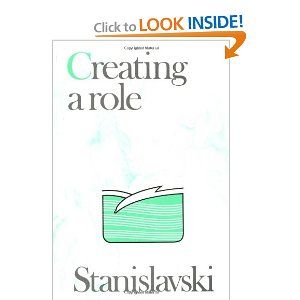
Creating A Role
(1989) This volume completes, with An Actor Prepares and Building a Character, the trilogy in which Stanislavski set down his life's accomplishment. Creating a Role describes the elaborate preparation that precedes actual performance. Stanislavski here relates the techniques he describes in his preceding books to analyzing specific plays and their roles. |
 |
|
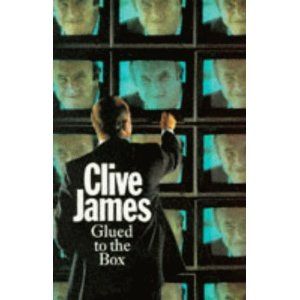
Glued to the Box: Television Criticism from the
(1984) Collection of the Australian-born writer's TV criticism published in the London 'Observer' during the period 1979-82. It is a paperback edition of a volume first published by Jonathan Cape in 1983. His earlier volumes of TV criticism are 'Visions Before Midnight' (1977 & 1981) and 'The Crystal Bucket' (1983). They were published in a single volume with a new introduction and index as 'Clive James on Television' (1991). |
 |
|
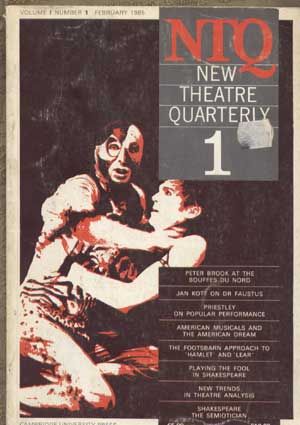
New Theatre Quarterly 15 (Part 3)
(1988) New Theatre Quarterly provides a vital international forum where theatrical scholarship and practice can meet and where prevailing dramatic assumptions can be subjected to vigorous critical questioning. It shows that theatre history has a contemporary relevance, that theatre studies need a methodology and that theatre criticism needs a language. The journal publishes news, analysis and debate within the field of theatre studies. |
 |
|
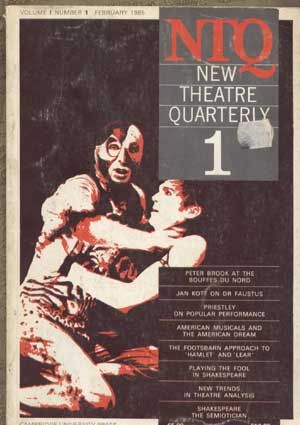
New Theatre Quarterly 14 (Part 2)
(1988) New Theatre Quarterly provides a vital international forum where theatrical scholarship and practice can meet and where prevailing dramatic assumptions can be subjected to vigorous critical questioning. It shows that theatre history has a contemporary relevance, that theatre studies need a methodology and that theatre criticism needs a language. The journal publishes news, analysis and debate within the field of theatre studies. |
 |
|
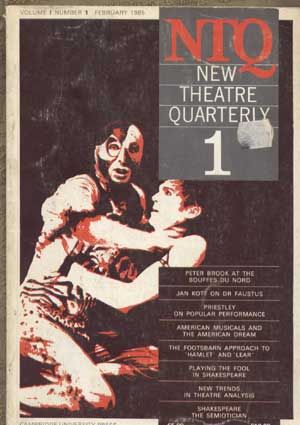
New Theatre Quarterly 13 (Part 1)
(1988) |
 |
|
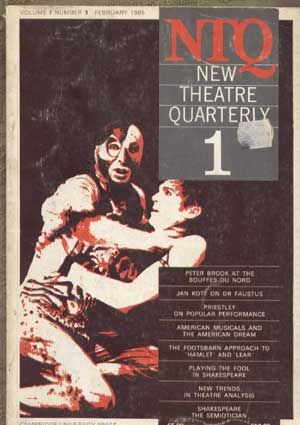
New Theatre Quarterly 11 (Part 3)
(1987) New Theatre Quarterly provides a vital international forum where theatrical scholarship and practice can meet and where prevailing dramatic assumptions can be subjected to vigorous critical questioning. It shows that theatre history has a contemporary relevance, that theatre studies need a methodology and that theatre criticism needs a language. The journal publishes news, analysis and debate within the field of theatre studies. |
 |
|
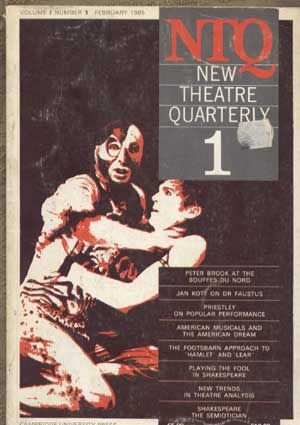
New Theatre Quarterly 10: Volume 3, Part 2
(1987) One of a series discussing topics of interest in theatre studies from theoretical, methodological, philosophical and historical perspectives. The books are aimed at drama and theatre teachers, advanced students in schools and colleges, arts authorities, actors, playwrights, critics and directors. |
 |
|
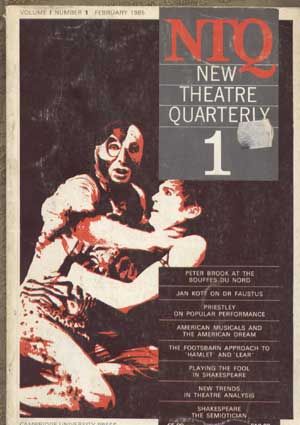
New Theatre Quarterly 12 (Part 4)
(1987) One of a series discussing topics of interest in theatre studies from theoretical, methodological, philosophical and historical perspectives. The books are aimed at drama and theatre teachers, advanced students in schools and colleges, arts authorities, actors, playwrights, critics and directors. --This text refers to an out of print or unavailable edition of this title. |
 |
|
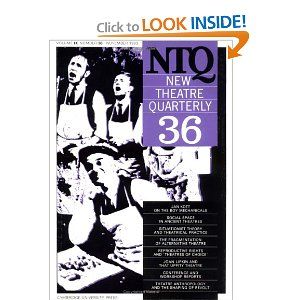
New Theatre Quarterly 36: Volume 9, Part 4
(1993) Providing an international forum for the discussion of topics of current interest in theatre studies, this edition of New Theatre Quarterly presents articles including the Gershwins in Britain; a discussion by Kott and Marowitz on 'Measure for Measure'; and Gramsci on Ibsen and Pirandello. |
 |
|
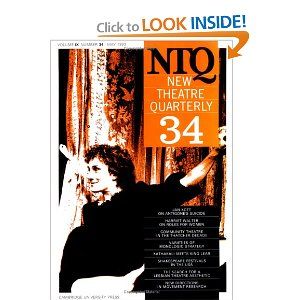
New Theatre Quarterly 34: Volume 9, Part 2
(1993) This is edition number 34 of the New Theatre Quarterly, which provides a lively international forum for discussion of topics of current interest in theatre studies, whether from the perspective of theory, methodology, philosophy or history. |
 |
|
New Theatre Quarterly 32: Volume 8, Part 4
(1993) Part 32 of the New Theatre Quarterly, which provides a lively international forum for discussion of topics of current interest in theatre studies. This edition includes articles on and theatre versus reality, the economics of apathy, feminist theatre in Britain and more. |
 |
|
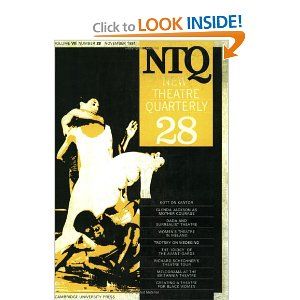
New Theatre Quarterly 28: Volume 7, Part 4
(1992) One of a series which discusses topics of interest in theatre studies from various perspectives. Part 28 includes discussions of 'Mother Courage' at the Citizens, 1990, by Margaret Eddershaw, and Wole Soyinka's 'Death and the King's Horseman', at the Royal Exchange, 1990, by Martin Banham. |
 |
|
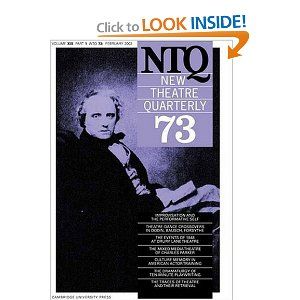
New Theatre Quarterly 26 (Part 2)
(1991) One of a series which discusses topics of interest in theatre studies from various perspectives. Part 26 includes reconstructions of John Barrymore's interpretation of 'Hamlet' and of Edward Booth's 'Jackets', and a discussion of sexuality and structure in expressionist drama. |
 |
|
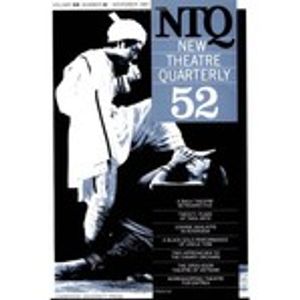
New Theatre Quarterly 25 (Part 1)
(1991) One of a series which discusses topics of interest in theatre studies from various perspectives. Part 25 includes an interview with Kaethe Ruelicke-Weiler on the artistic direction and management of the Berliner Ensemble, Bertolt Brecht and Helena Weigel. |
 |
|
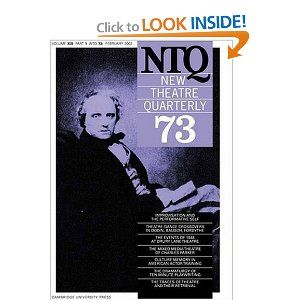
New Theatre Quarterly 23 (Part 3)
(1991) One of a series discussing topics of interest in theatre studies from theoretical, methodological, philosophical and historical perspectives. The books are aimed at drama and theatre teachers, advanced students in schools and colleges, arts authorities, actors, playwrights, critics and directors. |
 |
|
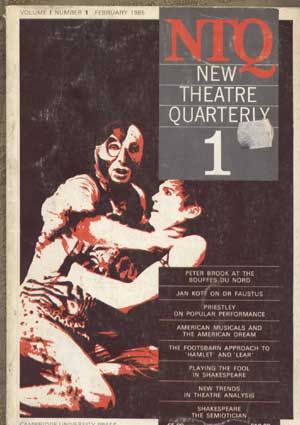
New Theatre Quarterly 1 (Part 1)
(1985) New Theatre Quarterly provides a vital international forum where theatrical scholarship and practice can meet and where prevailing dramatic assumptions can be subjected to vigorous critical questioning. It shows that theatre history has a contemporary relevance, that theatre studies need a methodology and that theatre criticism needs a language. The journal publishes news, analysis and debate within the field of theatre studies. |
 |
|
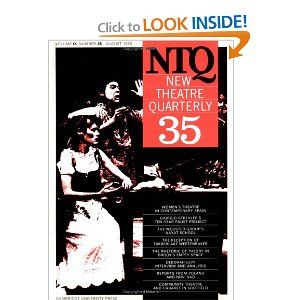
New Theatre Quarterly 35: Volume 9, Part 3
(1993) Provides an international forum for the discussion of topics of current interest in theatre studies. This issue includes articles on women and theatre in Spain; Sarah Bernhardt in Vaudeville; Giorgio Strehler's 'Faust' project; Deborah Levy in interview; and social space in ancient theatre. |
 |
|
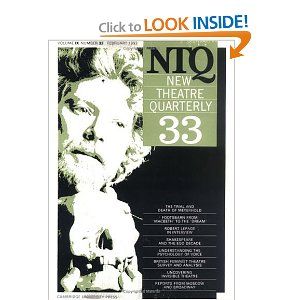
New Theatre Quarterly 33: Volume 9, Part 1
(1993) New Theatre Quarterly provides a lively international forum where theatrical scholarship and practice can meet, and where prevailing dramatic assumptions can be subjected to critical questioning. Articles in Volume 66 will include: Dario Fo, the Commune, and the Battle for the Palazzina Liberty; Dramaturgy according to Daedalus; 'Other' Spaces of Translation: the Theatre of Bernard-Marie Koltès; 'Everybody Got Their Brown Dress': Millennium Revivals of the Medieval Mysteries; 'Suffrage Shrews':... |
 |
|
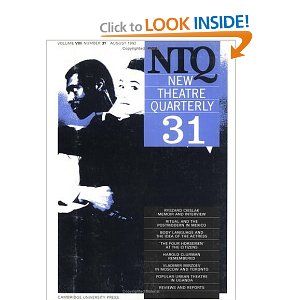
New Theatre Quarterly 31: Volume 8, Part 3
(1992) Part 31 of the New Theatre Quarterly, which provides a lively international forum for discussion of topics of current interest in theatre studies. This edition includes articles on 'The Four Horsemen' at the Citizen's Theatre, popular urban theatre in Uganda and body language. |
 |
|
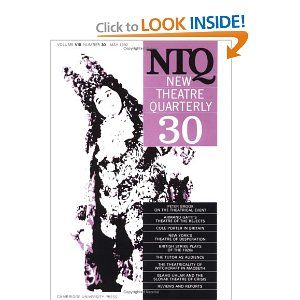
New Theatre Quarterly 30: Volume 8, Part 2
(1992) One of a series discussing topics of interest in theatre studies from theoretical, methodological, philosophical and historical perspectives. The books are aimed at drama and theatre teachers, advanced students in schools and colleges, arts authorities, actors, playwrights, critics and directors. |
 |
|
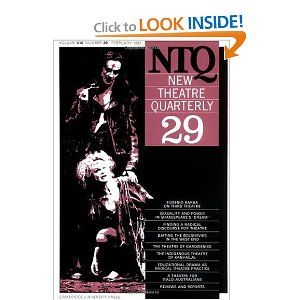
New Theatre Quarterly 29: Volume 8, Part 1
(1992) Part of a series which discusses topics of current interest in theatre studies, from the perspective of theory, methodology, philosophy or history. |
 |
|
AWAKE AND SING. A PLAY IN THREE ACTS
(1935) Awake and Sing! is a drama written by American playwright Clifford Odets. The play was initially produced by The Group Theatre in 1935. The play is set in The Bronx in 1933; it concerns the impoverished Berger family and their conflicts as the parents scheme to manipulate their children's relationships to their own ends, while their children strive for their own dreams. |
 |
|
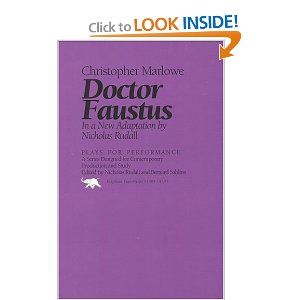
Doctor Faustus
(1991) Marlowe's classic treatment of the myth of man's greed and ambition has contemporary reverberations that make it compelling drama. Plays for Performance Series. |
 |
|
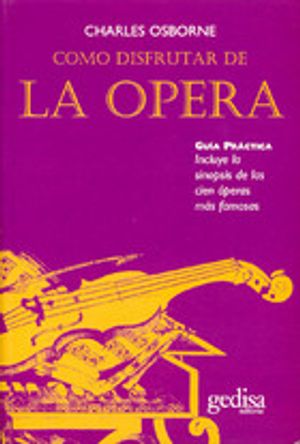
How to Enjoy Opera
(1987) Discusses the essential elements of opera, surveys the history of opera, and describes the plots of one hundred popular operas. |
 |
|
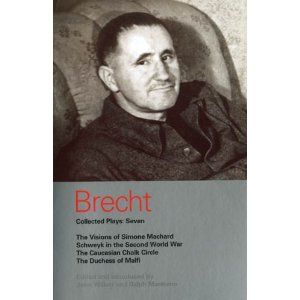
Visions of Simone Machard, The: Schweyk in the Second World War
(1987) Schweik in the Second World War is a play by German dramatist and poet Bertolt Brecht. It was written by Brecht in 1943 while in exile in California, and is a sequel to the 1923 novel The Good Soldier Švejk by Jaroslav Hašek. It is set in Prague and on the Russian Front during World War II. It is a satirical tale of a common man, Schweyk, who is forced into war and manages to survive. He overcomes dangerous situations in Gestapo Headquarters, a military prison, and a Voluntary Labor Service. ... |
 |
|
Saint Joan of the Stockyards
(1970) "A major Brecht play in an outstanding translation with an expert and up-to-date preface." -- Eric Bentley "... a fine translation.... Jones has handled Brecht's meters with great skill." -- Choice |
 |
|
Open Letters to the Intimate Theater
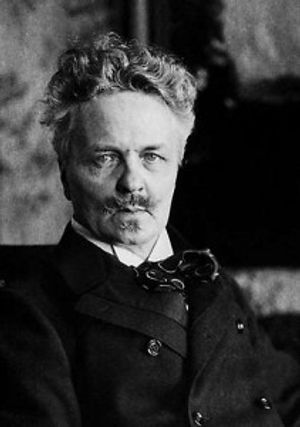
(1966) Swedish playwright, novelist, and short-story writer, who combined in his works psychology, naturalism, and later elements of new literary forms. Strindberg was married three times – several of his plays drew on the problems of his marriages and reflected his constant interest in self-analysis. A sensitive and controversial writer, who suffered from hostile reviews, Strindberg represented the 19th-century ideal of artist as a free personality, unrestrained by convention. |
 |
|
A Lesson from Aloes
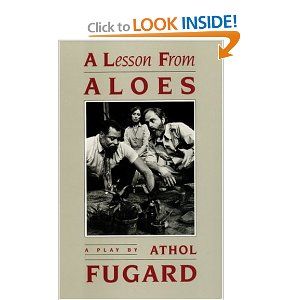
(1993) The New Yorker has said of Athol Fugard, "A rare playwright, who could be a primary candidate for either the Nobel Prize in Literature or the Nobel Peace Prize." His major works for the stage include: Blood Knot; "Master Harold"...and the boys; My Children! My Africa!; A Lesson from Aloes; The Road to Mecca; Valley Song; and The Captain's Tiger. |
 |
|
After the Fall: A Play in Two Acts
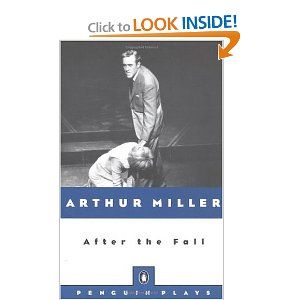
(1980) A lost character draws upon events in his past as he searches for life's meaning in Miller's powerful play. |
 |
|
Salesman in Beijing
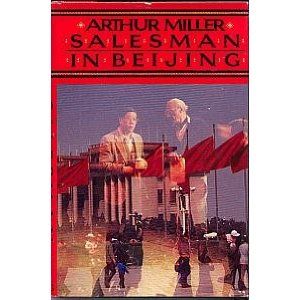
(1984) " In 1983 Arthur Miller was invited to direct a Chinese version of his play, "Death of a Salesman." "Salesman in Beijing" is his day by day account of his experience. Most of the book focuses on the problems of communication with the Chinese actors as a result of linguistic and cultural differences. He feels that he was able to overcome these difficulties because of the dedication of the actors and the fact that the play itself deals with universal qualities that transcend local culture. He ... |
 |
|
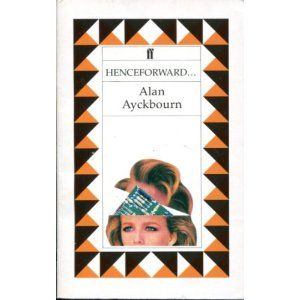
Henceforward
(1988) Starring Anne Heche and Jared Harris, the hilarious Henceforward... is one of Alan Ayckbourn s most unusual works. In the not-so-distant future a composer is building a female robot to act as his fiancée, so that he can convince his ex-wife that their daughter should come live with him. Thus, he hopes to overcome his writers block and redress the pain of his past. A full-cast performance featuring: Jack Davenport, Jared Harris, Anne Heche, Paula Jane Newman, Moira Quirk and Darren Richardson... |
 |
|
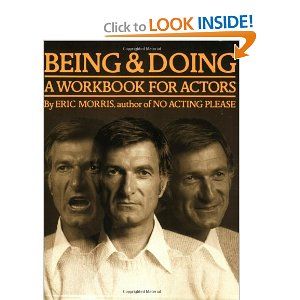
Being and Doing: A Workbook for Actors
(1990) A fun and exciting workbook for actors to use in establishing a daily work schedule. Designed to help the actor integrate the two parts of the process, THE INSTRUMENT AND THE CRAFT. Which gives spontaneity, dimension, and authenticity to his performance. The numerous daily exercises deal with every aspect of acting including the actor's relationship to the business. Blank pages provide the actor with space to document his or her own involvement and progress. Being a workbook, every page is fill... |
 |
|
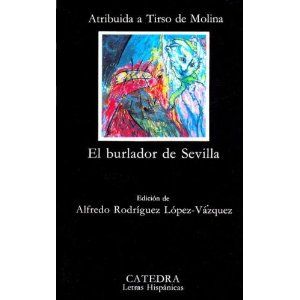
El Burlador De Sevilla
(1990) El burlador de Sevilla is a play by Tirso de Molina, first published in Spain around 1630, though it may have been performed as early as 1616. Set in the 14th century, the play is the earliest fully-developed dramatisation of the Don Juan legend. |
 |
|
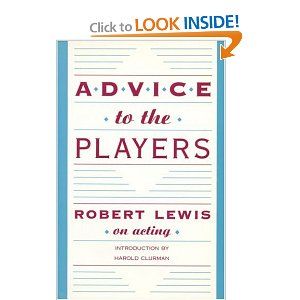
Advice to the Players
(1993) Robert Lewis was an American actor, director, teacher, author and founder of the influential Actors Studio in New York in 1947. In addition to his accomplishments on Broadway and in Hollywood, Lewis' greatest and longest lasting contribution to American theater may be the role he played as one of the foremost acting and directing teachers of his day. He was an early proponent of the Stanislavski System of acting technique and a founding member of New York's revolutionary Group Theatre in the 1... |
 |
|
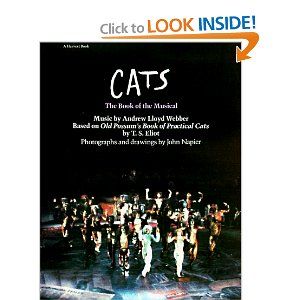
Cats: The Book of the Musical
(1983) A richly illustrated book that re-creates the making of one of Broadway’s biggest hits, based on Eliot’s Old Possum’s Book of Practical Cats. Color photographs and drawings by John Napier. |
 |
|
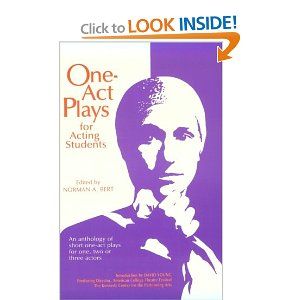
One Act Plays for Acting Students: An Anthology of Short One-Act Plays for One, Two or Three Actors
(1987) 23 short length plays for a cast of one, two, or three. 5 minutes acting time for each character. Performance times vary from 8-15 minutes. |
 |
|
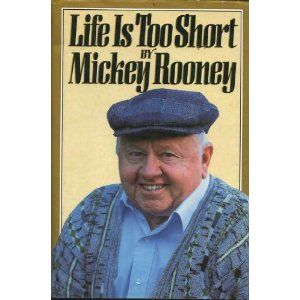
Life Is Too Short
(1991) At age two in 1922, Joe Yule Jr. joined his parents on the vaudeville circuit in an act that was disbanded when Joe Sr. decamped. On their own, mother and son went looking for work in Hollywood, where little Joe metamorphosed into Mickey Rooney. His racy, comic, poignant autobiography recalls the highs and lows during the years he made more than 200 films, including the hugely popular Andy Hardy series and musicals with Judy Garland. Rooney is candid on the subjects of his eight marriages (the f... |
 |
|
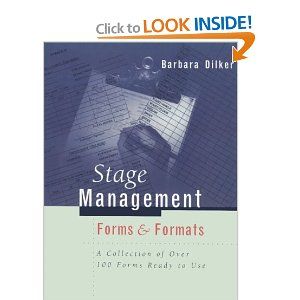
Stage Management Forms and Formats: A Collection of over 100 Forms Ready to Use
(1991) Designed to provide a head-start on the task of organizing and recording production information, "State Management Forms & Formats" contains 112 full-size, blank forms which can be used in the book or removed and added to a separate production log. Cast and scene breakdowns, expense sheets, rehearsal and performance reports, sign-in sheets, and property plots are just a few of the forms included. (Performing Arts) |
 |
|
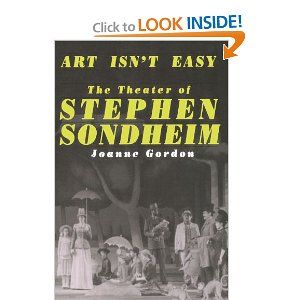
Art Isn't Easy: The Theater of Stephen Sondheim
(1992) Gordon explicates the works of Sondheim to repudiate the common perception of musical theater as mere escapist entertainment, showing how Sondheim tackles real, complex subjects, without fear of introducing pain, trauma, and difficult ideas onto the Broadway stage. |
 |
|
A Short History of Opera
(1965) When first published in 1947, A Short History of Opera immediately achieved international status as a classic in the field. Now, more than five decades later, this thoroughly revised and expanded fourth edition informs and entertains opera lovers just as its predecessors have. The fourth edition incorporates new scholarship that traces the most important developments in the evolution of musical drama. After surveying anticipations of the operatic form in the lyric theater of the Greeks, medi... |
 |
|
Master Teachers of Theatre: Observations on Teaching Theatre by Nine American Masters
(1988) Claribel Baird reviews the interpretation of classical texts for theatrical performance. Howard Bay interrupted his stage design career of more than 150 Broadway productions to help students. Bernard Beckerman asks if there are approaches to the teaching of dramatic literature that particularly suit drama-as-theatre. Robert Benedetti offers suggestions on the teaching of acting. Oscar Brockett treats the problems of the theatre teacher and the processes of learning. Agnes Haaga shows that the ... |
 |
|
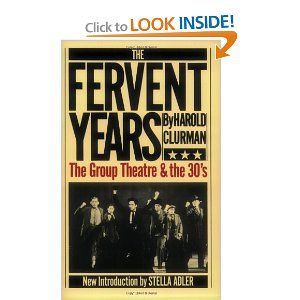
The Fervent Years: The Group Theatre And The Thirties
(1983) The Group Theatre was perhaps the most significant experiment in the history of American theater. Producing plays that reflected topical issues of the decade and giving a creative chance to actors, directors, and playwrights who were either fed up with or shut out of commercial theater, the ”Group” remains a permanent influence on American drama despite its brief ten-year life. It was here that method acting, native realism, and political language had their tryouts in front of audiences who... |
 |
|
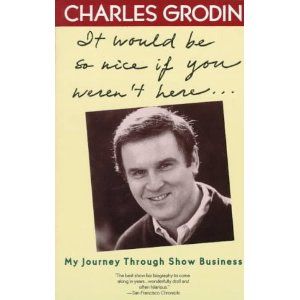
It Would Be So Nice If You Weren't Here: My Journey Through Show Business [
(1990) "In this ebullient, often rancorous autobiography, the stage, film and TV actor describes vividly the hassles that cost him the plum role in The Graduate and numerous other setbacks before he starred in The Heartbreak Kid . Instructive and entertaining, his story includes tidbits on Mike Nichols, Elaine May, Roman Po lanski, Ellen Burstyn, Simon & Garfunkel, and many other luminaries, none more intriguing than the un sinkable Grodin," said PW. Photos. |
 |
|
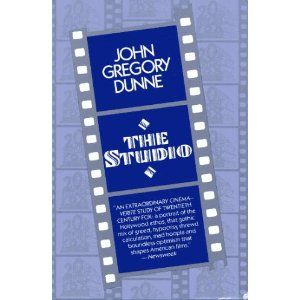
The Studio
(1985) In 1967, John Gregory Dunne asked for unlimited access to the inner workings of Twentieth Century Fox. Miraculously, he got it. For one year Dunne went everywhere there was to go and talked to everyone worth talking to within the studio. He tracked every step of the creation of pictures like "Dr. Dolittle," "Planet of the Apes," and "The Boston Strangler." The result is a work of reportage that, thirty years later, may still be our most minutely observed and therefore most uproariously funny po... |
 |
|
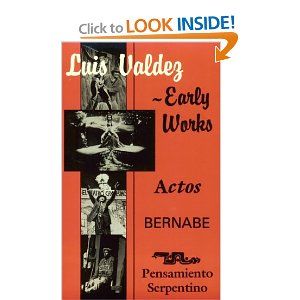
Luis Valdez Early Works: Actos, Bernabe and Pensamiento Serpentino
(1990) This collection is actually three books in one: 1) a collection of one-act plays by the famous farmwork theatre, El Teatro Campesino and its director, Luis Valdez, 2) one of the first fully realized, full-length plays by Valdez alone, and 3) an original narrative poem by Luis Valdez. |
 |
|
Unmarked: The Politics of Performance
(1993) InUnmarked, Peggy Phelan examines the relationship between political and representational visibility and invisibility within both mainstream culture and the avant-garde. Her controversial study of the politics of performance uses theories of psychoanalysis, feminism and cultural studies to examine issues in photography, film, theatre, anti-abortion demonstrations and performance art. Unmarked is a boldly speculative analysis of contemporary culture and will be of interest to performance theorist... |
 |
Videos