


|
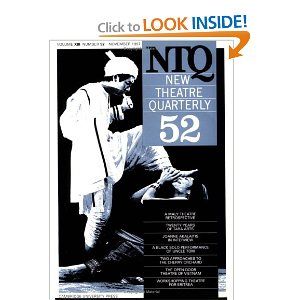
New Theatre Quarterly 52: Volume 13, Part 4
(1998) New Theatre Quarterly provides a lively international forum where theatrical scholarship and practice can meet, and where prevailing dramatic assumptions can be subjected to vigorous critical questioning. It shows that theatre history has a contemporary relevance, that theatre studies need a methodology, and that theatre criticism needs a language. The journal publishes news, analysis and debate within the field of theatre studies. Topics covered in NTQ 52 include: Resistance and Resilience: th... |
 |
|
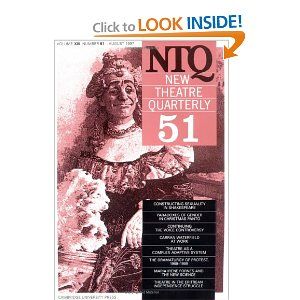
New Theatre Quarterly 51: Volume 13, Part 3
(1997) New Theatre Quarterly provides a lively international forum where theatrical scholarship and practice can meet, and where prevailing dramatic assumptions can be subjected to vigorous critical questioning. It shows that theatre history has a contemporary relevance, that theatre studies need a methodology, and that theatre criticism needs a language. The journal publishes news, analysis and debate within the field of theatre studies. Topics covered in NTQ 51 include: The Paradoxes of Gender in En... |
 |
|
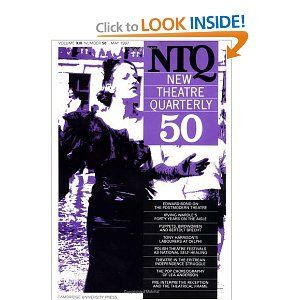
New Theatre Quarterly 50: Volume 13, Part 2
(1997) New Theatre Quarterly provides a lively international forum where theatrical scholarship and practice can meet, and where prevailing dramatic assumptions can be subjected to vigorous critical questioning. It shows that theatre history has a contemporary relevance, that theatre studies need a methodology, and that theatre criticism needs a language. The journal publishes news, analysis and debate within the field of theatre studies. Topics covered in NTQ 50 include: Postmodernism, Capitalism, an... |
 |
|
New Theatre Quarterly 47: Volume 12, Part 3
(1996) One of a series discussing topics of interest in theatre studies from theoretical, methodological, philosophical and historical perspectives. The books are aimed at drama and theatre teachers, advanced students in schools and colleges, arts authorities, actors, playwrights, critics and directors. |
 |
|
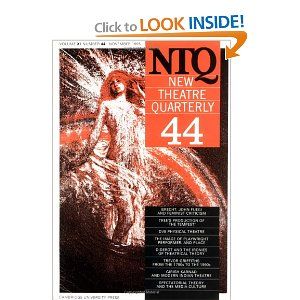
New Theatre Quarterly 44: Volume 11, Part 4
(1996) New Theatre Quarterly provides an international forum where theatrical scholarship and practice can meet. Topics covered in number 44 include: 'Spectatorial Theory in the Age of the Media Culture', and 'The Company You Keep: Subversive Thoughts on the Impact of the Playwright and the Performer'. |
 |
|
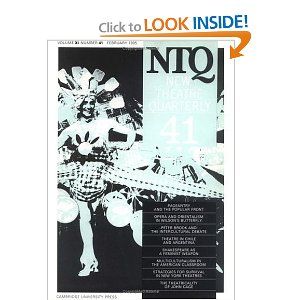
New Theatre Quarterly 41: Volume 11, Part 1
(1995) New Theatre Quarterly provides a valuable international forum where theatrical scholarship and practice can meet, and where prevailing dramatic assumptions can be subjected to vigorous critical questioning. |
 |
|
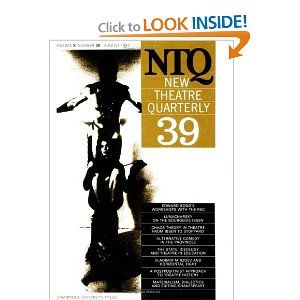
New Theatre Quarterly 39: Volume 10, Part 3
(1994) New Theatre Quarterly provides a lively international forum where theatrical scholarship and practice can meet, and where prevailing dramatic assumptions can be subjected to vigorous critical questioning. It shows that theatre history has a contemporary relevance. |
 |
|
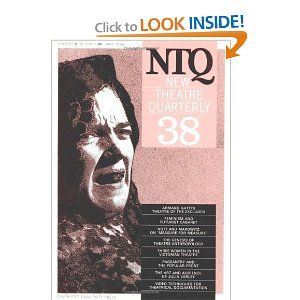
New Theatre Quarterly 38: Volume 10, Part 2
(1994) Topics in New Theatre Quarterly, 38, include Fulvia Guiliani, portrait of a futurist actress; ideological production and mass spectacle in popular front Britain; working in the margin: women in theatre history; Stanislavsky directing Chekhov; and the genesis of theatre anthropology. |
 |
|
New Theatre Quarterly 37: Volume 10, Part 1
(1994) Based on a pair of comic dramas from ancient Rome, The Comedy of Errors presents a spectacle of pure farce in the spirit of utmost fun and - as the title suggests - hilarious confusion. Two sets of identical twins provide the basis for ongoing incidents of mistaken identity, within a lively plot of quarrels, arrests, and a grand courtroom denouement. One of Shakespeare's earliest dramatic efforts, the play abounds in his trademark conceits, puns, and other forms of fanciful wordplay. It also fo... |
 |
|
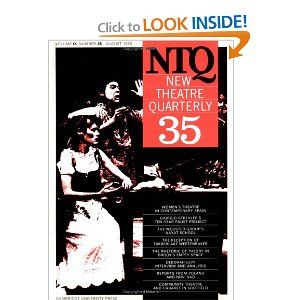
New Theatre Quarterly 35: Volume 9, Part 3
(1993) Provides an international forum for the discussion of topics of current interest in theatre studies. This issue includes articles on women and theatre in Spain; Sarah Bernhardt in Vaudeville; Giorgio Strehler's 'Faust' project; Deborah Levy in interview; and social space in ancient theatre. |
 |
|
New Theatre Quarterly 33: Volume 9, Part 1
(1993) New Theatre Quarterly provides a lively international forum where theatrical scholarship and practice can meet, and where prevailing dramatic assumptions can be subjected to critical questioning. Articles in Volume 66 will include: Dario Fo, the Commune, and the Battle for the Palazzina Liberty; Dramaturgy according to Daedalus; 'Other' Spaces of Translation: the Theatre of Bernard-Marie Koltès; 'Everybody Got Their Brown Dress': Millennium Revivals of the Medieval Mysteries; 'Suffrage Shrews':... |
 |
|
New Theatre Quarterly 31: Volume 8, Part 3
(1992) Part 31 of the New Theatre Quarterly, which provides a lively international forum for discussion of topics of current interest in theatre studies. This edition includes articles on 'The Four Horsemen' at the Citizen's Theatre, popular urban theatre in Uganda and body language. |
 |
|
New Theatre Quarterly 30: Volume 8, Part 2
(1992) One of a series discussing topics of interest in theatre studies from theoretical, methodological, philosophical and historical perspectives. The books are aimed at drama and theatre teachers, advanced students in schools and colleges, arts authorities, actors, playwrights, critics and directors. |
 |
|
New Theatre Quarterly 29: Volume 8, Part 1
(1992) Part of a series which discusses topics of current interest in theatre studies, from the perspective of theory, methodology, philosophy or history. |
 |
|
New Theatre Quarterly 43: Volume 11, Part 3
(1995) This journal provides a forum where theatrical scholarship and practice can meet and where dramatic assumptions can be questioned. It shows that theatre history has a contemporary relevance, that theatre studies need a methodology, and theatre criticism needs a language |
 |
|
New Theatre Quarterly 45: Volume 12, Part 1
(1996) New Theatre Quarterly provides a forum where theatrical scholarship and practice can meet. Topics covered in number 45 include: Palimpsestus: Frank Wedekind's Theatre of Self Performance, and 'Leaking Bodies and Fractured Texts': Representing the Female Body at the Omaha Magic Theatre. |
 |
|
AWAKE AND SING. A PLAY IN THREE ACTS
(1935) Awake and Sing! is a drama written by American playwright Clifford Odets. The play was initially produced by The Group Theatre in 1935. The play is set in The Bronx in 1933; it concerns the impoverished Berger family and their conflicts as the parents scheme to manipulate their children's relationships to their own ends, while their children strive for their own dreams. |
 |
|
The Jew of Malta
(1997) One of the best-known works by the hugely influential English Renaissance dramatist Christopher Marlowe. The Introduction discusses the significance of this brilliant and major work, with detailed commentary provided for meanings of difficult words, lines, and references. |
 |
|
Doctor Faustus
(1991) Marlowe's classic treatment of the myth of man's greed and ambition has contemporary reverberations that make it compelling drama. Plays for Performance Series. |
 |
|
How to Enjoy Opera
(1987) Discusses the essential elements of opera, surveys the history of opera, and describes the plots of one hundred popular operas. |
 |
|
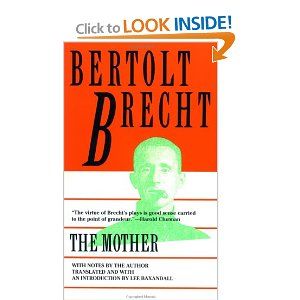
The Mother
(1994) The Mother is a play by the German modernist playwright Bertolt Brecht. It is based on Maxim Gorky’s 1906 novel of the same name. It was written in collaboration with Hanns Eisler, Slatan Dudow and Günter Weisenborn from 1930–31 in prose dialogue with unrhymed irregular free verse and ten initial songs in its score, with three more added later. It premièred at the Theater am Schiffbauerdamm in Berlin, opening on 17 January 1932. It was directed by Emil Burri and the scenic design was by... |
 |
|
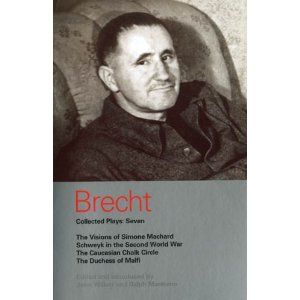
Visions of Simone Machard, The: Schweyk in the Second World War
(1987) Schweik in the Second World War is a play by German dramatist and poet Bertolt Brecht. It was written by Brecht in 1943 while in exile in California, and is a sequel to the 1923 novel The Good Soldier Švejk by Jaroslav Hašek. It is set in Prague and on the Russian Front during World War II. It is a satirical tale of a common man, Schweyk, who is forced into war and manages to survive. He overcomes dangerous situations in Gestapo Headquarters, a military prison, and a Voluntary Labor Service. ... |
 |
|
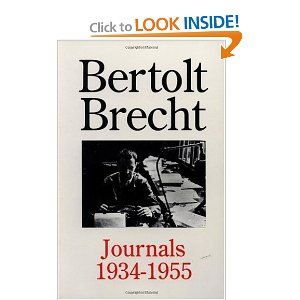
Bertolt Brecht: Journals 1934 - 1955
(1995) Bertolt Brecht's work journals trace his years of exile (the period from 1934 to 1955) in Denmark, Sweden, Finland, and America, as well as his return, via Switzerland, to East Berlin. These journals include his perceptive and at times polemical critiques of other writers and intellectuals, but the accounts of his own writing practice provide the greatest insights into the creation of his dramatic work as well as the development of his politics and theories about epic theatre. There are memora... |
 |
|
Saint Joan of the Stockyards
(1970) "A major Brecht play in an outstanding translation with an expert and up-to-date preface." -- Eric Bentley "... a fine translation.... Jones has handled Brecht's meters with great skill." -- Choice |
 |
|
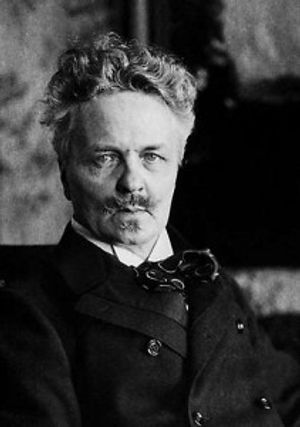
Open Letters to the Intimate Theater
(1966) Swedish playwright, novelist, and short-story writer, who combined in his works psychology, naturalism, and later elements of new literary forms. Strindberg was married three times – several of his plays drew on the problems of his marriages and reflected his constant interest in self-analysis. A sensitive and controversial writer, who suffered from hostile reviews, Strindberg represented the 19th-century ideal of artist as a free personality, unrestrained by convention. |
 |
|
A Lesson from Aloes
(1993) The New Yorker has said of Athol Fugard, "A rare playwright, who could be a primary candidate for either the Nobel Prize in Literature or the Nobel Peace Prize." His major works for the stage include: Blood Knot; "Master Harold"...and the boys; My Children! My Africa!; A Lesson from Aloes; The Road to Mecca; Valley Song; and The Captain's Tiger. |
 |
|
After the Fall: A Play in Two Acts
(1980) A lost character draws upon events in his past as he searches for life's meaning in Miller's powerful play. |
 |
|
Salesman in Beijing
(1984) " In 1983 Arthur Miller was invited to direct a Chinese version of his play, "Death of a Salesman." "Salesman in Beijing" is his day by day account of his experience. Most of the book focuses on the problems of communication with the Chinese actors as a result of linguistic and cultural differences. He feels that he was able to overcome these difficulties because of the dedication of the actors and the fact that the play itself deals with universal qualities that transcend local culture. He ... |
 |
|
The Theater Essays Of Arthur Miller
(1996) Arthur Miller is one of the most important and enduring playwrights of the last fifty years. This new edition of The Theater Essays has been expanded by nearly fifty percent to include his most significant articles and interviews since the book's initial publication in 1978. Within these pages Miller discusses the roots of modern drama, the nature of tragedy, and the state of contemporary theater; offers illuminating observations on Ibsen, Strindberg, Chekhov, O'Neill, and Williams; probes the ... |
 |
|
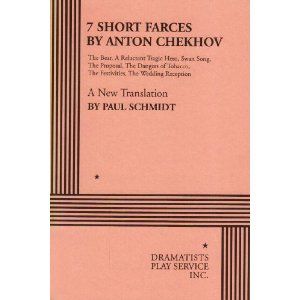
7 Short Farces by Anton Chekhov
(1998) Includes: The Bear, a Reluctant Tragic Hero, Swan Song, the Proposal, the Dangers of Tobacco, the Festivities, the Wedding Reception |
 |
|
Henceforward
(1988) Starring Anne Heche and Jared Harris, the hilarious Henceforward... is one of Alan Ayckbourn s most unusual works. In the not-so-distant future a composer is building a female robot to act as his fiancée, so that he can convince his ex-wife that their daughter should come live with him. Thus, he hopes to overcome his writers block and redress the pain of his past. A full-cast performance featuring: Jack Davenport, Jared Harris, Anne Heche, Paula Jane Newman, Moira Quirk and Darren Richardson... |
 |
|
Agamemnon
(1995) Purchase of this book includes free trial access to www.million-books.com where you can read more than a million books for free. This is an OCR edition with typos. Excerpt from book: And wept; while visioned in the light Of her own loveliness, more bright Than pictured breathing form that is but mute, She looked as though she wished, with that pure voice, That oft her father's halls along, Had made full many a chieftain there rejoice, To speak to that assembled throng. STROPHE IV. Yes! at those... |
 |
|
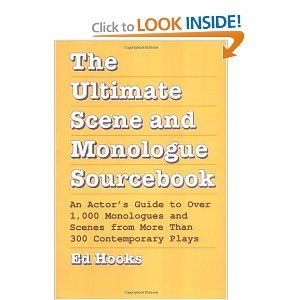
The Ultimate Scene and Monologue Sourcebook: An Actor's Guide to over 1000 Monologues and Dialogues from More Than 300 Contemporary Plays
(1994) Preparing for an audition and unsure of what you want to do? The Ultimate Scene and Monologue Sourcebook is the book you've been waiting for. Unlike “scene books” that reprint 50 to 75 monologues excerpted from plays but don't include any background information, this annotated guide tells you what you really need to know about audition material from more than 300 contemporary plays. Here is how the book works. Suppose that you're looking for a dramatic male/female scene. When you sc... |
 |
|
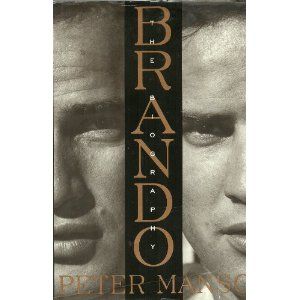
Brando: The Biography
(1994) A scandal-loving biographer's dream, Marlon Brando has led a tumultuous life, complete with unhappy childhood, an active and varied sex life, troubled children of his own (son Christian is now in prison for killing daughter Cheyenne's lover), and a long history of eccentric behavior on and off the set. Surprisingly, Brando hasn't caught Kitty Kelley's eye, but journalist Manso (Mailer: His Life and Times, LJ 4/15/85) corrects that oversight with this massive tome. Based on seven years' research... |
 |
|
Being and Doing: A Workbook for Actors
(1990) A fun and exciting workbook for actors to use in establishing a daily work schedule. Designed to help the actor integrate the two parts of the process, THE INSTRUMENT AND THE CRAFT. Which gives spontaneity, dimension, and authenticity to his performance. The numerous daily exercises deal with every aspect of acting including the actor's relationship to the business. Blank pages provide the actor with space to document his or her own involvement and progress. Being a workbook, every page is fill... |
 |
|
Period Make-up for the Stage: Step-by-step
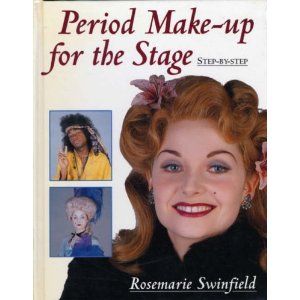
(1997) Period productions on stage, television and film are increasingly popular. Part of the success of these productions is authentic make-up. In this text, basic stage make-up for men and women is described and illustrated clearly for white, Hispanic, Chinese, black and Asian skins. Step-by-step instructions are given on how to create each look, from Ancient Egyptian, to the Punk-look of the 1970s." |
 |
|
El Burlador De Sevilla
(1990) El burlador de Sevilla is a play by Tirso de Molina, first published in Spain around 1630, though it may have been performed as early as 1616. Set in the 14th century, the play is the earliest fully-developed dramatisation of the Don Juan legend. |
 |
|
Advice to the Players
(1993) Robert Lewis was an American actor, director, teacher, author and founder of the influential Actors Studio in New York in 1947. In addition to his accomplishments on Broadway and in Hollywood, Lewis' greatest and longest lasting contribution to American theater may be the role he played as one of the foremost acting and directing teachers of his day. He was an early proponent of the Stanislavski System of acting technique and a founding member of New York's revolutionary Group Theatre in the 1... |
 |
|
Twentieth Century Theatre: A Sourcebook
(1995) A diverse selection of original texts on theatre by its most creative practitioners - actors, writers, directors and designers. Contributors include Jarry, Ionescu, Shaw, Brecht, Strindberg, Stanislawski, Lorca, Brook, Soyinka, Boal, Barba. |
 |
|
Cats: The Book of the Musical
(1983) A richly illustrated book that re-creates the making of one of Broadway’s biggest hits, based on Eliot’s Old Possum’s Book of Practical Cats. Color photographs and drawings by John Napier. |
 |
|
Costume and Makeup
(1994) One part of a five-part series designed to help the amateur and student to develop their theatre skills. The author looks at drama as it is now and offers imaginative approaches to classical and less conventional theatre - mime, spectacle, musicals, outdoor shows and productions in unusual settings.. He stresses the importance of teamwork and planning and shows how with a creative use of resources outstanding results can be achieved. |
 |
|
One Act Plays for Acting Students: An Anthology of Short One-Act Plays for One, Two or Three Actors
(1987) 23 short length plays for a cast of one, two, or three. 5 minutes acting time for each character. Performance times vary from 8-15 minutes. |
 |
|
Drama, Skits, & Sketches
(1997) From The Ideas Library this book contains how-to ideas for youth promotion, publicity, advertising, fundraising, announcements, administration, bulletin boards, flyers, and all kinds of tricks of the trade. |
 |
|
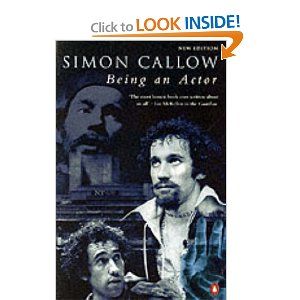
Being an Actor
(1995) Callow was told by master performer Michael MacLiammoir that he was "a born writer, perhaps, but not a born actor." He went on to become not only a most versatile actor, but with this book becomes an accomplished commentator on the theater. What makes Callow's memoir of the familiar uncertainties of an actor's life pleasurable is this actor's eccentricity. He revels in spinning tales of failed shows, arrogant directors, Oscar Wilde reincarnations such as MacLiammoir, who became Callow's first m... |
 |
|
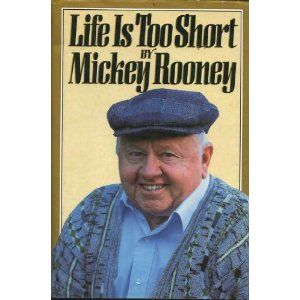
Life Is Too Short
(1991) At age two in 1922, Joe Yule Jr. joined his parents on the vaudeville circuit in an act that was disbanded when Joe Sr. decamped. On their own, mother and son went looking for work in Hollywood, where little Joe metamorphosed into Mickey Rooney. His racy, comic, poignant autobiography recalls the highs and lows during the years he made more than 200 films, including the hugely popular Andy Hardy series and musicals with Judy Garland. Rooney is candid on the subjects of his eight marriages (the f... |
 |
|
Stage Management Forms and Formats: A Collection of over 100 Forms Ready to Use
(1991) Designed to provide a head-start on the task of organizing and recording production information, "State Management Forms & Formats" contains 112 full-size, blank forms which can be used in the book or removed and added to a separate production log. Cast and scene breakdowns, expense sheets, rehearsal and performance reports, sign-in sheets, and property plots are just a few of the forms included. (Performing Arts) |
 |
|
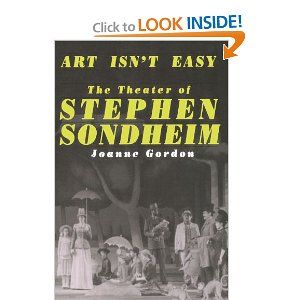
Art Isn't Easy: The Theater of Stephen Sondheim
(1992) Gordon explicates the works of Sondheim to repudiate the common perception of musical theater as mere escapist entertainment, showing how Sondheim tackles real, complex subjects, without fear of introducing pain, trauma, and difficult ideas onto the Broadway stage. |
 |
|
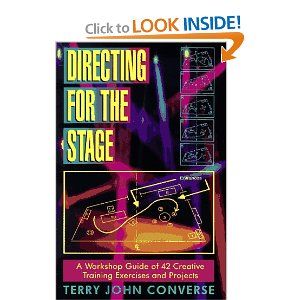
Directing for the Stage: A Workshop Guide of 42 Creative Training Exercises and Projects
(1995) 42 training exercises and projects for stage directing are included in this guide, which provides seven chapters filled with exercises for student stage directors. The basic directing concepts are included in a text which encourages hands-on experience. |
 |
|
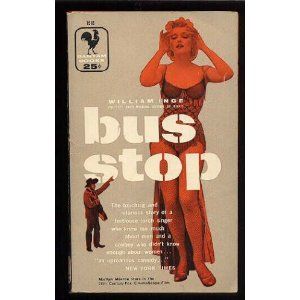
Bus Stop: A Three-Act Romance
(1995) Upon hitting Broadway in 1955 Bus Stop was an immediate commercial & critical success. During a winter storm a busload of weary travelers are forced to shack up at a roadside diner until morning. Inge was renowned for his in-depth character studies, Bus Stop is no exception and offers a warm play about the intersecting lives of eight ordinary people. A L.A. Theatre Works full-cast performance featuring: Megan Anderson, Terrence Currier, Rachel Miner, Anson Mount, Kyle Prue, Lynnie Raybuck, Jef... |
 |
|
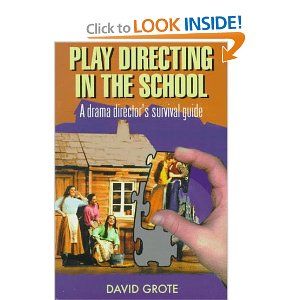
Play Directing in the School: A Drama Director's Survival Guide
(1997) Directing plays in schools requires knowledge and talents far different than directing for community or professional theatre. In ten comprehensive chapters the author explains the "real world" of producing effective theatricals in the school environment. He details the pitfalls and the problems while providing ideas for consistently successful shows. He covers budgeting, scheduling, faculty politics, motivating and disciplining students and many other school-life realities beyond a director or t... |
 |
Videos