


|
Theatre World 1994-1995, Vol. 51
(1/1/2000) Theatre World, the statistical and pictorial record of the Broadway and off-Broadway season, touring companies, and professional regional companies throughout the United States, has become a classic in its field. The book is complete with cast listings, replacement producers, directors, authors, composers, opening and closing dates, song titles, and much, much more. There are special sections with biographical data, obituary information, listings of annual Shakespeare festivals and major drama a... |
 |
|
Theatre World 1993-1994, Vol. 50
(1/1/2000) Theatre World, the statistical and pictorial record of the Broadway and off-Broadway season, touring companies, and professional regional companies throughout the United States, has become a classic in its field. The book is complete with cast listings, replacement producers, directors, authors, composers, opening and closing dates, song titles, and much, much more. There are special sections with biographical data, obituary information, listings of annual Shakespeare festivals and major drama a... |
 |
|
The Social Significance of Modern Drama
(1/1/2000) Out of print virtually since its completion in 1914, Emma Goldman's pioneer work Social Significance in Modern Drama bridges modern drama and political philosophy, pointing out the road that remains to be travelled toward a theatre of social empowerment. Activist, feminist, philosopher and anarchist, Emma Goldman was a passionate thinker about all things modern when the 20th century was still raw and new. The emergence of her treatise on the theatre after years of obscurity is certain to arouse ... |
 |
|
Polaroid Stories
(1/1/1999) Naomi Iizuka’s 1997 play, Polaroid Stories, consciously uses stories, characters and themes from Ovid’s Metamorphoses to tell the stories of street kids living on the edge in a desolate, urban landscape. Because these characters are named after Orpheus and Eurydice, and Echo and Narcissus, or based on stories of Dionysus, and Ariadne and Theseus, and because scenes are entitled “The Story of Semele” or “Theseus in the Labyrinth,” Iizuka creates a world that has two dimensions: the g... |
 |
|
One Act Plays for Acting Students: An Anthology of Short One-Act Plays for One, Two or Three Actors
(12/31/1969) 23 short length plays for a cast of one, two, or three. 5 minutes acting time for each character. Performance times vary from 8-15 minutes. |
 |
|
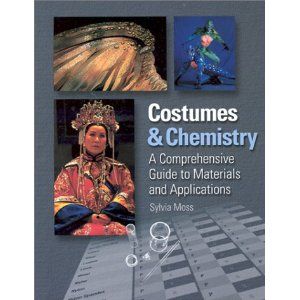
Costumes and Chemistry: A Comprehensive Guide to Materials and Applications
(12/31/1969) Based on 14 years of research and experiment with plastics and various non-traditional materials, this book supplies information to designers and interpreters on specialized techniques for use in costumes for theatre, film and TV. Also included are charts detailing the effects of dry cleaning and laundering on adhesives, coatings, colourings and metallisers, allowing the designer to make appropriate choices for specific needs and longevity. This reference delivers many exciting new choices to d... |
 |
|
Drama, Skits, & Sketches
(12/31/1969) From The Ideas Library this book contains how-to ideas for youth promotion, publicity, advertising, fundraising, announcements, administration, bulletin boards, flyers, and all kinds of tricks of the trade. |
 |
|
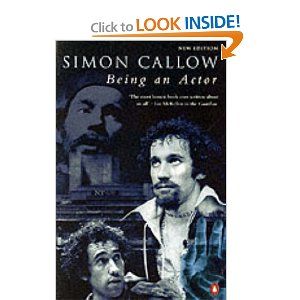
Being an Actor
(12/31/1969) Callow was told by master performer Michael MacLiammoir that he was "a born writer, perhaps, but not a born actor." He went on to become not only a most versatile actor, but with this book becomes an accomplished commentator on the theater. What makes Callow's memoir of the familiar uncertainties of an actor's life pleasurable is this actor's eccentricity. He revels in spinning tales of failed shows, arrogant directors, Oscar Wilde reincarnations such as MacLiammoir, who became Callow's first m... |
 |
|
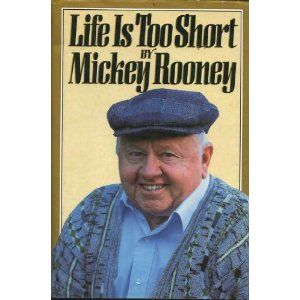
Life Is Too Short
(12/31/1969) At age two in 1922, Joe Yule Jr. joined his parents on the vaudeville circuit in an act that was disbanded when Joe Sr. decamped. On their own, mother and son went looking for work in Hollywood, where little Joe metamorphosed into Mickey Rooney. His racy, comic, poignant autobiography recalls the highs and lows during the years he made more than 200 films, including the hugely popular Andy Hardy series and musicals with Judy Garland. Rooney is candid on the subjects of his eight marriages (the f... |
 |
|
The Hornes: An American Family
(12/31/1969) Daughter of Lena Horne, Buckley here tells a vital story, made even more appealing by her gracefully understated writing and objective viewpoint. Spanning the history of six generations of an American family, the book is based on voluminous papers kept by the Hornes since the mid-19th century. The author sheds light on an area of black society unrecognized for the most part. After the Civil War, the "old Hornes" settled in Brooklyn as part of a minority elite, an upper-middle class with enclave... |
 |
|
Stage Management Forms and Formats: A Collection of over 100 Forms Ready to Use
(12/31/1969) Designed to provide a head-start on the task of organizing and recording production information, "State Management Forms & Formats" contains 112 full-size, blank forms which can be used in the book or removed and added to a separate production log. Cast and scene breakdowns, expense sheets, rehearsal and performance reports, sign-in sheets, and property plots are just a few of the forms included. (Performing Arts) |
 |
|
Art Isn't Easy: The Theater of Stephen Sondheim
(12/31/1969) Gordon explicates the works of Sondheim to repudiate the common perception of musical theater as mere escapist entertainment, showing how Sondheim tackles real, complex subjects, without fear of introducing pain, trauma, and difficult ideas onto the Broadway stage. |
 |
|
Directing for the Stage: A Workshop Guide of 42 Creative Training Exercises and Projects
(12/31/1969) 42 training exercises and projects for stage directing are included in this guide, which provides seven chapters filled with exercises for student stage directors. The basic directing concepts are included in a text which encourages hands-on experience. |
 |
|
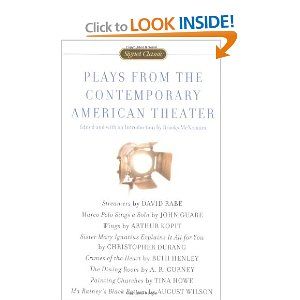
Plays From the Contemporary American Theater
(12/31/1969) Includes eight full-length, award-winning plays: * Streamers by David Rabe * Marco Polo Sings a Solo by John Guare * Wings by Arthur Kopit * Sister Mary Ignatius Explains It All for You by Christopher Durang * Crimes of the Heart by Beth Henley * The Dining Room by A.R. Gurney * Painting Churches by Tina Howe * Ma Rainey's Black Bottom by August Wilson Edited and with an introduction by Brooks McNamara. |
 |
|
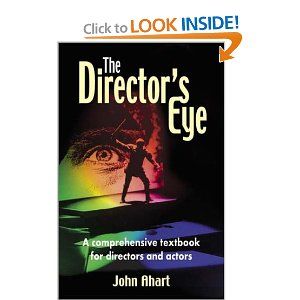
The Director's Eye: A Comprehensive Textbook for Directors and Actors
(12/31/1969) Can a theatre class textbook be both inspirational and informative? Yes! This holistic book on directing and acting does it all. Students will keep it as a lifelong career reference on how to make things work. Written subjectively, it's based on nearly a half-century of teaching and directing. A text that compels involvement in all layers of creating memorable theatre. Thirty-five chapters in seven sections with assignments and convenient section summaries make a complete semester course. This ... |
 |
|
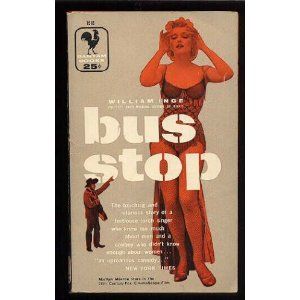
Bus Stop: A Three-Act Romance
(12/31/1969) Upon hitting Broadway in 1955 Bus Stop was an immediate commercial & critical success. During a winter storm a busload of weary travelers are forced to shack up at a roadside diner until morning. Inge was renowned for his in-depth character studies, Bus Stop is no exception and offers a warm play about the intersecting lives of eight ordinary people. A L.A. Theatre Works full-cast performance featuring: Megan Anderson, Terrence Currier, Rachel Miner, Anson Mount, Kyle Prue, Lynnie Raybuck, Jef... |
 |
|
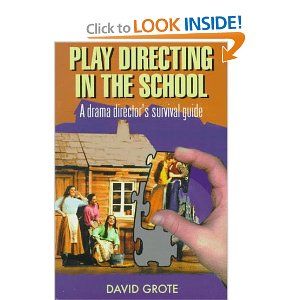
Play Directing in the School: A Drama Director's Survival Guide
(12/31/1969) Directing plays in schools requires knowledge and talents far different than directing for community or professional theatre. In ten comprehensive chapters the author explains the "real world" of producing effective theatricals in the school environment. He details the pitfalls and the problems while providing ideas for consistently successful shows. He covers budgeting, scheduling, faculty politics, motivating and disciplining students and many other school-life realities beyond a director or t... |
 |
|
Broadway's Best
(12/31/1969) 16 beautiful solo arrangements of Broadway standards from 14 great shows. Includes: All I Ask of You * And All That Jazz * Beauty and the Beast * Bring Him Home * Cabaret * Edelweiss * If I Loved You * It Might as Well Be Spring * Seasons of Love * September Song * Some Enchanted Evening * Where Is Love? * With One Look * and more. |
 |
|
Eastern Standard
(12/31/1969) Eastern Standard is a play by Richard Greenberg. Set in 1987, it focuses on yuppies, AIDS, the stock market and insider trading scandals, homelessness, and urban malaise. |
 |
|
Legislative Theatre: Using Performance to Make Politics
(12/31/1969) Boal is a Brazilian activist who has devoted his career to effecting social change through theater. This book is an account of his most recent efforts, especially during his term as a legislator. Growing out of his Theatre of the Oppressed, an international theater movement giving artistic and social voice to the otherwise voiceless, Legislative Theatre is an interactive dramaturgy. Working locally, Boal gets citizens to articulate their concerns by developing plays that are then presented loca... |
 |
|
A Short History of Opera
(12/31/1969) When first published in 1947, A Short History of Opera immediately achieved international status as a classic in the field. Now, more than five decades later, this thoroughly revised and expanded fourth edition informs and entertains opera lovers just as its predecessors have. The fourth edition incorporates new scholarship that traces the most important developments in the evolution of musical drama. After surveying anticipations of the operatic form in the lyric theater of the Greeks, medi... |
 |
|
The Actor's Encyclopedia of Casting Directors: Conversations with Over 100 Casting Directors on How to Get the Job
(12/31/1969) Karen Kondazian has compiled inside information from talking to the premier casting directors in film, television, and commercials from New York to Los Angeles. |
 |
|
History of Theatre
(12/31/1969) This bold undertaking covers Western theatre from ancient Greece to the present day. It traces the development of dramatic art through the miracle plays, the great Shakespearean period, Moliere and Racine in France, Goethe in Germany, through the 19th century and the main movements in the 20th century. It is illustrated by numerous examples of differing styles, with some historical recordings as well and excerpts from nearly 50 plays. A fascinating journey. It is written by David Timson, the Br... |
 |
|
The Theatre: A Concise History
(12/31/1969) Acting, direction, stagecraft, theater architecture and design, above all the whole extraordinary evolution of dramatic literature--here is an all-embracing and richly illustrated history, worldwide in scope and ranging from the ancient origins of the theater in the choral hymns sung around the altar of Dionysus to the fascinating variety of forms that it has taken in our own age. For this revised edition, Enoch Brater has written a new chapter, taking into account contemporary movements in the... |
 |
|
The Santaland Diaries / Season's Greetings: 2 Plays
(12/31/1969) THE STORIES: THE SANTALAND DIARIES is a brilliant evocation of what a slacker's Christmas must feel like. Out of work, our slacker decides to become a Macy's elf during the holiday crunch. At first the job is simply humiliating, but once the thousands of visitors start pouring through Santa's workshop, he becomes battle weary and bitter. Taking consolation in the fact that some of the other elves were television extras on One Life to Live, he grins and bears it, occasionally taking out his frus... |
 |
|
Camp: Queer Aesthetics and the Performing Subject--A Reader
(12/31/1969) The complete guide to camp; an anthology of the best writing on its history and current theory in cultural studies and lesbian and gay studies |
 |
|
Master Teachers of Theatre: Observations on Teaching Theatre by Nine American Masters
(12/31/1969) Claribel Baird reviews the interpretation of classical texts for theatrical performance. Howard Bay interrupted his stage design career of more than 150 Broadway productions to help students. Bernard Beckerman asks if there are approaches to the teaching of dramatic literature that particularly suit drama-as-theatre. Robert Benedetti offers suggestions on the teaching of acting. Oscar Brockett treats the problems of the theatre teacher and the processes of learning. Agnes Haaga shows that the ... |
 |
|
Rocky Horror Show
(12/31/1969) The whole gory story in song! Vocal selections from the hit musical arranged for piano, voice and guitar. Complete with lyrics and photo section. |
 |
|
Great Scenes and Monologues for Actors
(12/31/1969) Great Scenes and Monologues for Actors, spanning nearly 500 years of drama, from Shakespearean England to Contemporary Broadway, is a useful tool for every student or actor wanting to improve their acting skills. Included are 80 scenes and monologues from playwrights ranging from William Shakespeare to Anton Chekhov to Wendy Wasserstein. This small and affordable book can help improve memory, concentration, and confidence. |
 |
|
Commedia Dell'Arte: An Actor's Handbook
(12/31/1969) An entertaining and highly illuminating account of Commedia's origins as a popular theatrical form, plus a practical and timely step-by-step guide to using commedia techniques in performance. |
 |
|
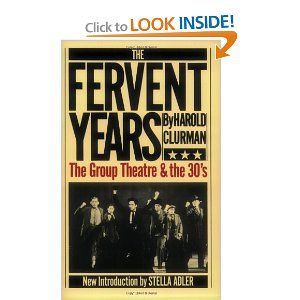
The Fervent Years: The Group Theatre And The Thirties
(12/31/1969) The Group Theatre was perhaps the most significant experiment in the history of American theater. Producing plays that reflected topical issues of the decade and giving a creative chance to actors, directors, and playwrights who were either fed up with or shut out of commercial theater, the ”Group” remains a permanent influence on American drama despite its brief ten-year life. It was here that method acting, native realism, and political language had their tryouts in front of audiences who... |
 |
|
The Country Girl
(12/31/1969) One of America's great dramatists rocked the worlds of Broadway and Hollywood in this moving drama about a desperately self-destructive alcoholic actor and Georgie, his long-suffering wife. A searing, emotional play of love and redemption. |
 |
|
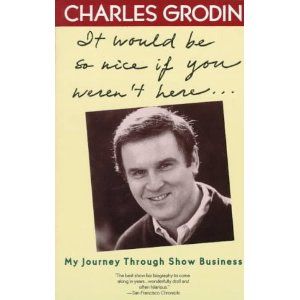
It Would Be So Nice If You Weren't Here: My Journey Through Show Business [
(12/31/1969) "In this ebullient, often rancorous autobiography, the stage, film and TV actor describes vividly the hassles that cost him the plum role in The Graduate and numerous other setbacks before he starred in The Heartbreak Kid . Instructive and entertaining, his story includes tidbits on Mike Nichols, Elaine May, Roman Po lanski, Ellen Burstyn, Simon & Garfunkel, and many other luminaries, none more intriguing than the un sinkable Grodin," said PW. Photos. |
 |
|
The Studio
(12/31/1969) In 1967, John Gregory Dunne asked for unlimited access to the inner workings of Twentieth Century Fox. Miraculously, he got it. For one year Dunne went everywhere there was to go and talked to everyone worth talking to within the studio. He tracked every step of the creation of pictures like "Dr. Dolittle," "Planet of the Apes," and "The Boston Strangler." The result is a work of reportage that, thirty years later, may still be our most minutely observed and therefore most uproariously funny po... |
 |
|
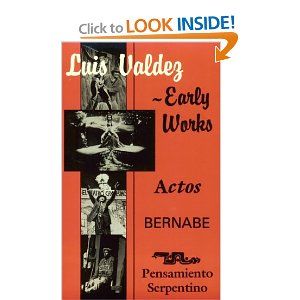
Luis Valdez Early Works: Actos, Bernabe and Pensamiento Serpentino
(12/31/1969) This collection is actually three books in one: 1) a collection of one-act plays by the famous farmwork theatre, El Teatro Campesino and its director, Luis Valdez, 2) one of the first fully realized, full-length plays by Valdez alone, and 3) an original narrative poem by Luis Valdez. |
 |
|
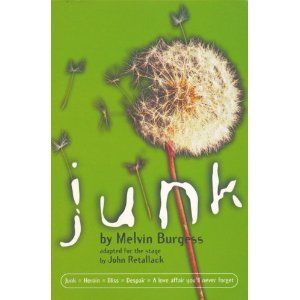
Junk
(12/31/1969) Tar loves Gemma, but Gemma doesn't want to be tied down - not to anyone or anything. Gemma wants to fly. But no one can fly forever. One day, somehow, finally you have to come down. Commissioned and produced by Oxford Stage Company, Junk premiered at The Castle, Wellingborough, in January 1998 and went on to tour throughout the UK in 1998 and 1999. |
 |
|
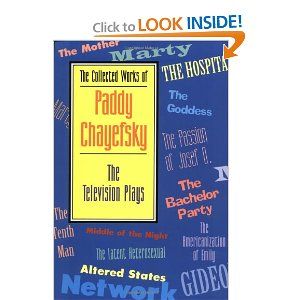
The Collected Works of Paddy Chayefsky: The Television Plays
(12/31/1969) A collection of six television plays by this brilliant writer: "Holiday Song," "PrinterÕs Measure," "The Big Deal," "Marty," "The Mother," and "The Bachelor Party." Includes an introduction and notes for each play by the author himself. |
 |
|
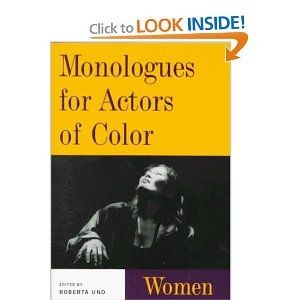
Monologues for Actors of Color: Women
(12/31/1969) This collection features 45 monologues excerpted from contemporary plays and specially geared for actors of color. Robert Uno has carefully selected the monologues so that there is a wide-range of ethnicities included: African American, Native American, Latino and Asian American. Each monologue comes with an iintroduction with notes on the characters and stage directions to set the scene for the actor. |
 |
|
Unmarked: The Politics of Performance
(12/31/1969) InUnmarked, Peggy Phelan examines the relationship between political and representational visibility and invisibility within both mainstream culture and the avant-garde. Her controversial study of the politics of performance uses theories of psychoanalysis, feminism and cultural studies to examine issues in photography, film, theatre, anti-abortion demonstrations and performance art. Unmarked is a boldly speculative analysis of contemporary culture and will be of interest to performance theorist... |
 |
|
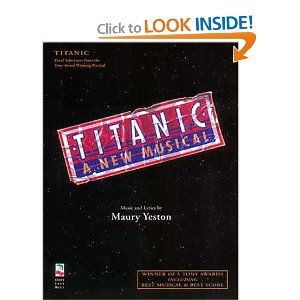
Titanic: A New Musical
(12/31/1969) Titanic is a musical with music and lyrics by Maury Yeston and a book by Peter Stone that opened on Broadway in 1997. It won five Tony Awards including the award for Best Musical. Titanic is set on the ocean liner RMS Titanic which sank on its maiden voyage on April 15, 1912. |
 |
|
King John
(12/31/1969) Satire, comedy and farce all play their part in this exploration and examination of the nature and responsibilities of kingship and the concept of the nation-state. |
 |
|
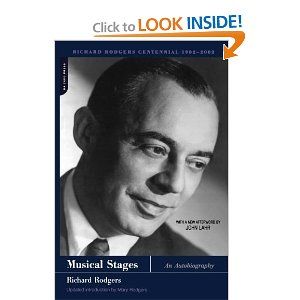
Musical Stages: An Autobiography
(12/31/1969) A new edition to commemorate the legendary composer's 100th birthday. From Oklahoma! to Carousel, The Sound of Music to The King and I, the sights and sounds of Broadway were dominated by Richard Rodgers for the better part of the twentieth century. And now, on the centenary of his birth, comes a new edition of his classic autobiography. "A memoir worthy of one of the great names in the American theater" (Washington Post), it's packed with backstage tales of everyone's favorite musicals. |
 |
|
The Way of Acting: The Theatre Writings of Tadashi Suzuki
(12/31/1969) Widely considered the most influential contemporary theatre director in Japan, Tadashi Suzuki provides a thorough and accessible formulation of his ideas and beliefs, and insights into his training methods — the Suzuki Method of Actor Training (not to be confused with the violin training technique). His method of training actors has been taught in the United States since the early eighties. Some programs which employ this method in their training of actors include the Juilliard School, Col... |
 |
|
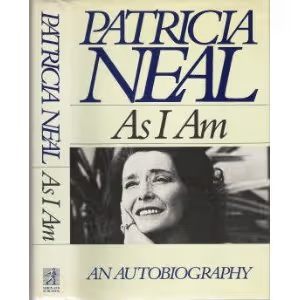
AS I AM
(12/31/1969) By age 21 the self-confident, determined, Southern-bred actress had starred in a Broadway hit, won a Tony, was "the toast of New York" and was featured on a Life coveronly the first of many triumphs in a celebrity life. In this account written "to reclaim the past that was stolen," Neal writes candidly about her numerous love affairs, both transient and profound, such as a liaison with Gary Cooper and her 25-year marriage to writer Roald Dahl. More arresting are the tragedies that beset her, in... |
 |
|
Don Giovanni
(12/31/1969) Standard Italian libretto, with complete English translation. Convenient and thoroughly portable—an ideal companion for reading along with a recording or the performance itself. Introduction. List of Characters. Plot Summary. |
 |
|
The Technique of Acting
(12/31/1969) Adler, among the most acclaimed actresses and teachers of acting, has written a dynamic book that is sure to become a classic. After the forward by former pupil Marlon Brando, Adler explains her technique, which is based on the methods of Stanislavskishe was a student of the famous Russian. The 12 chapters cover goals, body and speech control, imagination, action, and character; the book also includes a very useful listing of scenes from well-known plays. Adler made her stage debut in 1906 at th... |
 |
|
The Duchess of Malfi
(12/31/1969) The evils of greed and ambition overwhelm love, innocence, and the bonds of kinship in this dark tragedy concerning the secret marriage of a noblewoman and a commoner. John Webster’s great Jacobean drama detailing the fiendish schemes of two brothers who desire their wealthy sister’s title and estates ends with a bloody and horrifying climax. A dynamic plot brimming with poetic lyricism, this provocative and profoundly original work will appeal to general readers, students, and teachers of ... |
 |
|
A Source Book in Theatrical History: Twenty-five centuries of stage history in more than 300 basic documents and other primary material
(12/31/1969) A rich resource for students of theater and theater historians, this volume features an annotated collection of more than 300 unusually interesting and detailed articles. Passages by contemporary observers from ancient Greece to modern times include notes on acting, directing, make-up, costuming, stage props, machinery, scene design, and much more. |
 |
|
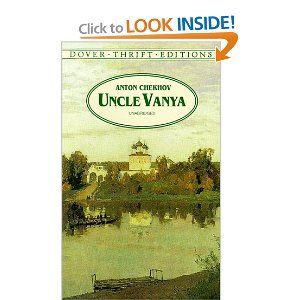
Uncle Vanya
(12/31/1969) So, what happens in Uncle Vanya? Not much; just life, played out over four acts. There are rich people, and there are people who work for the rich people, whom the rich people don't really care about. There is a gun fired in anger and desperation, but there aren't any bodies to carry off stage. There are men making fools of themselves over women. There are those who accept their fates and wait for their rewards in heaven, and there are others who don't care one way or another. There is a charac... |
 |
|
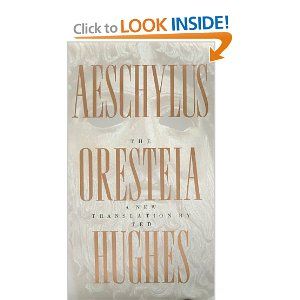
The Oresteia of Aeschylus
(12/31/1969) In the last year of his life, Ted Hughes completed translations of three major dramatic works: Racine's Phedre, Euripedes' Alcestis, and the trilogy of plays known as at The Oresteia, a family story of astonishing power and the background or inspiration for much subsequent drama, fiction, and poetry. The Oresteia--Agamemnon, Choephori, and the Eumenides--tell the story of the house of Atreus: After King Agamemnon is murdered by his wife, Clytemnestra, their son, Orestes, is commanded by Apol... |
 |
Videos