


|
Designing with Light: An Introduction to Stage Lighting
(1983) This comprehensive survey of the practical and aesthetic aspects of basic stage lighting design treats its subject as an art closely integrated with that of the director, actor, and playwright, and as a craft that provides practical solutions for the manipulation of stage space. An eight-page color section provides a discussion of the practical applications of color theory as well as an analysis of the color choices for the lighting design of an actual production. Numerous illustrations of techn... |
 |
|
The Pot of Gold and Other Plays
(1965) One of the supreme comic writers of the Roman world, Plautus (c.254–184 BC), skilfully adapted classic Greek comic models to the manners and customs of his day. This collection features a varied selection of his finest plays, from the light-hearted comedy Pseudolus, in which the lovesick Calidorus and his slave try to liberate his lover from her pimp, to the more subversive The Prisoners, which raises serious questions about the role of slavery. Also included are The Brothers Menaechmus, which... |
 |
|
The Stanislavski System: The Professional Training of an Actor
(1984) This clearly written guide to the Stanislavski method has long been a favorite among students and teachers of acting. Now, in light of books and articles recently published in the Soviet Union, Sonia Moore has made revisions that include a new section on the subtext of a role. She provides detailed explanations of all the methods that actors in training have found indispensable for more than twenty years. Designed to create better actors, this guide will put individuals in touch with themselves... |
 |
|
An Unsocial Socialist
(1972) An Unsocial Socialist was published in 1887, having been written in 1883. The tale begins with a humorous description of student antics at a girl's school then changes focus to a seemingly uncouth laborer who, it soon develops, is really a wealthy gentleman in hiding from his overly affectionate wife. He needs the freedom gained by matrimonial truancy to promote the socialistic cause, to which he is an active convert. Once the subject of socialism emerges, it dominates the story, allowing only ... |
 |
|
Impro: Improvisation and the Theatre
(1987) Impro ought to be required reading not only for theatre people generally but also for teachers, educators, and students of all kinds and persuasions. Readers of this book are not going to agree with everything in it; but if they are not challenged by it, if they do not ultimately succumb to its wisdom and whimsicality, they are in a very sad state indeed . . . .Johnstone seeks to liberate the imagination, to cultivate in the adult the creative power of the child . . . .Deserves to be widely read... |
 |
|
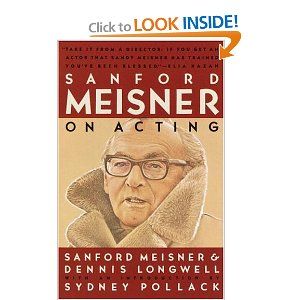
Sanford Meisner on Acting
(1987) Meisner, a member of the Theater Guild and the Group Theater, has devoted most of 50 years to teaching acting and is one of the great unsung resources in American theater. This book is not an acting text, but a journal of a 15-month course taken by 16 adult actors. We follow them as they progress from early exercises through preparation to detailed scene work. Meisner emphasizes emotional truth and acting as the reality of doing. His students find the course difficult, but most improve markedly.... |
 |
|
Rosencrantz and Guildenstern Are Dead
(1988) Rosencrantz and Guildenstern Are Dead is an absurdist, existentialist tragicomedy by Tom Stoppard, first staged at the Edinburgh Festival Fringe in 1966. The play expands upon the exploits of two minor characters from Shakespeare's Hamlet, the courtiers Rosencrantz and Guildenstern. The action of Stoppard's play takes place mainly "in the wings" of Shakespeare's, with brief appearances of major characters from Hamlet who enact fragments of the original's scenes. Between these episodes the two ... |
 |
|
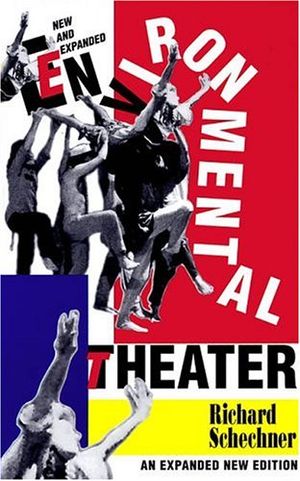
Environmental Theater
(1973) Here are the exercises which began as radical departures from standard actor training etiquette and which stand now as classic means through which the performer discovers his or her true power of transformation. Available for the first time in fifteen years, this new expanded edition offers a new generation of theater artists the gospel according to Richard Schechner, the guru whose principles and influence have influenced a quarter century of theater. |
 |
|
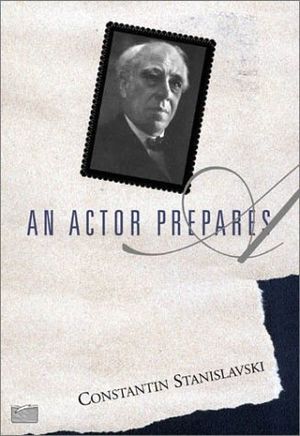
An Actor Prepares
(1989) Stanislavski's simple exercises fire the imagination, and help readers not only discover their own conception of reality but how to reproduce it as well. |
 |
|
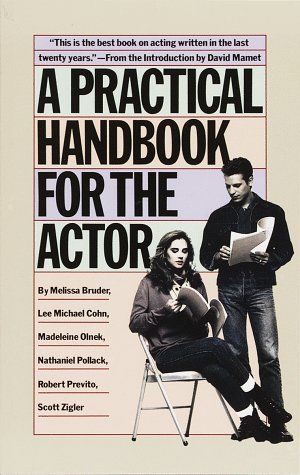
A Practical Handbook for the Actor
(1986) 6 working actors describe their methods and philosophies of the theater. All have worked with playwright David Mamet at the Goodman Theater in Chicago. |
 |
|
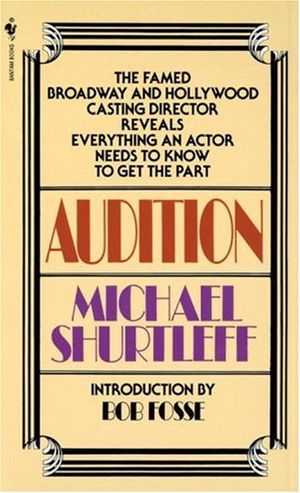
Audition
(1979) Michael Shurtleff has been casting director for Broadway shows like Chicago and Becket and for films like The Graduate and Jesus Christ Superstar. His legendary course on auditioning has launched hundreds of successful careers. Now in this book he tells the all-important HOW for all aspiring actors, from the beginning student of acting to the proven talent trying out for that chance-in-a-million role! |
 |
|
Backwards & Forwards: A Technical Manual for Reading Plays
(1983) This guide to playreading for students and practitioners of both theater and literature complements, rather then contradicts or repeats, traditional methods of literary analysis of scripts. Ball developed his method during his work as Literary Director at the Guthrie Theater, building his guide on the crafts playwrights of every period and style use to make their plays stageworthy. The text is full of tools for students and practitioners to use as they investigate plot, character, theme, expo... |
 |
|
No Exit and Three Other Plays
(1989) 4 plays about an existential portrayal of Hell, the reworking of the Electra-Orestes story, the conflict of a young intellectual torn between theory and conflict and an arresting attack on American racism. |
 |
Videos