


|
The World of Theatre: Tradition and Innovation
(11/29/2005) The World of Theatre is the first introduction to theatre book to truly focus on diversity and globalism, integrating coverage of multicultural, international and experimental theatre throughout. Theatre is presented as a global and multicultural form that reflects both traditional and evolving world views. While the American commercial theatre and European forms are central to the text, alternative theatres are placed side by side for comparison and contrast in each chapter, thus avoiding the s... |
 |
|
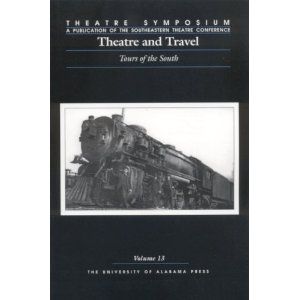
Theatre and Travel: Tours of the South
(3/2/2005) Presents rare information on traveling circus, minstrel, opera, and Toby shows. This collection of essays explores an understudied but pervasive aspect of American theatre: theatre on the road, from minstrel shows and Toby shows to contemporary African American theatre, 19th-century circus rail travel, and small-town opera houses. The challenges in gathering and compiling data on these ephemeral productions, from such far-flung sources as railroad schedules and weather reports, minutes f... |
 |
|
New York Then/New York Now
(2/21/2005) New York Then/New York Now—a collection of essays, memoirs, interviews, commentary, and plays—contemplates New York City’s history and future as a center for groundbreaking theatrical forms and ideas. Featuring the work of theater artists, producers, and critics, this special issue of Theater is concerned with the ideas and practicalities of making theater in and for New York within specific historical, political, and economic contexts. The first section, “New York Then,” reflects on ... |
 |
|
The Complete Annotated Gilbert & Sullivan
(1/1/2005) Lovers of Gilbert and Sullivan will be in heaven with the publication of these two books, which nicely complement each other. Stedman (English, Roosevelt Univ., Chicago) offers an outstanding study of this playwright and his often overlooked works, with much of its value deriving from its study of Gilbert without Sullivan. The author is a recognized expert on Gilbert as well as the Victorian time period, and she shows him to be a complex and interesting man who often found himself at odds with ... |
 |
|
The Cambridge Companion to David Mamet
(1/1/2004) This collection of specially written essays offers both student and theatregoer a guide to one of the most celebrated American dramatists working today. Readers will find the general and accessible descriptions and analyses provide the perfect introduction to Mamet's work. The volume covers the full range of Mamet's writing, including now classic plays such as American Buffalo and Glengarry Glen Ross, and his more recent work, Boston Marriage, among others, as well as his films, such as The Ver... |
 |
|
Golda's Balcony: A Play
(11/21/2003) The sold out off-Broadway smash has moved to Broadway! The rise of Golda Meir from impoverished Russian schoolgirl to Prime Minister of Israel is one of the most amazing stories of the 20th century. Now her life has been transformed into a one-woman play of overwhelming power and triumph by William Gibson, author of The Miracle Worker. Golda's Balcony earned actress Tovah Feldshuh a 2003 Drama Desk award."Enlightening ... Now, hearing from someone who was there at the birth of the country, who ... |
 |
|
The Wadsworth Anthology of Drama
(6/25/2003) Known through three editions as the boldest and most distinguished introduction to drama, William Worthen's pace-setting text continues to provide exciting plays usefully situated within their historical and cultural contexts. |
 |
|
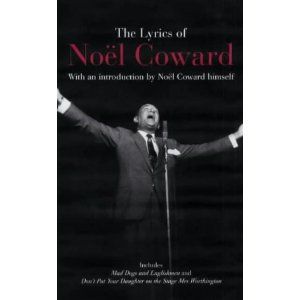
The Lyrics of Noel Coward
(1/1/2002) Mad Dogs and Englishmen, Don't Put your Daughter on the Stage, Mrs Worthington and over 250 more lyrics from Coward's musical masterpieces. Noel Coward is one of the greatest lyricists of the twentieth century. Songs such as A Room with a View, The Stately Homes of England, Mad Dogs and Englishmen and Mrs Worthington are known, sung and loved the world over. This edition gathers together over 250 of Coward's lyrics, arranged in chronological order and grouped by show. In addition, these masterp... |
 |
|
Theatre World 1994-1995, Vol. 51
(1/1/2000) Theatre World, the statistical and pictorial record of the Broadway and off-Broadway season, touring companies, and professional regional companies throughout the United States, has become a classic in its field. The book is complete with cast listings, replacement producers, directors, authors, composers, opening and closing dates, song titles, and much, much more. There are special sections with biographical data, obituary information, listings of annual Shakespeare festivals and major drama a... |
 |
|
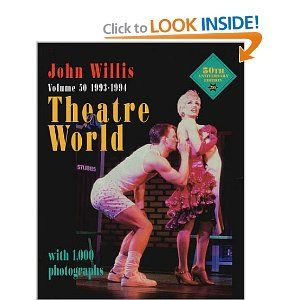
Theatre World 1993-1994, Vol. 50
(1/1/2000) Theatre World, the statistical and pictorial record of the Broadway and off-Broadway season, touring companies, and professional regional companies throughout the United States, has become a classic in its field. The book is complete with cast listings, replacement producers, directors, authors, composers, opening and closing dates, song titles, and much, much more. There are special sections with biographical data, obituary information, listings of annual Shakespeare festivals and major drama a... |
 |
|
The Social Significance of Modern Drama
(1/1/2000) Out of print virtually since its completion in 1914, Emma Goldman's pioneer work Social Significance in Modern Drama bridges modern drama and political philosophy, pointing out the road that remains to be travelled toward a theatre of social empowerment. Activist, feminist, philosopher and anarchist, Emma Goldman was a passionate thinker about all things modern when the 20th century was still raw and new. The emergence of her treatise on the theatre after years of obscurity is certain to arouse ... |
 |
|
Polaroid Stories
(1/1/1999) Naomi Iizuka’s 1997 play, Polaroid Stories, consciously uses stories, characters and themes from Ovid’s Metamorphoses to tell the stories of street kids living on the edge in a desolate, urban landscape. Because these characters are named after Orpheus and Eurydice, and Echo and Narcissus, or based on stories of Dionysus, and Ariadne and Theseus, and because scenes are entitled “The Story of Semele” or “Theseus in the Labyrinth,” Iizuka creates a world that has two dimensions: the g... |
 |
|
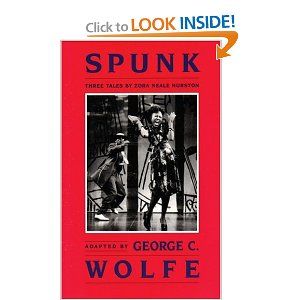
Spunk
(1993) Zora Neale Hurston was an American folklorist, anthropologist, and author during the time of the Harlem Renaissance. Of Hurston's four novels and more than 50 published short stories, plays, and essays, she is best known for her 1937 novel Their Eyes Were Watching God. |
 |
|
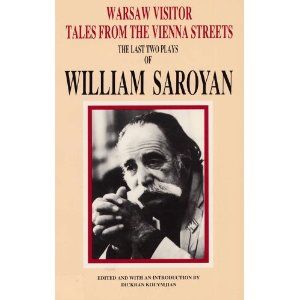
Warsaw Visitor, Tales from the Vienna Streets: The Last Two Plays of William Saroyan
(1990) Late in life Saroyan wrote: “In 1943 I turned my back on Broadway, but I did not stop writing plays… I wrote new plays every year… and they are part of the real American theatre, and of the real world theatre, even though they have not been produced, performed, and witnessed.” In fact, William Saroyan left some 150 unpublished plays, two of which are offered here. Typically Saroyan in their graceful, acrobatic use of language, these plays have a breadth, a universality, and a somber... |
 |
|
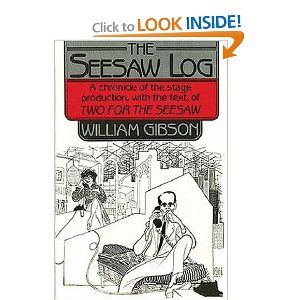
The Seesaw Log: A Chronicle of the Stage Production, with the Text, of Two for the Seesaw
(1984) A day-by-day candid account of the creativity, conflict and compromise involved in the making of a smash-hit Broadway play. |
 |
|
The Complete Plays of William Dean Howells
(2003) William Dean Howells (1837-1920) was an American realist author and literary critic. He wrote his first novel, Their Wedding Journey, in 1871, but his literary reputation really took off with the realist novel A Modern Instance, published in 1882, which describes the decay of a marriage. His 1885 novel The Rise of Silas Lapham is perhaps his best known, describing the rise and fall of an American entrepreneur in the paint business. His social views were also strongly reflected in the novels Ann... |
 |
|
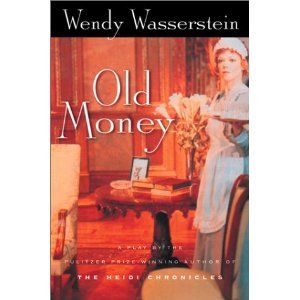
Old Money
(2002) Still best known for The Heidi Chronicles, which won a Tony Award and a Pulitzer Prize in 1989, Wasserstein is a comic and satirical playwright who has carved out a target area defined by wealth and the rarefied air of privilege. Poking fun at members of the American aristocracy is easy, but Wasserstein also makes us care about them as people. Old Money is no exception. This is a comedy of manners the kind of play that is funny if the manners are bad enough. It is set in fashionable Manhattan du... |
 |
|
Uncommon Women and Others
(1998) Comprised of a collage of interrelated scenes, the action begins with a reunion, six years after graduation, of five close friends and classmates at Mount Holyoke College. They compare notes on their activities since leaving school and then, in a series of flashbacks, we see them in their college days and learn of the events, some funny, some touching, some bitingly cynical, that helped to shape them. Each of the group is a distinct individual, and it is their varying reaction to the staid, shel... |
 |
|
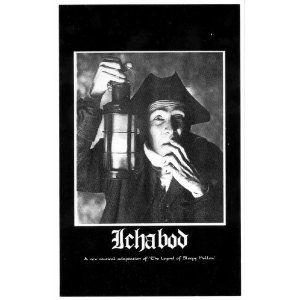
Ichabod: A New Musical Adaptation of the Legend of Sleepy Hollow
(1995) Play Script. Beware! The horseman rides through a hollow that is anything but sleepy in this nimble new musical. Space staging. Cast of 6 males, 4 females, but flexible and may be larger. Imaginative traditional costumes. The classic tale of Washington Irving emerges transformed by the theatrical genius of Jones and the musical talent of Cole. We are challenged to look our fears squarely in the face - - or hoof, as the case may be. Schoolmaster Ichabod offers a new twist in teaching as his st... |
 |
|
Zaïre
(2000) ZARA and Nerestan, Christian slaves, had grown up in the palace of Osman, Sultan of Turkey. Zara was but a baby when she was brought to the palace. In fact, the only proof that she was a Christian lay in the ornamental cross she wore. Consequently she had found no difficulty in accepting the Moslem faith. Nerestan, however, though but a young lad when captured, took his obligations to Christianity and his fellow slaves seriously. Two years before the opening of the play he had secured from the ... |
 |
|
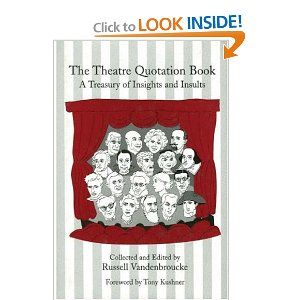
The Theatre Quotation Book: A Treasury of Insights and Insults
(2004) In two acts that consider what the theatre is and what it does, a star-studded cast of intellects, wits and wags here take center stage to enlighten, provoke, and amuse. A collection of close to 1000 distinctive anecdotes, aphorisms, adages and assaults written and spoken by actors, directors, composers, producers, critics and other observers - everyone from Sophocles to David Mamet, from Buddha to Brando. |
 |
|
Tony Kushner in Conversation
(1998) In the Fall of 1992, Millennium Approaches, the first part of Tony Kushner's Angels in America, won England's prestigious Evening Standard award as the season's Best Play. By the Spring of 1993, Millennium had come to Broadway and won its highest honor, the Tony Award for Best Play, and the distinguished Pulitzer Prize for drama as well. Through its epic theatrical panorama of the intimate and political dynamics that arise when individuals, histories, and cultures intersect, Millennium captured... |
 |
|
Caroline, or Change
(2004) Louisiana, 1963: A nation reeling from the burgeoning Civil Rights Movement and the Kennedy assassination. Caroline, a black maid, and Noah, the son of the Jewish family she works for, struggle to find an identity for their friendship. Through their intimate story, this beautiful new musical portrays the changing rhythms of a nation. Tony Kushner and composer Jeanine Tesori have created a story that addresses contemporary questions of culture, community, race and class through the lens and musi... |
 |
|
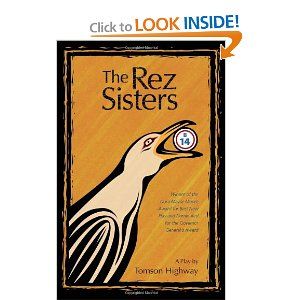
The Rez Sisters
(1992) Winner of the Dora Mavor Moore Award for Best New Play Nominated for the Governor General's Award This award-winning play by Native playwright Tomson Highway is a powerful and moving portrayal of seven women from a reserve attempting to beat the odds by winning at bingo. And not just any bingo. It is THE BIGGEST BINGO IN THE WORLD and a chance to win a way out of a tortured life. The Rez Sisters is hilarious, shocking, mystical and powerful, and clearly establishes the creative voice of ... |
 |
|
Doing It: Five Performing Arts
(2001) Does an opera producer do anything besides tell the singers where to stand? Can a single note be played more or less beautifully on the piano? In these essays, five of our most accomplished artists and critics explore the relationship between technique and interpretation in the performing arts. Tom Stoppard considers ways of controlling how an audience gets information while watching a play, and Charles Rosen reflects on the very physical relationship between the musician and the instrument. Jon... |
 |
|
The Real Thing
(1984) A talented ensemble cast brings to life Stoppard's classic play featuring the loves and loves lost of playwright Henry; his wife, Charlotte; an actor named Max; and his activist wife, Annie. Featuring a play within a play, this production is superbly performed if slightly confusing in audiobook format—it's often difficult to keep track of who is speaking and to keep track of the endlessly reconfiguring relationships. Henry searches for meaning both in art and romantic relationships as he atte... |
 |
|
Elizabeth Rex
(2002) Based on the original stage production at the Stratford Festival of Canada, directed by Martha Henry. In this daring and original production of Timothy Findley's Governor-General Award winning play, William Shakespeare and the formidable Virgin Queen, Elizabeth I, are brought together in a remarkable encounter on the night of April 22, 1616. The night the Queen's Lover will be executed, by the Queen's decree. --This text refers to the Audio CD edition. |
 |
|
A Mad World, My Masters
(1999) The Globe Quartos is a ground-breaking new series of forgotten plays co-published with Shakespeare's Globe in London. It marks the astonishing discovery of work by Shakespeare's contemporaries, and for some of the plays, this is the first time they have been in print in over 400 years. Middleton's craft and wit abound in this masterly satire of London Society at the turn of the 17th century. Disjointed and dysfunctional families wrangle and plot, cuckold and gull, 'but women's wit is ever at fu... |
 |
|
A Game at Chess
(1997) Thomas Middleton's notorious play, A Game at Chess, provoked a scandal when it was first performed in 1624. Through a masterly use of the metaphor of chessplay, this satire of men in high places was immediately recognized. The play was performed nine times to large theater audiences before the Privy Council closed the Globe theatre. Numerous contemporary reports and official documents relating to the scandal (printed in the appendix, some for the first time ever), provide a rich content for thi... |
 |
|
Spectacles
(2004) De Spectaculis (also known as On the Spectacles) is a surviving moral and ascetic treatise by Tertullian. Written somewhere between 197-202, the work looks at the moral legitimacy and consequences of Christians attending the circus, theatre, or amphitheatre ("the pleasures of public shows"). In it, Tertullian posits against the popular view that human enjoyment can be of no offence to God. His view of these public entertainments are that they are a misuse of God's creation and a perversion of ... |
 |
|
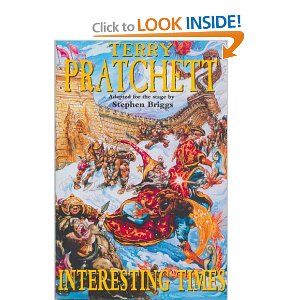
Interesting Times: Adapted for the Stage
(2003) When the Agatean Empire requests the Great Wizzard, Lord Vetinari of Ankh-Morpork sends a pathetically inept wizard named Rincewind 6000 miles away to the Counterweight Continent to intercede. The latest novel in the satirical fantasy "Discworld" series; for fantasy collections with the series. |
 |
|
Summer & Smoke
(1998) The play is a simple love story of a somewhat puritanical Southern girl and an unpuritanical young doctor. Each is basically attracted to the other but because of their divergent attitudes toward life, each over the course of years is driven away from the other. Not until toward the end does the doctor realize that the girl's high idealism is basically right, and while she is still in love with him, it turns out that neither time nor circumstances will allow the two ultimately to come together. ... |
 |
|
Cat on a Hot Tin Roof
(2004) The definitive text of this American classic—reissued with an introduction by Edward Albee (Who's Afraid of Virginia Woolf? and A Delicate Balance) and Williams' essay "Person-to-Person." Cat on a Hot Tin Roof first heated up Broadway in 1955 with its gothic American story of brothers vying for their dying father's inheritance amid a whirlwind of sexuality, untethered in the person of Maggie the Cat. The play also daringly showcased the burden of sexuality repressed in the agony of her husban... |
 |
|
The Selected Letters of Tennessee Williams, Vol. 2: 1945-1957
(2004) This second volume of the playwright's correspondence begins at a time, after the staging of The Glass Menagerie, when Williams had "no interest... in more Broadway productions." It wouldn't be long, though, before he started writing A Streetcar Named Desire, which would become an even greater success and was the first of many collaborations with director Elia Kazan. Williams had plenty of advice for Kazan about the staging of Streetcar and subsequent plays, and the letters reveal the active ro... |
 |
|
Theatre of Tennessee Williams, Vol. 4: Sweet Bird of Youth / Period of Adjustment / The Night of the Iguana
(1972) The Theatre of Tennessee Williams brings together in matching format the plays of one of America's most persistently influential and innovative dramatists. Arranged in chronological order, this ongoing series includes the original cast listings and production notes for all full-length plays. |
 |
|
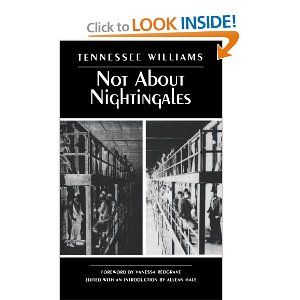
Not About Nightingales
(1998) Written in 1938 when Williams was 27, still living at home and a good six years away from Broadway, Not about Nightingales is as much writing exercise as fully realized drama. It lacks the originality and depth of The Glass Menagerie, written only a few years later, and his later masterworks. Nevertheless, it is of considerable interest, not least because it was inspired by a real occurrence in which several unruly prisoners were cooked alive as punishment. And after all, it is Williams' first f... |
 |
|
A Streetcar Named Desire
(2004) The Pulitzer Prize and Drama Critics Circle Award winning play—reissued with an introduction by Arthur Miller (Death of a Salesman and The Crucible), and Williams' essay "The World I Live In." It is a very short list of 20th-century American plays that continue to have the same power and impact as when they first appeared—57 years after its Broadway premiere, Tennessee Williams' A Streetcar Named Desire is one of those plays. The story famously recounts how the faded and promiscuous Blanche ... |
 |
|
Tennessee Williams: Plays 1957-1980
(2000) This set collects all of Williams's plays, including the recently rediscovered early efforts Spring Storm and Not About Nightingales up through his most famous works and later lesser-known dramas. These magnificent titles are essential for all academic and public libraries. |
 |
|
Tennessee Williams: Plays 1937-1955
(2000) This set collects all of Williams's plays, including the recently rediscovered early efforts Spring Storm and Not About Nightingales up through his most famous works and later lesser-known dramas. These magnificent titles are essential for all academic and public libraries. |
 |
|
The Spectator: Talk About Movies and Plays With Those Who Made Them
(1999) A collection of interviews with screen and stage actors, directors, playwrights and critics, Terkel's latest richly entertaining oral history is a departure from his bestselling interview books on weightier themes (Working; Hard Times; Race). Here, Terkel offers interviewsAmany of them reading almost like monologues, Terkel says so littleAfirst heard on the Chicago radio program he has hosted for the past 45 years. Many of the exchanges feel dated, and there is an awful lot of chitchat. Neverth... |
 |
|
Rough Magic: Making Theatre at the Royal Shakespeare Company
(2001) Steven Adler examines the dynamic life and workings of the theatre company responsible for some of the world’s most compelling performances and influential productions of the last forty years, including Marat/Sade, A Midsummer Night’s Dream, Les Misérables, Les Liaisons Dangereuses, and Nicholas Nickleby. Rough Magic provides a thorough analysis of the many strands of theatrical activity on both sides of the footlights that coalesce in the artistic vigor of the Royal Shakespeare Company... |
 |
|
Picasso at the Lapin Agile and Other Plays
(1997) Ever wonder what it would have been like if wild and crazy Steve Martin had written an episode of "The Twilight Zone"? Well, wonder no more. The zany actor/comedian made playwright rookie of the year with this, the script of his first comedy, set in a bar in 1904 Paris. Two of the regulars, twentysomethings Pablo Picasso and Albert Einstein, argue about the art of physics and the physics of art as they try to impress and bed a pretty girl. And then the space/time/culture continuum ruptures, and... |
 |
|
Harold Prince and the American Musical Theater
(1989) This book follows the career of the producer/director of such shows as "Pyjama Game", "Damn Yankees", "Fiddler of the Roof" and "West Side Story" and who has collaborated in many productions of Stephen Sondheim's works. |
 |
|
Plays and Stories: Arthur Schnitzler
(1982) Arthur Schnitzler, Viennese playwright, novelist, short story writer, and physician, was a sophisticated writer much in vogue in his time. He chose themes of an erotic, romantic, or social nature, expressed with clarity, irony, and subtle wit. Reigen, a series of ten dialogues linking people of various social classes through their physical desire for one another, has been filmed many times as La Ronde. As a Jew, Schnitzler was sensitive to the problems of anti-Semitism, which he explored in the... |
 |
|
Oedipus at Colonus
(2002) This play forms a bridge between the events in Oedipus the King and Antigone. It begins with the arrival of Oedipus in Colonus after years of wandering; it ends with Antigone setting off toward her own fate in Thebes. |
 |
|
Philoctetes
(2003) Based on the conviction that only translators who write poetry themselves can properly re-create the celebrated and timeless tragedies of Aeschylus, Sophocles, and Euripides, the Greek Tragedy in New Translations series offers new translations that go beyond the literal meaning of the Greek in order to evoke the poetry of the originals. Under the general editorship of Peter Burian and Alan Shapiro, each volume includes a critical introduction, commentary on the text, full stage directions, and a... |
 |
|
Babbitt
(1996) First published in 1922, Babbitt is an authentic modern American classic, a biting satire of middle-American values that retains much of its poignancy today. George F. Babbitt, Lewis's outwardly successful but inwardly unhappy real estate salesman, still seems real. His story makes engrossing reading and is ideal for audio listening. With Babbitt himself at the center of every scene, it is impossible for listeners plagued by frequent interruptions to lose track of the story line. Narrator Wolfr... |
 |
|
Les Bouches Inutiles
(2002) Simone de Beauvoir is best known for her autobiographical writings, as well as her study of the subordination of women in Western society, "Le Deuxi me Sexe" (1949). Written five years before, her powerful play "Les Bouches Inutiles" (1945) shows Beauvoir's dramatisation of issues to which the later texts would return, as well as a significant stage in her creative and philosophical dialogue with Jean-Paul Sartre. The play describes the decision by the male rulers of a besieged city to kill its... |
 |
|
Stagestruck: Theater, AIDS, and the Marketing of Gay America
(1998) Schulman, a lesbian activist and 1997 winner of the Stonewall Award, joined ACT UP in 1987. Shortly thereafter, she completed her fourth novel, People in Trouble (NAL Dutton, 1991), which featured a group of East Village artists struggling with homelessness and AIDS and was based on her personal experiences. After attending a performance of Rent in February 1996 and writing a review of it, Schulman realized that the storyline of this mega-hit was, in fact, taken directly from her novel. Stagestr... |
 |
|
The Theatrical Notebooks of Samuel Beckett: Krapp's Last Tape v. 1
(1993) Samuel Beckett directed "Krapp's Last Tape" on four separate occasions, and this volume offers a facsimile of his 1969 Schiller-Theater notebook. The notebook contains what is probably some of the most explicit analysis by Beckett of his own work ever revealed. The revised text incorporates many of the changes Beckett made in the 1969 Schiller production, as well as subsequent changes in later productions. Professor Knowlson worked closely with Beckett over these revisions - and deviations from... |
 |
Videos