Wesley Doucette - Page 4
Wesley Doucette is a PhD student in French Literature at the CUNY Grad Center. His research focuses on cultural institutions as both patrons and platforms for art. His research also includes Turkish and late Ottoman theatre traditions and will be spending the next academic year writing his doctoral disseration at Bogaziçi Üniversitesi with a Fulbright grant. He has received a Masters in Théâtre et Patrimoine from Avignon Université and received his undergraduate degrees from Kent State University in Art History and Theatre.
LEARN MORE ABOUT Wesley Doucette
First Show:
The Phantom of the OperaFavorite Show:
IndecentJuly 25, 2022
According to a poll taken in 2016, a little more than half of all British people have seen or read Shakespeare's Romeo and Juliet. That number dips just below half for Macbeth and Midsummer. The Tempest rounds out the Top 10 at 22% engagement. Deep down in this list at 7%, tucked between Merry Wives of Windsor and Love's Labour's Lost, is Richard II. This obscurity was seen as a feature not a bug for Jean Vilar when he opened the first Festival d'Avignon with Richard II in 1947. Since this performance, the play has become something of a hallmark of French theatre. This year, Christophe Rauck adds his own directorial vision at the Festival's Gymnase du Lycée Aubanel with Micha Lescot in the title role.
July 21, 2022
Eulogies, obituaries, and post-mortems. There are many ways people digest a life ended. It's a daunting task to try to encapsulate someone else's life. The task becomes even more difficult when the existence you're attempting to reckon with is your own. Meng Jinghui's Le Septième Jour, now in performance at the Cloître des Carmes, shows a recently deceased man grappling with his life.
July 21, 2022
Hanane Hajj Ali considers a lot when she jogs through her home city of Beirut. She thinks about her compression socks and the pin for her headscarf. She thinks about the birds flying in the sky and, if all birds are praising God, what does it mean when one defecates on her? She thinks about great actors and great roles like Medea. She thinks about the catastrophes and scandals that have rocked her country for the past decades. With conviction and a deft hand, Hanane Hajj Ali takes us through her mind's pathways in Jogging, now in performance in Avignon's Théâtre Benoît XII.
July 21, 2022
Seated in the middle of a meters long bench in Avignon's Cour d'Honneur, Goska Isphording whirls through compositions on the harpsichord in front of her. Through deep concentration she executes rhythmic repetition with tongue twister like variations. It is understandable that Jan Martens has given her pride of place in his Futur Proche, which was premiered by Opera Ballet Vlaanderen last night in the Festival d'Avignon. Her presence elevated the dance composition, turning the dancers from plastic movement, to figments of her musical imagination.
July 19, 2022
The classic elements to create an effective magical illusion are smoke and mirrors. There might not be mirrors, but there is a great deal of smoke throughout Alessandro Serra's production of Shakespeare's La Tempesta (The Tempest), now in performance in Avignon's Opera House. This ubiquitous fog assists in creating many sublime illusions. Though for those who find Shakespeare enticing for pathos as well as panache, this fog blurs performances. With their faces obscured by fog and chiaroscuro lighting, Serra's take on The Tempest is an enchanting puppet piece.
July 18, 2022
If this Avignon season's other marathon project, the 13-hour Nid de Cendres, calls to mind a jewel box, Ma Jeunesse Exaltée calls to mind bathroom stall graffiti. The ten-hour long burlesque serves as the capstone to Olivier Py's tenure as artistic director of the Festival d'Avignon. In it he passes the baton, not to Avignon's next artistic director Tiago Rodrigues, but to a new generation of vibrant performers. Amongst this new generation is the indefatigable Bertrand de Roffignac, who performs a staggering harlequin marathon. Through the run time of the performance he never falters in precision or intensity. Indeed, on a scale of one to ten, the entire ensemble never lets the their work calm itself down past and eleven.
July 14, 2022
'Who's in charge here?' seems to be the question ringing though Anne Théron's powerful production of Tiago Rodrigues's Iphigénie, currently residing in Avignon's beautifully restored opera house. Power over memory, which dictates the proceeding actions, is bartered over between the characters and a chorus. There are memories they are unsure of. There are memories they are certain of. Sometimes a memory is a dead end, and sometimes it's the crack in the wall. Though it is not just power over memory that is being determined. Power over people, one's own actions, and the capacity to control one's own destiny are also in play. With the TNS, Théron has made the story of Iphigenia heart breaking and gripping, timeless and current.
July 14, 2022
It is clear that Marie Vialle finds the story of Simon Pease Cheney compelling. Her fascination with this 19th century American composer energizes her intimate Dans Ce Jardin Qu'On Aimait, now in performance at the Festival d'Avignon's Cloître des Célestins. Inspired by the novel by Pascal Quignard of the same name, Vialle and costar Yann Boudaud present a whimsical tale of redemption and artistic inspiration. If their production were in the 'Off', it'd be a highlight. However, their staging never unlocks the work past historical curiosity.

July 18, 2022
In Avignon's 'other theatre', a purpose built space some miles out of the city center, Bashar Murkus presents his new dance theatre piece Milk. It is an elemental meditation of death, rebirth, and disaster. It is this theme of disaster in particular that captivates Murkus's imagination. The piece occupies itself with the viscera of the human experience, and expresses that by having blood, water, and milk spill onto the stage floor. Though for all this connective tissue to the anxieties of the present day, its poetic visual language doesn't expand far past the realm of homage to theatre artists who came before.
July 11, 2022
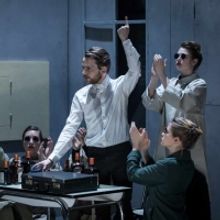
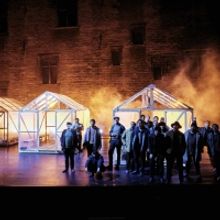
While describing the marginalization of theatre artists in early Christian society my theatre history professor once said, 'It must be a kind of witchcraft or at least magic. You are making something there that wasn't there before from your mere presence!' These words rang in my ears as I watched Simon Falguière's Le Nid de Cendres, a 13 hour long miracle currently running at The Festial d'Avignon's mercifully comfortable La Fabrica theatre. Separated into seven segments from 11 in the morning until midnight and after eight years of construction, the ambition of Falguière's company Le K is obvious. Though what astounds more than the run time is that this ambition is paired with boundless imagination, cutting wit, and deep generosity.
July 11, 2022
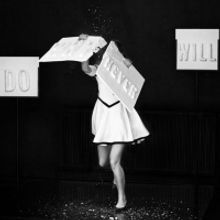
When it was announced that the 2022 Festival d'Avignon season would be headed by an adaptation of Chekhov in La Cour d'Honneur, I was skeptical. Chekhov's tragedies are often very cerebral. Their ultimate catastrophes are subtle and internal. How could something as fragile as a Chekhov character make itself realized in the chasm of La Cour d'Honneur? Kirill Serebrennikov answered this question through a liberal adaptation of Le Moine Noir, or The Black Monk, which turned the playwright's work into a surreal landscape. While the Cour d'Honneur still muffles subtelties, Serebrennikov's vision results in a few marvelous performances and resonating images.
July 11, 2022
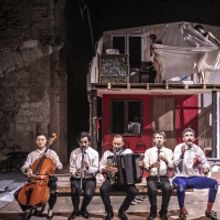
What if Philip Glass led The Ramones? This is as good an introduction as any to Miet Warlop's One Song, which recently premiered in the Festival d'Avignon's Cour du Lycée Saint Joseph. The title, One Song, is more or less accurate, as Warlop presents to the audience how one simple song can transform, hypnotize, and energize. It's an hour-long metaphorical treadmill, neatly paired with a very literal treadmill that singer Joppe Tanghe performs on at a brisk jog for roughly the duration of the piece.
July 11, 2022
One possible translation of the city name 'Avignon' would be 'The Windy City.' Avignon earned this name through an aggressive wind tunnel that begins in the Alps, shoots along the Rhone valley, and ends in the Mediterranean. The locals have named this weather event 'le Mistral.' In my previous Avignon experience, the Mistral has made limited cameo appearances. However, for the opening performance of Samuel Achache's Sans Tambour at the Festival d'Avignon's Cloître des Carmes, it became a leading playe and watching the cast masterfully steer its way around this scene stealing diva became a foundational element to the evening's performance.
April 4, 2022
'Il Était Une Fois' or 'Once Upon A Time' is the theme of this year's Festival d'Avignon. Olivier Py announced the programme this past Thursday in Avignon, where he has been the artistic director since 2014. 2022 marks his final year in the role, as he will be passing the torch to artist Tiago Rodrigues. Born in Lisbon in 1977, Rodrigues is the first non French artistic director since the Festival's founding. His production of Chekhov's Cherry Orchard, La Cerisaie in French, headlined in the Festival's Cour d'Honneur in 2021.
July 6, 2020
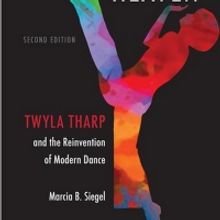
Assigning shape and motivation to New York-based dance institutions can be a sisyphean task for the historian. Many are maddeningly haphazard, the aesthetic shifts incredibly jarring, and the community networks so unorthodox that, to the untrained eye, it can feel like the artistic equivalent of throwing spaghetti at the wall. In 'Howling Near Heaven: Twyla Harp and the Reinvention of Modern Dance,' Marcia B. Siegel expertly reads direction and purpose into the chaos of Tharp's career from the '60s at Judson to her commercial successes decades later.
April 14, 2020
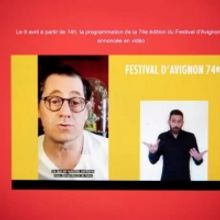
With a backdrop of (as of this writing) West End theatres closed until late May, Broadway theatres closed until early June, and the cancellation of The Edinburgh Theatre Festival in August, artistic director Olivier Py announced the programme for this July's Festival d'Avignon. The director offered his rationale to persist in terms of the event's status as a public service, which contrasts with Edinburgh's commercial theatre market. This is not an unfair distinction, given Avignon's founding as a public works project following the Second World War, and significant public funding. However, this public funding, while generous, requires significant income from ticket sales to keep the Festival afloat. Canceling the Festival would be a historic and economically catastrophic event (the Festival was only cancelled once before, for a strike in 2003) with ramifications not only for the Festival, its administrators, and its artists, but also for the outlying region of Avignon and the Vaucluse, which relies on the Festival as a source of yearly income. While any comparison would be inexact, one can imagine the fallout from canceling Mardi Gras in New Orleans. In any event, the artistic director appeared online to offer his theme for this year's festival: Eros and Thanatos.
March 11, 2020
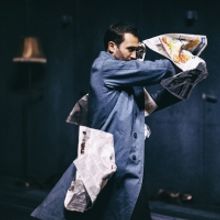
The performers of Nederlands Dans Theater fuse exacting execution and creative ambition to create grotesque, haunting, and sublime images. Under the artistic direction of choreographer Paul Lightfoot, the company is presenting three US premieres at NY City Center. Gabriela Carrizo's The Missing Door, Marco Goecke's Walk the Demon, and Sol León and Paul Lightfoot's Shut Eye form a triptych, presenting those parts of the body and mind that resist cultivation.
February 10, 2020
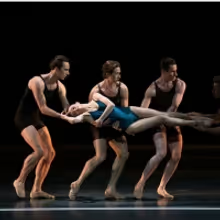
What happens when a choreographer goes off the beaten path? This past Friday's New Combinations program at The New York City Ballet staged unique works in the repertory of four icons of the field: Wheeldon, Peck, Robbins, and Ratmansky. The four choreographers taken together offer ballets that we can view as academic curiosities, forgettable B-Sides, or explosive new dance visions.
December 23, 2019
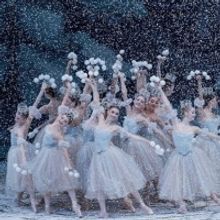
Nostalgic rose-colored glasses so tint few works as The Nutcracker. Its music, its images, its audience of children, either mesmerized or fidgeting in their Sunday best, have become annual staples of the Christmas season. Balanchine's 1954 staging of the ballet is its quintessential manifestation. As with all things Balanchine, it is a feat of harmonious contradictions; instead of his more academic ventures that seek to marry the aristocratic form with the fashionable modern, The Nutcracker is a practice in elegant nostalgia. Perhaps Balanchine felt this nostalgia for a Russia that was long gone; Stalin died the previous year, leaving behind a Russia that held no resemblance to the first act fete. That the choreographer was capable of conjuring these charming visions of a dreamlike childhood, while not sacrificing his pioneering vocabulary, is a testament to his genius
November 25, 2019
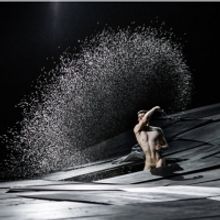
Throughout The Great Tamer, choreographer Dimitris Papaioannou makes his audience witness violent absences, ponderous stillness, and tender presence. The entirety of the human experience, from sublime to mundane, and from the curious to the apathetic, finds space on the stage. All of these events yearn for human connection and charm with a witty human touch. While The Great Tamer lacks the symphonic seamlessness of its inspirations-Wilson and Bausch-it leaves me wondering if the whole is greater than the sum of its parts, as the surrealist menagerie on stage sets the imagination spinning.
Videos