

Review: THE MAN OF THE PEOPLE at Different Stages
An unsettling portrait of persuasion unchecked by accountability. Now playing through Jan 24th, 2026
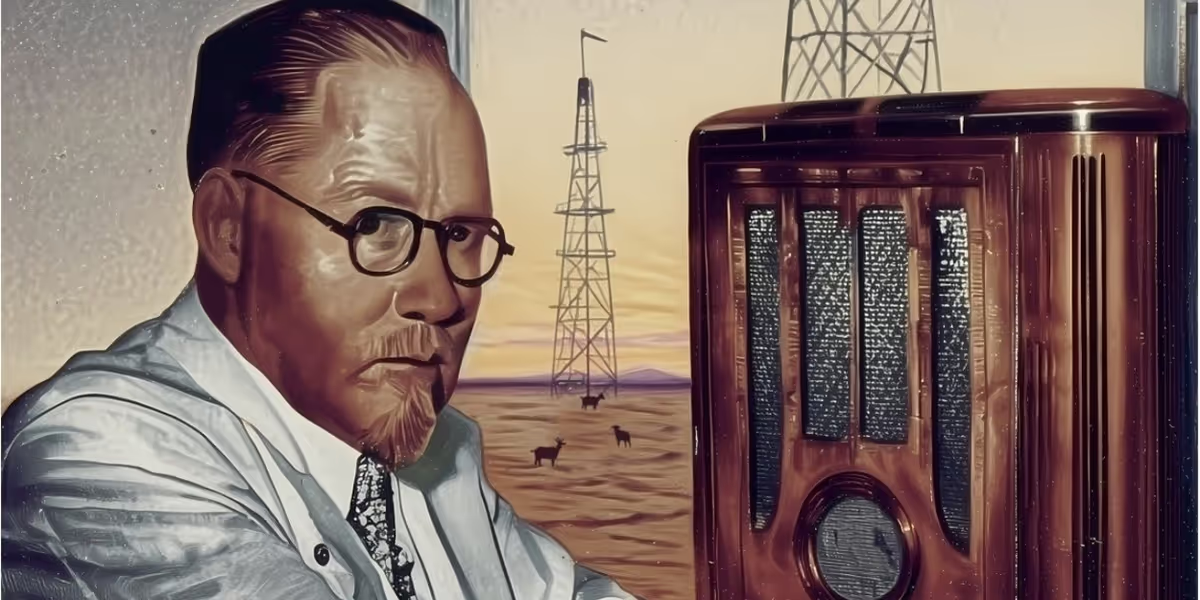
Different Stages’ The Man of the People opens like a file pulled from a drawer and set beneath a bright light. At its center is Dr. John R. Brinkley, not myth or exaggeration, but a very real man. Born in 1885 and gone by 1942, he became rich and celebrated through a bogus procedure in which he implanted goat testicles into men, claiming it cured impotence and nearly every human ailment. He had no legitimate medical degree. He bought his credentials from a diploma mill. That is not a rumor. That is the résumé.
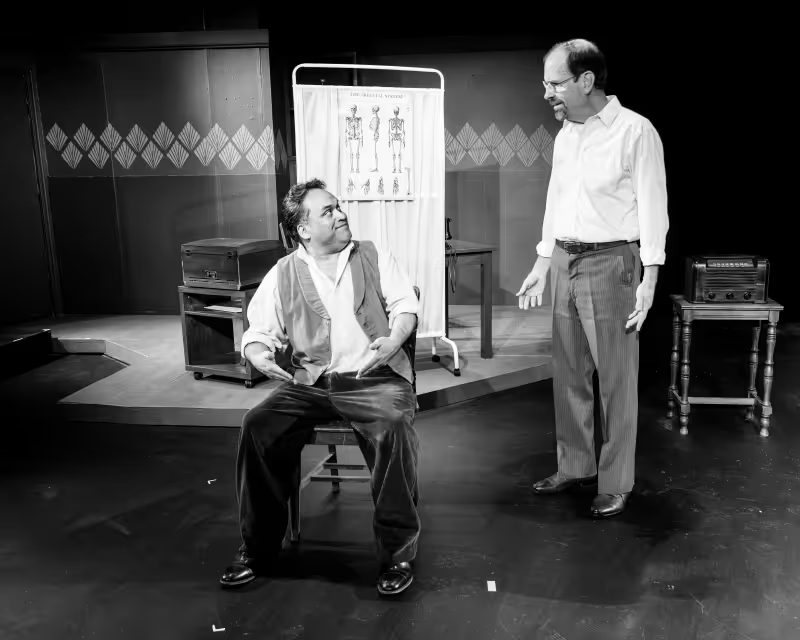
The Man of the People
PC: Different Stages
Dolores Díaz’s sharp script traces Brinkley’s rise from small-town hustler to national sensation, laying bare how charm, timing, and a well-placed performance can turn a heap of lies into an empire. He promised miracles, painted himself as the hero of the “ordinary people,” and somehow convinced the masses that expertise was just a pesky roadblock. That the media and regulators were out to get him. A witch hunt. Unjust prosecution. Sound familiar?
But, of course, Brinkley’s rise didn’t happen in a vacuum. These things never do. They are always powered by opportunists, by those who lack a moral compass but have a keen sense of the gaps in society they can exploit. Brinkley found his opening when medicine was in flux, regulations were laughable, and people were clawing for certainty. He packaged that certainty with a smile and sold it alongside pseudo-science, blending the theatrical with the fraudulent. He didn’t just sell a product; he sold a narrative, and radio stations were his megaphones. Long before digital platforms made "intimacy" a buzzword, Brinkley knew the magic of a voice in your living room. It felt like a friend, one you could trust. And who ever says no to a friend asking for trust?

The Man of the People
PC: Different Stages
Brinkley didn’t rise on his own. His wife Minnie, brought to life by Annie Merritt with bright charisma and wicked comedic snap, was his partner in crime. An architect, not an ornament. Together they polished the brand and kept the machine humming. Opposing them were Dr. Morris Fishbein (Chuck Winkler) and Dr. Maxwell (Beau Paul). They represented the AMA and confronted Brinkley with articles, lawsuits, regulations, and stubborn facts. The tension held: charisma sprinting ahead while accountability followed, steady and relentless. You watch reason try to anchor a crowd that prefers a magic trick.
The structure of the play is quietly cunning. It begins with a single patient, portrayed by Adrian Villegas, and one account of what happened. By the end, we hear that same story again. The shine has worn away. The truth remains. It is a simple device with blunt impact. The first version is legend. The second is ledger. Between them lie bodies, families, and the cost of believing the wrong man.
The value of this production is in its message much more than it is in the presentation of the material.
Under the direction of Marie Alice Carnes, performances are neither overwrought nor softened. Chamberlain’s Brinkley resists cartoon villainy. He charms, he jokes, he sells you a bridge and leaves you grateful for the view. That charisma casts a long, chilling shadow over the harm he causes. Winkler’s Dr. Morris Fishbein offers restrained focus, carrying the fatigue of a man forced to keep proving gravity to people who would rather levitate. Paul’s Dr. Maxwell becomes the tempting whisper in the room, wondering if a beautiful lie is truly terrible when it wraps hope in ribbon. Morris answers repeatedly that the cost is counted in real bodies, and the answer is absolutely yes.
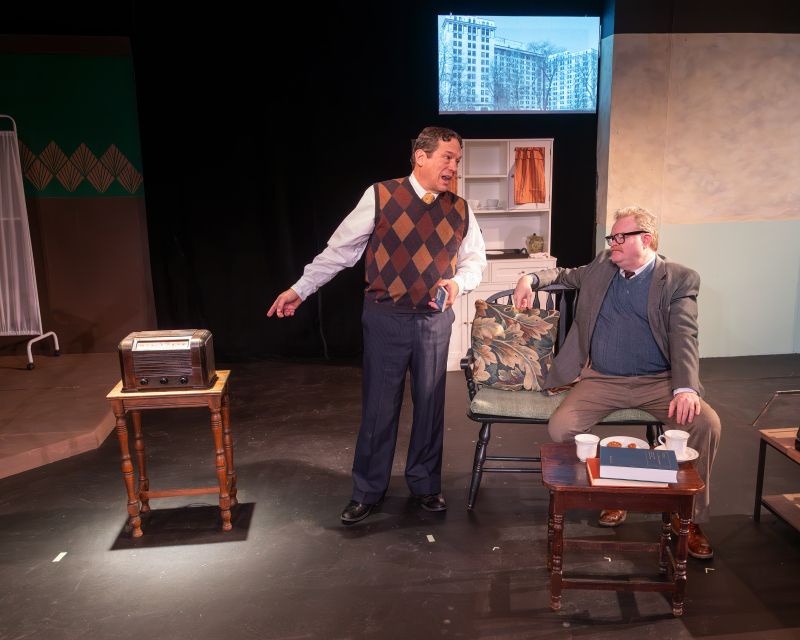
The Man of the People
PC: Different Stages
One of the production’s most memorable choices sits at center stage. An old radio glows like an oracle. As the story advances, the radio changes shape, becoming sleeker and more seductive. Brinkley does not change. The con stays constant. It is hard not to think that if you swapped that radio for a smartphone, you would be staring straight at America in 2025. Technology evolves. Familiar deceits remain.
Plot, history, and staging converge on one conclusion. We are not undone because liars are brilliant. We are undone because reassurance feels so good. Brinkley sold confidence, and people bought it because it sounded like hope. The invoice arrived later.
This play argues that performance, not proof, has long shaped American leadership. The production, however, does not scold. It records. It presses. It sends you into the night with the image of that glowing radio and the sharp knowledge that the next version of Brinkley may already be in your pocket, smiling, patient, and hungry for your attention.
Duration: 2 hours and 15 minutes, including intermission.
The Man of the People
Book by Dolores Diaz
Directed by Mary Alice Carnes
Now playing through January 24th, 2026
Thursdays through Saturdays at 7:30pm
Sundays at 2pm
Extra show Wednesday Jan 21st at 7:30pm
Additional matinee on Saturday, December 27 at 2pm
Different Stages at Trinity Street Playhouse
902 Trinity Street, 4th Floor
Austin, TX 78701
Weekly top stories - unsubscribe anytime.
|
The Visit B. Iden Payne (10/29-11/08) |

|
ALL MY SONS by Arthur Miller The Filigree Theatre @ Ground Floor Theatre (10/30-11/14) |
|
Our Our Town Rude Mechs (11/05-11/21) |

|
Oklahoma! Georgetown Palace Theatre-Springer Stage (10/02-11/01) |

|
Honky Tonk Angels by Ted Swindley Southwestern University Theatre Department (11/13-11/22) |

|
Every Christmas Story Ever Told (And Then Some!) Penfold Theatre (12/04-12/27) |

|
Caleb De Casper ‘People Don’t Fall’ music video release show Cheer Up Charlies (10/29-10/29) |

|
2026 Sonic Guild Ball ACL Live at the Moody Theater (12/11-12/11) |

|
Your Old Fashioned Die Hard Holiday Radiocast The Driskill Ballroom, The Driskill Hotel (12/22-12/23) |

|
Harvey BASTROP OPERA HOUSE (8/06-8/22) |

Reader Reviews
To post a comment, you must register and login.