Student Blog: Behind JOHN PROCTOR IS THE VILLAIN: Noah Pacht & Victoria Vourkoutiotis
Both in theatre and in life, sometimes all it takes is a green light, a signal to go, to jump in, to trust your preparation and instincts.

Swings on a playground and Broadway swings may seem worlds apart, but they share a beautiful common thread: flexibility, readiness, and the capacity to be set in motion.
On a playground, swings wait quietly until someone takes a seat and is ready to move in any direction with the right push. They can carry different riders, big or small, each bringing their own energy. Likewise, a Broadway swing is someone who’s always ready to step in, no matter which “seat” (or role) needs filling. They don’t always get the spotlight, but without them, the whole system would come to a halt.
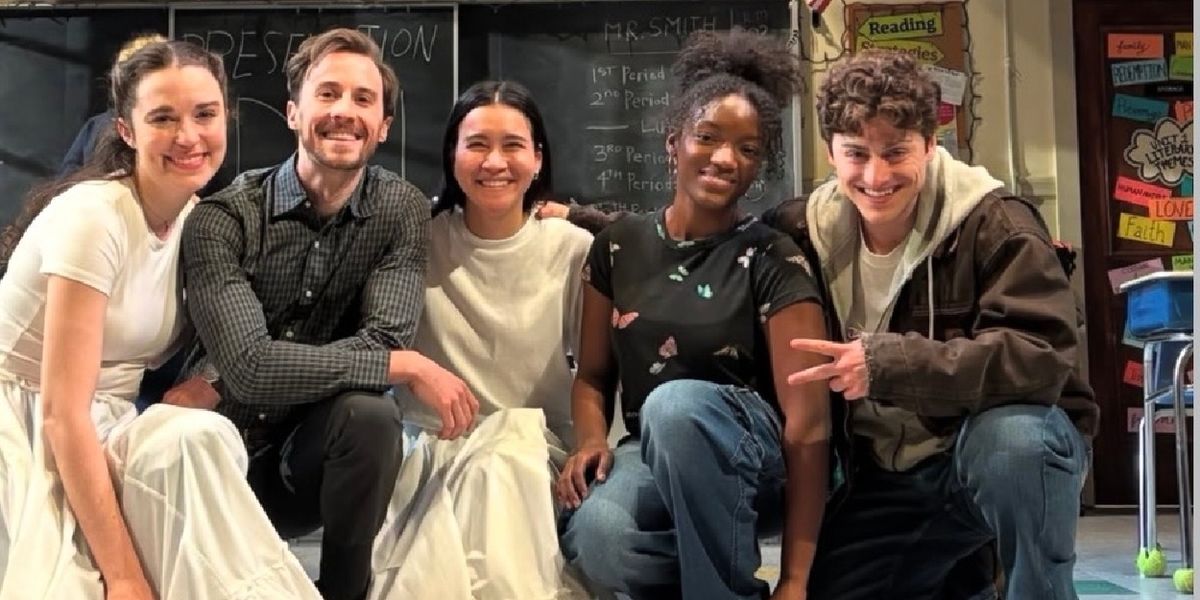
Some of my greatest inspirations and personal heroes of mine, stepped into the roles of The Heroes behind John Proctor Is The Villain on Broadway. Noah Pacht and Victoria Vourkoutiotis represent that spirit of heroism. Just like playground swings, they embody adaptability while keeping the momentum going when others can’t, ensuring the story is still told and the experience still feels seamless to the audience. Understudies and swings may not always be seen until they’re absolutely essential, but are often referred to as the “backbone” of Broadway. When they’re called on, they lift the production and everyone watching, just like that soaring feeling of your feet leaving the ground while on a swing set.
What sets a swing in motion is a push, sometimes gentle, sometimes forceful, but always enough to create momentum. On the playground, it’s the hands behind the rider or the rider’s own drive that sends them flying. For Broadway swings, that “push” is the call that comes when another actor can’t perform. It might arrive with weeks or hours of notice or even just minutes before curtain, but either way, it sets them into motion. The force behind that motion is countless hours of rehearsal, often spent learning multiple roles at once. Noah covered two roles in the show: Lee and Mason, while Victoria covered four: Shelby, Raelynn, Ivy, and Beth. Yet once they’re moving, the audience feels only the rhythm and flight of the story, never the sudden shift that puts them there.
For Victoria, the journey began in August, when she submitted a self-tape for Ivy. A couple of weeks later, she was invited to an in-person audition in mid-September. Afterward, silence lingered for a while until November, when she was called back, this time to be seen for four roles: Shelby, Raelynn, Beth, and Ivy. In the first week of January, she received the life-changing phone call: she had booked the job as the cover for all four girls. Noah’s path followed a similar rhythm. In September, he sent in a self-tape for Lee. Months passed before he heard back with the news that casting had loved his work and wanted him to tape for Mason as well. In December, he submitted his Mason tape and was invited to a final in-person callback. Soon after, he learned he had booked the show, covering both Lee and Mason.
For both Noah and Victoria, this show not only marked their Broadway debuts but also their first time as swings. Their rehearsal process for covering multiple roles included full-cast rehearsals, understudy rehearsals twice a week, and running lines at home or backstage in their dressing rooms with their fellow swings. Whether they were making schedules, tracking sheets, running lines, or mastering the perspective of multiple characters, they were constantly balancing preparation with adaptability and building the foundation they would need to be the heroes of John Proctor Is The Villain. Covering multiple roles often meant performing the same scenes back to back in rehearsals, seamlessly switching between characters and ensuring that each role was on speed dial.
Both in theatre and in life, sometimes all it takes is a green light, a signal to go, to jump in, to trust your preparation and instincts. For Victoria, that green light came not just in performing her roles, but in mastering a pivotal moment on stage: the Green Light dance. Because she was covering both Shelby and Raelynn, she had to learn both parts of the dance, familiarizing herself with two distinct sets of movements, cues, and emotions. It wasn’t just about memorizing dance steps, it was about embodying each character fully, switching seamlessly from one to the other at the push of a metaphorical green light button. In that moment, the green light wasn’t just a cue for action, it was a symbol of readiness, adaptability, and the heroism that defines a swing. For Noah, his green light wasn’t just a single cue, it came in the form of going on as both Lee and Mason sometimes within days of each other. Each role demanded its own emotional arc, physicality, and timing and he had to be fully prepared to switch between them at a moment’s notice. The green light meant trusting his preparation and instincts and stepping onto the stage with full confidence that he could honor both characters no matter how quickly the show demanded it. It was a test of versatility, focus, and the resilience that defines a swing and every time he answered that green light, the audience experienced nothing but the seamless rhythm of the story.
Beyond mastering the lines, movements, and cues of multiple characters, Noah and Victoria faced the challenge of truly making each role their own. It wasn’t enough to step into the parts, they had to bring individuality, nuance, and breathe new life into each character so the audience could see them as fully individualized people, not just interchangeable roles. For Victoria, that meant shifting seamlessly between Shelby, Raelynn, Ivy, and Beth, finding each girl’s unique energy, rhythm, and emotional arc. For Noah, inhabiting both Lee and Mason required a delicate balance of contrast and consistency, ensuring that each character felt distinct yet integral to the story. Their work turned preparation into artistry, allowing them to inhabit multiple worlds on a single stage in one singular story while leaving a memorable mark on each.
When I asked Noah and Victoria what advice they would give someone about swinging for the first time, they shared a beautifully hilarious and metaphorical story. Understudying is like spending a year of your life creating a painting, the most beautiful painting which you pour your soul into, bringing yourself immense joy. The second you finish the last stroke of the painting, you throw a party at 7:00pm, but at 6:59pm, you burn the painting. The point of this beautiful and humorous metaphor is that as an understudy, you must be willing to create something extraordinary even if you do not know whether the world will ever get to see it. You cannot hold back simply because you are not performing every night or are not guaranteed a performance. You must work as if this is all you will ever do, fully immersing yourself in the process. At the end of the day, if you get the opportunity to share your painting with the world, that is a gift. But even if you do not, the painting still exists, it is yours and is a creation of your hard work, and that is just as meaningful.
In the end, being a swing whether on a playground or on Broadway is about presence, patience, and the power of readiness. Just as a swingset waits until someone jumps on and sets it in motion, Noah and Victoria spent countless hours preparing, learning, and perfecting multiple roles so that when their moment came, their performance soared effortlessly. They are the forces keeping the story alive, the backbones of Broadway and the steady hands that allow the production to reach its highest heights. In John Proctor Is The Villain, they are the heroes whose dedication, hard work and skill helped to create a show that moved audiences to tears, and to reflection, leaving a life-changing impact on audiences that last long after the final curtain call. Like a swing waiting for the push that sends it to the sky, Noah and Victoria were always ready for their green light and when it came, they lifted the show, the story, and the audience to the sky with them.