


Review: YOUNG JOHN LEWIS: PRODIGY OF PROTEST at Mosaic Theater Company
Psalmayene 24's original work explores the legacy of John Lewis in new daring musical

At a moment when the language of protest feels once again urgent, Mosaic Theater’s newest original work from Playwright-in-Residence Psalmayene 24, YOUNG John Lewis: PRODIGY OF PROTEST, delivers a powerful message through the eyes of the late Civil Rights leader. Blending rap, slam poetry, and historical storytelling, the musical reimagines the formative years of civil rights activist and longtime Georgia congressman, John Lewis. It’s a ride that’s as inventive and new as it is ambitious. Even though there are stretches that struggle to keep pace, the music is brimming with modern beats and originality.
Rep. Lewis’s legacy is titanic in the annals of U.S. history, particularly his leadership during the Civil Rights Movement’s more seminal events throughout the 1950s and 1960s. Psalmayene’s original musical doesn’t try to present a comprehensive history of Rep. Lewis, mercifully, but smartly focuses on the events that created his foundation as an activist and leader of people.
John Lewis grew up in Pike County, Alabama, as the son of former sharecroppers. Inspired as a teenager by the teachings of Dr. Martin Luther King Jr. and ignited by the brutal murder of Emmett Till, John quickly becomes interested in activism to fight for racial equality in the deeply racist American South. He becomes inspired by the non-violent, direct-action teachings of James “Jim” Lawson (Montel Butler) and even takes part in several lunch counter sit-ins to protest segregated spaces throughout the South in the 1950s.
As the 1960s begin, John Lewis has embraced his mantra of getting into “good trouble.” He becomes a leader in the Student Nonviolent Coordinating Committee (SNCC), a Freedom Rider, and an organizer and speaker for the famous 1963 March on Washington. He also joined the historic Selma to Montgomery march, known as “Bloody Sunday” and immortalized by images from the Edmund Pettus Bridge in Selma, AL. Wherever the heartbeat of the Civil Rights Movement was, it seemed John Lewis wasn’t far away.
The musical concludes just as John is considering a transition to politics, which was the beginning of what would become a legendary three-decade career in Congress serving his constituents in the Atlanta, GA community. However, the piece merely brushes against this topic. It instead leaves us with hope for the future that Rep. Lewis has helped create.
It is without question that the piece is original and pushes the boundaries of what a musical can be today. Despite its refreshing feeling of newness, the musical no doubt follows a road map provided by Miranda’s HAMILTON in that the score is mostly rap and slam poetry rather than more traditional songs of musicals past. Like Miranda’s masterpiece, the songs are exceptional in that they thread the needle between being captivating as standalone pieces and advancing the narrative effectively.
However, the non-sung portions of the piece do not deliver the same punch as their melodic counterparts. These sections are quite weak and often come across as filler. The job is done to get us from one song to the next, and we get the information we need, but these passages often feel stunted, forced, and lacking honesty.
It can be disorienting to introduce a bevy of characters quickly and effectively, and YOUNG John Lewis certainly struggles with this very thing. While the ensemble is magnificent in weaving throughout the myriad of characters, there are far too many clunky transitions and dialogue that feels inauthentic. It means there’s a bit of momentum lost here, which is unfortunate because the songs, cast, and subject matter are so strong.
As the Young John Lewis, Michael Bahsil-Cook wears the role like a glove. He skillfully raps, sings, and recites his way through a daunting role, and he brings a grounded and strong presence to the role. An Atlanta native, one has to assume Bahsil-Cook has a deep connection to this material and to the legacy of Rep. Lewis. His performance is raw but somehow still controlled - he never gets too lost in the weaker points of the script and consistently brings honesty throughout.
Latrice Pace and Vaughn Ryan Midder play Lewis’s parents in the piece’s early scenes, which are definitely among the weaker sections mentioned previously, but both get a chance to show off their immense talents later. For Midder, it’s his turn as Medgar Evers that stays with the audience. For Pace, it’s her spectacular vocals that stand out, and we must thank Psalmayene 24 and Kokayi, credited with the music, for allowing her to shine.
Several other ensemble members deliver equally excellent performances, including Montel Butler as a spirited Jim Lawson, who inspires Lewis to adopt the principles of non-violent direct action, and Jordan Essex, who is a standout as Stokely Carmichael. Though it comes across as an all-out carbon copy of the Founding Fathers rap battle in HAMILTON, Essex is excellent in the John Lewis vs. Carmichael showdown.
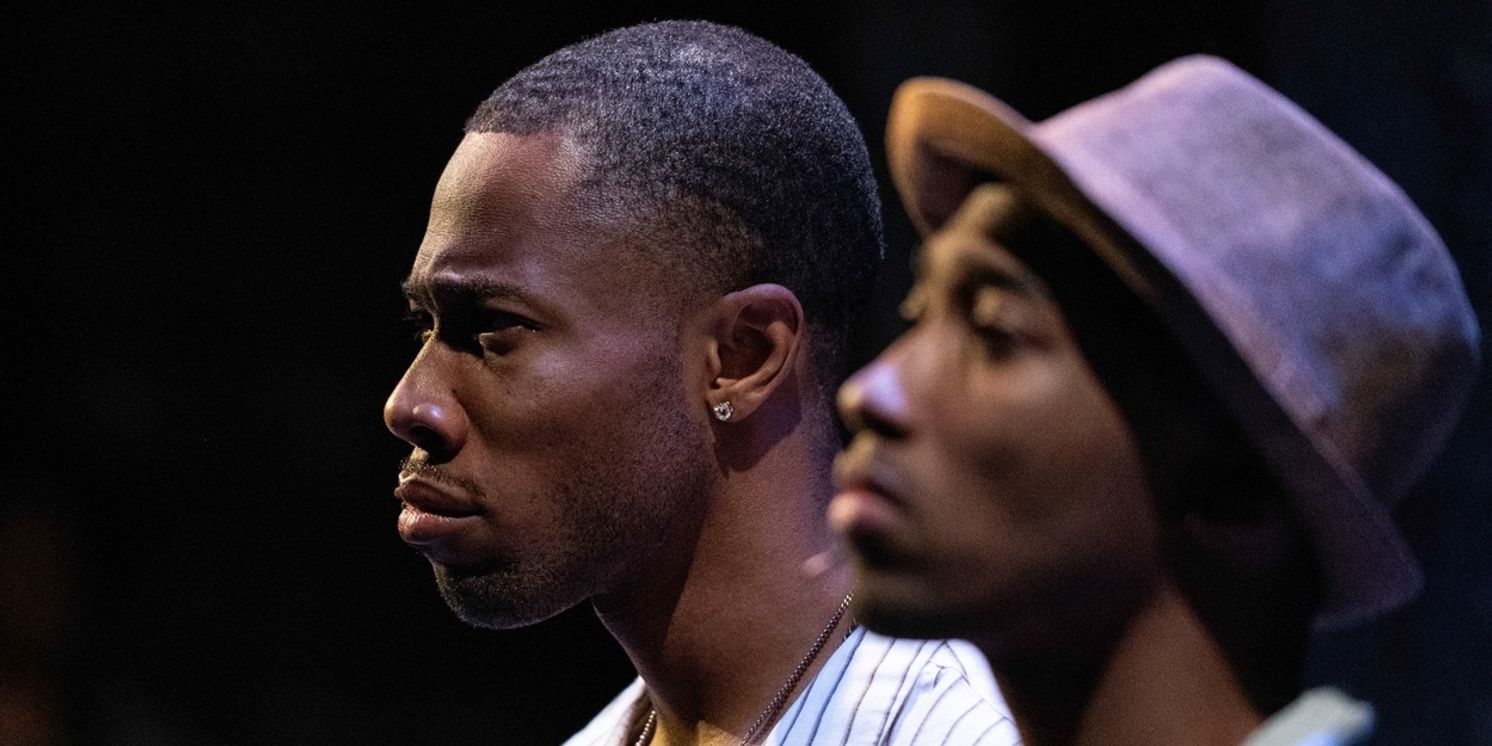
Creatively, the piece places the spirit of Emmett Till (Christian Emmanuel) as a sort of sidekick/guide for John Lewis’s journey. Having seen the graphically violent photos of his death, Lewis is motivated to jump headfirst into activism, and who better to support this journey than Till himself? Emmanuel is a good fit for the role and complements Bahsil-Cook well.
Though very talented with exquisite vocals on display, the only real historical figure “miss” of the piece is that of Harrison Smith’s Bobby Kennedy. Psalmayene can’t seem to decide whether the character will be an ally in the struggle or treated as an enemy of it. However, this may intentionally reflect the Black community’s feelings about the Kennedys at the time. Still, Kennedy’s song borders on caricature, and his song in the show’s final act stands out as it’s not quite as rooted in the truth of the piece’s earlier numbers. Fortunately, Smith’s dynamic vocals are fantastic regardless.
Additional members of the ensemble include: Kit Krull (Joan T. Mulholland/Waitress/Ensemble), Solomon Parker (Reverend Doctor/Hosea Williams/Ensemble), and Nia Savoy-Dock (Diane Nash/Mamie Till/Ensemble).
YOUNG John Lewis: PRODIGY OF PROTEST boldly permits itself to think outside the box and create an original piece of theatre. Though the script doesn’t match the ferocity and sharpness of the music, it still plays its part to make the story effective. With clear inspiration from HAMILTON, it’s exciting to see contemporary music and storytelling techniques continuing to flourish on stage.
YOUNG John Lewis: PRODIGY OF PROTEST has book and lyrics by Psalmayene 24 with music by Kokayi. The piece is directed by Reginald L. Douglas, and Tony Thomas is credited as Choreographer and Associate Director. Other members of the creative team include: Andrew Cohen (Scenic Designer), Marika Countouris (Vocal Music Director), Shayna O’Neill (Stage Manager), Albert Segarra (Lighting Designer), Nick tha 1da & Ian Vespermann (Co-Sound Designers), Sierra Young (Intimacy & Violence Director), Moyenda Kulemeka (Costume Designer), Zavier Augustus Lee Taylor (Projections Designer), Chelsea Radigan (Casting Director & Dramaturg), Larry Peterson (Wig & Make-up Designer), Drew Kid (Band Director), Pauline Lamb (Properties Designer), and Claire Fogle & Luis Ramon Cordovez (Assistant Stage Managers).
Special mention goes to the on-stage band, which is an integral part of the storytelling here. Band members include Stephen Arnold (Bass), Tijan Glover (Drums), Drew Kid (Keys & Band Leader), and Jabulani (DJ). The latter provided some excellent tunes during the pre-show, and audiences should arrive early for the great vibes and party atmosphere.
The musical runs approximately 100 minutes with no intermission.
Photo: Michael Bahsil-Cook as Young John (left) and Christian Emmanuel as Emmett Till (right)
Photo by Teresa Castracane Photography
Reader Reviews
Videos