

Review: WATER FOR ELEPHANTS Runs Away with the Circus at Benedum Center
The national tour runs through April 5
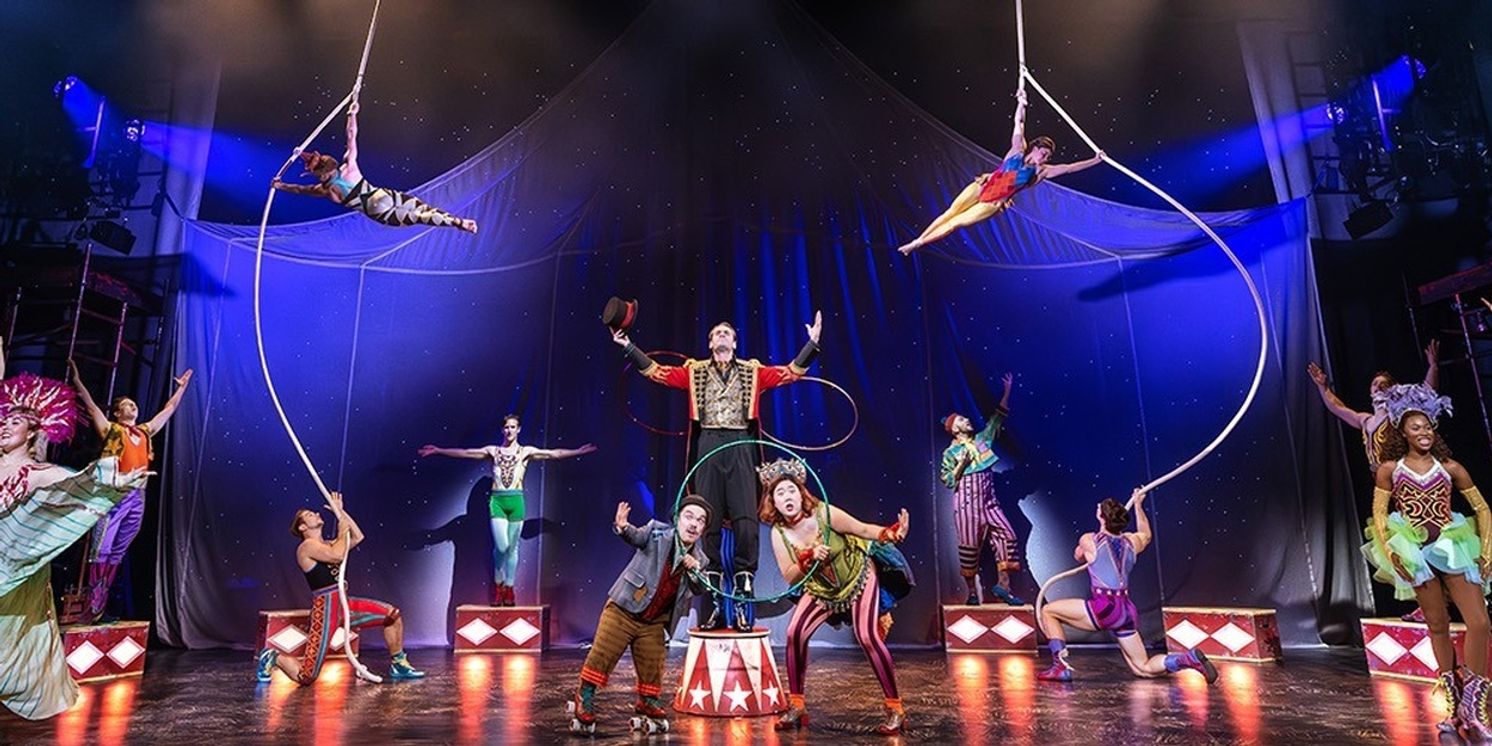
If I told you I spent an evening last week watching a surrealist dramedy about performers in a circus run by a needy, codependent and violent ringmaster with bipolar disorder, you'd have two options to choose from. If I narrowed it down by telling you that the climax involved that ringmaster torturing and tormenting the circus denizens, while simultaneously begging for their affection and respect, you'd still have a fifty-fifty chance. No, I was not watching the cult sci-fi dramedy The Amazing Digital Circus, I was watching the national tour of Water for Elephants. Even on a non-equity national tour, the fusion of conventional musical theatre with circus skills, show tunes with bluegrass, worked like gangbusters. While Pippin may have a better script and score, and more star power in its cast, I've never seen a fusion of cirque and theatre that works this well.
Aging circus veteran Mr. Jankowski (Robert Tully), in roughly the present day, elopes from his care facility to visit the circus. He reminisces with the current circus staff about his days as a circus vet in the 1930s, when, as a younger man (Zachary Keller), he ran from a dead-end life into the circus, and woudn up in a bizarre love quadrangle with the mercurial ringmaster August (Connor Sullivan), his animal-tamer wife Marlena (Helan Krushinski), and... Rosie the elephant (a massive yet modular puppet played by up to five ensemble members at once).
I'll come right out with my quibble instead of burying the lede: this is not the strongest script or score you're ever going to hear. The songs, by band/theatre collective Pigpen Theatre Co., aren't especially memorable, and tend to be meandering and repetitive. The script itself moves at an odd pace, rushing through exciting or important plot points to linger long on sentimental moments of stillness instead. But listen... LISTEN. None of that matters here. This show lives and thrives on the mix of musical theatre spectacle (puppets, quick costume changes) with human stunt athleticism. The ensemble of Water for Elephants is led not by its singers and dancers, but by its cirque-skills performers. Gymnast Yemie Woo, aeriealist Yves Artieres, and physical performer Adam Fullick must be praised for leading this incredibly skillful, athletic and death-defying group through a series of stunts, tricks and feats of strength and skill.
As young Jacob Jankowski, Zachary Keller is no slouch in the athletics field: he makes a series of leaps of faith onto moving set pieces or ladders, and sings a very dramatic solo with nary a quaver while hanging from a trapeze. His physicality off the bars is gentle and sensitive, even as he has the kind of strong, heroic baritone-tenor that Jeremy Jordan popularized. He meshes quite well with Helen Krushinski's Marlena. Marlena has to do a lot with a little: her songs are more meandering and free-form than the rest, especially a recurring lullaby she sings to her animals. Despite this, she has a warm and winning presence, the sort of energy that lends itself as well to a romantic lead as to a circus animal tamer, who must be able to establish immediate rapport with any living creature she makes eye contact with. The rest of the circus leads are equally strong, especially Javier Garcia as handicapped ticket seller Camel. Garcia has a raw, bluesy tone to both his singing and his sense of humor, making you see the young soul and the old man in the ticket seller at once.
There are two characters who undoubtedly steal the show. First, Connor Sullivan makes a meal of August's rapidly shifting mental states. His performance of "The Lion Has Got No Teeth," a paean to artificiality and deception for its own sake, is the musical highlight of the show (one of the few songs from the score I felt compelled to go back and listen to after the show). As August unravels during the second act, his seriocomic mood swings add a jolt of energy to the somewhat slow-burning romantic plot. The other performer isn't so much one person as several: Rosie the elephant puppet. Whether a single puppet trunk controlled by Ella Huestis, or a massive conglomeration of puppet parts together run by the whole ensemble in perfect synchronicity, Rosie's presence onstage is always a highlight.
Leaving the show, I couldn't help but think of the last time I saw the circus. I was probably ten the last time I saw a classic American circus, and sixteen or seventeen the last time I saw a French-Canadian cirque. It's amazing how some things go in and out of style, like American circus, while other things, like musical theatre, seem to stick around forever with little fluctuation in popularity. Is the future of cirque going to stay as successful and trendy as it has been for thirty years, or will it become a nostalgic novelty the way a three-ring American original did? Do kids still dream of running off and joining the circus? I don't know for sure, but anyone who sees this show (especially someone naive enough to watch the stunts and say "I could do that") will be dreaming of tumbling and trapeze for nights after.


Reader Reviews
Videos