


Review: CARMEN, London Coliseum
Proabably the world's most popular opera is back in town
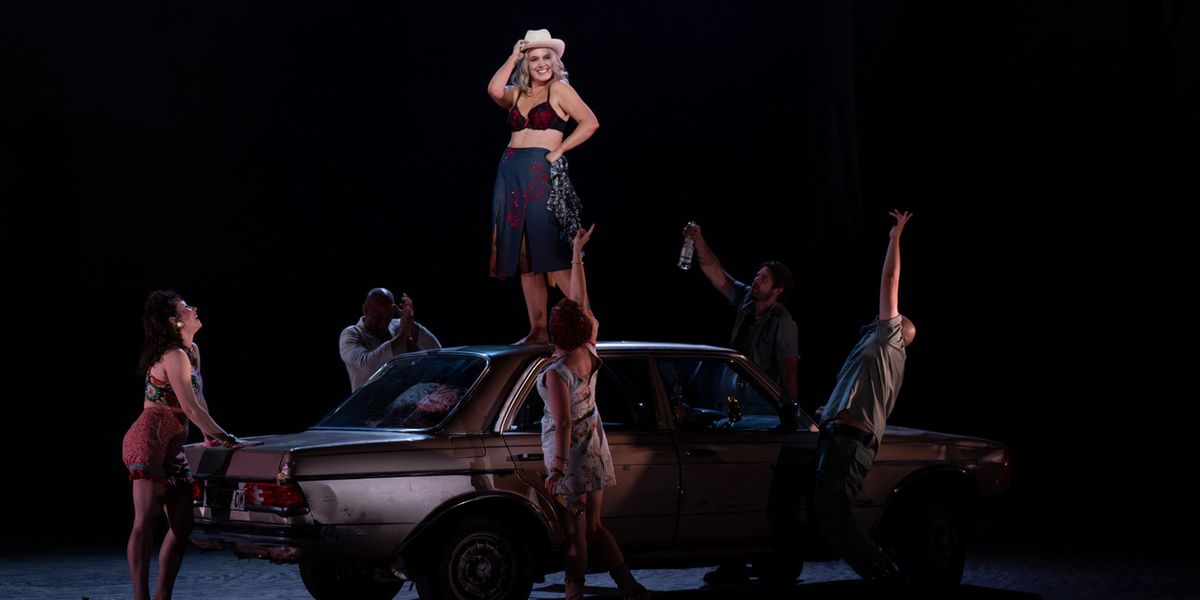
 Sometimes there’s no connection at all, just two things happening at the same time that sit nearby in your mind. In an opera about connections both too strong (Don José’s to Carmen) and too weak (Carmen’s to, well, everyone) perhaps it’s no surprise that I found myself thinking of parallels between Evita, recently closed at London’s second largest theatre, The Palladium, and Carmen, now playing at the largest, The Coliseum.
Beyond the titles, the fiery Latin heroines and the tunes you feel you’ve always known, it’s the conception and execution of the directors, Jamie Lloyd for the Lloyd-Webber and Jamie Manton as revival director for Calixto Bieito’s much-travelled 1999 Bizet, that feel connected even if they’re not.
Both productions are staged in cavernous dark spaces with no sets to distract or amuse us. Evita’s Argentina is largely absent; for Carmen, Spain is largely missing too. What’s gained in the tight focus on performance and psychological intensity, is lost in exotic otherness.
Perhaps it’s wise, in 2025, to lose the stereotypes of gypsy outlaws and black-eyed temptresses leading weak men to violence, but the opera is diminished in the distillation. Maybe that’s why, even on its fourth revival since it first appeared in St Martin’s Lane in 2012, its singing in English created more distance from its French language original than was the case in other translated Carmens I’ve seen.
That said, it’s still Carmen, opera’s biggest crowdpleaser!
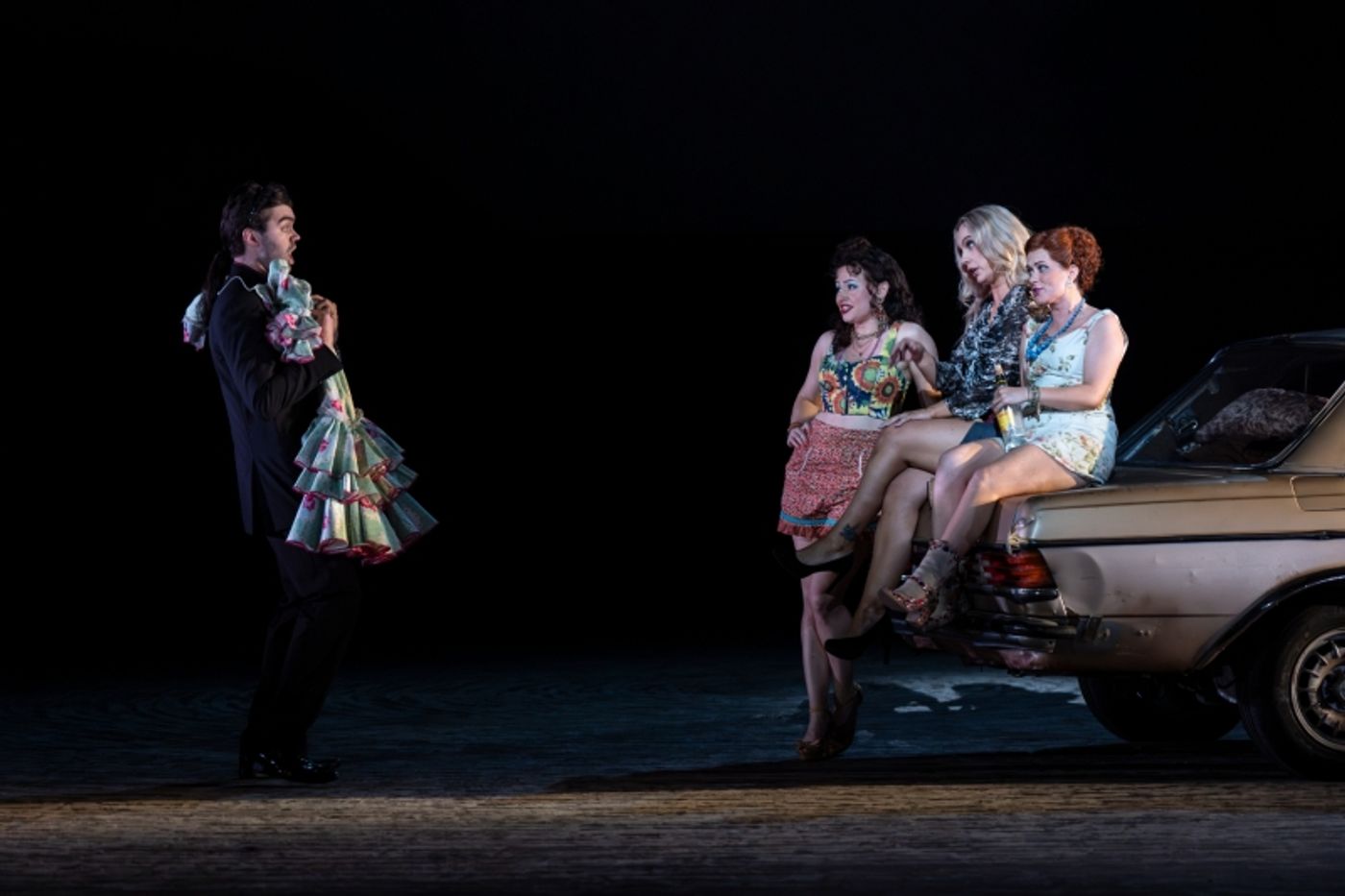
The chorus (in fine form throughout) fill the yawning void before us in a gigantic opener, a tour-de-force that sets a tone of testosterone-fuelled transgression, soldiers swarming the town on the lookout for sex and violence. These are the last days of Franco’s Spain, a country emerging from dictatorship, in which smugglers drive around in big slabby 70s Mercedes and men can be whipped and women tied to flagpoles on a whim.
The factory girls emerge to tease the soldiers (there are no cigars and barely any smoking at all) but, uniforms now loosened, they’re waiting for one specifically, the one who brings the sex and violence they crave, the one who shares their appetites and their morals. Carmen.
Niamh O’Sullivan’s glamourpuss owes more to Madonna's blonde rocking a push-up bra phase in her look and swagger than to the Spanish Lady whose picture hung on many a living room wall back in the day. No matter - she’s different and women who are different bring fascination and fear and, then and now, usually pay a price - and she does.
She’s quite the contrast to mousy Micaela, the good girl who is in love with Don José and tries to make him see sense and return to his aging mother one last time before she dies. On an evening during which some singers struggled at times for audibility, Ava Dodd’s soprano was, in every sense, the high point, making the most of a part that can be something of a thankless job. I won’t be alone in looking forward to seeing much more of this Irish singer, currently developing her career as a Harewood Artist at the English National Opera.
Big dim Don then. Carmen tells him that she owns him and he, somewhat pathetically, agrees. John Findon admits as much in a superb performance of “The Flower Song” - we’ve all been there mate. For Carmen, dumb Don disobeys orders, brawls with his commanding officer and joins the outlaw gang smuggling contraband. And worse, much worse.
Findon brings charm to his loser, outgunned (as anyone would be) by the bullfighter Escamillo - Cory McGee curiously dressed like a bank clerk for all his milking of the acclaim. That makes the final scene difficult, no easier for our knowing that it’s coming, not just in Carmen’s reading of the cards but because this is an opera after all.
We’re not presented with excuses for domestic violence, but we can see Don José is a broken man in a broken family in a broken society. Perhaps the lesson is that things should never get so far, but I couldn’t help wondering what message the teenage girl in the seat in front of mine was taking away from the tragic denouement, a free spirit silenced. We’re kidding ourselves if we think today’s men are all that different from Don aren’t we?
Back to the music. Clelia Cafiero, who hands the baton to Olivia Clarke later in the run, leads the ENO Orchestra at a tremendous lick. The overture always feels too fast for my ears, but part of the timeless appeal of this work is the furious pace at which events unravel, a 19th century opera with a 21st century impatience. The sound is marvellous of course - just because the musicians can play this score in their sleep doesn’t make it any less impressive.
Quibbles about the bleak visuals aside, the audience will enjoy the arias we’re pretty much born knowing (“Habanera” and “Toreador”) and will all but join in with the chorus, kids and all, hailing the arrival of their heroes at the corrida in a wonderful fourth act opener. They won’t all, like me, be reaching for the remote to turn up the volume on occasion as their ears will work better!
A monument of the canon, Carmen is an opera for everyone. It was event theatre in 1875 and still event theatre 150 years on.
Carmen is at the London Coliseum until 5 November
Photo images: Ellie Kurttz






Reader Reviews
To post a comment, you must register and login.