
Review: BARRIER(S), Camden People's Theatre
This love story about two women, one deaf and one hearing, fails at the final hurdle
By: Clementine Scott Nov. 12, 2025
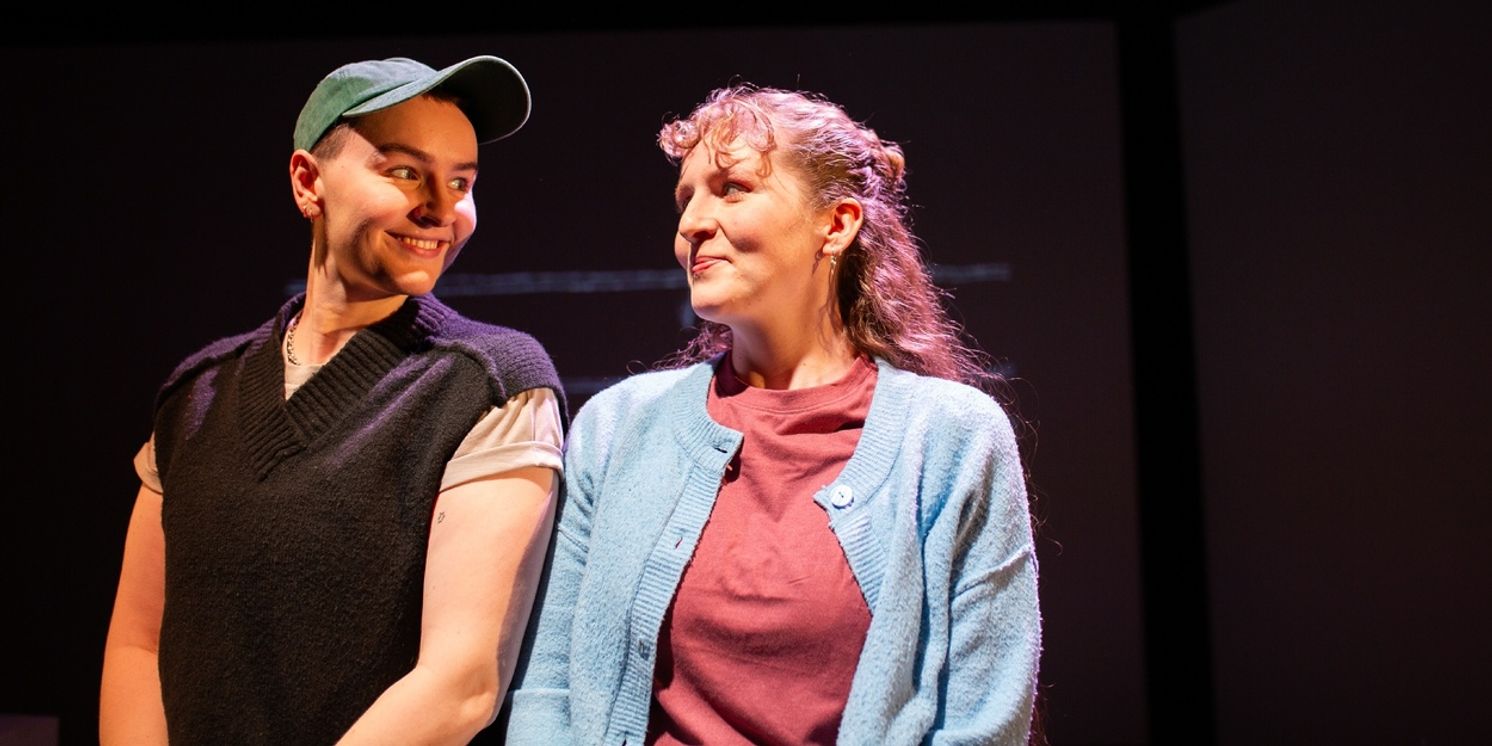
 There’s something of Heartstopper to the design of Barrier(s), pastel sketches of suburban living rooms and nervous texts to a crush etched out lovingly on the projector. On this occasion, though, those charmingly awkward texts have a practical function as well as an aesthetic one, because Barrier(s) is performed mostly in British Sign Language.
Katie (Zoë McWhinney), a deaf primary school teacher, meets Alana (Em Prendergast, who uses they/them pronouns) at a house party, who promptly spells their name in halting sign language as ‘Alan’. What ensues is a tenderly observed romance, marked by nervous flirting via video camera blossoming into electric chemistry between the two leads, and above all Alana’s gradual mastery of sign language – chivalry is not dead after all.
This play, by debut writer Eloise Pennycott, is as much about the beauty of BSL as a language as it is about romance, or about the deaf experience. Both McWhinney and Prendergast use the language to its full expressive potential, embracing opportunities for humour (the BSL word for “d*ckhead”, for instance) and grandiose visual metaphor in equal measure. There are also some very effective moments when Pennycott does away with the closed captioning altogether, immersing the hearing audience fully in her actors’ physicality.
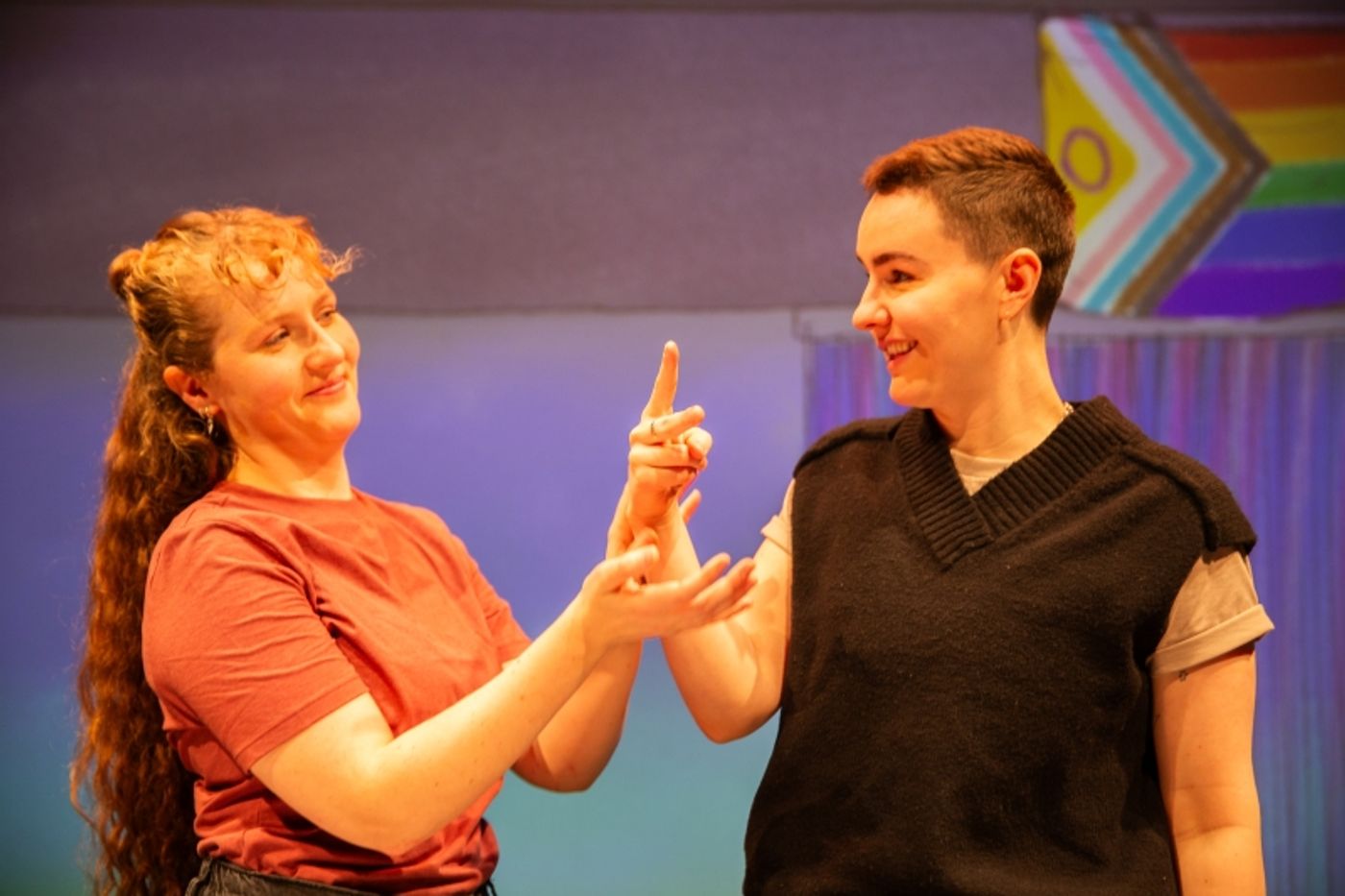
Photo credit: Becky Bailey
As Alana and Katie’s romance progresses, Alana inevitably becomes aware of the challenges their girlfriend (and soon wife) faces – the frustrations of sorting out disability allowance, the inability to accomplish anything over the phone, the ableism of the doctors the couple meet in an IVF clinic.
With a less capable writer, this portrait of modern disabled life could feel like an awkward political tickbox exercise. Here, though, the integration of societal issues feels seamless, simply a part of Katie and Alana’s reality. An early scene, where Alana fails to fix the fire alarm Katie relies on for her safety, is a deft blend of domestic slice of life and rage-inducing indictment of an ableist world.
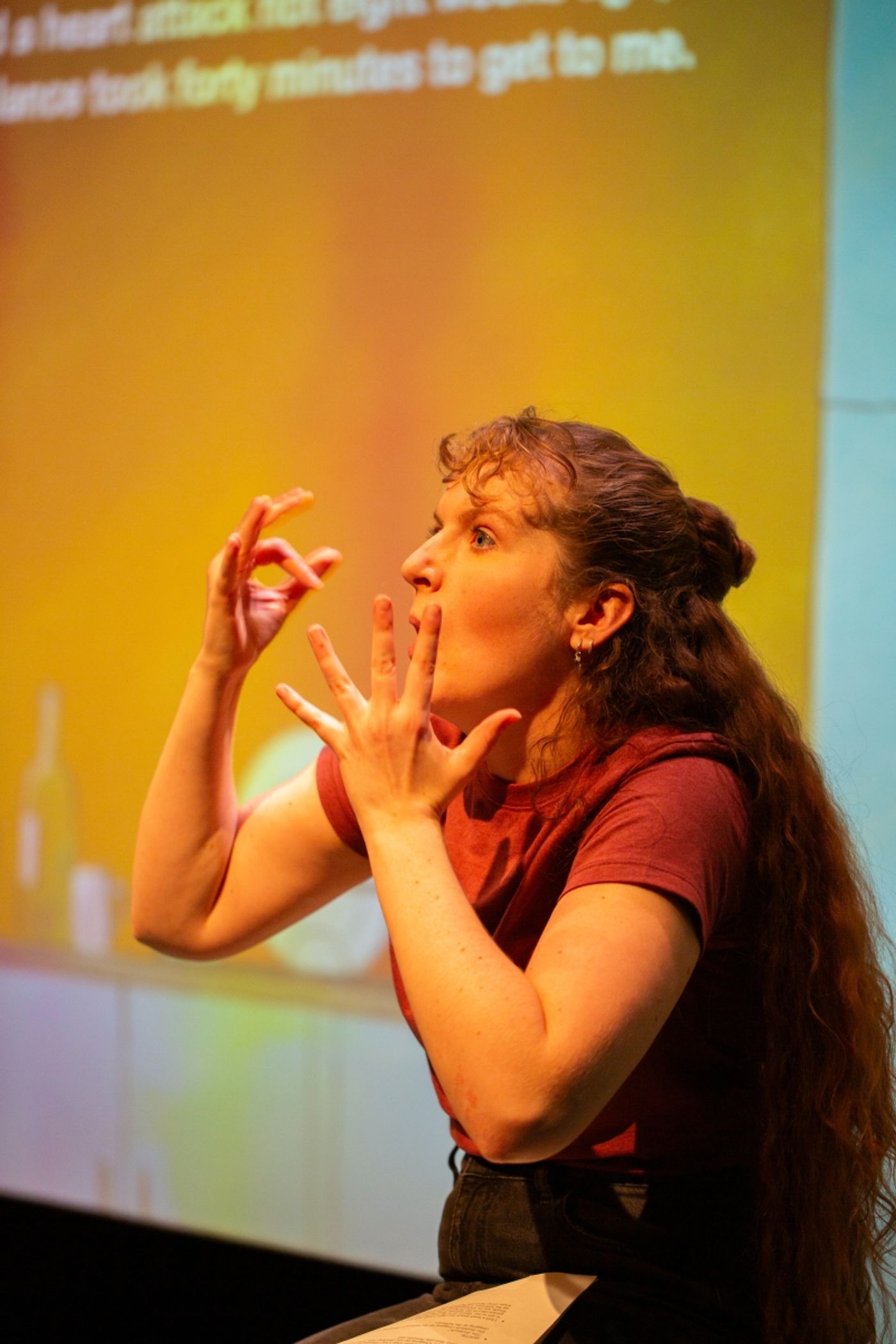
Photo credit: Becky Bailey
Unfortunately, Pennycott comes close to ruining what she has achieved. After a pregnant Katie experiences one too many traumatic incidents in both her professional and personal life, Prendergast – who, like their co-star, is deaf in real life – breaks the fourth wall to decry the script they are performing in for its prioritisation of deaf suffering over deaf joy.
That would all make sense if Barrier(s) thus far had made Katie a tragic character, weighed down by her disability with no light at the end of the tunnel, but this has not been the case. McWhinney’s portrayal of Katie is imbued with a sense of righteous rage against the injustices she faces, and a willingness to tackle them head-on, all counterbalanced by an unerring excitement about motherhood.
This sort of ending, then, turns its back on the rest of the show, and seems to indicate a writer lacking the confidence to finish what she has started. Instead of creating a satisfying resolution that springs from Katie and Alana’s love as well as their pain, Pennycott has merely stated the flaws in most media about disabled people without offering a complete alternative. These characters, and this overall idea, deserved better.
Read our guest blog from the writer of Barrier(s), Eloise Pennycote, here.
Barrier(s) plays at Camden People's Theatre until 29 November
Photo credits: Becky Bailey
Reader Reviews
Videos