


Review: ARTAUD / VAN GOGH at The Simeio Theater
Gene Gillette is a masterful "Artaud / Van Gogh".
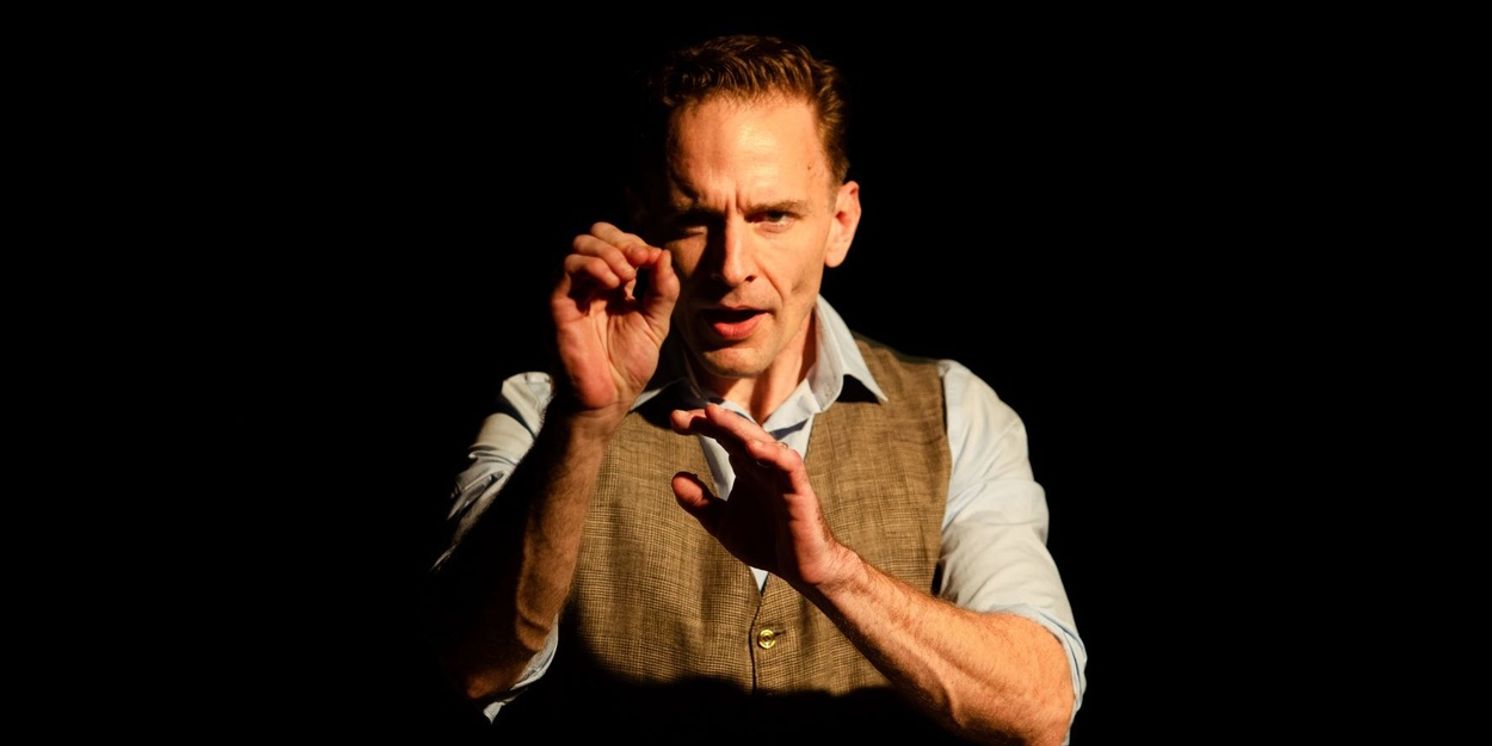
Recently, Broadway and Off-Broadway have seen a preponderance of one-man-shows; some wildy imaginative, some not so much. This critic has grown just a bit tired of the formant because, far too frequently, they come across as little more than vanity projects for an actor (often playing, with varying degrees of success, multiple characters). Just when I thought I never needed to see another such show.... I attended Ioli Andreadi and Aris Asproulis’ Artaud / Van Gogh in Athens, and my faith in the genre was completely restored! In the title role, American actor, Gene Gillette gives a performance that borders on possession. Presented in English with Greek surtitles at the Simeio Theater in Athens in October 2025, this harrowing solo work depicts a fictional Artaud lecture, entitled “Van Gogh, the Man Suicided by Society” as both a theatrical séance and a philosophical reckoning. What begins as an address to the intelligentsia of postwar Paris—an audience that includes Gide, Breton, Camus, and Lacan—becomes an indictment of the society that deifies art while destroying the artist.
The play opens on a stark, black, almost clinical stage. Artaud has returned from nine years of psychiatric confinement and fifty-one electric shocks in the final year alone. He looks calm—until he begins to speak. The calmness fractures. In his hands, language becomes a scalpel, dissecting the hypocrisy that called him mad while applauding the suffering of Van Gogh. Gillette channels this violent lucidity with a precision few performers could match. His Artaud is not a ghost or a caricature of insanity, but a prophet gutted by revelation—a man who insists that Van Gogh’s suicide was no act of weakness but a conviction executed by the collective cruelty of society.

Andreadi’s direction reinforces this duality between chaos and contemplation. Her staging is stark, sculpting the space into zones of confinement and exposure. Light isolates Gillette in geometric slivers; sound seeps in like memory or threat. The result is an atmosphere both cerebral and oppressive, where even silence hums with unease. Andreadi refuses decorative sympathy. There is no softening Artaud’s rage, no sentimental appeal to fragility. Instead, she builds a ritual of confrontation. The audience, in turn, becomes Artaud’s mirror and adversary—an uncomfortably implicated chorus.
Gillette moves through this charged landscape with mercurial fluidity. His command of voice and stillness anchors the torrent of Artaud’s language. One moment he is composing arguments with philosopher’s calm; the next, he is tearing through syntax as if it were tissue. What could easily have devolved into grotesque mimicry instead becomes a study in containment—an actor tracing the perimeter of madness without ever surrendering to incoherence. His silences, held unnervingly long, feel like the true aftershock of the words that precede them.
The textual density of the piece, drawn by Asproulis and Andreadi from one of Artaud’s last essays, demands this kind of rigor. Andreadi and Gillette treat the monologue less as a lecture than as a lived transformation, where thought itself becomes performance. When Artaud declares his intent to unmask Van Gogh’s executioners, Gillette seems to be searching not in the script but among the faces before him. This collapsing of historical distance—Paris, 1947 into Athens, 2025—gives the evening its haunting immediacy.
Gillette’s background makes him uniquely suited to this high-wire performance. A veteran of both Broadway and television, his work spans classical tragedy and contemporary realism. His credits include Hamlet at the Denver Civic Theater, To Kill a Mockingbird at Lincoln Center Theater and its monumental one-time free staging at Madison Square Garden in 2020 for 18,000 New York City students, The Curious Incident of the Dog in the Night-Time (Broadway and National Theatre), and War Horse (Broadway). Most recently, during the 2024–2025 season, he co-starred alongside Denzel Washington and Jake Gyllenhaal in Othello, which went on to become the highest-grossing non-musical production in Broadway history. That experience—balancing intimacy with grand scale, psychology with spectacle—infuses his portrayal of Artaud with formidable control.
In Greece, the work gains an additional layer of resonance. Athens, a city steeped in philosophical inquiry and artistic rebellion, provides fertile ground for Artaud’s plea against moral indifference. The Greek surtitles hover above the stage like ghost-text, a constant reminder that translation itself is both bridge and barrier—the very distance Artaud fought to collapse between feeling and form.
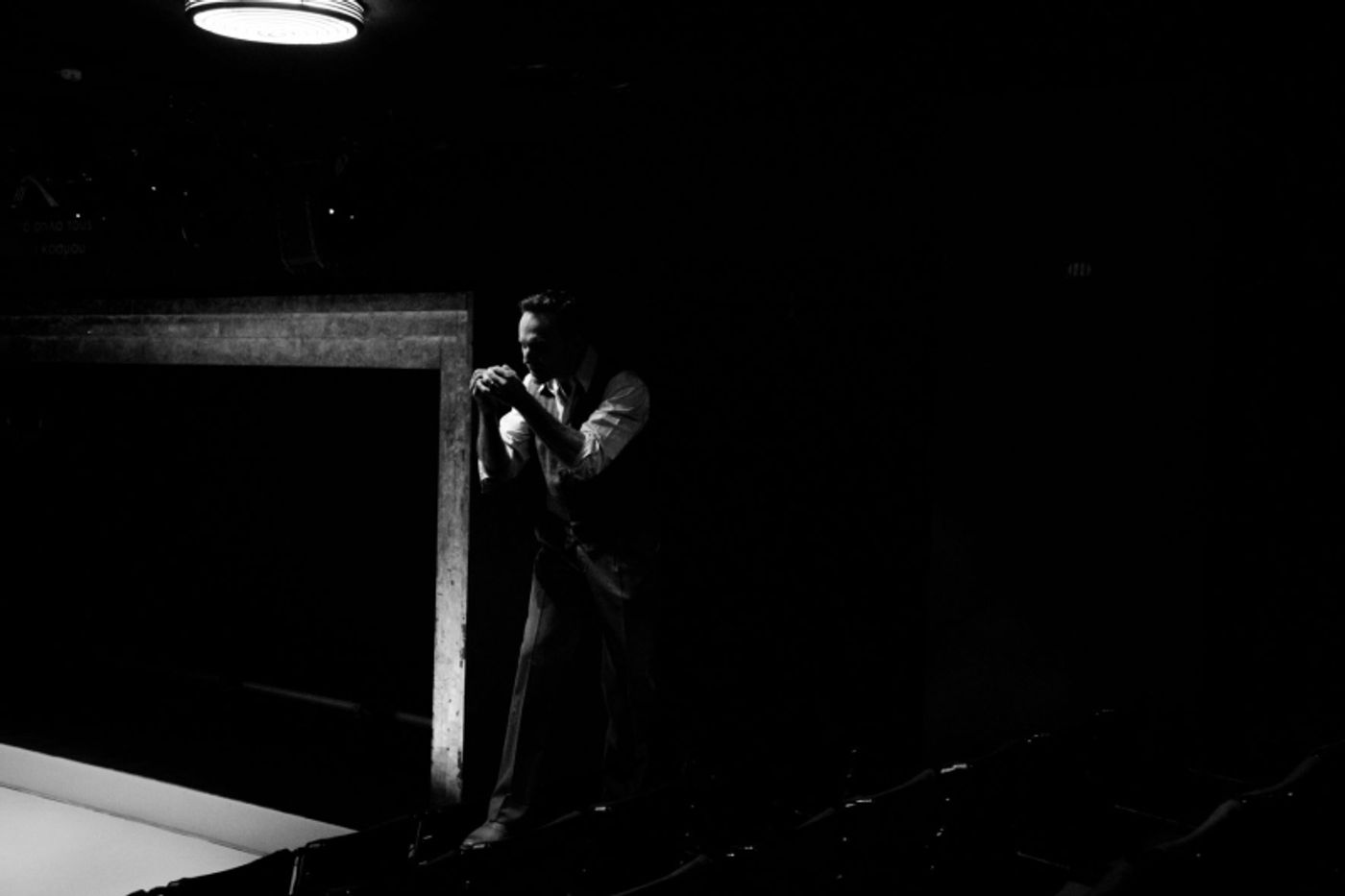
By the performance’s end, Gillette’s voice is nearly gone, his body carved by exhaustion. And yet, his stillness holds extraordinary dignity. It is as if Artaud, after raging through the ruins of language, finally confronts his own silence. What remains is the echo of that essential question: who truly destroys the artist—the world that abuses him, or the world that refuses to listen?
Artaud / Van Gogh is less a biographical play than an act of resurrection. Under Andreadi’s taut direction, Gillette embodies the perilous intersection of genius, pain, and moral vision. The result is an evening that refuses comfort and challenges the very function of theater. It is not about remembering Artaud but reenacting his combustion—a reminder, as urgent now as in 1947, that art and madness are not opposites but parallel routes to truth.
The play ran in New York City in 2023, let's hope it returns (with Mr. Gillette!) very soon.
Reader Reviews
Videos