


Review: APPROPRIATE at Theatre Artists Studio
The production run through February 1st at Theatre Artists Studio in Scottsdale, AZ.
By: Herbert Paine Jan. 27, 2026
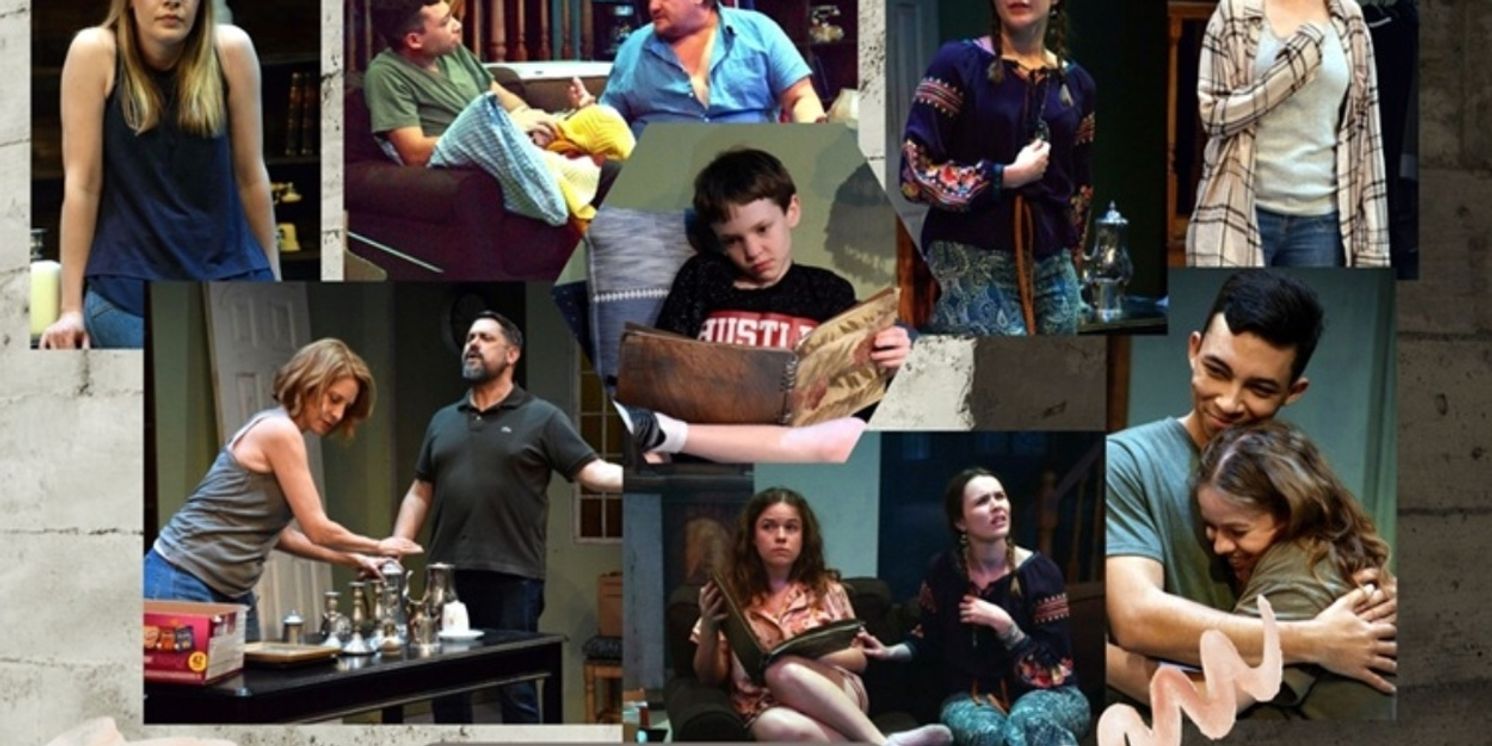
Branden Jacobs-Jenkins’s 2024 Tony Award-winning drama, APPROPRIATE, (running through February 1st at Theatre Artists Studio) looks at first like a play you already know. But, it doesn’t stay that way.
You settle in, thinking you’ve seen this story of sibling rivalry and inheritance disputes before. And throughout the long first act, you think you’re right until you’re not. Jacobs-Jenkins has ingeniously set up a familiar family scenario only to seamlessly pull the ground out from under it. It turns out that it’s not just a story about family dysfunction but an allegory about the fictions we create about our personal lives, our culture, and our nation’s history. It simply takes the discovery of an old picture album to bring reality to bear.
Two siblings return to their late father’s Arkansas home where their older sister has been caretaking the property and preparing for its sale. They need to sort through his belongings, dispose of the clutter, and divide the proceeds. It’s summer, the cicadas are loud, and the house, a neglected plantation with too much history baked into its walls, feels like it’s been waiting for a reckoning. What they uncover resists easy disposal. A photograph album documenting racial violence becomes the object around which emotions erupt and narratives unravel, forcing the family to confront a past they’ve long agreed not to see…and a truth about their father they’ve chosen to ignore.
Each of the Lafayettes has their own story about who and why they are and what this weekend is supposed to mean. Toni, the eldest, has been the caregiver for the last decade and carries that role like both a badge and a shield. Bo, the middle sibling, is focused on money: what he’s owed, what the estate is worth, what can still be salvaged. Franz, the youngest, shows up after a ten-year absence, hoping to make amends without quite knowing how. Each believes their version of the family history is the accurate one. Watching those narratives collide is where the play does its real work.
Debra Rich’s performance as Toni is riveting and bristles with pathos. Her intensity permeates the production. Toni’s defensiveness is immediate and deeply familiar; she’s the child left holding the bag, uncared for while caring for all, aggrieved at having lost a life and a marriage, and angry and suspicious of her brothers’ motives. Although fierce in her demeanor, Rich never plays Toni as a villain, even when her arguments become the hardest to accept. Her anger is palpable, as though outrage has become her default way of staying upright. In quieter moments, when her certainty wavers, Rich lets us see how much fear is tied up in Toni’s need to control the story.
Ben Rojek’s Bo approaches things from a different angle. His concern with finances can easily read as cold, but Rojek gives him a pragmatic edge that feels honest rather than cruel. Bo isn’t uninterested in the past. He just believes it has a price tag, and that someone (he) should be paid. His moral compromises are quieter, but no less revealing, and they land with particular force because they’re so rationalized.
Howie Johnson plays Franz as a man perpetually out of sync with the room. He wants forgiveness, connection, maybe absolution, but he also wants to avoid responsibility for his long absence. Franz carries his own carefully edited version of the past, one where leaving was necessary and returning should count for something. Johnson captures the unease of someone who knows he doesn’t quite have the right to make demands, but makes them anyway, and that tension results in one of the play’s most emotionally poignant performances.
Lauren Isherwood’s Rachel, Bo’s wife, operates on a different frequency altogether. She’s observant, measured, and often the person saying what others are thinking but won’t quite admit. Isherwood uses restraint to great effect, letting pauses and glances do as much work as dialogue. Rachel doesn’t raise her voice often, but she consistently shifts the temperature in the room, sometimes as peacemaker, sometimes as instigator.
Aurora Howard brings an offbeat, disarming presence to River, Franz’s young, earth-loving girlfriend. River arrives with a worldview that feels both idealistic and oddly grounded, and Howard leans into that tension. Her openness and curiosity cut through the family’s practiced defenses in unexpected ways, making her an outsider who sees more than she’s supposed to.
The younger characters sharpen the stakes rather than softening them. Elias Matthews’s Rhys, Toni’s teenage son, watches the adults closely, absorbing more than they realize. Claire Dettloff’s Cassie, Bo and Rachel’s daughter, is perceptive and unafraid to challenge the contradictions she sees. Ainsley (Desmond Trombley), the youngest, registers the chaos in quieter, more unsettling ways. These children are not insulated from the family’s moral mess; they’re learning from it in real time.
Director Tom Noga’s staging has the great benefit of the theatre’s close quarters, keeping the audience near enough to feel the tension. The house itself, crowded with objects, memories, and things no one wants to deal with, feels like another character. Nothing is neutral. Everything carries a story someone is trying to tell, or hide. As the play moves forward and its tone shifts, the sense of control the characters think they have starts to slip.
The second act pushes the play into stranger and more destabilizing territory. It’s jarring, but it also makes sense. When the stories we tell ourselves start to fall apart, so does the structure holding them up. Perhaps all that’s left are the spirits and memories that haunt the place.
What APPROPRIATE doesn’t do is tell you how to feel when the lights come up. There’s no moral bow tied at the end, no reassurance that the “right” choices have been made. Instead, it leaves you sitting with the uncomfortable realization that every character believed they were acting reasonably, ethically, even generously…until they weren’t.
This isn’t a play for anyone looking to escape for a pleasant afternoon or evening at the theatre. It’s heavy, unsettling, and intentionally unresolved. But it’s also deeply human. You leave thinking not just about what the Lafayette family did, but about the stories we all tell ourselves to live with what we inherit. That lingering discomfort is not a flaw. It’s the point.
Theatre Artists Studio -- https://www.thestudiophx.org/ -- 12406 N. Paradise Village Parkway E, Scottsdale, AZ -- 602-765-0120
Photo collage credit to TAS
Reader Reviews
Videos