


Review: 42ND STREET at Arizona Broadway Theatre
The production runs through February 27th at Arizona Broadway Theatre in Peoria, AZ.
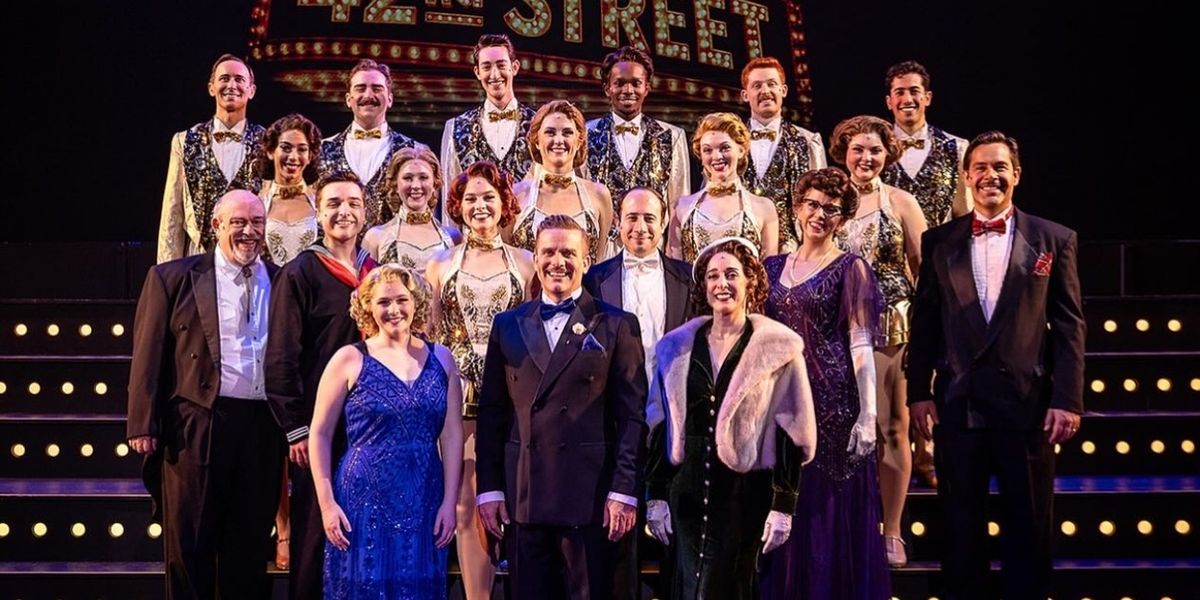
Guest contributor David Appleford’s review of Arizona Broadway Theatre’s production of 42ND STREET.
There’s something almost radical in today’s theater about a show so unabashedly cheerful where there’s no irony, no smirking revisionism, just a full-throated belief in the redemptive magic of rehearsal and rhythm. 42ND STREET is cotton candy; a backstage fairytale told with enough conviction that you believe, if only for a moment, that showbiz can save your soul if you lace up your shoes and keep smiling. The message is part pep talk and part wish fulfillment: be young, be nice, dance well, and luck will find you.
Playing now at Arizona Broadway Theater in Peoria until February 27, this sparkling musical is a brand of theater that’s all surface and shimmer and doesn’t pretend to be otherwise. In an era when so many classic musicals are being reimagined, director Danny Gorman chooses not to modernize but to preserve. ABT’s production is a vintage valentine to an era when musicals believed that a plucky kid from Allentown PA with good ankles and the right attitude could conquer Broadway before lunch.
Adapted from Bradford Ropes’s 1932 novel and the tough, tap-happy 1933 film, 42ND STREET is a backstage musical with stars in its eyes that follows the frantic rehearsal process of a Broadway production mounted smack in the middle of the Great Depression.
It’s a jukebox musical in the most generous sense; a time capsule of Warner Bros. musicals, with numbers not just from the original film but a cascade of other Dubin-Warren gems familiar to classic Hollywood movie buffs, from Gold Diggers of 1933 to Dames. In fact, the 2017 revival even slipped in Boulevard of Broken Dreams from the 1934 film Moulin Rouge, billed as Montage in the program, as if it was a lost soul looking for one last glorious moment in the spotlight.
Where the 1933 film had a harder, almost sardonic edge, the stage musical, crafted in the hazy optimism of 1980, opts for something softer, like a dream remembered just before waking. It’s deliberately sweeter.
With a book by Michael Stewart and Mark Bramble, lyrics by Al Dubin and Johnny Mercer, and music by Harry Warren, this glittering, old-fashioned 1980 warhorse galloped off with Tony Awards for Best Musical and Best Choreography, confirming its staying power as a giddy salute to the dazzle and discipline of showbiz. It’s the kind of production where characters are played broad and the dialog is delivered with the volume dialed up.
Its emotional anchor is Peggy Sawyer, played by Elyssa Blonder, a character whose smile feels engineered to illuminate entire city blocks. Described as someone “with eyes sparkling like a kid at Christmas,” Blonder brings a buoyant innocence to Peggy, the small-town kid tumbling into Penn Station with nothing but a suitcase, raw talent, and hope. She’s a human sunbeam with tap shoes.
The plot, of course, is barely an outline. It’s mostly scaffolding for tap breaks, misunderstandings that evaporate as quickly as they appear, and a make-or-break opening night. At the center is aging diva Dorothy Brock (Renee Kathleen Koher, wielding a powerhouse voice), trapped between her wealthy patron Abner Dillon (Wes Martin) and the man she actually loves, Pat Denning (Scott Seaman).
Charles Pelletier brings another topnotch voice to Billy Lawler, introducing himself as “one of Broadway’s better juveniles.” He radiates suave confidence, his tenor gleaming without ever tipping into showiness. Kiel Klaphake gives a solid, grounded performance as imperious, no-nonsense director Julian Marsh, whose blunt ultimatum to Peggy (“You’re going out there a youngster… but you’ve got to come back a star!”) still lands with bracing clarity.
The ensemble is tight and tireless, while Savanna Worthington’s Diane all but steals the chorus scenes with her snap and style, like someone who’s been waiting in the wings too long and is going to make every second count. Even the characters meant to be cads or curmudgeons come off as essentially good eggs; the show’s sunny disposition simply won’t let anyone stay sour for long.
On the technical side, the theatre’s giant digital backscreen projection, which cycles through atmospheric images of a backstage brick wall, a bustling train station, and shadowed street corners among others, does much of the scenic work on an otherwise open stage, supplying both context and the illusion of a fully realized set. Morgan Anderson’s costumes shimmer and glitter throughout, while Chris Zizzo’s wigs are clearly working overtime.
The real showrunner, though, is Harry Warren’s music, performed by a twelve-piece orchestra under Steve Hilderbrand’s direction, all chugging forward with the polished fury of a locomotive. Kurtis Overby’s choreography matches that rhythmic insistence with precise tap numbers that generate real tension; the dancing isn’t just razzle-dazzle but physical storytelling. If there’s a production that believes the old adage that the show must go on, come heartbreak, high water, or a diva’s bum ankle, it’s this one.
ABT’s production of 42ND STREET remains a confection, no doubt. It’s is a showbiz fantasy at full throttle making you feel delightfully upbeat. But more importantly, it’s also one where you can feel the audience around you seated at their dinner theater tables cheering the whole thing on. And judging by the response, they’re having a great time doing it.
Arizona Broadway Theatre -- https://www.azbroadway.org/ -- 7701 W. Paradise Lane, Peoria, AZ -- 623-776-8400
Photo credit to ABT

Sign up for all the news on the Fall season, discounts & more...
|
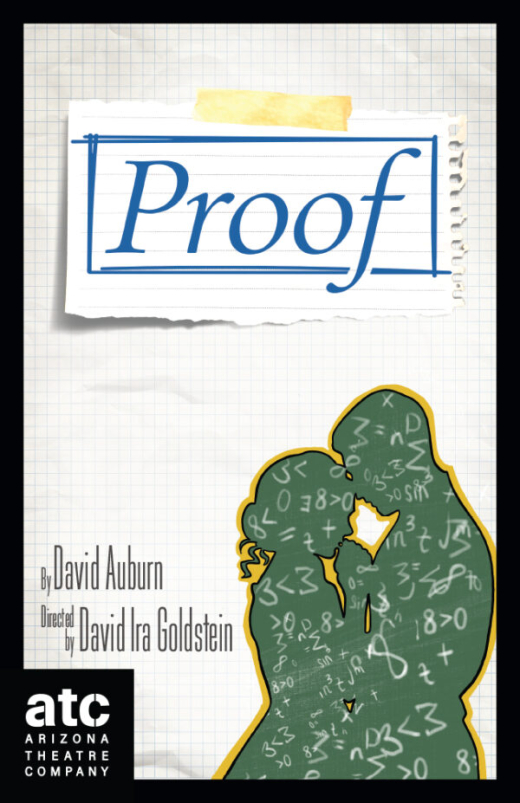
Proof Temple of Music and Art (9/27-10/17) |
|
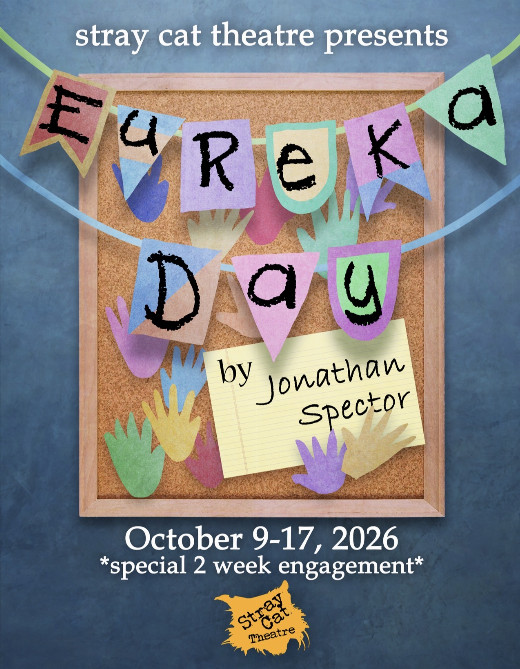
EUREKA DAY Stray Cat Theatre (10/09-10/17) |
|
Murder at the Magic Show II Mystery and Magic Dinner Theater on Broadway (4855 East Broadway, Tucson) (10/09-10/10) |

|
The Wiz (Touring) Mesa Arts Center (11/20-11/22) |
|
Black Comedy Live Theatre Workshop (10/30-11/22) |
|
The Lightning Thief: The Percy Jackson Musical Valley Youth Theatre (10/09-10/25) |
|
THE MALTESE FALCON Don Bluth Front Row Theatre (5/20-6/26) |

|
JEKYLL & HYDE Emerald City Players (10/02-10/11) |

|
It's A Wonderful Life Don Bluth Front Row Theatre (11/19-12/23) |
|
Dance Nation Valley Players (11/06-11/14) |

Reader Reviews
To post a comment, you must register and login.