

Donne To Death: Exploring Brilliance, Baldness, and Mortality in WIT
Production kicks off inaugural season at Peoria Performing Arts Center.
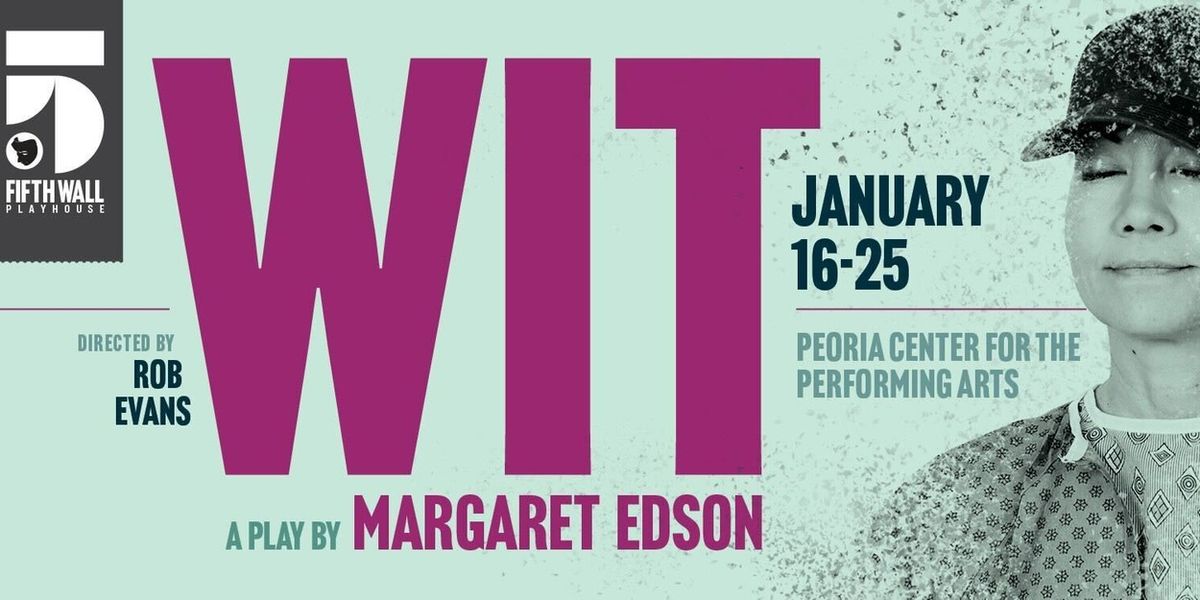
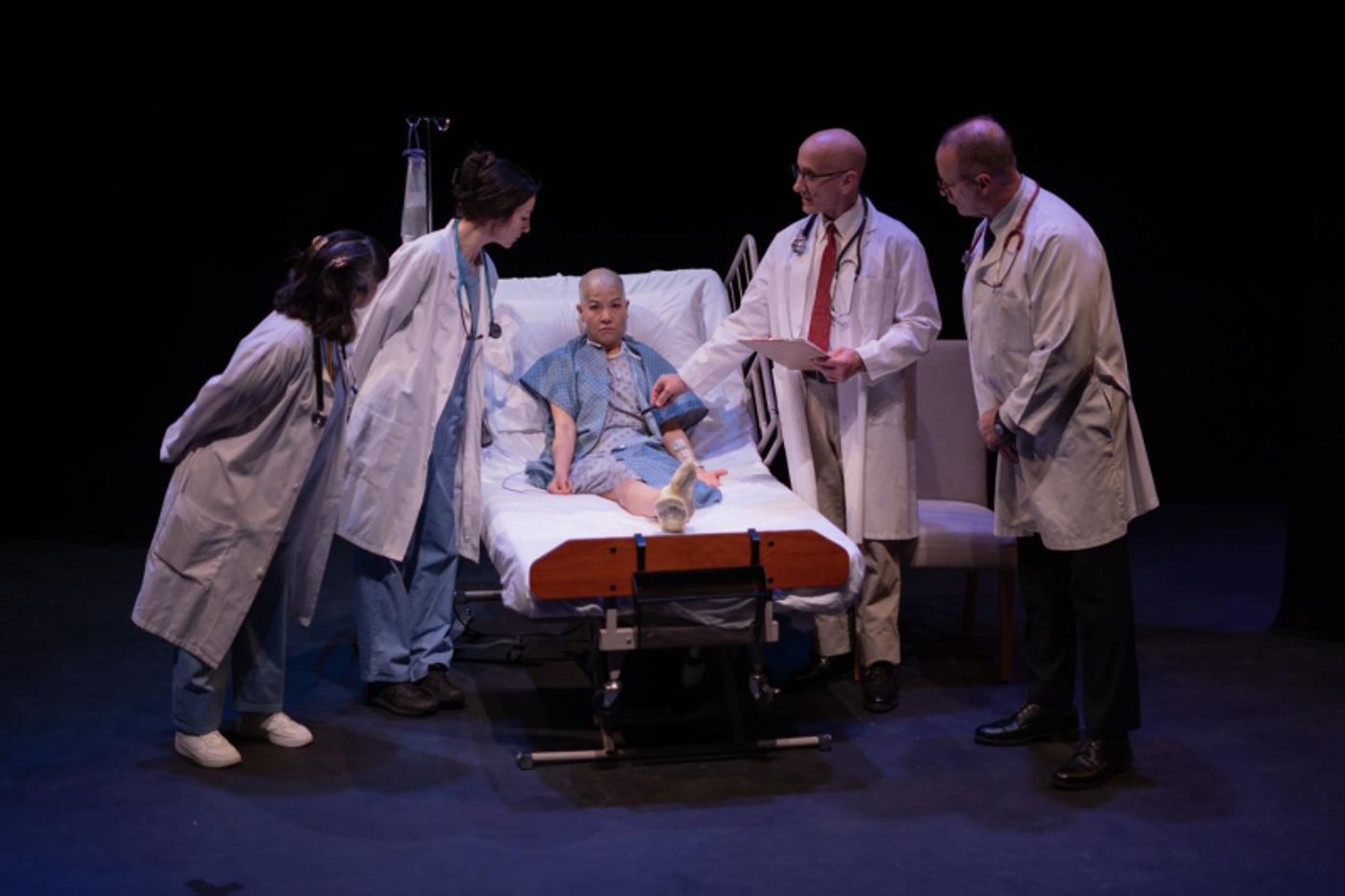
photo by Jennifer Giralo
As Fifth Wall Playhouse launches its inaugural season, the company has chosen to begin with a play that asks both artists and audiences to confront the most fundamental human questions. Margaret Edson’s Wit is a searing and deeply humane examination of mortality, intellect, and compassion, told through the voice of Dr. Vivian Bearing. A formidable scholar of 17th-century metaphysical poetry, Vivian has spent her life mastering language and logic—particularly the intricate verse of John Donne—only to find those tools tested when she is diagnosed with stage-four ovarian cancer. As experimental chemotherapy strips her body of control and privacy, she confronts the uncomfortable divide between intellectual brilliance and emotional understanding, asking what truly sustains us at the end of life.
From the moment Wit begins, Vivian Bearing is already daring the audience to underestimate her—and in this production, that challenge extends beyond the text itself. Kristin Joy Moran, who plays the formidable scholar at the center of the play, made an early and deeply intentional choice to shave her head for the role. But for Moran, the decision was never about heightening fragility or signaling suffering in an obvious way.
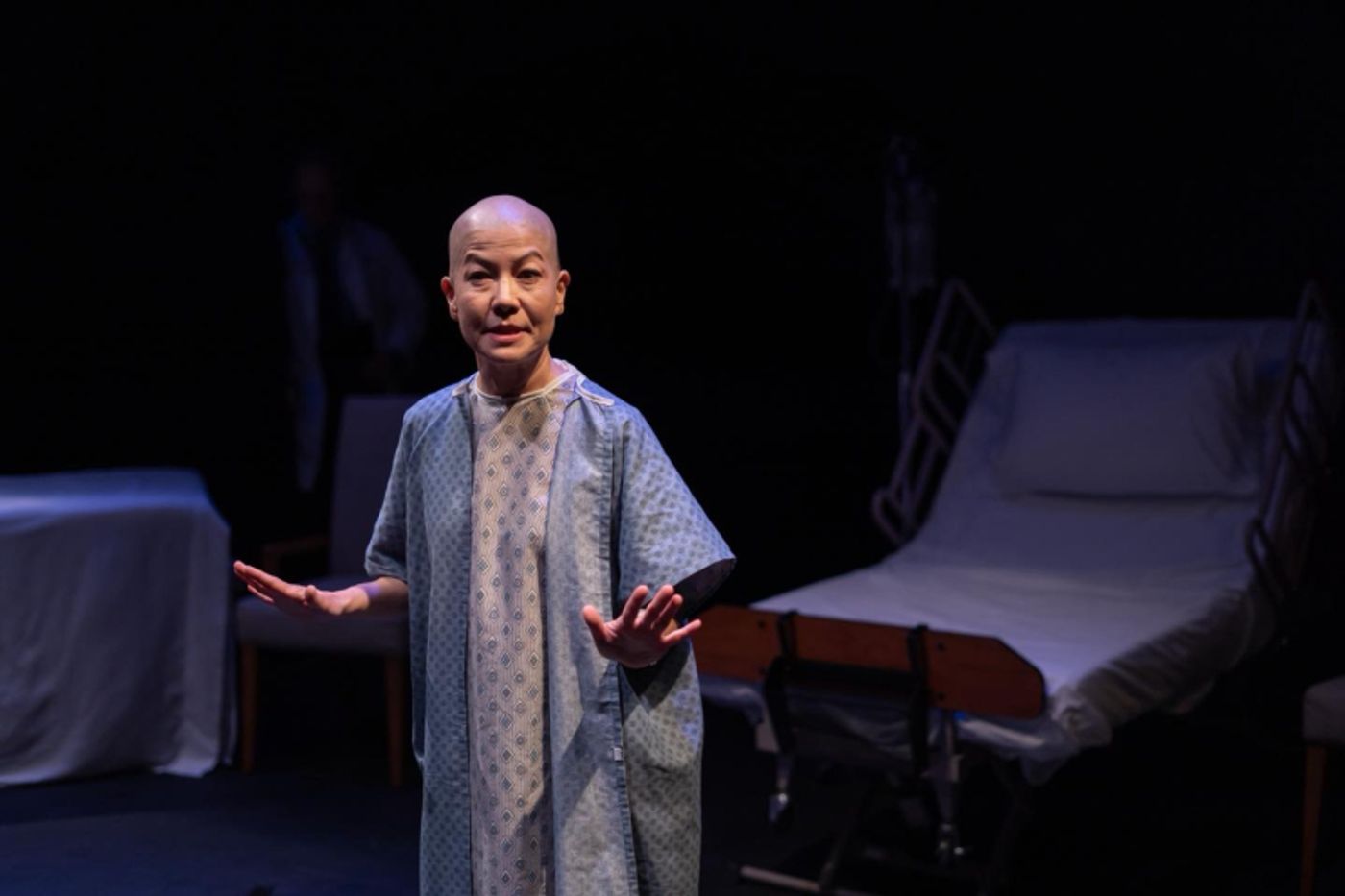
Photo by: Jennifer Giralo
“To be honest, shaving my head did not make me feel more vulnerable as Vivian,” Moran says. “She is so grounded in her intellect and confidence that a bald head does not weaken her.” Instead, Moran imagined Vivian meeting the audience head-on, daring them to react. “My inner monologue at the top of the show was just daring the audience to laugh or mock her bald head so she could blow them away with her indifference and cunning wit.”
That defiance, unapologetic and rooted in intellectual authority, became a foundation for Moran’s performance. Yet the physical act of shaving her head also created a subtle shift beyond the character. At first, she confided in a promo video before shaving her head that she was a little scared, but afterwards, something changed inside her. “I think Vivian’s outlook must have crept into my own psyche,” she reflects. “I found the act of shaving my head to be sort of enlightening. It was symbolic of letting go of old patterns and having a sense of empowerment that I can detach from my appearance and the way that people view me.”
For director Rob Evans, the choice felt inseparable from the truth of the story, especially in an intimate performance space where the audience sits just feet from the actors. “Not shaving her head was never really an option,” Evans says. “We wanted to show the reality of what Vivian had to go through.” While earlier productions often concealed Vivian’s hair loss, Evans felt that this staging demanded honesty. “It can unsettle the audience because it is the ultimate sign of vulnerability, but it also makes them immediately invest in the performer as well as the character.”
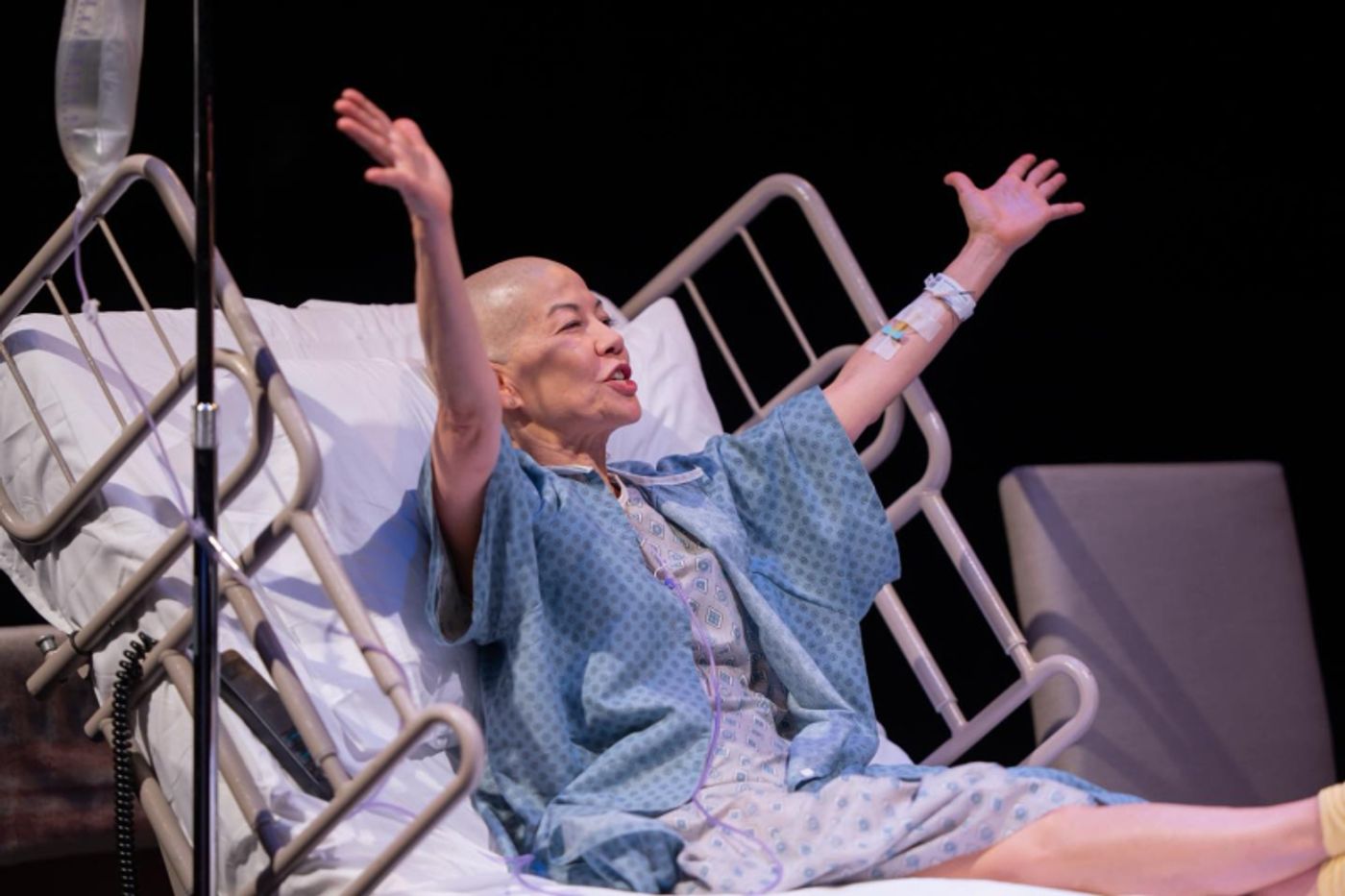
Photo by: Jennifer Giralo
That investment, Evans notes, required trust on every level. “For a community theatre company in its first year, we also had to go on faith that we would find an actor willing to take that step. All credit to Kristin Joy Moran for being willing to take a drastic step for the role, adding another layer to an already rich and complex performance.”
Language, its power and its limits, also sits at the heart of Wit, and Moran immersed herself in John Donne’s work to understand Vivian’s worldview. “I checked out a volume of John Donne’s major works from the library and did a bit of research into his background,” she says, delighting in unexpected discoveries. “What I found most interesting was how Donne’s poetry mirrored Vivian’s life, both her strengths and weaknesses. She and Donne spent their lives ‘hiding behind wit.’”
She was also struck by how deeply Donne’s words echo through the play’s emotional core. “I did not know before working on this play that Donne is the one who made famous the words ‘No man is an island’ and ‘never send for whom the bell tolls; it tolls for thee,’” Moran says. Those lines, she notes, take on devastating resonance as Vivian’s isolation becomes unavoidable.
One of the most emotionally challenging moments for Moran arrives not in the play’s quiet ending, but earlier. “There is a moment after Vivian’s robust lecture on Holy Sonnet 5, when she is at the height of her power and passion, and she is abruptly interrupted,” Moran explains. “Reality comes crashing back when she is called by Susie to go have an ultrasound.” For Moran, this is the play’s emotional turning point. “She is heartbroken to realize that her life is now just a ‘specimen jar, a dust jacket.’ The challenge for me was feeling this pain but still wearing Vivian’s stubborn mask of intelligence and stoicism.”
Evans sees that tension as central to what makes Wit such a demanding theatrical experience. “The play is a leap of faith on every level,” he says. Structurally, its vignette-based flow, lack of intermission, and near-constant direct address require sustained engagement. “The audience almost experiences the struggle in real time,” Evans explains. “It was very important, given the play’s use of poetry as a plot device, that we found a rhythm to the show that complemented, and was complemented by, the poetry.”
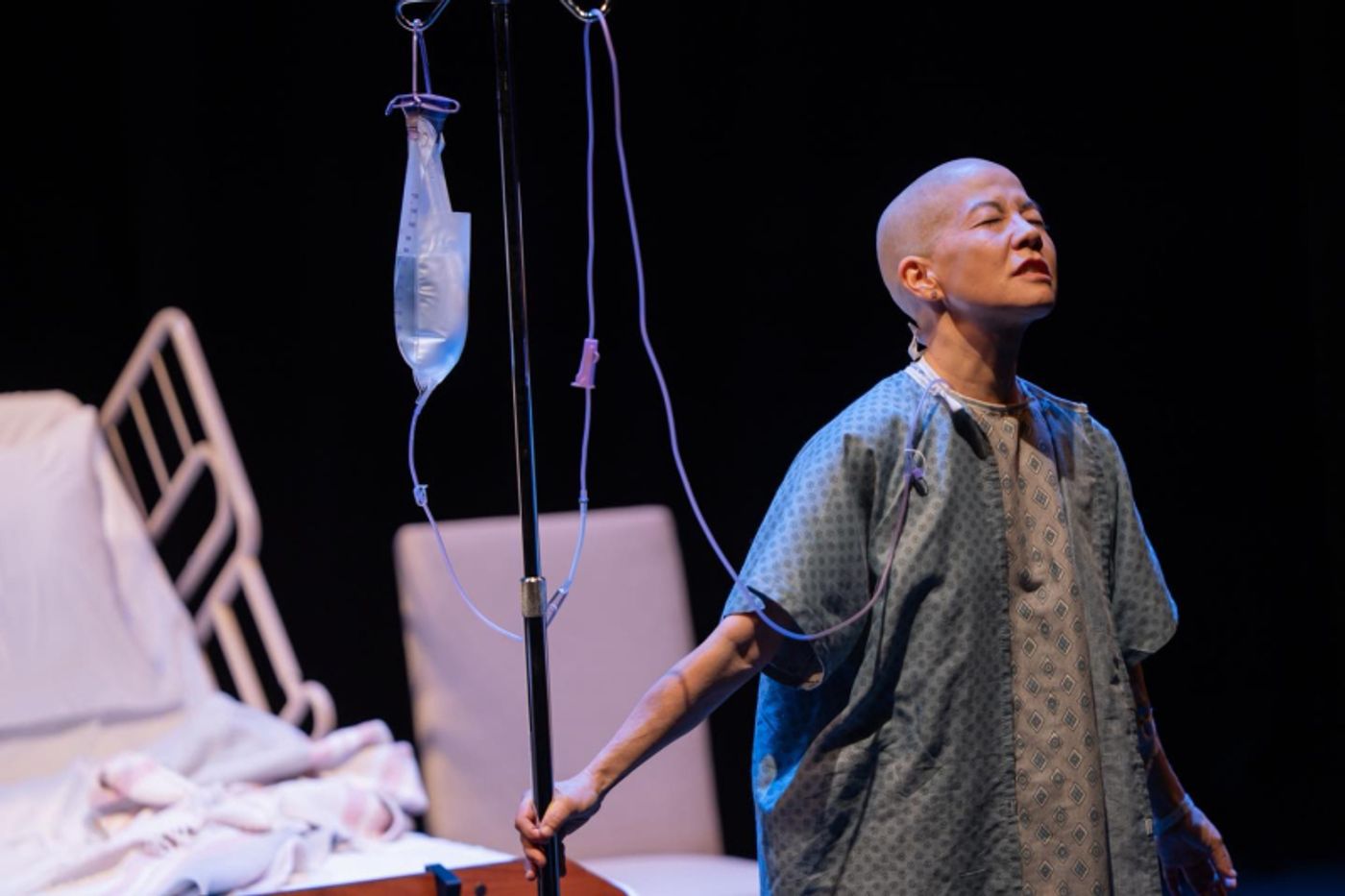
Photo by: Jennifer Giralo
That rhythm also depends on intimacy. Vivian’s direct address to the audience collapses the boundary between performer and spectator, and Evans credits Moran with navigating that balance. “It’s a tricky balancing act,” he says. “She was able to locate the beats in the story where her professorial side gave way to the vulnerability that followed her arc.”
Nowhere is that arc more evident than in a line that opens and closes the play: Hi, how are you feeling today? Moran recalls the moment its significance fully landed for her. “She is mocking the simplicity and banality of the greeting at the beginning,” Moran says, turning it into an inside joke with the audience. “But when she says the line again at the very end of the play, it is no longer a casual phrase unworthy of her intellect, but a genuine plea for a final, true connection.”
For Evans, that humanity is what distinguishes Wit from being labeled “just another cancer play.” “Most people come in expecting it to be a depressing show,” he says. “It certainly does have emotional moments, but it is ultimately about strength, beauty, and courage. It’s also funny; I don’t think people expect that.”
Moran agrees and hopes audiences leave with something deeper than sadness. “We as human beings don’t like to talk about it, think about it, and perhaps we don’t really want to see it acted out on a stage,” she says. “But there is one certainty for all of us in this life: we will all die one day.” Rather than fear, she believes the play offers a gift. “When faced with the inevitability of death, we can transform our thinking about life – how we choose to spend our time, how we treat others, and how we treat ourselves.”
Ultimately, what both Moran and Evans hope audiences carry with them is not despair, but a heightened awareness: that contemplating mortality can sharpen our appreciation for life. That knowing our days are numbered can bring sweetness, not fear. And that sometimes, the simplest words, spoken sincerely, matter most of all.
Cast:
Kristin Joy Moran as Vivian Bearing, PhD
Peter Hart as Harvey Kelekian, MD
Kristin McQuaid as Susie Monahan, RN
Glenn Parker as Jason Posner, MD
Kathie Merritt as E.M. Ashford, PhD
Baylee Decker as Ensemble
Holly Mutascio as Ensemble
...
This is the final week to see Wit at Peoria Performing Arts Center. Tomorrow, January 24, there will be ASL interpreters from ASL Impact hosting a pre-show mixer starting at 6 p.m.

Videos

|
Annie TheaterWorks (7/10-7/26) |

|
John Pizzarelli Presents 'Dear Mr. Bennett' Fox Tucson Theatre (9/20-9/20) |

|
#IMOMSOHARD Fox Tucson Theatre (11/13-11/13) |

|
Geoffrey Asmus 191 Toole (9/27-9/27) |

|
Fraggle Rock Live Fox Tucson Theatre (11/24-11/24) |

|
Doja Cat Mortgage Matchup Center (10/29-10/29) |

|
Coffee Mixed with Cream Fountain Hills Theater (8/21-8/30) |

|
ENCORE: A Tribute to 70's Soul: The Music of Stevie Wonder, Al Green, Marvin Gaye, Bill Withers and More Hale Centre Theatre Arizona (7/17-8/01) |

|
Scott Silven Marroney Theatre (11/17-11/21) |

|
MEGALODON Ronin Theatre Collaborative (7/30-8/23) |
| VIEW ALL SHOWS ADD A SHOW | |