


Review: AMERICAN STREET DANCER at The Joyce Theatre
Passing Down the Ancestral Legacy of Percussion
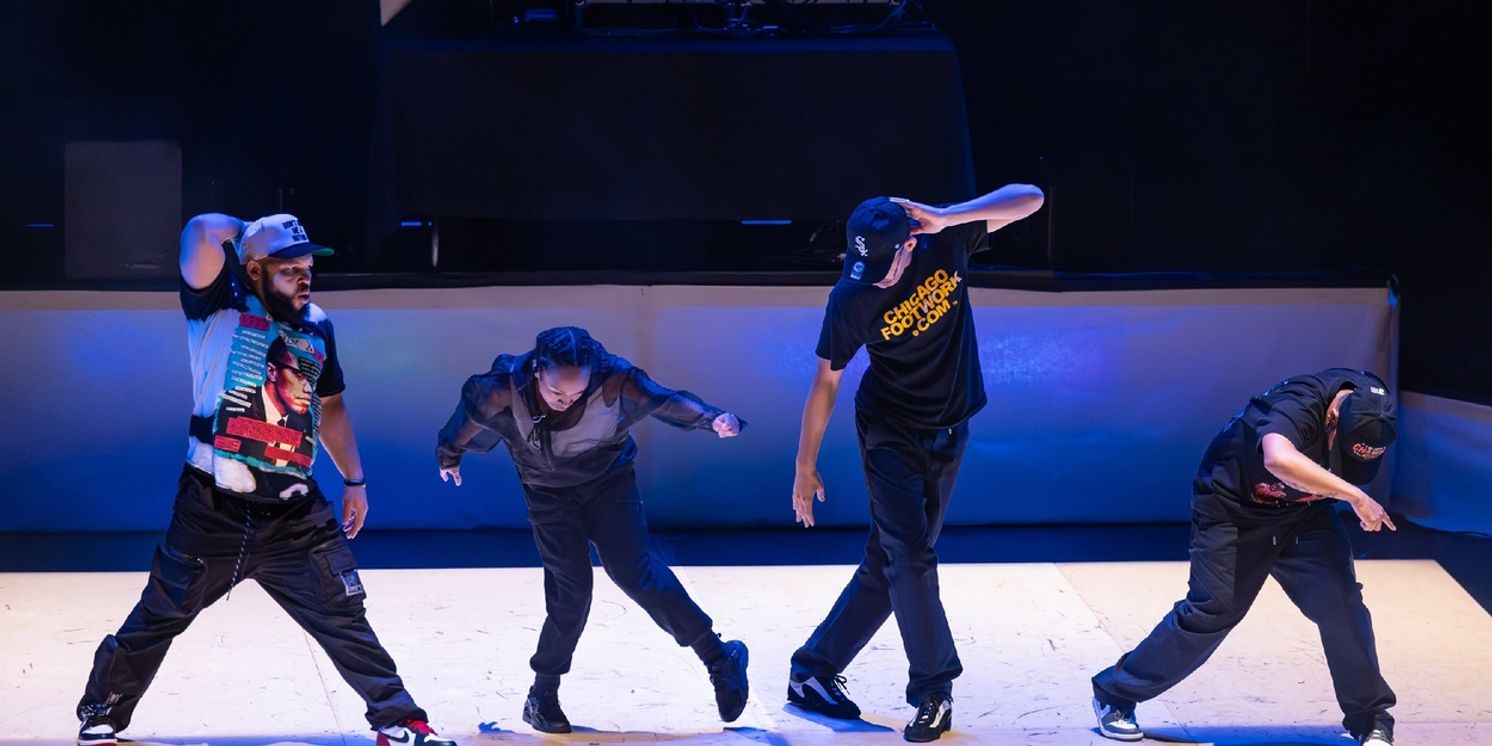
Is rhythm learned or is it inherited? In Rennie Harris’ American Street Dancer we explore how rhythm and percussion can travel, and has in fact traveled, through time, lineage, and lived experience. Conceived by Rennie Harris and performed by his acclaimed company, Rennie Harris Puremovement American Street Dance Theater, the evening honors the legacy of African American rhythm and movement through tracing the deep cultural roots of three distinctive street styles: jitting, GQ, and Chicago footwork.
What unfolds is a living dialogue between body, music, and spirit, between ancestry and innovation, between percussion and the dancer. American Street Dancer feels less like a performance and more like a sacred ritual of passing on rhythm: making it your own while still honoring its integrity and where it came from.
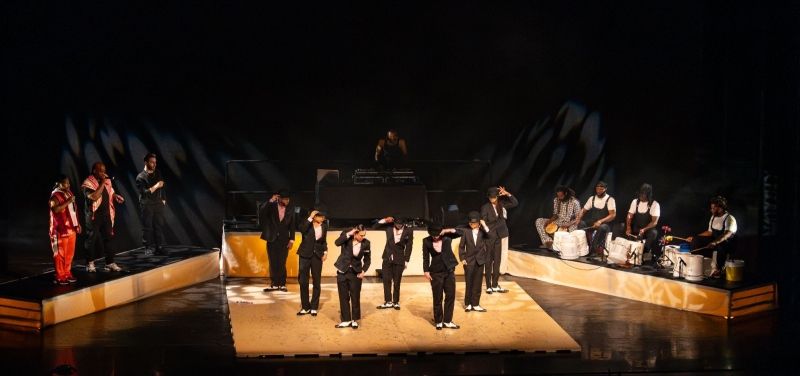
Photo Credit: Mark Garvin
American Street Dancer
Featuring:
Rennie Harris Puremovement American Street Dance Theater
Choreography: Rennie Harris
Dancers: Marguerite Waller, Rachel Snider, Miyeko Urvashi, Rennie Harris, Joshua Archibald, Zakhele Grabowski, Tyreis Hunte
Creation Global
Choreography: Edde Martin
Dancers: Eddie Martin, Donnetta Jackson, Christopher Thomas, Michael Davis (Mike D)
House of Jit
Choreography: Mike Manson
Dancers: Michael Manson, Gabrielle McLead, Michael Reed, James Broxton, Malaino Ross, Tristan Hutchinson
Guest Artist: Ayodele Casel
Rennie Harris Hip-Hop Orchestra
Turntablist: DJ Razor Ramon
Original Beatboxers: Akim Funk Buddah, Kenny Muhammad, Alexander Sanchez
Bucket Drummers: Edward Smallwood, Tony Royster, Solomon Saunders
Master Djembe Player: Brytiece Wallace
Sound Designer, Composer & Engineer: Darrin M. Ross
Playback & Mixing: DI D-9 3 & DJ ILOVE
Production Videography & Lighting Designer: Julie Ballard
Harris is a celebrated choreographer who brings street dance from the sidewalk to the stage without diluting its cultural power. In American Street Dancer, he creates a world on stage where street dance forms speak in their native language, set against, and so deeply intertwined with, the music that powered and cultivated the street dance forms featured.
As the show opens, the stage itself feels like a cathedral of percussion—three elevated platforms flank the main stage, evoking layers of sound and story. To the left, three exceptional beatboxers; at the center, a commanding DJ; and to the right, a percussion ensemble featuring both traditional hand drummers and street drummers beating on plastic paint bins. Together, they form The Hip Hop Orchestra, which serves as both a visual and sonic architecture that anchors the evening.
The opening moments feel ritualistic. The sound of flowing water, a deep breath, and then a pool of light reveals a single drummer.. His rhythm builds, expands, and finally releases as he “passes the baton” of percussive energy to a solo tap dancer. The transition is breathtaking: the lineage of rhythm quite literally embodied, as the dancer’s taps mirror, then transform, the drumbeats the audience just heard into something newly alive.
Over this, an overhead voice speaks of ancestry and cultural inheritance, and how rhythm has been passed down through African and African American traditions. The tap dancer’s performance becomes a living metaphor: precision meeting playfulness, laughter meeting resistance. Behind her, projected images from Black Lives Matter protests remind us that the joy of rhythm has always existed in conversation with pain and persistence. The juxtaposition is powerful. In this moment, the tap solo becomes both celebration and elegy, showing how rhythm endures oppression by transforming it into art.
As the tap dancer yields the stage, she hands the beat, quite literally, to the beatboxers. The first performer starts his beat boxing by taking the tap dancer’s last percussive rhythm, and transforming it vocally. Once again, the percussive baton has been passed, and we watch the rhythm evolve in real time across the three beat box performers.
This sets the stage for the explosive arrival of the first featured street style of the night: Chicago footwork—a style defined by lightning-fast feet and emotional urgency. One dancer breaks the fourth wall to contextualize his movement: “People ask me how I move my feet so fast. I tell them, it’s in my culture to use my feet against my oppressor. Music and dance saved my life.” The declaration lands like a thesis for the entire night. What follows is a frenzy of precision and fire: dancers alternately gliding and attacking the floor with speed and joy. The contrast between stillness and frenzy gives the piece another form of percussion: a heartbeat. The movement is urgent, human, alive.
A lively percussive interlude from the Hip Hop Orchestra drummers bridges us to the next street style: jitting —a Detroit-born style rooted in the city’s house and techno culture. The lights drop to single spotlights as dancers, one by one, take to chairs before erupting into motion one by one, swiftly switching levels, flipping to the floor, crossing legs mid-air with startling fluidity. The moment feels intimate and communal at once, a fusion of individuality and once again, a shared pulse.
Finally, it’s time for our final member of the hip-hop orchestra to take the stage: the DJ. With charisma and showmanship, he turns the theater into a club. Showcasing impressive scratching techniques, (including scratching with his actual face), he teases some of the most iconic club hooks (Fat Man Scoop’s Be Faithful “Single Ladies…make noise!”).
This kinetic crescendo leads into our final street style of the night, GQ — a Philadelphia-based style born from cha-cha rhythms and Black social club culture. Dancers in sharp suits and fedoras move with both grace and swagger, their weight shifts and slides. The choreography brims with leans, slow drags, flips, and dangerously close falls. Something about the GQ movement feels nostalgic. It becomes apparent that many pop culture icons have likely been inspired by, and borrowed from, GQ. As the voiceover explains, GQ is no longer widely practiced, and so tonight’s performance is a dance of preservation. Watching it feels like witnessing a rare artifact come to life: history reanimated through motion.
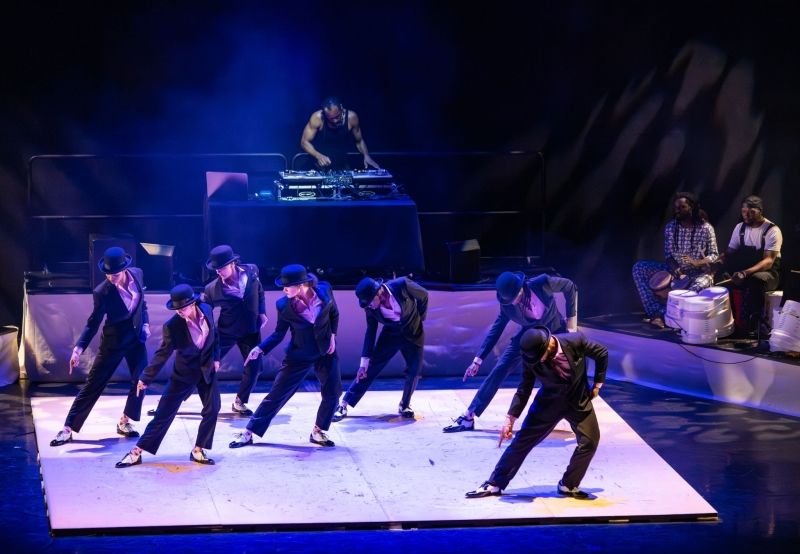
Photo Credit: Mark Garvin
American Street Dancer culminates in the most celebratory form possible: a dance circle. Each dancer in the semi circle takes turns in the center, showing off their best moves, cheering one another on. It’s not a performance anymore; it’s a celebration. When the final figure appears, a man in white, chanting and dancing in traditional African rhythm, the evening circles back to its source: the ancestral drum. The light fades, and a video tribute to Renegade Dave reminds us that this show is honoring percussive roots, preserving the rhythmic history, and celebrating the joy of dance and its power to uplift and build community.
American Street Dancer charts a rhythmic lineage that shows us percussion is the foundation of cultural DNA. Each style, whether Chicago footwork’s relentless drive, Detroit jit’s improvisational spirit, or Philadelphia GQ’s elegant bravado, represents not just regional flavor, but a distinct way of surviving through sound and movement. The curation is delightful; every transition between the artists on stages feels like a conversation between ancestors and descendants, each beat an inheritance made new.
If there is a single critique, it’s only that the world Harris and his collaborators created is so rich, that it leaves audiences hungry for more. American Street Dancer whet’s the audience’s appetite with a pre-fixe menu of three unique street styles. But after getting a taste, it’s hard not to crave seeing American Street Dancer evolve into a series where even more street styles are explored in the same fashion.
American Street Dancer reminds us that rhythm is inheritance, that dance can be a form of resistance, and that movement can carry memories across generations. And with the final bow, there’s an air of excitement: how will the legacy of percussion through music and dance evolve in the years to come? We can’t wait to find out.
American Street Dancer runs at The Joyce Theater from Tuesday, November 11 through Sunday, November 16.
Reader Reviews
Videos