


Interview: 'It's Always Loomed Large In My Imagination': Actor Alfred Enoch on Legacy, Innovation and Playing HENRY V at the RSC
'Shakespeare gives you so much to work with'

After his recent role in Pericles at the Swan Theatre in Stratford-upon-Avon, Alfred Enoch returns to the RSC in Shakespeare’s Henry V, reuniting with Co-Artistic Director Tamara Harvey, who directs the production.
Recently, we had the chance to speak with Enoch about taking on the titular role of the iconic Shakespeare work. We discussed how he has been connected with the Bard of Avon since his theatrical beginnings, what it is like to be a part of the legacy of the Royal Shakespeare Company and his own hypothesis on what makes Shakespeare such a legendary writer.
So, how did you first get started in the world of theatre?
My father was an actor, and I went through a phase - which I imagine probably lots of young kids do - saying I want to do what my dad or mum does. Only my mum is a public health doctor, and I think that looked too much like hard work!
And then to answer the theatre question, it actually ties directly into Henry V! My dad was in the opening season at Shakespeare's Globe, and I was already interested in his work and what he did as a kid, probably asking loads of questions. He was very glad to share with me about that process. And of course, it was really exciting because they had just created a replica Elizabethan theatre in London, built to the specifications and with the working practice of the time. The opening play was Henry V, and my dad played the King of France. So I went to see it, and I still remember it very well, considering I was eight years old!
The other thing is that my dad absolutely nurtured and encouraged my interest. He taught me a sonnet, which I then performed at Shakespeare's Globe. They used to have this thing called the “Shakespeare Walks” on Shakespeare's birthday, where people would walk from Westminster Abbey to the Globe, with places relevant to Shakespeare's life or plays, and, at certain points, an actor would jump out of a tree or something and do a sonnet! And so that's what I did... the first thing I performed was Shakespeare, and I think the first play I saw was Henry V, so this feels like a nice full circle being closed.
And what made you want to be a part of this particular production of Henry V?
As you can imagine, by what I've said, Henry V has always loomed large in my imagination. But that has been consistently repaid the more I read or think about the play. It is maybe my favourite play, and there is an emotional element to that, but I don't think it's the only thing. I think it is an absolutely extraordinary piece of theatre that asks so many questions, so incisively. So I'd always loved it.
And Tamara, very generously, thought about what we might want to do next, and I just thought, “Great, you want to work with me again? That's good!” Working with Tamara on Pericles was the best experience of my creative life. And I've been very fortunate and worked with some wonderful people, but it was such a rich and extraordinary experience. So just a chance to get back in a rehearsal room with her was massive.
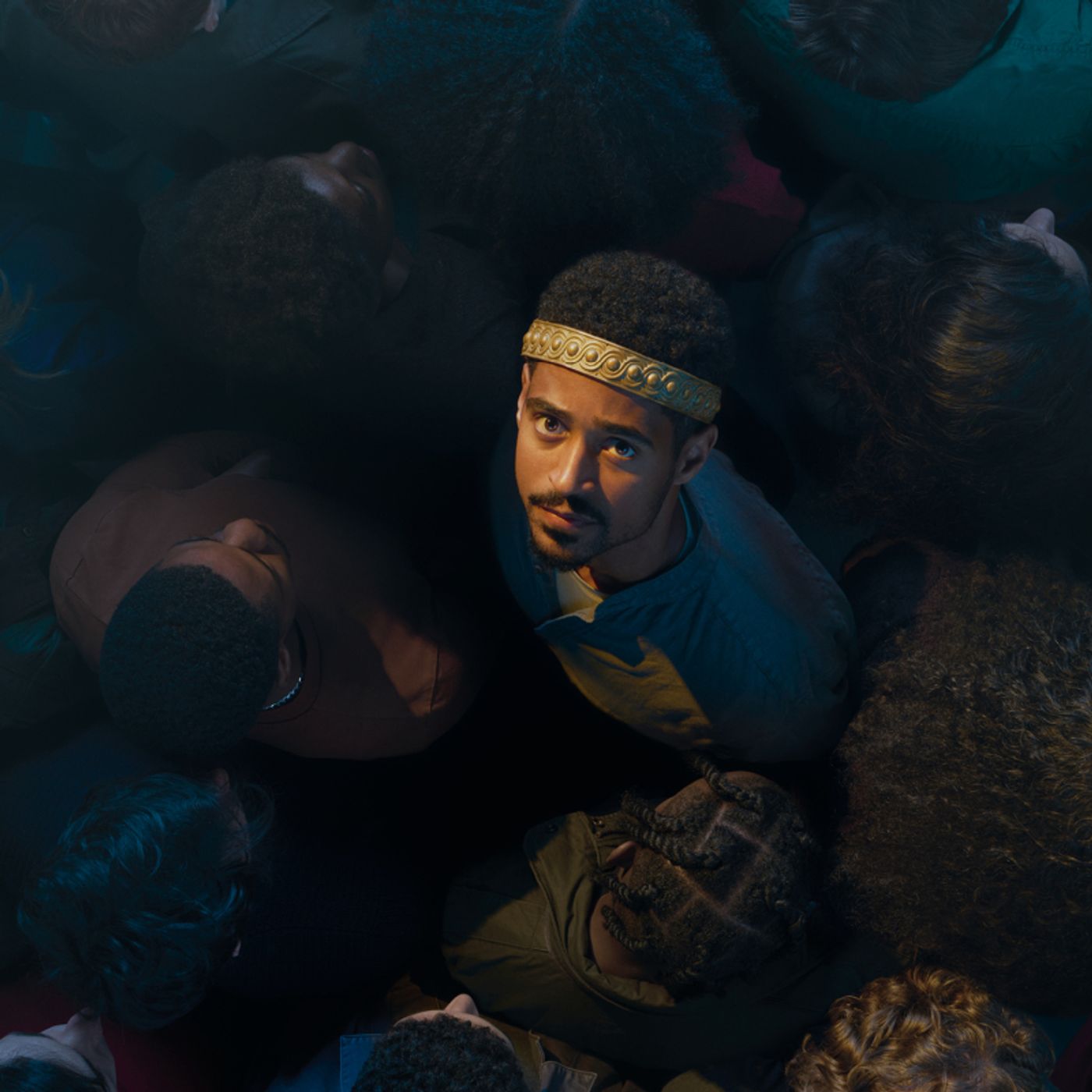
Photo Credit: Seamus Ryan
So I mentioned how much I love Henry V, but I was not counting on having to do it yet. I was a bit like, “Gulp! I was hoping I could just keep kicking that one down the line!” But there's something quite nice about having it thrust upon you, because it's appropriate for the play. You don't choose when you father dies and when you become the king of England - it happens to you. And then you've got to work out how to do that. Fitting!
What has the process been like in taking on this role after being so familiar with Henry V?
That is actually, strangely, one of the challenges! It's been a help and a hindrance, in a way. I read something really good that I think Mark Rylance wrote. People always ask actors, “How do you remember all those lines? But of course, the real thing is forgetting them.” And that is so true and well-put.
So on the one hand, that's great. It's really in there. On the other hand, you have to throw it away and rediscover it. That's what you always have to do. So it's been a happy luxury to have a company to help me do that, because I'm not speaking, thinking, “Well, I sound nice!” I've got people who maybe look at me like, “I don't know if this idea of fighting the French right now sounds like a good idea to me!” So you have to rise for that challenge, receive that instigation, and do something about it. So that's been really joyous, because it brings it to life. It three-dimensionalises these words that I've lived with for a long time.
One of the challenges is cutting the play and going back and forth with Tamara about the edit. Looking at it even more closely, I sometimes have the problem of a phantom line. We'll be rehearsing a scene, and I'll say a line, and then the thing that comes into my head is the next line in the Folio, but I'll know we've cut it. Going to take me a minute while I do the next four lines, which we've cut, before I can find what I'm actually looking for in our production! So that's a strange thing to live with. And every now and then, we'll do something, and I’ll go, “I'm just going to throw it in!” It's always in that place of knowing and forgetting, discovery and rediscovery, that you find the renovation, and you find new things. So it's been a gift.
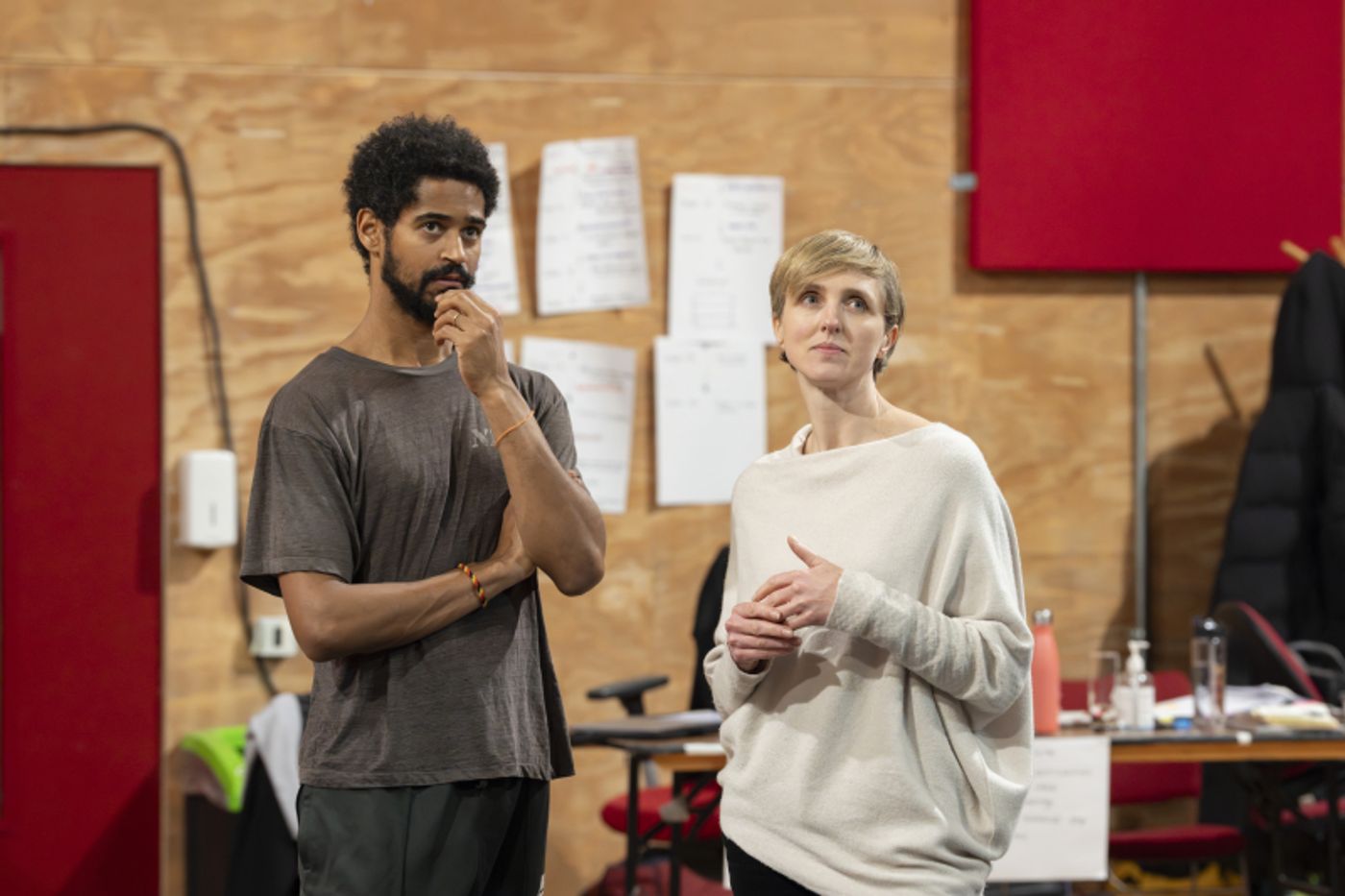
Photo Credit: Johan Persson
What has it been like reuniting with Tamara Harvey after Pericles, What A Carve Up! and The Picture of Dorian Gray?
Delighted she's not sick of me yet! She really is wonderful. I feel so liberated and enabled by her, the way she works, where she directs, the way she collaborates. It's had a real impact in the way I work.
And I really thought about this before Pericles, and I thought about my relationship with rehearsing, and I thought that's what rehearsal is. It is a place to discover. You have to take the freedom that that space invites. Many times I've been in rooms, and I felt I've never really risen to that challenge. I've never taken enough chances. The rehearsal room is a place to make choices, to fail. Don't just sit there polishing an extra millimetre off the butt cheek of your Doric statues - that's not what we're here for. It's a living thing. You don't finish your Michelangelo and wheel it out in front of the audience. It gets made new at the time. So try something new, do something, make it.
Tamara is totally revolutionary, because she set me that challenge. It has changed the way I rehearse and work. She keeps doing that in the room. She gave me a great note in Pericles once, she said, “Yeah, great,” went through some technical things, and then, “And Act One, in Antioch, take your shoes off.” And I just looked at her, and I was like, “I'm gonna ask her about that.” I thought about it, and then I thought, just do it. And I did, and it was very different - we found something.
What is it like performing in more modern works like Red and Tree versus those of Shakespeare? Do you find there's a big difference?
One of the biggest differences is that I do a lot more Shakespeare plays professionally, and that's probably excluding one-off readings and workshops. It's a lot of what I do. I feel really fortunate to have that. Shakespeare gives you so much to work with. Sometimes people feel daunted by it, and our cultural reverence has a lot to answer for there. But here was someone who was an actor. He knew what it was like to step onto the stage and be in front of an audience. So it comes from that knowing and understanding - what he gives you are tools, offers, invitations, possibilities. I have never encountered text so plastic and apt as Shakespeare's. This is to say that I've been really fortunate to do some wonderful stuff, brilliant plays. That's also part of the work that I've got to do, and I hope that continues to be so. But there is something in the possibilities contained.
I have a hypothesis. One of the reasons there is this much space is because there's such wonderful attention to detail, to moments on a granular emotional level, those things that you sometimes find in a line of verse, and you go, “Why is the line ending there?” And then that gives such a possibility in that suspension, in that it unlocks something on an emotional level. The completeness of those moments, the wonderful attention to those moments, the observationism tells us a lot about big claims, how we really are.
We spent almost all of our time as human beings answering the question, ‘Who am I?’ And almost no time answering it. We try and avoid asking the question, because the answer is so much more capacious, so much less defined, so much more nebulous - a bit of a threat to a sense of self. But what Shakespeare gives you is not, “This is the character. This is how he has to be.” He gives you these pinpricks, these stars that make a constellation, but how you form the picture is up to you. That's why it's so good.
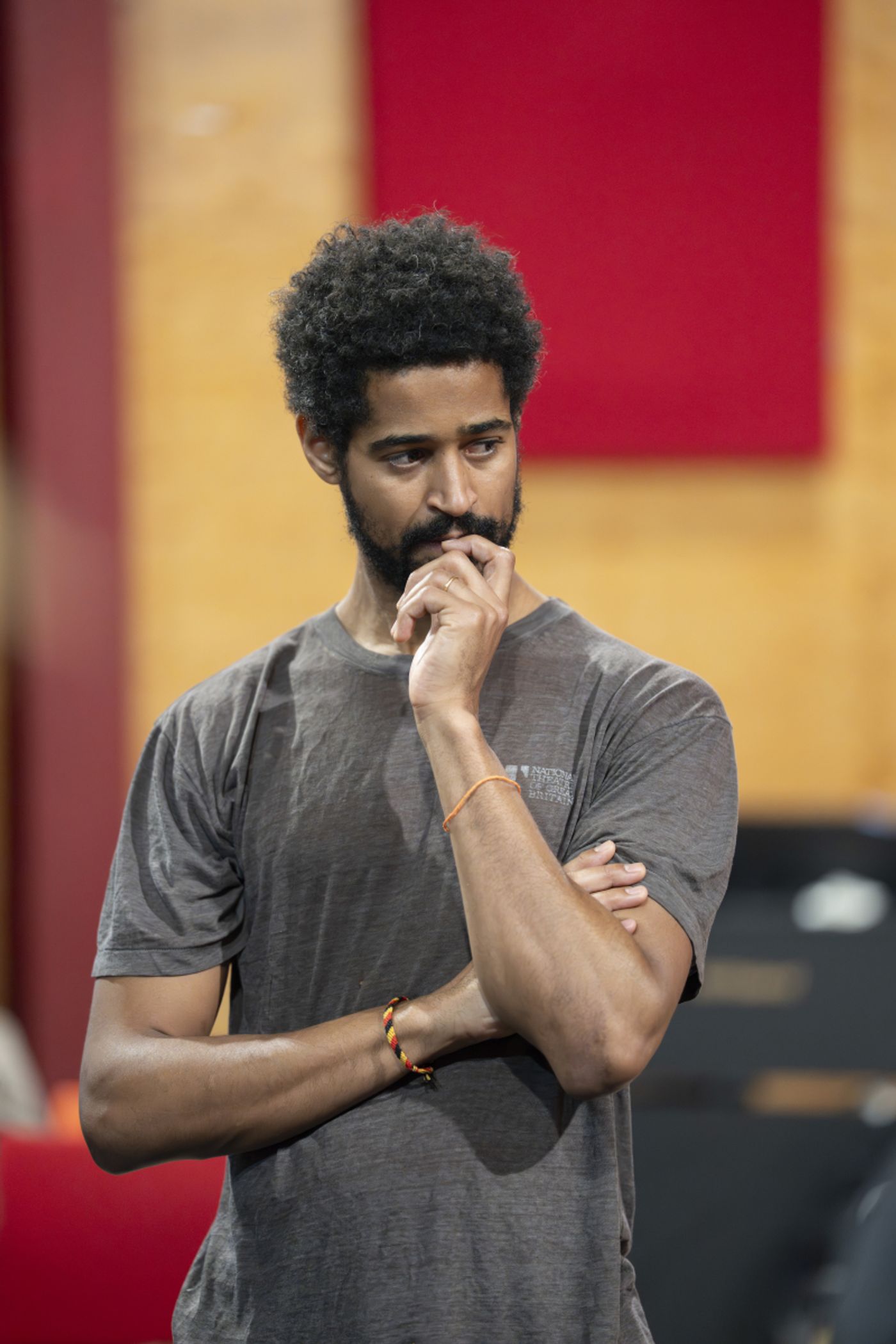
Photo Credit: Johan Persson
That's a very good hypothesis!
Thanks for joining my TED Talk! [Laughs] And segueing neatly back to Henry V, in the Crispin's Day Speech, there are the words, “This story shall the good man teach his son.” What's the story we're telling? How do we choose to answer the question? Henry's very concerned about that question - I suppose we all are. And one thing that's really interested me playing the part is this idea of the performance of kingship, and the distance between that avatar and the person - the wider, more nebulous question.
So you're performing this at the RSC, which has such an incredible legacy, as proven by the recent roundtable you had with other actors who have played Henry V. What is it like to be a part of that legacy?
It's a tricky question, because legacy is the story we've inherited till this point, but I think sometimes it's to be distrusted. One of the reasons that people feel separate from Shakespeare is that it's pedestalised, and there's an orthodoxy, and you have to think it's great, otherwise you're stupid and bad because it is great and everyone agrees. You can not like it, it's okay!... So it's really important that we always empower the audience - remember to enter into that dialogue. Otherwise, there's nothing.
Legacy can be a tricky thing, right? But on the other hand, it's wonderful because it's a story of stories being told and audiences coming into spaces and people telling stories and giving themselves an encounter. Theatres have a magic to them. It's a space where all of those possibilities are realised again and again. These spaces have a potency, because we come into them and we meet, we come into them and we, together, tell a story.
Ken [Kenneth Branagh] said something nice in that conversation about the idea of the ghosts standing with you. And I think that's it. What you feel is a vibration of the space. A friend of mine is a guitarist, and he said, “I can tell when I pick up a guitar if it's been played or not.” There's something of that when you come into a theatre, you know stories have been told here. That's there's a potency in them. So that is a really special thing, but it can be anywhere. Doesn't need to be the RSC - it just needs to be a meeting place. But it's lovely to do!
And finally, how would you describe Henry V in one word?
I can't! It would be arbitrary, like rolling a dice. I am not up to that task. Maybe if I could do it in one word, I wouldn't have to play the part! Maybe at the end of it, but I hope not! I hope I will not be able to distil it.
Henry V runs from 14 March - 25 April at the Royal Shakespeare Theatre in Stratford-upon-Avon.

Videos