Interview: How Fabian Aloise Shaped the Movement of SUNSET BOULEVARD
Aloise discusses how Nicole Scherzinger helped shape the choreography, Pussycat Dolls Easter eggs in the production and more.
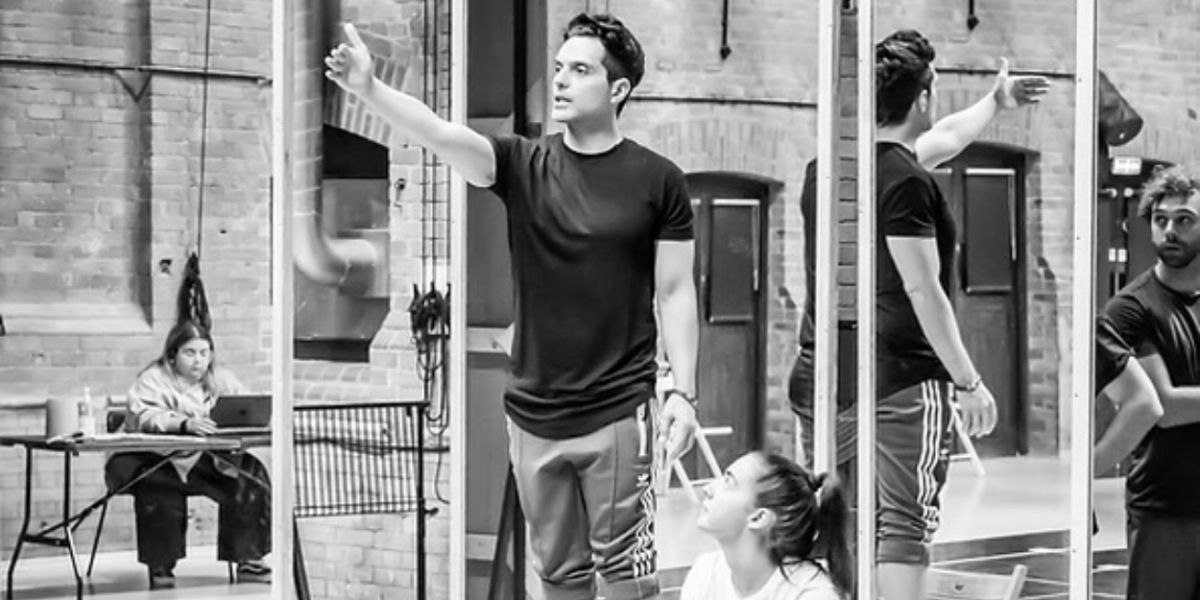
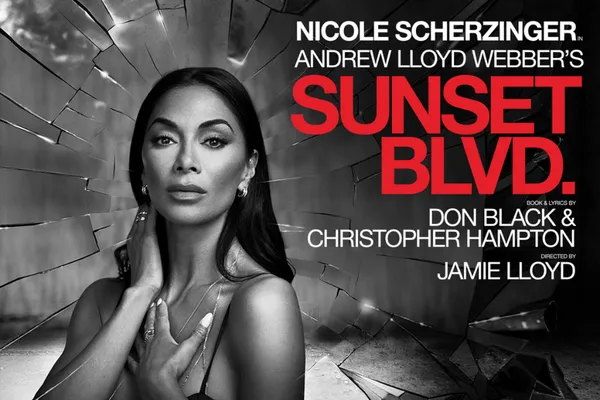
Sunset Boulevard has stepped into a new era with a reimagined Broadway production that deepens its iconic narrative through striking choreography and cinematic storytelling. In Jamie Lloyd’s new production, starring Nicole Scherzinger as Norma Desmond, the classic Hollywood noir is told in a stark space, with physical movement and a filmic lens at the center of the production.
At the heart of this revival is longtime Jamie Lloyd collaborator and choreographer Fabian Aloise, whose inventive movement direction transforms the non-dance musical into a new experience. BroadwayWorld spoke with Aloise about his long-standing creative partnership with director Jamie Lloyd, the process of weaving choreography into a non-dance-based musical like Sunset Boulevard, and how Nicole Scherzinger’s personal history and performance background deeply informed the movement language of the production.
You’ve worked with Jamie Lloyd since Evita in 2018. How would you describe your working dynamic, and what excites you most about building movement within his directorial vision?
We get along so well, and we got really close on Evita at Regent’s Park. We’re about to go and do it again, another version at The Palladium. We have a very great shorthand now after all these years, and we share a similar aesthetic, which lies within the narration of the story. Holding onto people’s attention, that’s always the key to everything we do together, there can never really be a moment where you allow the audience to sit back and ponder. You want to keep hold of them right up until the end. Our worlds collide in a very sort of amazing, workable way.
One of the best compliments I ever got, specifically about Sunset, was on opening night in London, where someone pulled me aside and said, “This is quite a remarkable show, I actually don’t know where you end and Jamie begins and vice versa.” And the reason that that was such an amazing compliment is because that’s what we set out to do. We never set out to do anything where you notice, 'Okay, that’s where Fabian starts. Now that’s where Jamie’s taken over.'
We just finished working on Much Ado About Nothing here in London, and that’s a Shakespeare play, but I’m peppered into so much of the movement, and physicality, and the narration through physicality, that it weaves itself together in a unique way, and we both know that. We’re both very aware that we work very well together.
.jpg?format=auto&width=1400)
With this version of Sunset, unlike previous versions, there is more of a focus on dance, which adds a whole new layer of storytelling. What was your approach to integrating choreography into a show that wasn’t traditionally based in choreography or dance?
Well, let’s say it how it is, there is really no dancing in Sunset Boulevard [laughs], and when Jamie first asked me and said we were going to be doing it, my first reaction was, “Yes, absolutely, you know I love working with you. What am I going to do in there?” [laughs]. And then when we started to discuss his fever dream version of what the show might entail, and it all is in a black box in a weird world, perpetual night - which is ironic because it takes place in California- I started to realize the simplicity of what Soutra [Gilmour] was designing. And what his fever dream was, was going to rely heavily on the narration being told through the bodies on stage.
So we were going to have to force the audience to navigate through the ensemble to know where they are, what’s happening, who are these characters, why is this happening, where does Joe drive to, how are we going to depict Joe driving? All of that became very integral, and it leaned very heavily on the choreography then. So then it made perfect sense. And all of a sudden I was as happy as a clam.
The production is so cinematic, how did you balance theatricality with the film lens?
The whole thing is one long collaboration with every single department. So collaborating with Nathan [Amzi] and Joe [Ransom], who did all the video stuff on Sunset became like a labor of love, and I became a nerd with it.
There are so many moments, the walk-around included, but there is one moment in particular, called New Ways to Dream, where we reflect on Norma watching a movie of herself as a younger version, and we keep going back and forwards to Hannah [Yun Chamberlain] playing Young Norma, and Nicole playing older Norma. And we learned very quickly that the movement off camera had to be bombastic or hypnotic enough to hold the viewers eye, but the movement on camera had to be in perpetual closeup. So, the second it becomes too much- and I’m talking about raising an eyebrow or scratching your ear- it’s too much on a screen that size. And sometimes so much movement can drive the audience to the point of wanting to look away. So, to strike that balance was incredibly difficult to find, but once we found that sweet spot, we held onto that. We were like, “This is where the choreography has to live, in this weird land in between on and off camera.”
.jpg?format=auto&width=1400)
Do you find that your choreographic language changes from production to production based on what is required, especially with as something as nontraditional as this? Or do you take it all on with the same approach?
I think it really depends on every production. I would be lying if I said that every production that I do is different, because ultimately, I think a lot of my DNA is in there, and so, I can’t pretend I’m someone else. But I do approach every show different. And Sunset definitely is very differently, because I had never worked as extensively with this art form of utilizing live video, and having a dancer being the one holding it and filming it.
When I first met Nicole, we worked together for a couple of hours, creating this commercial that was going to get shown on social media, of her in the mirror, and I asked her to trace the lines of her face, and her cheekbones, and her chin, and her jaw, and her neck- everywhere where a woman like Norma would start to see the lines of age show. And it was very full-on, and I remember being in the mirror with Nicole, just side-eyeing each other, and asking each other, “Is this triggering for you? Because it’s triggering for me!” Because it was so intense.
But then, what we did, is I utilized that and pulled that movement, and infused it in the body of Hannah Yun Chamberlain, who was hired because I had worked with her previously on a version of Cabaret at the Lido, she was a Kit Kat Girl, and she was brilliant in that production. She comes from a very Urban/Hip Hop background. So, when I started to ask her to morph this movement into a contemporary, slow, pulling-the-audience-in movement and base it all on Nicole’s cheekbones, we all started to realize, “I think this is going to work, I think this hypnotic quality is going to work." And I have to say, hand on heart, it is all because of Nicole. So, in essence, if I didn’t have Nicole, I wouldn’t go through that process.
And also, to pull on Nicole’s background, the work that she did with The Dolls, you can’t train someone like that in a short span of rehearsals, so I had to tap into that. Why would you not tap into that? She’s got this incredible box of facilities that I don’t even think she remembered! And we wanted to nod a little bit to The Dolls, so there are hidden Easter eggs throughout… I think if you blinked you’d go, ‘Was that even anything?’ But it enhances her performance to such a potent level of realism, because she did do that, she did have that level of fame when she was young. I wanted to tap into the real nitty-gritty of what she went through. And I think what she does every night is a testament to all that diving into it, and she’s absolutely remarkable. So, my process for Sunset was definitely different to what I normally go through.
.jpg?format=auto&width=1400)
I feel like I now need to look and see if I notice choreography from When I Grow Up, or Buttons!
We started with Buttons, we started pulling things apart. I didn’t want the audience to basically be able to say, ‘Fabian’s just copied some other choreographer’s work,’ but there are enough little hints to pay homage to who Nicole was as her younger self. And then there’s one that I think true Pussycat Dolls fans would absolutely see in one of the scenes, and it’s been pointed out to me before, but I’ll let you find that the next time you watch it [laughs].
You mentioned Evita earlier. You were involved in 2018, and it’s coming back! How do you feel about that returning?
We were meant to continue the journey with Evita in 2020. And obviously, the world shut down, so it’s always been something that Jamie and I have felt like, ‘We’re not finished with this.’ We made quite a remarkable leap with Evita, being an outside experience and treated it like it was almost like the Super Bowl.
We wanted to create an icon. And I remembered we started by asking each other, what is an icon? Who is an icon today? How can we compare Eva Peron to one of these massive icons? And so, we tapped into Gaga, and Beyonce, Shakira at the Super Bowl… Jamie came up to me and said, “How do you feel about doing this on stairs?” And instantly I saw Beyonce’s Homecoming, and I thought, ‘Yes. Absolutely. Let’s do this.’ So they were deeper than what Beyonce used at Homecoming, but instantly the show started to unfold before our eyes. And then I was able to infuse it with a lot of traditional Latin American dances, a lot of Latin American street dance. It was really cool, and because of the nature of the set, choreography became very integral to the storytelling.
Even on Much Ado, the choreography was born out of being able to infuse Shakespeare with a reason to move, and to have this joyous movement in it. And I think I’m very lucky to work with a director that sees choreography and movement language for what it can do. Because I think that’s rare. Sometimes, in the past, a lot of directors I’ve worked with can be scared of it, so it’s wonderful to be able to work with someone that is like, “No, no, you’ve got to do more!”
|
Powered by

|