How David Korins' Scenic Design Helps Build the Tension in DOG DAY AFTERNOON
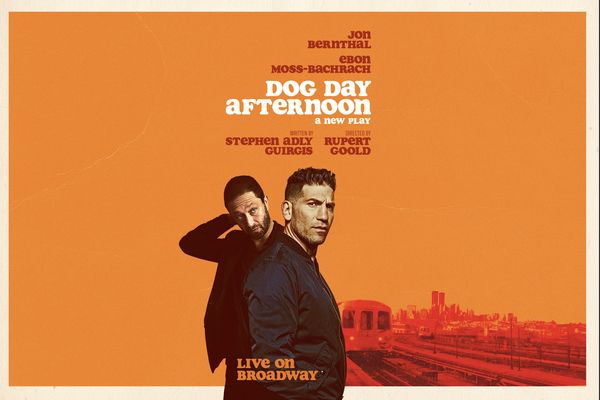
Dog Day Afternoon stars Jon Bernthal and Ebon Moss-Bachrach.
Let's set the scene... it's the sweltering summer of 1972, New York City—a time when the Vietnam War looms large, Watergate headlines flood the news, and one man's desperate act captivates the nation. A Brooklyn bank hold up quickly goes wrong, and with each gut-wrenching twist that unfolds, chaos ensues that ignites the city as they follow the actions of a man on the edge.
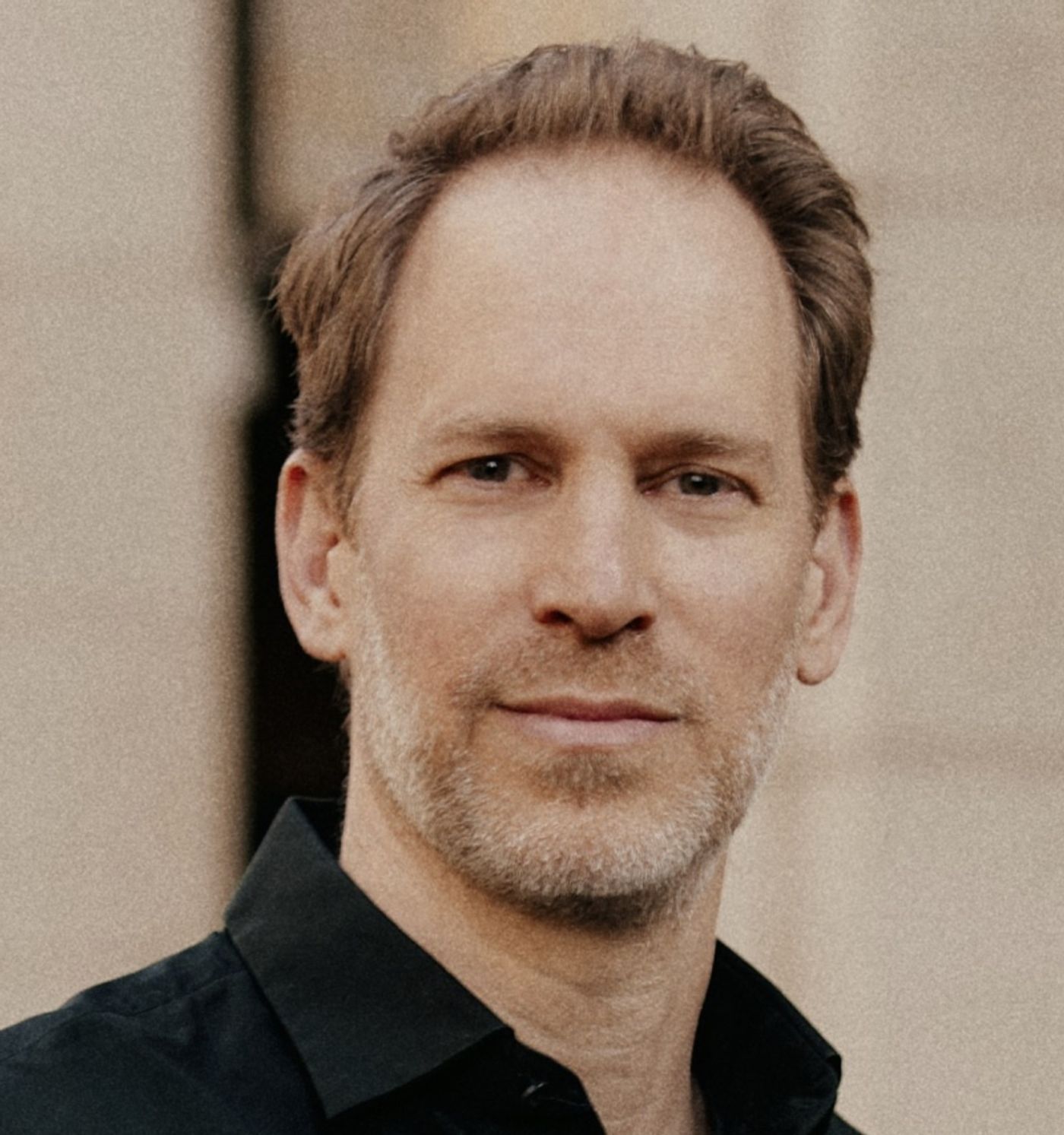
That's just a taste of what audiences can expect this spring at the August Wilson Theatre, where the stage adaptation of Dog Day Afternoon is about to open. One of the people who has created that world is four-time Tony-nominated scenic designer David Korins, who with this play, celebrates his 27th Broadway show. David checked in with BroadwayWorld to talk all about bringing the iconic story to life on stage, and watching it all come together from an ocean away.
 I think that for a lot of theatregoers, their entry point into this play will be what they remember from the film. What was your relationship with the movie like?
I saw it years and years ago, but of course I rewatched it as the process of the play started heating up. I cannot believe how prescient it is and how timely it is on so many levels. With the divisiveness of the uprising of... well, everything that's going on in the world, it's crazy. This play has been in the works for a very long time. I think I started having a conversation with Mark Kaufman at Warner Brothers around 2012 or 2013 when we were doing Misery. And he said, 'Oh, this is happening and as we get closer, I'd love to talk to you about it. And that's now 14 years ago!
Wow, that is quite the journey!
It is. I think whenever you do things that are movies turned theatrical events, you have to ask yourself, 'Why are we turning this into a play?' It's a play about people who are trapped in a physical space. There's no jump cuts, there's no crossfades, there's no swish pans. It's all right there in front of you and that pressure cooker and watching that thing play out in real time is incredible.
And did that become one of your biggest challenges in the design process?
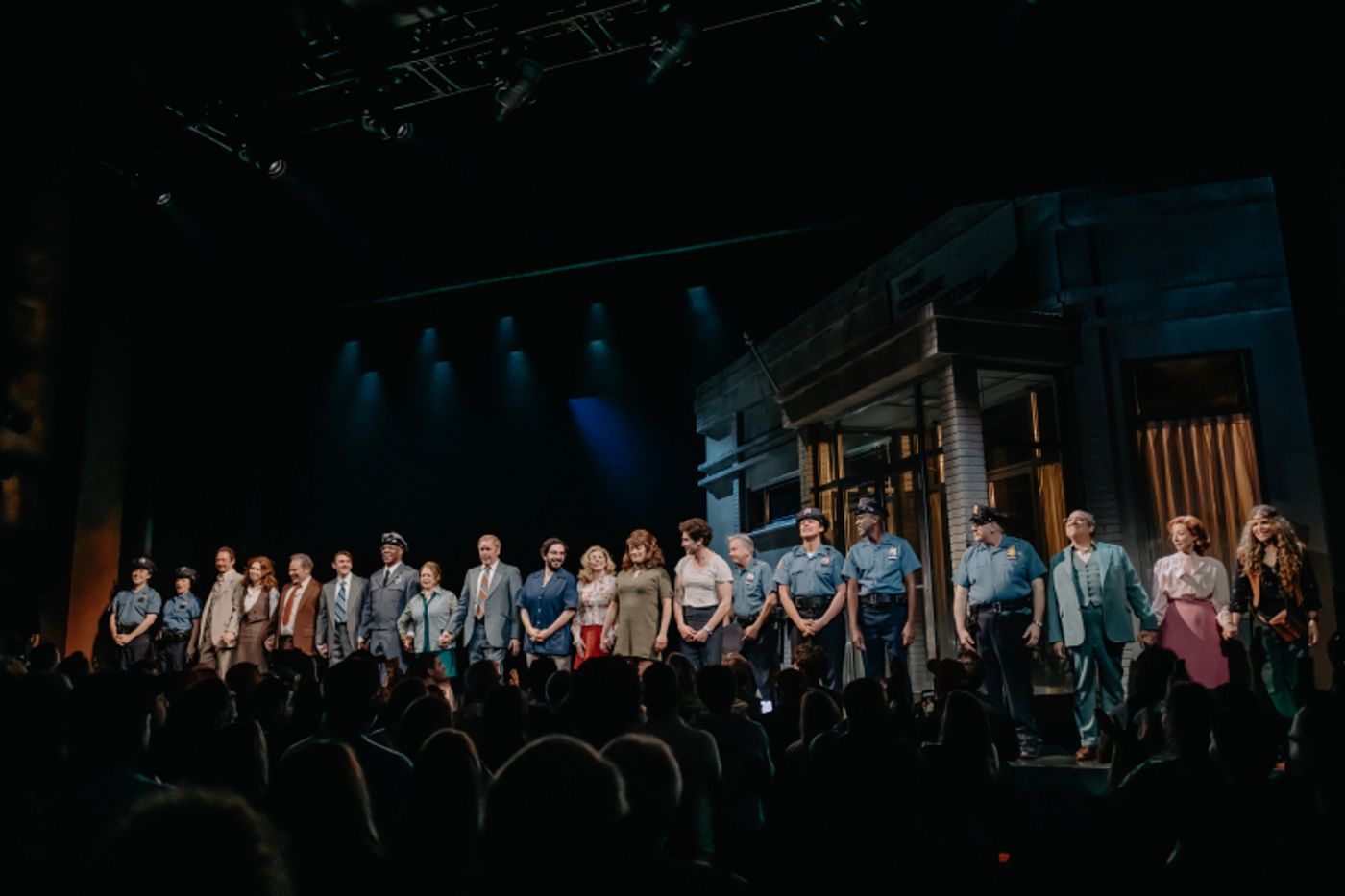
Yes, but the design of the show had a bunch of challenges. The first one is that it's not just set in the bank. It's at the bank, it's at the liquor store, and it's out on the street. So how can you make a space big enough to hold 12 people trapped inside of a space, and allow the bank to both exist first in its normal state and then in its seized state. And have it move seamlessly from one location to the other where you can go outside, where there's extremely important scenes that happen and then also deliver a liquor store and have it not feel elemental and highly abstracted.
That was really hard to actually figure out both the working ground plan of the bank, but then also the overall macro-ground plan to try and figure out how things can move between those locations.
How would you describe the overall look of this production?
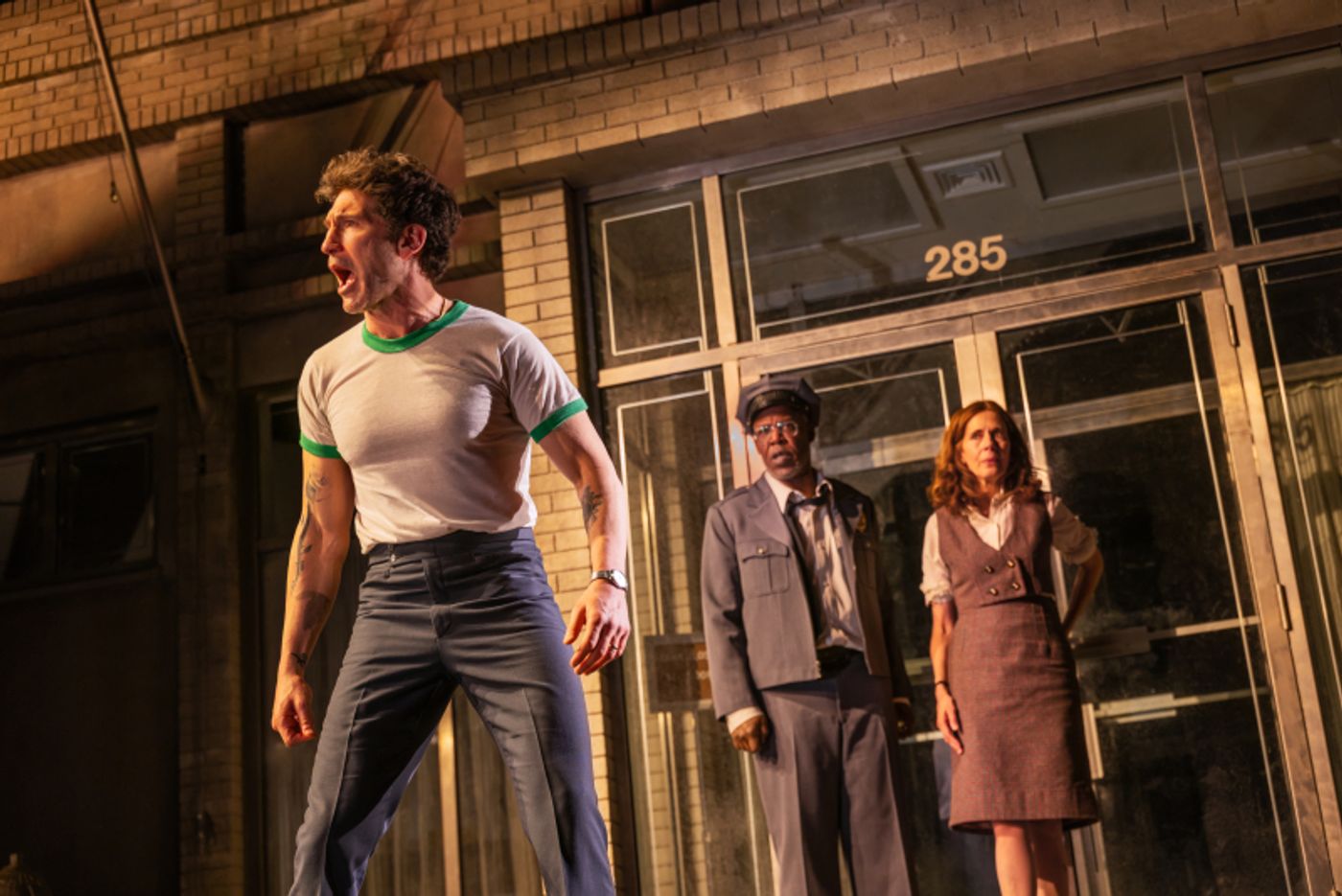
I think that it exists in a heightened realistic place. The bank presents as relatively real. I would not call it hyper-realistic. I wouldn't even really call it fully realistic! But when we go to the exterior, it's much more poetic and elevated because it really is just the object of the bank. It's sort of like two guys and their mission to infiltrate and take it over.
I would call the language of the liquor store more of a fragmented, magical, realistic thing. Once we establish that location, it exists in a downstage world from the bank. The reason why we chose to do it that way is because I was really interested in never letting the energy of the bank go away. Never letting the people go off stage, never letting the energy of what happens in those long moments between scenes go away. They're always activated.
Oh, I love that.
Right? Because in a hostage situation, even though we get news clips and little bites of information, those people are still in that very, very, real moment. So it felt important to bring something into the foreground but not let the pressure out.
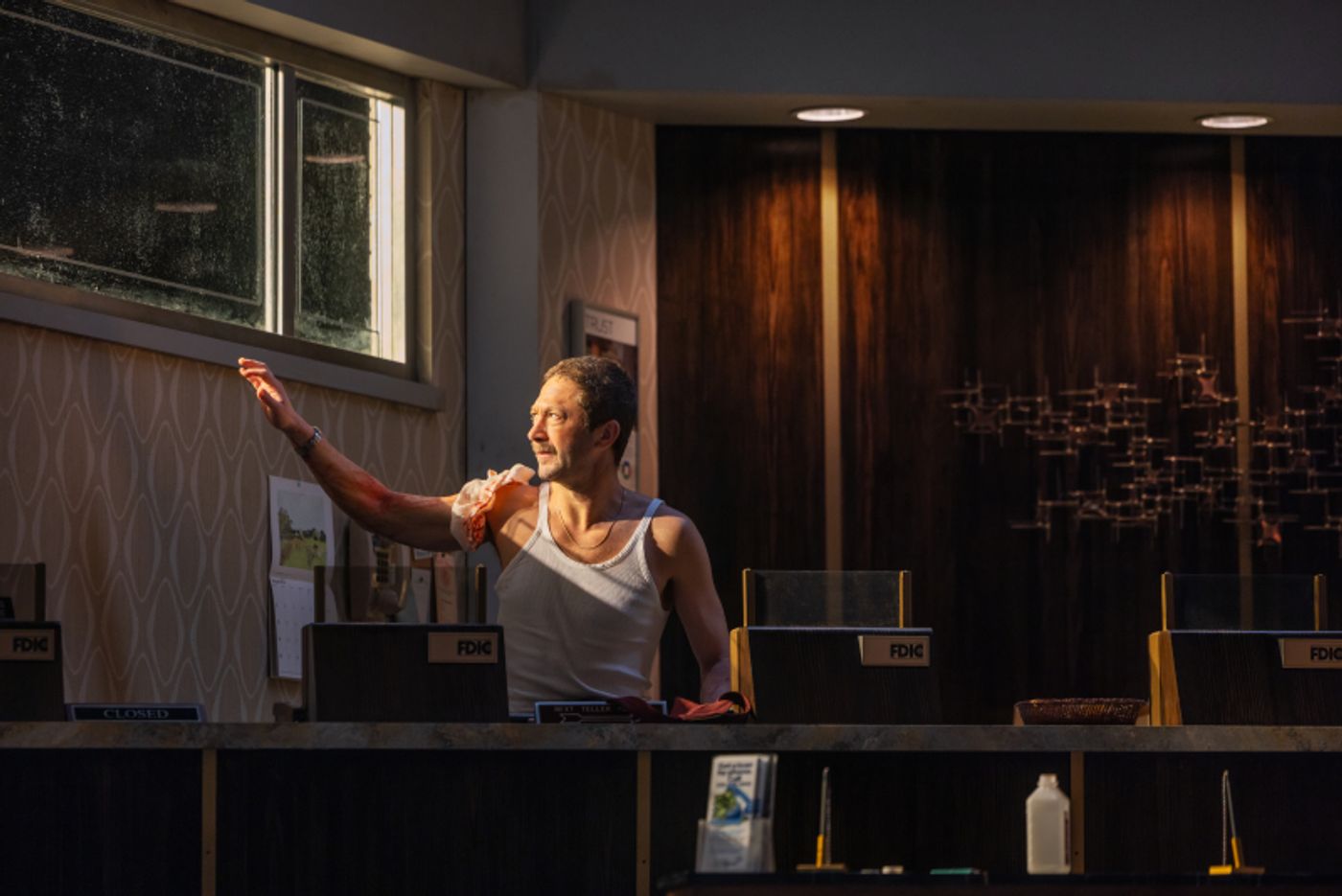
There's also the challenge that this play takes place in the midst of a major heat wave. These people are sweating and struggling physically. So our lighting designer, Isabella Byrd, had to really play with the quality of light that comes in and the time of day. The walls and the windows really help also tell that story.
I know that you are in the UK right now working on The Greatest Showman. Is that at all scary for you, not being in the August Wilson to keep an eye on things?
In my almost 30-year career, I have never had this experience. I really made sure to cross my T's and dot my I's. Actually in a weird way, the time difference has helped me because I go back to my hotel room and I am live texting and watching live videos of the entire tech process. So I've been working until 2 o'clock in the morning, with my associates sending me videos and giving timing notes on transitions and other things like that. It's definitely a weird thing, but I'm in constant communication with the team.
What are you personally proudest of in this particular project and what you've created?
You know, the thing about being a set designer is we have a lot of levers that we can pull that feel cool and flashy. What I'm proudest of is I think that the set does a really, really good job at taking on the page what is an almost impossible challenge and actually making it feel inevitable. You're like, 'That's right! That's how people would be in a bank!' I think [the design] serves the narrative really well and it does enough work that the audience feels really cared for. But also... it does what theater does really well, which is that we get to see the scene changes! It really makes a decided differential between the play and the movie.
What do you think is going to most surprise audiences about this production?
I think that they will be surprised at how timely it is. You walk into a theater and you see a sign that announces: Brooklyn, August 22, 1972, you think, 'Well, what do I have in common with 1972?' And then you realize... literally everything. I think that's a little bit of like a surprise grenade.
Dog Day Afternoon will open at the August Wilson Theatre on March 30, 2026.
.png?format=auto&width=1400 "How David Korins' Scenic Design Helps Build the Tension in DOG DAY AFTERNOON")