From the West End to DOWNTON ABBEY: A Look at Penelope Wilton's Stage Career
Wilton can be seen in Downton Abbey: The Grand Finale, now in theaters.
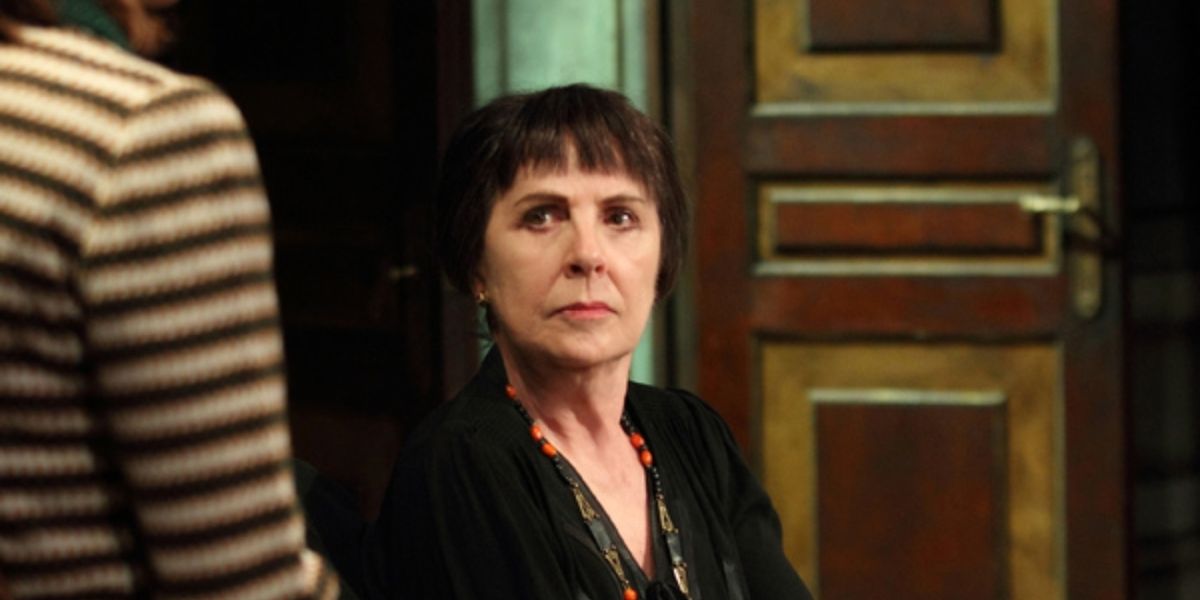
DOWNTON ABBEY: THE GRAND FINALE is now in theaters, and the new film is full of beloved actors whose talents have graced both stage and screen, including Olivier Award-winning performer Penelope Wilton.
Since the early 1970s, Wilton has established herself as a major player on the British stage, earning six Olivier Award nominations and eventually winning the award in 2015 for Taken at Midnight. Wilton's professional stage career began in 1969 as Cordelia in productions of King Lear with the Nottingham Playhouse Company and The Old Vic. During this period, she remained active with Nottingham Playhouse under the tutelage of director Jonathan Miller, starring in The Alchemist and Twelfth Night with the company.
In 1971, she appeared in the original Broadway production of The Philanthropist. Written by Christopher Hampton as a response to Molière's The Misanthrope, the play had previously made its world premiere at The Royal Court Theatre in London (also starring Wilton) before transferring to the West End. Wilton's role as Araminta marked her first and, to date, only Broadway credit.
Later that year, Wilton made her West End debut opposite Ralph Richardson in West of Suez by John Osborne. The play first premiered at The Royal Court Theatre before transferring to the Cambridge Theatre. Throughout the 1970s, Wilton remained busy on British stages, appearing in a plethora of productions ranging from regional to West End. In 1973, she starred in a pair of repertory plays at the Chichester Festival: The Director of the Opera by Jean Anouilh and Masha in Anton Chekov's The Seagull, directed by Jonathan Miller. That same year, she was seen at the Bristol Old Vic in Uncle Vanya and as Joan Hwelett in Plunder by Ben Travers. She would later go on to star in a different production of the play at The National Theatre, this time as the character of Prudence Malone.
The late 1970s and early 1980s saw Wilton continue to frequent The National Theatre, interpreting the works of playwrights such as George Bernard Shaw and Harold Pinter in productions of The Philanderer and Betrayal, respectively. She would also begin to make appearances on the BBC in filmed productions of stage plays, beginning with Mrs. Warren’s Profession in 1972.
In 1974, she returned to the West End stage in Peter Luke's Bloomsbury, which ran at the Phoenix Theater for a short five weeks. The performer reunited with Jonathan Miller for Shakespeare productions at the Greenwich Theatre, including Measure for Measure and All’s Well That Ends Well.
She received her first Olivier Award nomination as Ann Whitefield/Dona Ana in Man and Superman, the lofty Shaw play in which she starred at The National Theatre in 1981. She would win the Drama Magazine Award for her performance. Her next Olivier nomination came in a different production later that year, as Beatrice in Shakespeare’s Much Ado About Nothing.
Also in 1981, she was seen opposite Anthony Hopkins as Desdemona in a televised BBC production of Othello, directed by Jonathan Miller. 1982 saw Wilton play the title role in The National Theatre production of Shaw’s Major Barbara, and appear as Regan in a BBC production of King Lear (again directed by Miller), led by British luminary Michael Hordern.
In the mid-1980s, Wilton found success on British television, appearing in a regular role in the sitcom Ever Decreasing Circles. Based on the 1980 stage play Hiccups, the series would run for five years, during which time Wilton was not active on stage. Following that interim, she returned to The National Theatre in full force with an Olivier Award-nominated performance in David Hare’s The Secret Rapture in 1988.
After starring in productions of Piano at The National Theatre and Vita and Virginia at Chichester Festival, she received another Olivier Award for her acclaimed performance as Hester Collyer in the 1993 production of The Deep Blue Sea at the Almedia Theatre, winning the Critics' Circle Award for Best Actress. The celebrated production was also broadcast on BBC television.
Back at The National Theatre, Wilton starred in a production of Harold Pinter’s Landscape, opposite her then-husband Ian Holm. Directed by Pinter himself, the production was later broadcast on British radio.
In 1995, Wilton played Madame Ranyevskaya in the Royal Shakespeare Company’s second production of Anton Chekhov’s classic play The Cherry Orchard. (Fun Fact: In Summer 2025, she appeared in a one-night-only charity performance of the play in Tangier, also starring her Downton Abbey co-star Michelle Dockery.)
1996 saw Wilton appear in Young Vic’s production of Eugene O’Neill’s A Long Day’s Journey into Night, helmed by Olivier Award-winning director Laurence Boswell, and, in 1997, starred in a revival of Shaw’s Heartbreak House at the Almedia Theatre. At The Donmar Warehouse in 1998, Wilton starred in a triple bill of Pinter plays, which also featured the author. For her performance in A Kind of Alaska, she won Best Actress at the Irish Theatre Awards.
Wilton’s stage career continued to flourish in the 2000s. At the Barbican Theatre, she played Arkadina in a production of Chekov’s The Seagull, reuniting with Adrian Noble, who previously directed her in The Cherry Orchard. A year later, in 2001, she returned to The Donmar Warehouse for Lillian Hellman’s The Little Foxes, directed by Marianne Elliot. She was nominated for the Evening Standard Award for Best Actress for her role as Regina.
The following year, Wilton performed the world premiere of Tess, an extended Harold Pinter monologue, at the Lyttelton Theatre. She also appeared at the Gielgud Theatre opposite John Hurt in Brian Friel’s one-act Afterplay, a piece following two Chekhov characters.
In 2005, Wilton would play the title role in David Hare’s new version of Federico García Lorca’s The House of Bernarda Alba at London’s Lyttelton Theatre. The next year, she led a production of Thomas Middleton’s Women Beware Women at the Royal Shakespeare Company.
Wilton's fourth Olivier nomination came in 2008, with her performance as Ella Rentheim in The Donmar Warehouse production of John Gabriel Borkman, starring alongside Tony Award-winner Ian McDiarmid. She received another Olivier nomination a year later in a production of The Chalk Garden, again at The Donmar Warehouse. For her performance, she shared an Evening Standard Award for Best Actress with her co-star, Margaret Tyzack.
That same year, she would play Agatha in a production of T.S. Eliot's The Family Reunion at The Donmar Warehouse alongside Samuel West and Gemma Jones and, a year later, returned to her Shakespearean roots in a production of Hamlet, again at The Donmar Warehouse. She played the role of Gertrude opposite Jude Law as the title character. In 2011, she appeared alongside Imelda Staunton and Tim Pigott-Smith in Edward Albee's Pulitzer Prize-winning play A Delicate Balance at London's Almeida Theatre.
In 2014, Wilton starred in the world premiere production of Taken at Midnight at Chichester Festival Theatre. Written by Mark Hayhurst, the play is based on the true court accounts of German lawyer Hans Litten and his mother, Irmagard (played by Wilton) efforts to release him from prison following his arrest by the Nazis in the 1930s. The production would later transfer to the West End's Theatre Royal Haymarket and earned Wilton her first Olivier Award.
Photo Credit: Manuel Harlan.
Wilton's most recent West End credit came in 2023 in the world premiere of the comedy Backstairs Billy. Taking place at the royal residence of Clarence House in 1979, the performer portrayed the late Queen Mother, alongside Luke Evans as her servant Billy Tallon. The production received positive reviews.
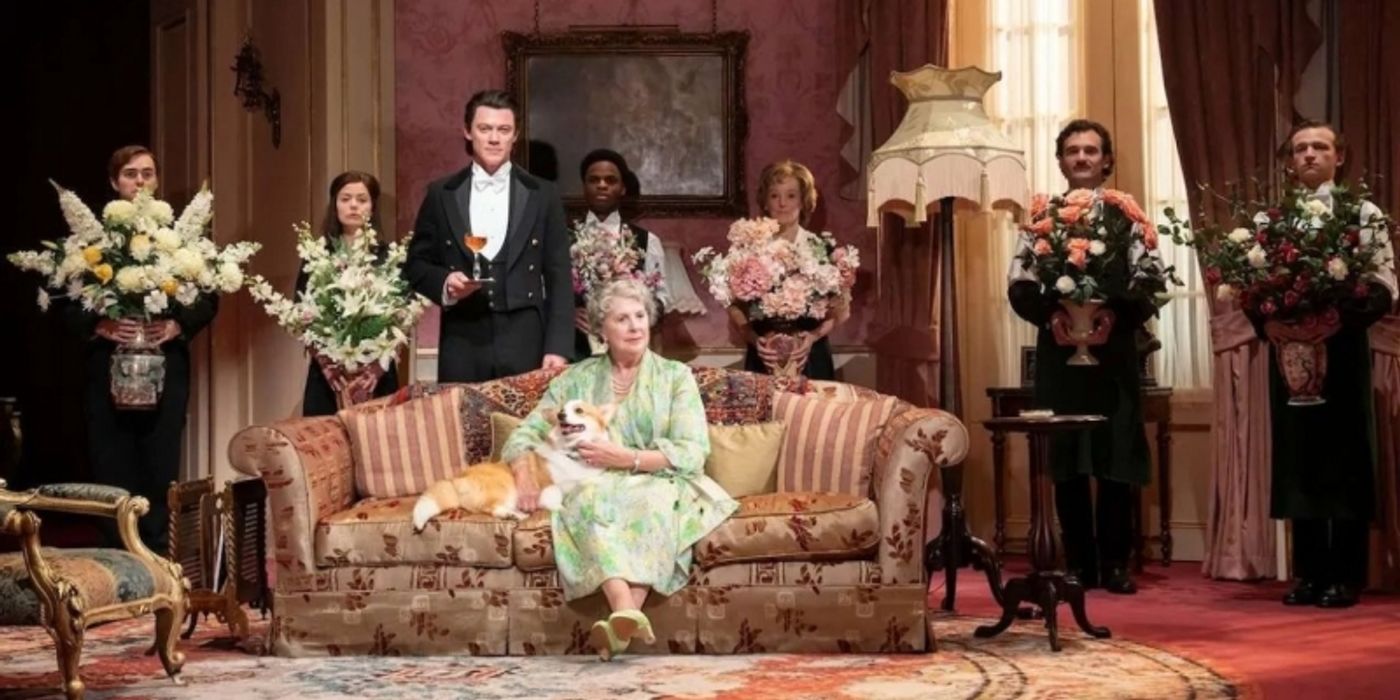
Photo Credit: Johan Persson
As theatergoers wait for Wilton's next stage role, viewers can see her on the big screen as Isobel Grey in Downton Abbey: The Grand Finale, now in theaters.
DOWNTON ABBEY: THE GRAND FINALE, the cinematic return of the global phenomenon, follows the Crawley family and their staff as they enter the 1930s. When Mary finds herself at the center of a public scandal and the family faces financial trouble, the entire household grapples with the threat of social disgrace. The Crawleys must embrace change as the staff prepares for a new chapter with the next generation leading Downton Abbey into the future.
The time has come to say goodbye. Experience the motion picture event only in theaters September 12. Get tickets now at DowntonAbbey.com.
Photo Credit: Catherine Ashmore