


Review: THE WEIR, Harold Pinter Theatre
Brendan Gleeson makes a quietly devastating West End debut
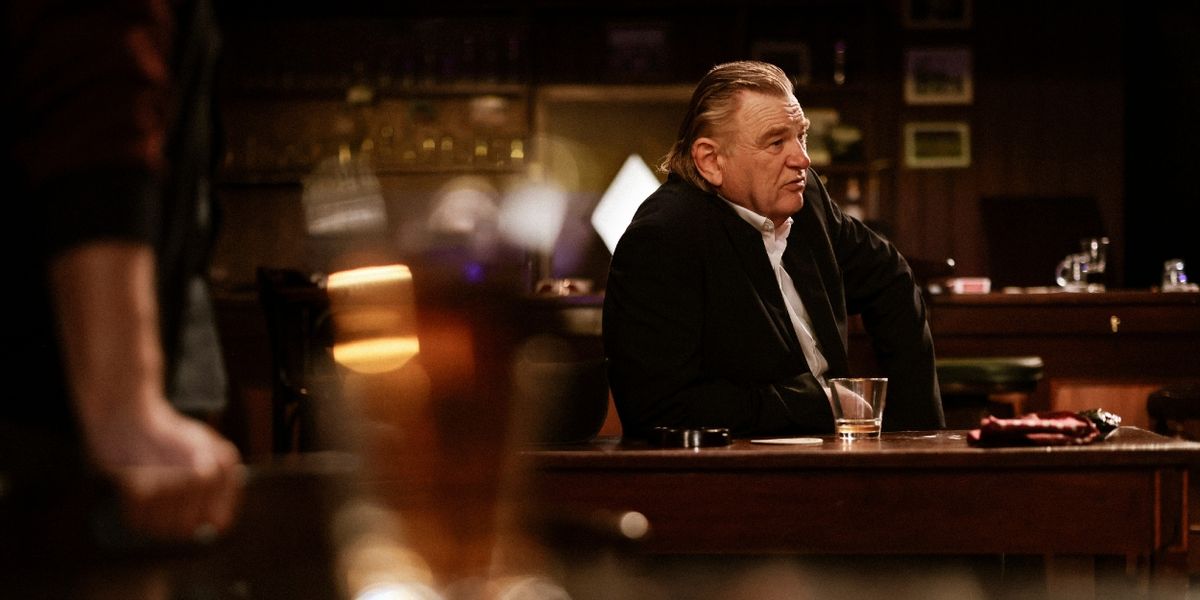
 On the surface very little happens. A handful of grizzled regulars gather in a pub in backwater Ireland, its walls lined with damp and dust. They proceed to drink, gossip and spin tall tales. Yet with each rambling anecdote and every fresh round, Conor McPherson’s The Weir reveals the mesmeric power that made it an instant hit in 1997 and the launchpad for its young playwright.
What makes it magnetic is not the ghost stories themselves, but the way they open windows into the souls of those telling them. Beneath the spookiness lies something far more human: grief, regret and endless longing.
At the centre is Brendan Gleeson, who despite a long and celebrated career makes his West End debut. As Jack, a gruff garage owner, he is all craggy glares and growls, seldom rising from his bar stool except to shuffle to the fire or refill his glass. Opposite him is the weary landlord Brendan, both men weighed down by rural drudgery that they cling to as a defence against the real world. The dynamic shifts when Finbar (Tom Vaughan-Lawlor), who escaped countryside ennui to a lucrative career the city, swans in with enigmatic newcomer Valerie (Kate Phillips). The men, scramble to impress. So accustomed to a masculine presence, the pub doesn’t even stock white wine.
The stories grow darker: childish knocks on windows give way to apparitions, uncanny coincidences and, finally, Valerie’s devastating confession. But the most haunting tale belongs to Jack, who recalls the woman he once loved but never followed to Dublin. His is a ghost story without ghosts, just the void of a wasted chance and life of regret to haunt for an unlived lifetime. Memory becomes a spectre, lingering in silences, refusing to rest.
_%20Credit%20-%20Rich%20Gilligan_%203J6A8636.jpg?format=auto&width=1400)
Each performance is finely tuned. Phillips maintains icy distance as Valerie, restrained by her grief which slowly smothers her. Vaughan-Lawlor’s Finbar sparks with boyish vivacity, but we sense gently that it masks an inner vacuum beneath the sparky surface.
If McPherson falters, it is in his overly wrought direction. Sequences are staged a little too cosily, rhythms a little too predictable, the dark comedy too caricatured. But the play’s spell remains. The Weir is not really about the supernatural at all. It is about the things we try to bury, the regrets that haunt us.
The Weir plays at the Harold Pinter Theatre until 6 December
Photography Credit: Rich Gilligan






Reader Reviews
To post a comment, you must register and login.