


Review: THE TWO GENTLEMEN OF VERONA, The Other Place, Stratford upon Avon
Love is blind in this early Shakespeare comedy
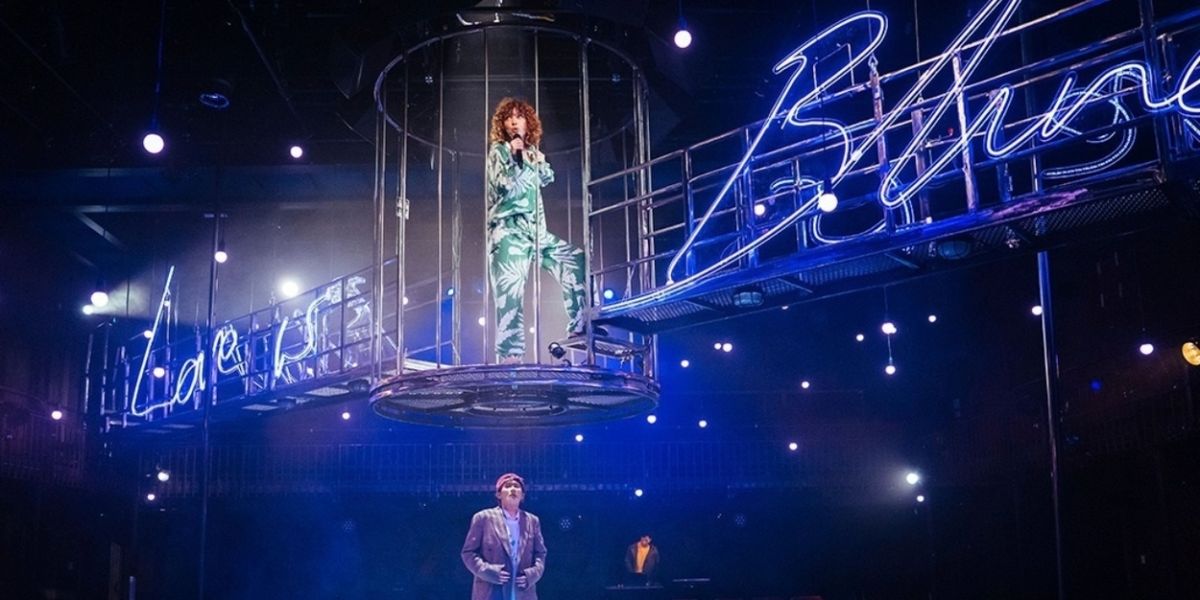
 Joanna Bowman brings Shakespearean Italy to The Other Place at the RSC with her new production of his first play, The Two Gentlemen of Verona. At a pacy 90 minutes (without an interval) and set in the round, the play is reimagined for the present day with a talented cast of actor-musicians - an ideal way to introduce old and new alike to this piece of work.
Best friends Valentine and Proteus have the chance to travel to Milan, but the latter can’t face leaving his love, Julia - Valentine is more cynical about romance, so doesn’t have the same problem, and immediately takes his leave. Proteus and Julia’s secret joy is short-lived, however, as his presence is soon requested by the Duke of Milan; the couple tearfully exchange rings, parting with the full expectation of reuniting and formalising their relationship. Meanwhile, Valentine has fallen head over heels for Sylvia (the Duke’s daughter), and she seems to reciprocate his feelings - the only trouble is that the Duke would prefer her to be matched with local nobleman Thurio. Matters are further complicated when Proteus arrives and becomes infatuated with Sylvia. Will he stay true to Julia and Valentine, or betray them both?

“Love, and a bit with a dog.” This is how Philip Henslowe memorably describes comedy (and this play in particular) in Shakespeare in Love, and this production commits fully to both of these elements. “Love is blind” emblazoned across the walkway in neon lighting and amorous songs take care of the first part - and real life dog Lossi embraces the limelight as Launce’s indifferent pooch Crab, stealing the scene with every appearance.
Francis O’Connor’s set design provides two levels upon which the action can take place; the aforementioned walkway also includes a cage (the Duke imprisons Sylvia, supposedly for her own good), and the lower level has several entrance/exit points. Both aspects of the design help to create a dynamic performance space, serving the play and making it interesting for the audience. Downstairs seating will probably allow a slightly better overall view, if you arrive in time to claim a space there.
My favourite part of O’Connor’s costume design is for Valentine’s servant Speed; when we first meet him, he’s wearing a blue and yellow Hellas Verona FC jersey, but once they’ve moved away he’s proudly sporting a red and black AC Milan football shirt. It’s a nice little detail for those in the know, and highlights Speed’s subservience and desire to blend in.
One possible reason for this play being rarely performed could relate to the more misogynistic elements, although there would be nothing wrong with using these as teaching points. As it is, this adaptation (dramaturgy from Zoe Cooper) counteracts some of this by ensuring both Julia and Sylvia are portrayed as independently-minded women - particularly the former, who’s introduced to the audience in the middle of a boxing lesson. The conclusion is re-framed as well; rather than Julia instantly forgetting Proteus’ betrayal, she instead gives him the chance to earn her forgiveness - but with no guarantee their relationship will be as it was.
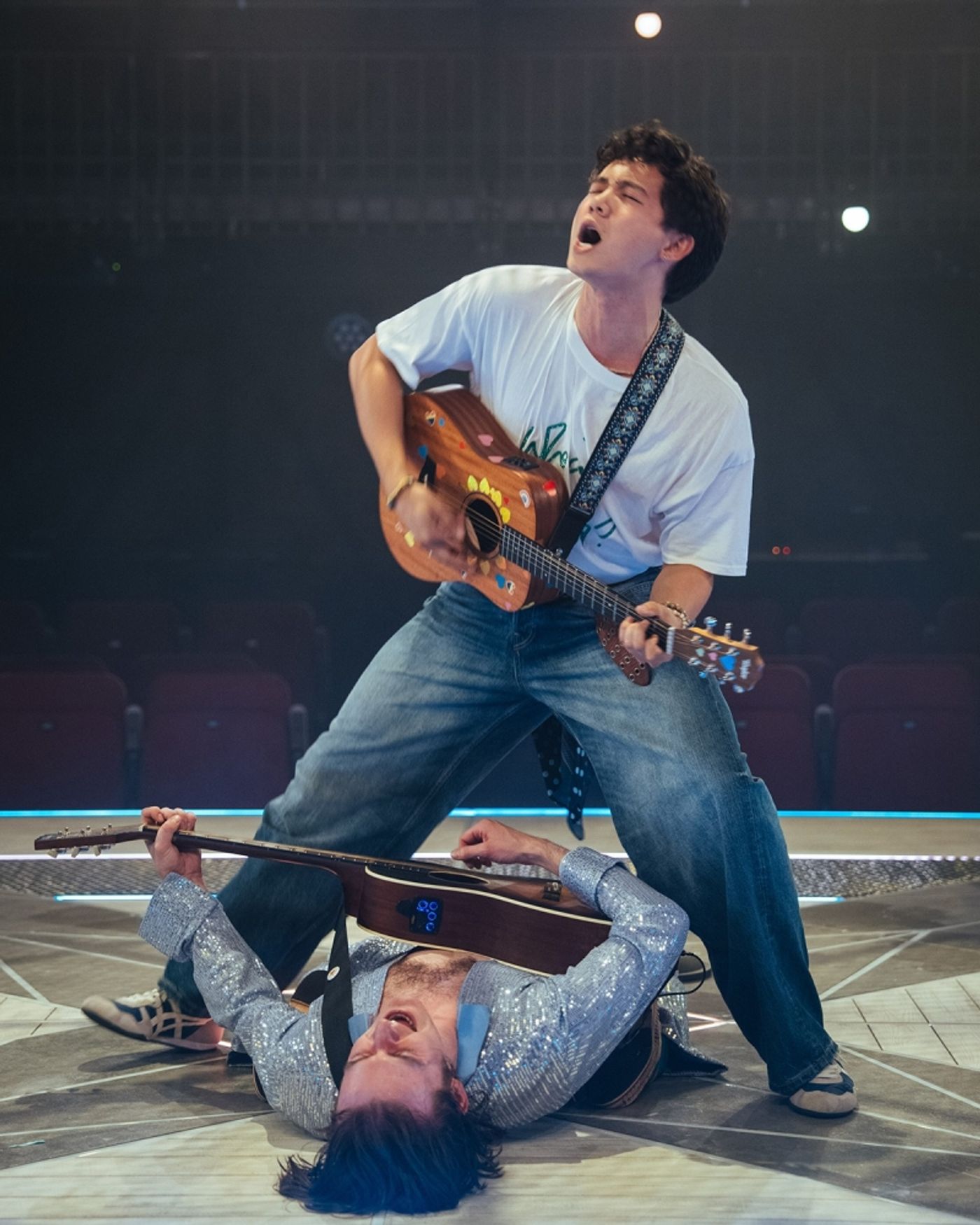
Stu McLoughlin and Lossi may give showstopping portrayals of Launce and Crab, but there are also brilliant performances from the rest of the cast. Tom Babbage is amusing both as put-upon servant Speed and snivelling suitor Thurio; Jonny Khan and Lance West give the instant impression of being old friends, which makes Proteus’ betrayal hit even harder. Aisha Goodman and Siân Stephens give spirited portrayals of Julia and Sylvia, as well as hitting the emotional beats during their characters’ journeys.
All in all, this is a production with a lot of laughs - but it doesn’t stint in the drama stakes either. A worthwhile revival of a rarely performed Shakespeare, proving once and for all that ‘love and a bit with a dog’ really is what the people want.
The Two Gentlemen of Verona is at The Other Place, Stratford upon Avon until 31 August
Photo credits: Helen Murray






Reader Reviews
To post a comment, you must register and login.