
Review: THE TALENTED MR RIPLEY, Birmingham Rep
The first major stage adaptation of Patricia Highsmith's iconic novel
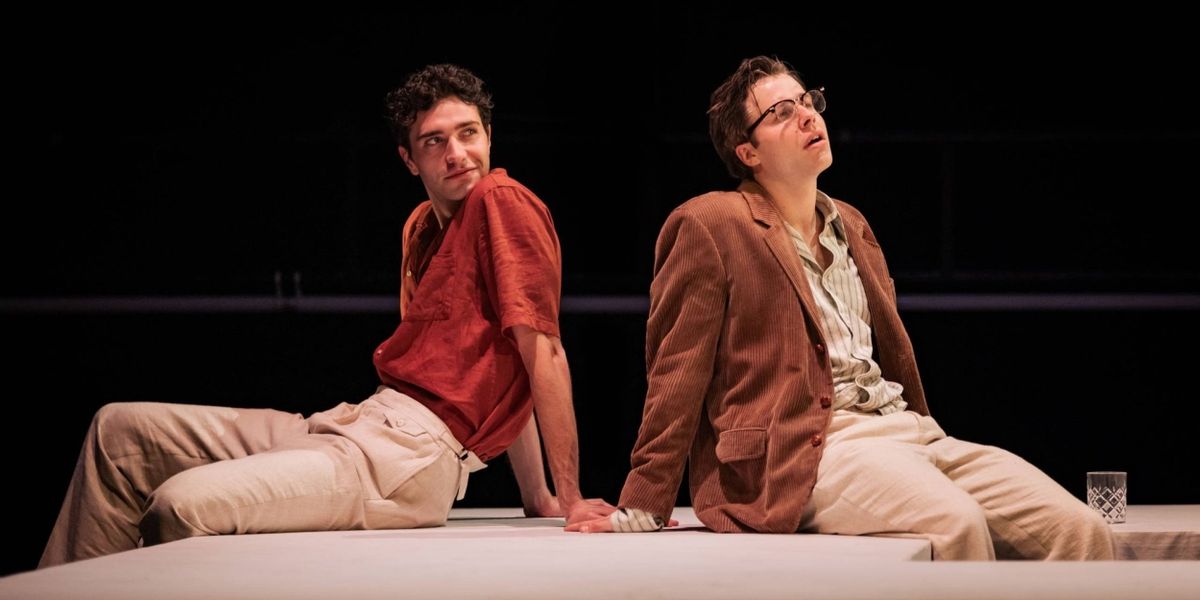
 Talented by name, talented by nature: Ed McVey is a perfectly cast Mr Ripley, deftly juggling paranoia, wild optimism, self-pity and bouts of violence, while never losing either his sense of humour or the audience's tolerance. It's a demanding role requiring seemingly endless reams of dialogue as Ripley narrates his every thought, and McVey navigates it with style and charisma.
Despite an all-round stellar cast and the thrilling source material, though, this stage adaptation of Patricia Highsmith's 1955 novel doesn't reach its full potential. Adapted and directed by Mark Leipacher, it's a stylish but somewhat soulless affair.
The play follows the novel closely, much like the 1999 movie and 2024 Netflix series. We meet the unsuccessful and dissatisfied Tom Ripley at the same time as he meets Mr Greenleaf, a businessman who believes - somewhat erroneously - that Tom was good friends with his son Dickie. Desperate for his son to return home from Europe, Greenleaf offers to pay Tom to travel to Italy and persuade Dickie to come back to the States. Once in Italy, though, Tom inserts himself into the lives of Dickie and his girlfriend Marge, and his growing obsession with Dickie leads him down a dark path.
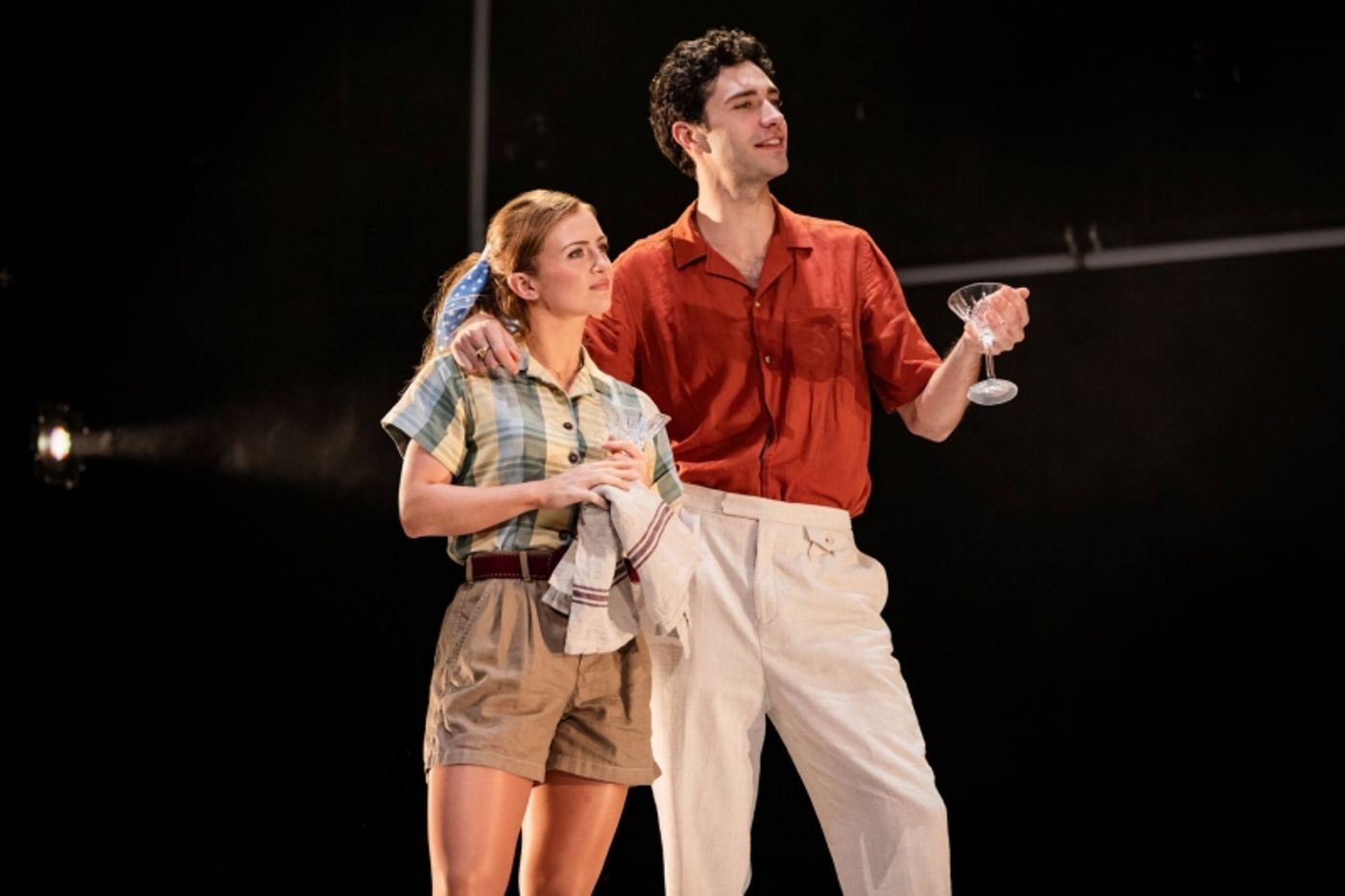
Photo Credit: Mark Senior
McVey is ably supported by Bruce Herbelin-Earle as the casually cruel Dickie, whose carefree lifestyle and manner enchant Tom so thoroughly. Maisie Smith is a likeable but underused Marge, and Christopher Bianchi does impressive double duty as Dickie's frustrated father and the determined Italian police inspector who can't quite figure out how or if a crime has been committed.
It's clear from the start that the production is aiming for a minimalist take on the material, with Holly Pigott's set design involving one large, bright white platform with a hole in the centre where characters occasionally appear from or disappear into. Aside from this platform, we get only an occasional doorway to differentiate the locations. For a story set in such iconic locations - New York, Rome, Sicily, Venice - it seems like a waste, and after two and half hours it becomes draining on the audience's vision too.
As well as minimalist, Leipacher's version is sometimes meta, with certain scenes stopped by a shouted “Cut!” from the trench-coated ensemble who seem to change from townspeople to filmmakers without reason, and who force Tom to replay the scenes two or three times until they are satisfied with the outcome. It could be an interesting concept, but there seems to be little internal logic for when it is used or not used, and with no explanation of why it's there at all, it doesn't really add anything other than confusion.
Highsmith's clever, twisty plot does a lot of the heavy lifting here, and as the net tightens around Tom in Act 2, there are some genuinely tense moments, as well as some shocking (and well-choreographed) bursts of violence. Her complex characters shine through too, particularly Tom, though we hear so much of his inner monologue that by the end it can feel exhausting to listen to, despite its eloquent phrasing and McVey’s well-honed performance.
The Talented Mr Ripley has great bones, and although this production isn't as visually stunning or emotionally satisfying as it could be, if you're looking for a version that differs from the movie and television series and takes some risks, then this adaptation may be for you.
The Talented Mr Ripley is touring until 22 November
Photo Credit: Mark Senior






Reader Reviews
To post a comment, you must register and login.