


Review: THE CODE, Southwark Playhouse Elephant
fact meets fiction in this intriguing look at the 'cesspool of Hollywood'
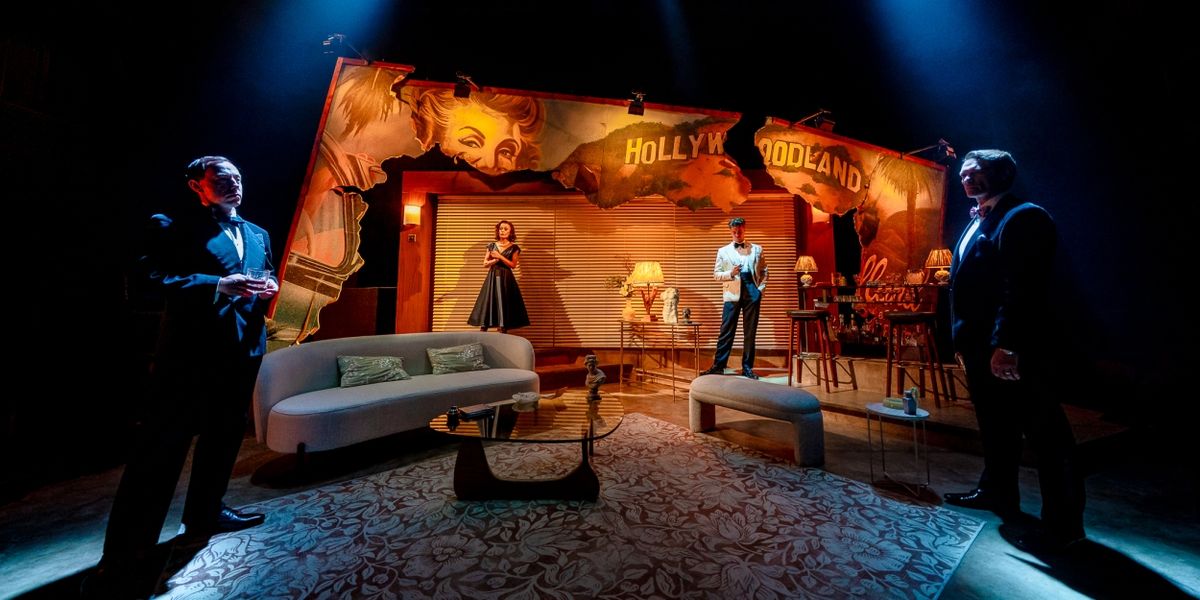
 Billy Haines and Tallulah Bankhead. Icons of popular culture in the 1930s. He had been one of MGM's biggest stars, by 1950 a feted interior designer to the stars. She was stage and screen and bigger than both in personality. Slighted for Scarlett in Gone With The Wind, yet still drawn to the Hollywood she termed 'a cesspool'.
He was openly gay, she was openly bisexual. They followed their own paths and disregarded the rules, remembering a time when Tinseltown was definitely more decadent and possibly more accepting. And they are together tonight, waiting to head to a party at director George Cukor's place.
Michael McKeever's The Code mixes fact, gossip, and invention in a spicy drama that offers a biting comment on the grime behind the glitter of Hollywood. Although he makes agent Henry Willson a guest at Haines's apartment, there is no evidence they knew each other or even met.
Willson, also gay but keen to toe the line, was full of hypocrisy in his private life, preying on many young men who wished to be movie stars. His roster included Rock Hudson, Tab Hunter, and Guy Madison. Young men who were often interchangeable examples of the 'beefcake' phase; often gay themselves and mainly closeted.
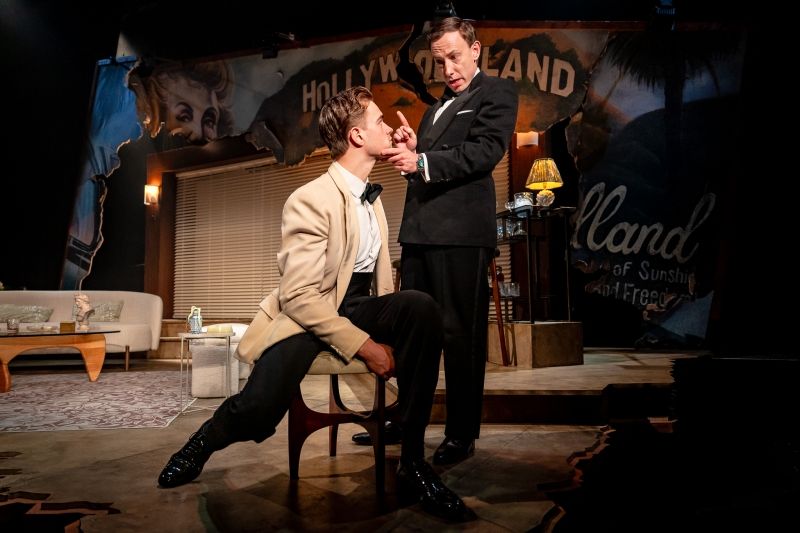
In The Code, Willson brings a new prospective star along to meet Haines and Bankhead, one 'Chad Manford', chisel-chinned and painfully naive. The title of the play itself refers to many things: the Production Code largely adopted by the American film industry in the mid-1930s,; the code of honour between the gay community; and the code of behaviour expected by a town that is far from tolerant.
This is an extremely talky play, taking place in one location only, the living area of the apartment. It is dominated by a bar in the corner, a couch, and a telephone that will be crucial to one shocking scene. The theme is all about 'being yourself', something both Haines and Bankhead have embraced at a cost. Christopher Renshaw's direction is cautious and committed.
While Haines is convincing in his pleas that life is more important than art, and Bankhead plays fast and loose with her affections across town, both are now on the fringes of Hollywood success. He is booked to design stars' homes, but the young Chad doesn't recognise him as a former actor, nor can he name one of his films.
For Bankhead, her reputation makes her a risk, as it does for any star who seeks to challenge the system or speak out against it,. As she puts it, "this town isn't cruel - it's savage". For young Chad Manford, his stardom (if we believe it will ever happen) depends on him giving up what is important to him, becoming a blank, an 'idea'.
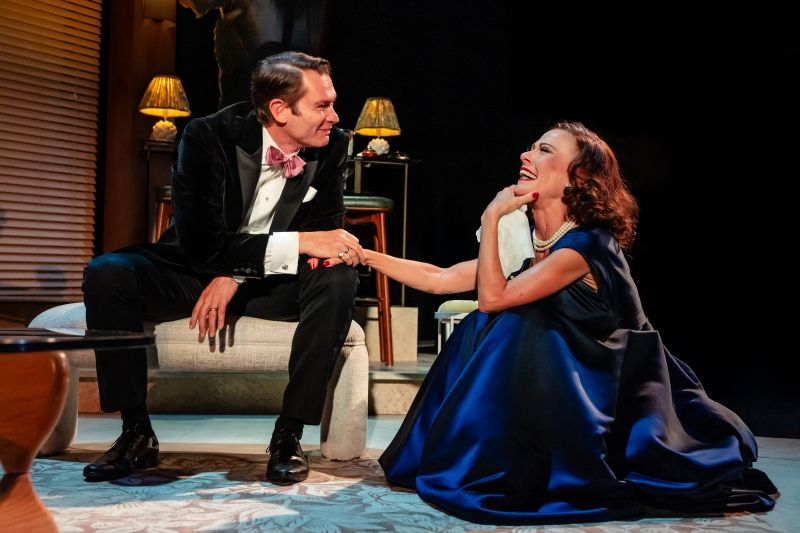
John Partridge is superb as Billy Haines, both a smooth charmer and a crumpled defeatist. His impassioned defence of his own decision to walk out of his movie career for his lover, Jimmie Shields, is touching and fierce. His distain for Willson, the epitome of a self-loathing gay man who manipulates others, is clear.
As Tallulah Bankhead, Tracie Bennett tackles another Hollywood icon after her lauded turn as Judy Garland in End of the Rainbow. She looks the part thanks to Martin Ramsdin's wig design and Josh Bamling's make-up, offering a touch of the fading grotesque. Although I enjoyed her fizzing performance, it felt a little overdone set against the other three - but then I can't imagine Bankhead fading into the shadows.
Nick Blakeley's Henry Willson offers a glimpse of the poison behind the smile in movieland. He hustles, bullies, and abuses vulnerable young men with the promise of stardom, riches, and immortality. He's pure poison and yet we believe every word he says about the code, the game, and the studios.
This leaves Chad. Solomon Davy has less to do and less to say, but as a cypher standing for those who feel the pull of ambition. We feel, or know, it won't end well for him. The warnings are clear enough. The world hasn't changed that much in 1950, and, as Tallulah tells us in one of her asides to the audience, it isn't much better now.
The Code is a very artificial play in many ways. It gleefully regurgitates snark and gossip and treads a line where folks have to 'put on a show' within a show. It doesn't always work. I couldn't connect with the asides, and I felt there was a little too much exposition. But then I am aware of these people and what they represented. I have seen many Haines films. I know who Bankhead was.
This is worth your time, but Retrograde, the recent West End play about Sidney Poitier and Hollywood's stance on race and politics, hit harder.
The Code continues at Southwark Playhouse Elephant until 11th October 2025.
Photo credits: Steve Gregson and Danny Kaan
Prefer BroadwayWorld in Google Search?
Add us as a preferred source so our stories show up more often in Top Stories and Google’s AI answers — for you.
Sign up for all the news on the Summer season, discounts & more...
.jpg?format=auto&width=300)
.jpg?format=auto&width=365)





Reader Reviews
To post a comment, you must register and login.