Interview: 'It's About Anyone With A Dream': Actor Becky Clayburn on Working Class Stories and Pride in the North East in GERRY & SEWELL
"This is our story to tell."


|
|

Becky Clayburn is an actor who truly represents what the North-East of England has to offer. With a natural talent for performing and a personality that will make you think of home, Clayburn puts the ‘Northern’ into ‘Northern Soul’.
Before reprising her role as Tyneside in Jamie Eastlake’s production of Gerry & Sewell, making its West End debut after dominating the North-East theatre scene, BroadwayWorld sat down with her to talk about all things Gerry & Sewell, the region we both grew up in, and how important returning to your hometown is.
What was your introduction to the industry? Was there a moment for you where you thought, ‘this is something I want to do’?
So I started as a young kid in am-dram. My mam was in an am-dram company in Chester-le-Street with our mates and they didn't have any kids in it, but then, they were like ‘oh we're gonna do Wizard of Oz, we need some like you know lollipop league and all that stuff’, so I came in as like a little munchkin and it was like it was probably from that moment that I was like ‘oh my god like I love an applause’.
The people in my family, my mam and my granda's side, they're quite musical. We are from a pit village, so I used to watch the brass band marching down the street every few months, and I was always just like “oh, like I just love, I love the rhythm, I love the music”. our local brass band got like a lottery grant so they got loads of new instruments so it was a bit more accessible for me to get an instrument to learn to play because in the working class it's hard, everything's quite expensive.
I did a foundation degree in musical theatre, but, honestly, you then leave uni studying theatre and I just felt like I couldn't afford to do it as a career because they said “you have to move to London, you have to move to London”, and I was like ‘well I don't have the money for that’ and so I saved some money, took a massive break... The older you get, the harder it definitely gets to break in.
How would you describe the plot of Gerry & Sewell?
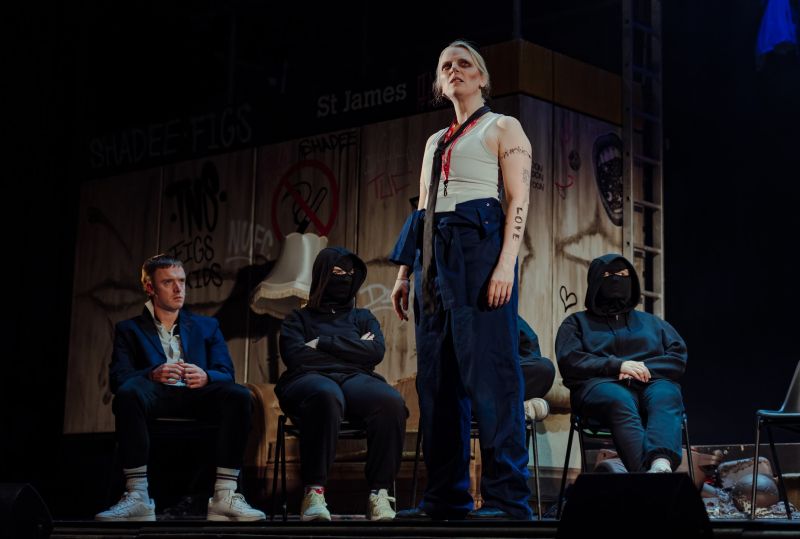
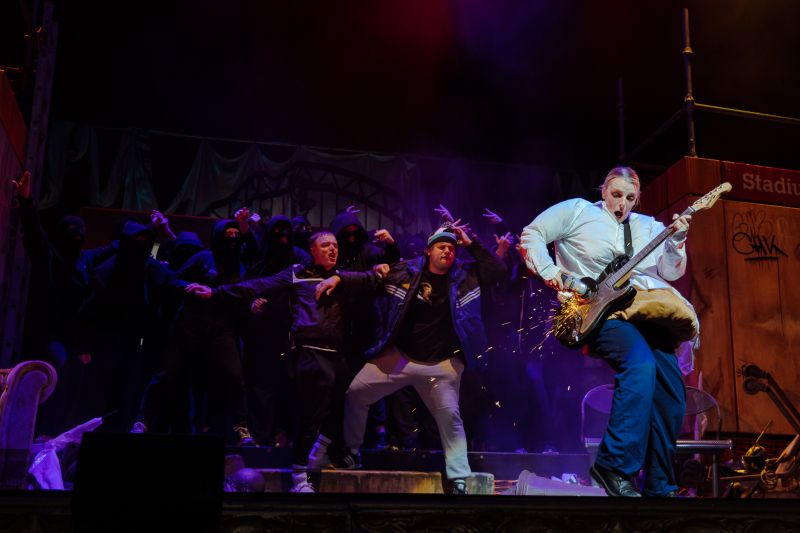
It's two lads who are just desperately on a mission to achieve their dream of getting season tickets. The story is less about what they're doing wrong and more about what it means to them. It's about their journey, and it's about friendship and community - how we are much stronger together as people.
These people, especially the ones that I play, are people that audiences may not think were real, but we've met them. Other people who've lived different lives from us might not have met these people. I know people who will jump in the River Tyne because they've seen a bike that they think looks worth saving, and I just think they're the people that nobody does a play about. And that's what it's all about.
There’s a lot in the original production that you may only fully understand if you’ve come from where the North East. How has it been working with a London production team and how has the process been bringing the piece down south? ?
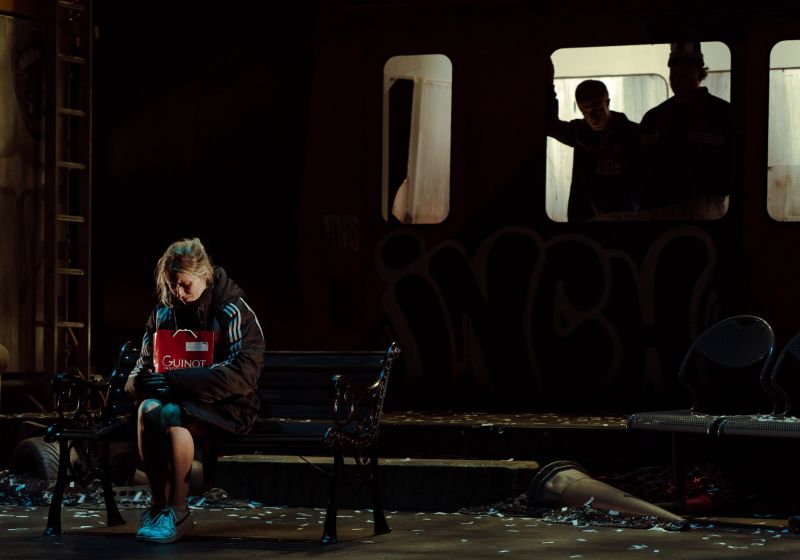
There’s a full-sized metro [the North-East’s equivalent of the London tube that is not as reliable] with working doors on this stage. The Powers, a family who built our set, wrote graffiti on it, and one of the bits of graffiti is ‘get off the metro, now’. Now, if anybody knows the North-East, there’s a video of a lad shouting “get off the metro, now!” The team of people who were getting the set out of the van were from London, and they had this southeast accent. Turns out they know the meme, so they picked it up and went “oh, it's that meme! “Get off the metro, now!”” It was a real moment of ‘oh my god this translates’, but they know that it's something that we held so dear.
During rehearsals, there were a few things that we've been saying in our own accents, where we've gone, “Do we need to change that? Will they understand that?” Some football references had to be changed. Other than that, it's been pretty welcomed! There hasn't been too much fight about our descriptions of the North East and how site-specific it is because it's actually just a story that evolves far further than the North East. It's about every community, everywhere. It's about every small city. It's about every underdog. It's about anyone with a dream.
I think it's so heart-warming. When you come from a small town in the North East, like us, you become so protective of it. People underestimate how many Geordies live here. Is there anything that you hope the fellow North-Easteners living down here take away?
Apparently, there are 40,000 Geordies living in London, so, first of all, I'm hoping that 40,000 London Geordies turn up to see the show. That absolutely would sell us out.
But first, I hope that Geordies in London get a slice of home. We spoke so much in this process about how we, as theatre-makers, were told that we had to live in London, and it turns out you don't have to; you can make good work up here too. But also, follow your dreams. If you want to live in London, go and be there, and we'll bring ‘home’ to you. Remember your roots and feel the passion.
The show is about working-class stories; also, a lot of us in the show are working-class people - it is our story to tell.
Is there anyone who inspires you?
My granddad. He is an entertainer. I mean, he worked in the coal mines, and then he plays the accordion. He just bursts out in his song occasionally. He's like 96 now, and he can barely walk. He's also got Alzheimer's and dementia, but you put a song on, and he'll try to tap dance! He is a comedian, and he's just so funny.
But also, Jamie Eastlake, who wrote this play. I’ve genuinely never seen anybody hustle the way that Jamie does - it is truly something else. He makes magic right before your eyes and creates a community. [Jamie] is such a good person and wants to give everyone opportunities. He is incredibly loyal and creative.
And so, finally, if you could describe ‘Gerry and Sewell’ in one word, what would it be?
Chaos!!
Gerry and Sewell plays at the Aldwych Theatre from 13- 24 January

Sign up for all the news on the Fall season, discounts & more...
.jpg?format=auto&width=300)