Guest Blog: Director Richard Beecham on Politics, Sisterhood and Antisemitism in Bringing The Mitfords to Life in THE PARTY GIRLS
'How do you love your family when you loathe what they stand for and what they believe in?'

Few families have captured the English imagination quite like the Mitfords. The six sisters—and their brother Tom—came of age in the 1930s, a period when other land-rich, cash-poor aristocrats quietly slipped into obscurity. Instead, the Mitfords commanded headlines: dazzling and scandalising in turn as debutantes, runaways, novelists and devoted fans of Fascism.
Nearly a century later, Amy Rosenthal’s new play brings their story to the stage, cutting through the layers of biographies, memoirs and adaptations to reveal a family saga, spanning decades and continents, that captures how sibling bonds survive—and fracture—under the weight of political extremes.
.jpg?format=auto&width=1400)
Photo Credit: Mark Senior
Much of the fascination with the Mitford sisters begins with their undeniable glamour—and, in Diana’s case, famed beauty. Theirs was a world of country house parties and coming-out balls. There is also their proximity to some of the great artists of their time: Evelyn Waugh lounging on Diana’s bed during her first pregnancy, John Betjeman repeatedly asking Pam to marry him. Nancy herself was a literary sensation, a novelist of sharp wit and sparkling satire. But, as Amy’s play reminds us, casting the Mitford girls as mere muses and socialites doesn’t explain our captivation: each sister was a distinct character deserving her own biography, yet they all belonged to one family—a reality stranger than fiction, impossible not to marvel at.
Audiences will notice that Pam and Tom never appear in Amy’s play on stage, though they are referenced indirectly. Likewise, we don’t meet Muv and Farve - two towering figures in Mitford lore, and inspirations for Uncle Matthew and Aunt Sadie in Nancy’s most famous novel, The Pursuit of Love. By keeping these figures at a distance, Amy places the spotlight squarely on Nancy, Diana, Unity, Jessica, and Deborah. The play traces their sisterhood in vivid detail, following shifting loyalties, fierce rivalries and fragile alliances from childhood home to Nancy’s deathbed. The play is about sisterhood in the raw: how they love, loathe, protect and betray each other - without parental interference.
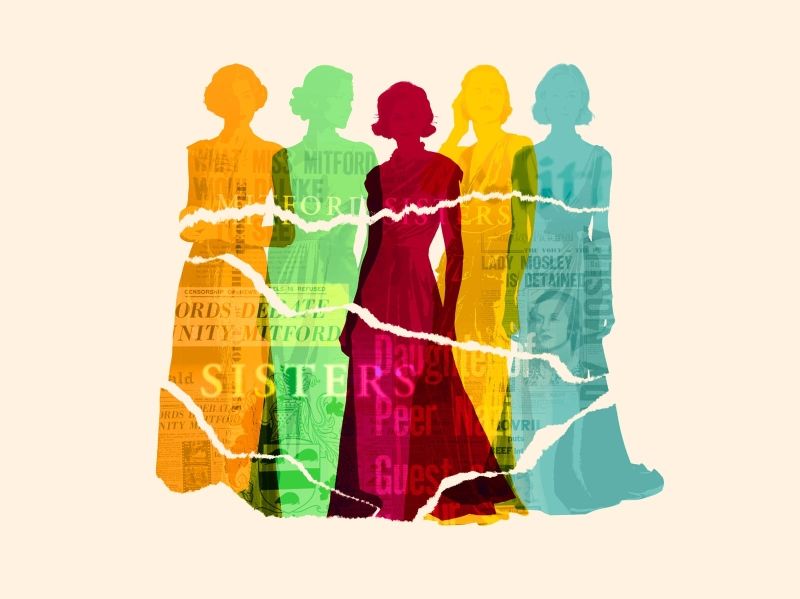
One of the key creative challenges in bringing the Mitfords to the stage has been to respond to Amy’s version of the sisters, rather than the many other portraits found in biographies, memoirs or fiction. None of these versions capture the ‘real’ women—they are all ultimately unknowable—so the task has been to stay true to Amy’s characters while drawing inspiration from outside sources. Casting the sisters demanded actors who could instinctively inhabit the world of the play while also bearing a general physical resemblance to the real women glimpsed in period photographs and television interviews. Our goal has been to eschew the inherited stereotypes of the sisters and to meet and imagine them afresh.
There is a huge amount written about the Mitfords, so the cast and creative team came to rehearsal armed with our own research. In rehearsal, our initial work focused on building a collective sense of the sisters’ world. That process came vividly to life when we enjoyed a private tour of Asthall Manor, the Mitfords’ childhood home in the Cotswolds.
It wasn’t hard to imagine the sisters chasing each other down the corridors and through the drawing-rooms of this grandly ramshackle house, or fleeing the dogs Farve famously set on them in its glorious gardens. Important though it was to build a shared foundation of reference material ultimately it was even more important to put it all away, allowing Amy’s play and the actors’ instincts to bring the sisters’ complex dynamics to life.
.jpg?format=auto&width=1400)
Photo Credit: Mark Senior
I don’t expect every audience member to be fully au fait with Mitford lore - nor do they need to be. The central question Amy’s play poses is universal: How do you love your family when you loathe what they stand for and what they believe in? This question resonates in any family, and perhaps particularly today, when once again extreme politics and ideologies seem to so easily divide us.
As a Jewish director, the play’s unflinching treatment of antisemitism is not an academic exercise— it is essential to the story of these women and a vital reflection on our collective history and present politics. Yet Amy is a hopeful writer. Beneath the horror, audiences will sense her humanism, her humour, and, I hope, will leave feeling both moved and uplifted by this story of ‘ands’ - women who were political extremists and country bumpkins, loving and cruel, monstrous and human. And, above all, entirely unforgettable.
The Party Girls opens at Marlowe Theatre, Canterbury from 1-6 September, then tours the UK, visiting the Belgrade, Coventry (9 - 13 September), Malvern Festival Theatre (16 - 20 September), Devonshire Park, Eastbourne (22-27 September, Oxford Playhouse (20 September - 4 October) and the Birminghap Rep (6 - 11 October).
Main Photo Credit: The Other Richard