Guest Blog: Director Alex Jackson On Why Nurturing New British Musicals Offers a Lifeline For All Theatres
Alex is co-host of Making a Musical: the Future of British Musicals

It’s no secret that the British theatre industry has been going through a tough period recently. In the West End, tourism is back and venues are generally on a more even footing (excepting a recent downturn in May widely reported and perhaps due to hotter than normal weather). As a freelance director, I know that it’s more of a mixed picture regionally. Especially for mid scale venues for whom the pipeline of new shows is unpredictable and producing is increasingly tough.
However, I believe a real opportunity presents itself in the form of new British musicals. Not only are American producers increasingly choosing to develop work in the UK due to more affordable development costs, but more venues and producers based in Britain are investing in new British musicals. The infrastructure is aligning for a sustainable ecosystem of new shows playing in the UK and worldwide.
It’s that writing and development infrastructure and process which we try to demystify on Making a Musical: the Future of British Musicals, the podcast where we interview creatives of musicals at all stages of development, and get geeky about the technical skill behind writing musicals and how to bring them to the stage.
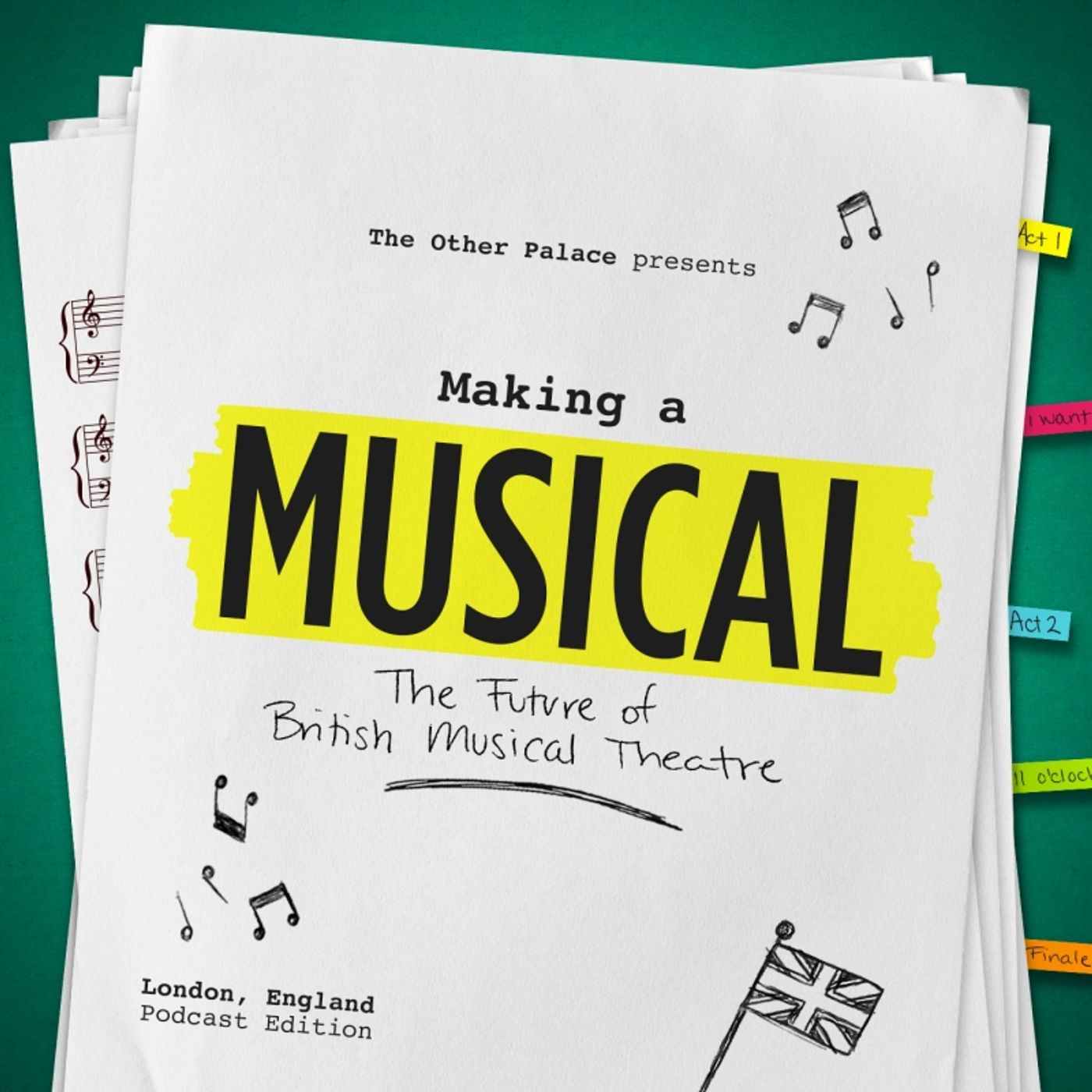
Making a Musical has featured the creators of new British musicals like The Curious Case of Benjamin Button which is now playing in the West End (back catalogue available wherever you get your podcasts). There are plenty of similar success stories this season with shows like After the Act at The Royal Court, Love Stuck at Theatre Royal Stratford East, and The Ministry of Lesbian Affairs at The Kiln.
The art form is thriving regionally too, with The Unlikely Pilgrimage of Harold Fry at Chichester Festival Theatre, Nessie at Pitlochry Festival Theatre, Hot Mess at Edinburgh Fringe, Starter for Ten returning to Bristol Old Vic, and Becoming Nancy at Birmingham Rep, plus the upcoming One Day at The Royal Lyceum Edinburgh.
It’s not difficult to see why new British musicals are having a renaissance. The international success of SIX, and more recently Operation Mincemeat, has put British writing teams firmly on the map with audiences keen to support new voices in the genre. Sure, recent hits from the ‘golden age of British musicals’ like Jamie Lloyd’s new production of Evita at the London Palladium, and the stunning cast of Jesus Christ Superstar at the Hollywood Bowl fly the flag for landmark revivals. But investing in new British musicals could offer UK theatres the long-term stability of audiences and funding required not just to survive, but to thrive, and which crucially government funding falls short of providing.
Co-production between the commercial and funded sector is already a popular way of creating work in the UK. In its simplest form, this involves a commercial producer and venue (sometimes commercial, sometimes funded) coming together to pay for the development of a production. As originating producers they are usually entitled, along with the original creative team, to future royalties from the show.
Royalties are the key to unlocking the future funding equation. The basic premise is that if something does well, the original production recoups its investment from the commercial producer and venue partner, they keep any profit from that production, which may go on to transfer to other theatres in the West End and internationally, as reward for the high-risk investment they made in developing the show.
Writers and creatives of new musicals are often early in their careers, and the ladder towards success for a new musical is missing multiple rungs. This is where I think more investment from venues early in a musical’s development could come into play. After all, the development pathway already exists for new plays. And it is in the early development where the greatest royalty potential lies. Invest early, ensure a generous ongoing royalty package for venues, producers and investors to all reap the rewards of taking the risk.
But royalties remain relevant long after the original production has closed, and any profit distributed. Royalties can be collected from future productions of the show professionally, but also significantly across the international amateur market. An international tale of royalty success is Alice by Heart written by the team behind Spring Awakening.
Following modest professional productions, it has become one of the top licensed shows across the US with schools and amateur groups queuing up to put on their own productions of the piece. The fees paid to licence the show are largely paid to the original creators, producers and venue partners.
There are venues across the UK struggling to make ends meet with standstill (and worse) Arts Council funding, increasing energy and staffing bills, for whom royalties could hold the key to future prosperity. Cumulative investment in new musicals today could safeguard prosperity of the venue for years to come, far longer than any Arts Council funding round.
The strategy is not without risk. With the recent developments in AI and particularly the lack of regulation worldwide regarding copyrighted materials perhaps it’s Sam Altman and Elon Musk who will be benefitting from new musical royalties in the future. Plus, this is a long-term strategy with huge cumulative potential, but it is not an instant fix. Musicals can be prohibitively expensive to develop, but with more frequent co-production models this is straightforward to overcome.
But recent success stories pave the way for a model where every major theatre in Britain invests in new British musicals, the way that many commercial producers are already beginning to, the way theatres used to invest in new British plays.
A successful new musical often starts off in a studio theatre, demonstrates a successful run, transfers to larger studio theatres, off West End or regional houses’ main stages, and to large scale venues internationally. All of whom share in the success of the work, financial and otherwise.
Here’s to a future where British musicals are featured in every major season announcement, and where every British musical made or revived pays it forward to the next generation of writers and producers.
Making a Musical: The Future of British Musical Theatre is available on all podcast platforms. There will be a live recording of the podcast at the London Podcast Festival on 11 September.
Main Photo Credit: Charles Flint