


Review: THE INHERITANCE at Round House Theatre
A production that will be remembered for generations.
 Click for Tickets!
The Inheritance (as in the title of the same award-winning epic play now being presented in a moving and masterly production at Bethesda’s Round House Theatre) is the legacy that must be respected, remembered and passed on from generation to generation so that a record of the tortuous winding road of LGBTQ history can never be forgotten or erased.
Time’s inexorable push from past to present affecting the pressures, societal norms, economic status and political stances of this community gains broader appeal by playwright Matthew Lόpez’s ingenious intertwining of pivotal symbols and plot points from E. M. Forster’s classic novel Howard’s End with relevant themes of loss, guilt, joy, romantic entanglements and community camaraderie in the LGBTQ community (as represented by the characters).
Luckily, this extremely ambitious and exciting production, under the very professional direction of Tom Story, unfolds with carefully controlled yet seemingly spontaneous moments of surprise and marvelous, inherent understanding of the permutations of reciprocal joy, sadness, survival, and infighting amongst friends. The lines of playwright Lόpez “burn in the mind” as representing the existential moments and immediacy of life. Mr. Story’s synergizing of the vast number of themes, acting choices demanded, and the many technical production elements, must be applauded.
The attempt to draw on so many themes and parallels can possess the danger of becoming a daunting intellectual and emotional drain---however, like the constant sensory, political, literary and cultural landscape that our characters are navigating ,---this is a challenging play that rewards the utmost attention of the audience, as preconceptions and paradigms are almost continually shattered and reconstructed to evoke surprise, sympathy and emotional identification.
Playwright Matthew Lόpez subtly employs E. M. Forster’s spectral-like presence (until he leaves the stage mid-way at the end of part one to encourage the next generation to move ahead on their own) to observe and make commentary on the more immediate action. Forster’s huge literary prominence as well as his sense of time’s message to the world to “Only connect!” is palpable throughout the play and the symbolism of his presence is alternately praised as a prophet of the gay world ahead of its time (Stonewall ---1969 --and post Stonewall) but, also criticized as a man who was “hiding in plain sight” as his novel of homosexual love was not published until 1971. Forster was a homosexual who had to live in the shadows.
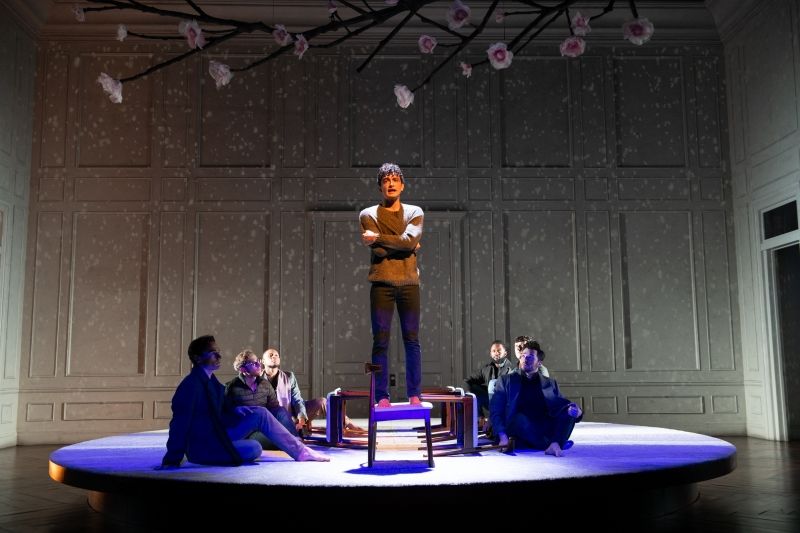
of The Inheritance.
Photo by Margot Schulman.
Actor Robert Sella’s dual performances as Morgan and Walter Poole (the man who marries the more conservative Henry Wilcox(—the owner of Howard’s End—played with solid bite by Robert Gant)---are the soul of this play and Mr. Sella is perfection in his sense of quietude and focus. Mr. Sella’s extended monologue stirs the heart –as he ruminates on making his way to move to New York City while carving out a new life, meeting Wilcox, suffering during the plague years of HIV/AIDS, and finally finding a country home that offered them initial domestic comfort until finally sharing his home as a safe haven/healing place for those who are ill and dying.
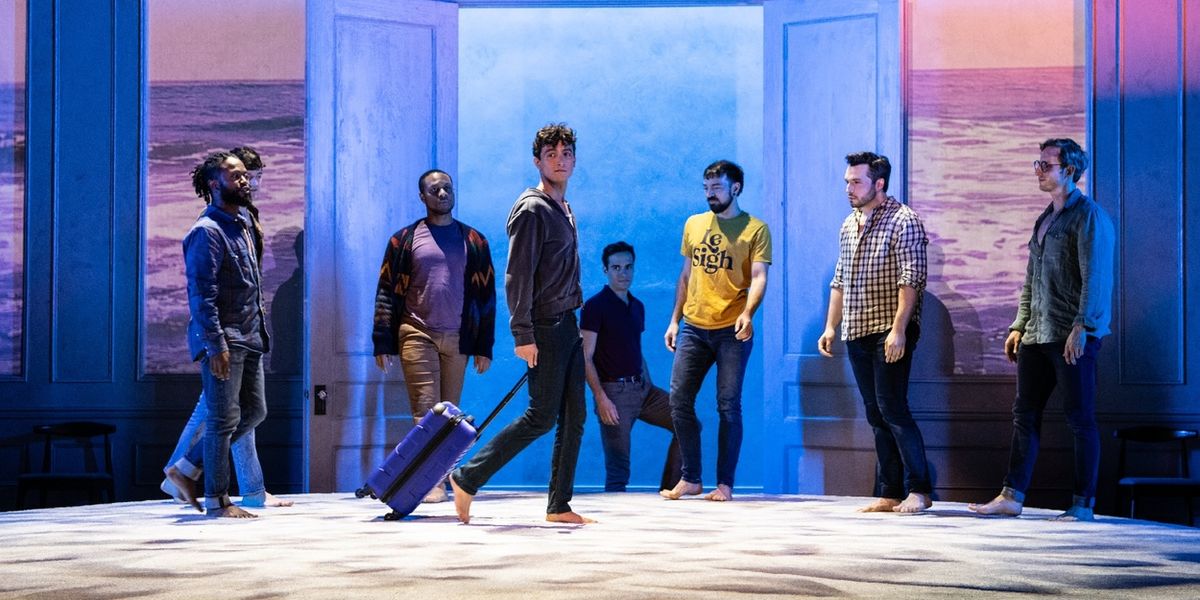
The utilization of a revolving stage (on the thrust stage of the theatre) aids in captivating the eye--- as a large ensemble of actors double and even take triple roles ---while commenting on or observing the immediate action and/or witnessing fluidly transitioned flashbacks of the main characters’ lives. This approach is stylistically delineated to propel the eclectic narratives. The actors often appear barefoot and often speak in the third person about their characters –which adds to the voluminous interplay and interaction of all the characters from their basic psyches to their past, present, and future selves.
The lead character Eric Glass is a taxing one in that he appears in so many of the scenes and this character is the central fulcrum in a play that truly revolves around his loving heart and his outward interactions. Actor David Gow beautifully manages to locate the delicate balance between pathos and humor in the play. Mr. Gow imbues his character with a slightly fey and dryly humorous tone. Mr. Gow has a lithe, natural manner in his delivery, yet he still possesses an undertow of a commanding, yet disarming, manner.
Mr. Gow’s sense of poetic realism comes to life in his monologue (at the end of part one) as he describes seeing “Howard’s End” for the first time. Director Tom Story directs with harrowing truth as a succession of gay men who have been killed by the plague walk out and introduce themselves to greet Eric—as if born anew.
In the dual roles of the privileged Adam Mc Dowell, who strives to make his own individual “mark on the world”--- and as Leo, who must fight for his self-respect after being homeless and plunging into the depths of despair, ---actor Jordi Bertrán Ramírez delivers a tour de force performance. While wandering the streets with anguish or being used as a vessel for others to demean, Mr. Ramírez peels away to his inner core and shows a raw exposed and wounded soul ---all shattered nerves strung out over a frayed splinter of possible redemptive hope.
Theatre stalwart Nancy Robinette imbues a sense of utter truthfulness in her portrayal of the loving caretaker, Margaret. In a gut-wrenching monologue describing holding the hand of her dying son and caring for all the young men who are dying and ill, Ms. Robinette weaves a spell of glowing maternal warmth (as well as a ruminative light laughter at herself).
As the impulsive and somewhat reckless character of Toby, actor Adam Poss has a raw, visceral quality that shines in several powerful scenes especially when interacting with his succession of trysts. However, I was not convinced with his character’s development and seeming lack of dimension and human depth —the character may be on the reckless side, but he must also, concurrently, carry a large amount of charm—how else would he attract and seduce so many?
As portrayed here, the character’s dramatic movement and actions seem imposed from a stereotypical, bellicose outside template rather than from an interior psyche that is collapsing. I never felt the character’s contrition, pain or love for others struggling to break free at any time whatsoever and I could not even feel sorrow at his tragic end. ( I do not know if this was intentional from the directorial or acting standpoints).
Composer Paul Englishby’s sublime music composition is alternately haunting and /or audaciously provocative, and the insertions of his music are subtly added at the most unpremeditated times. There is almost a mystical, interplanetary feeling that is transcendent and mesmerizing ; there is an achingly beautiful feeling to these compositions. (Holiday hushed music plays amidst the falling snow, sober notes echo in the depths of despairing dramatic scenes—I felt honored to hear this level of musical composition).
Scenic design by Lee Savage is stunning. The upstage theatre wall becomes an apartment, a nightclub, a Fire Island resort space replete with cut -out windows (encasing rain and sleet) and a gorgeous, paneled wall with meticulous embellishment, doors, and windows --. A large cherry tree swoops down from the rafters (to represent the haven that is “Howard’s End”).
Projections designer Kelly Colburn shows vivid torrents of sleeting rain and thunderstorms, and waves rolling in off of the ocean on Fire Island. Drifting snow falls on the sidewalks of New York City. All these visual effects are distinctive while effectively enriching the feel of this dramatic yet often bitterly witty play.
Lighting design by Colin K. Bills shows neon flashing, shafts of evocative light and a flashing cherry tree during a pulsating party sequence. A succession of neon cocks blaze hedonistically hot in an orgiastic party scene of drug-induced abandon .
Costume design by Frank Labovitz is astounding in detail and sartorial finesse.
Sexual scenes are forceful and there is some nudity, but they are overseen with sensitivity and are even shown in a stylistically theatrical manner -- rather than in a literal manner, in several scenes.
Matthew Lόpez’s play is a creative plea for this generation (and more recent generations) to honor and respect their “Inheritance” ---as did the generation who learned to recreate their lives amidst a plague ---and to pass their hard -earned wisdom to future generations. Whether through literature, letters, memory or telling our own stories with a sense of self and community---we must remember our collective histories and stories, or we are doomed to forget who we are.
Like playwright Matthew Lόpez’s earlier play (also produced by the Round House Theatre) The Legend of Georgia McBride,-- playwright Lopez believes in creating safe havens for those who are vulnerable, ostracized and erased in the world. The concluding scenes of creating a safe haven for those who have become ill from the plague and needing care is incredibly moving and the sound of copious tears is well earned.
The Inheritance has not been seen in this area until now and the Round House Theatre has shown vision and courage in presenting it during these challenging times. This penetrating and complex play by the brilliantly talented playwright Matthew Lόpez is being given a production that will be remembered for generations.
Running Time: Part One is three hours and twenty minutes with two intermissions. Part Two is three hours and ten minutes with a fifteen minute intermission and a five minute pause.
The Inheritance runs through November 2, 2025, at the Round House Theatre located at 4545 East-West Highway, Bethesda, MD, 20814.
The cast of Round House Theatre's production of The Inheritance.
Photo by Margot Schulman.

|
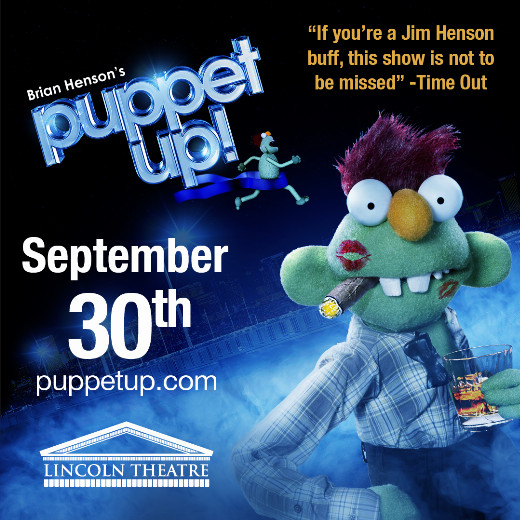
Brian Henson's Puppet Up! Lincoln Theatre (9/30-9/30) |
|
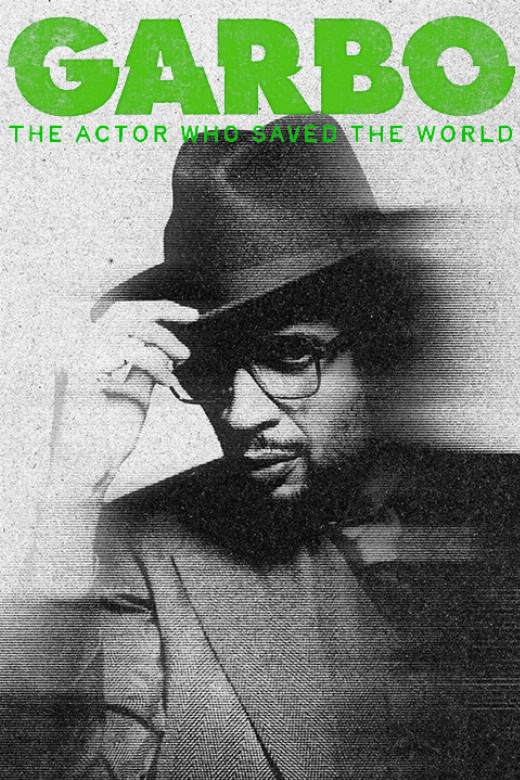
GARBO: EL ACTOR QUE SAVÓ AL MUNDO (Garbo: The Actor Who Saved The World) GALA Hispanic Theatre (9/03-9/27) |
|
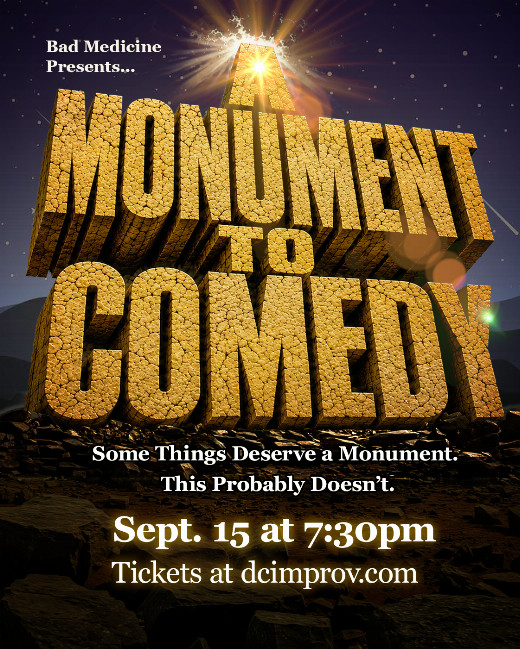
A Monument To Comedy DC Improv (9/15-9/15) |

|
Coming to America: An Immigrant Cabaret ExPats Theatre (9/30-10/18) |

|
Some Like It Hot Bernard Family Theatre, Olney Theatre Center (9/18-11/08) |
|
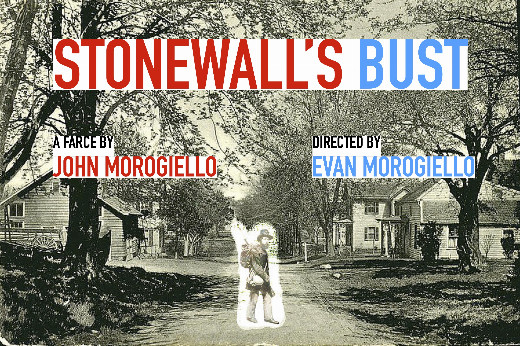
Stonewall's Bust The Writers Center (10/09-10/25) |
|
The Judy Carmichael Trio The Alden Theatre (11/08-11/08) |
|
Sleepy Hollow Olney Theatre Center (10/07-11/01) |

|
A Christmas Carol – 2026 Ford's Theatre (11/19-12/31) |
|
Million Dollar Quartet Olney Theatre Center (6/30-8/22) |

Reader Reviews
To post a comment, you must register and login.