


Interview: SISTER ACT: BEHIND THE HABIT with William Yanesh
Part four of our weeklong series on Ford's Theatre's current production of Sister Act.
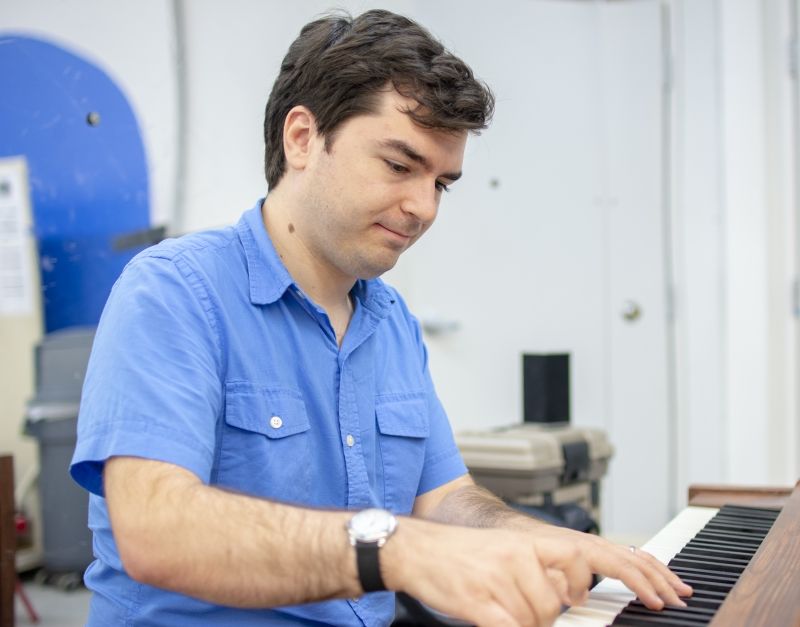
Today is our fourth installment of Sister Act: Behind The Habit series. So far this week we have met three performers that bring the show to life onstage eight performances a week. Today we are going to meet the man that sits in front of the performers in the orchestra pit conducting and playing one of the keyboards as part of the red hot eight piece Sister Act band. Please meet Maestro William Yanesh.
William returns to Ford’s Theatre after previously musical directing their productions of Little Shop of Horrors, Guys and Dolls (production got as far as dress rehearsal due to the pandemic), and Into The Woods which won him a Helen Hayes Award for Best Musical Direction.
Other area credits include Snow Child at Arena Stage, The Last Five Years, Jesus Christ Superstar, and Ragtime (piano solos) at Signature Theatre, Ordinary Days at Round House Theatre, Floyd Collins at 1st Stage, Working at Labor Heritage Foundation and Me… Jane: The Dreams & Adventures of Young Jane Goodall at Kennedy Center.
As a composer, his works include Vanishing Girl for Flying V, Caps For Sale, Make Way For Ducklings, and Blueberries For Sal at Adventure Theatre.
In recent years, it’s become common practice to hide the orchestra from the audience. I can’t tell you how many times I attend a show, and I hear an uninformed audience member say, “Wow that recording sounded just like a real orchestra.” At Ford’s Theatre the orchestra is always in full view of the audience, as it should be. Because of this, you are able to see Maestro William Yanesh and his bandmates having lots of fun playing Kim Scharnberg’s very full sounding set of orchestrations of Alan Menken’s music.
It should also be mentioned that Maestro WilliamYanesh has a very different doubling in Sister Act. You need to see the show for the full explanation. It’s not what you might think.
You have until May 17th to see Sister Act at Ford’s Theatre. Maestro William Yanesh and company will no doubt “Take You To Heaven” for a few hours and let’s face it, isn’t that what we all need right now?
What was it about the piano that made it your instrument of choice as a child?
It was a product of pure coincidence. My sister had a toy keyboard that had maybe an octave and a half on it, and I gravitated toward it and started picking out tunes. My parents decided that this meant piano lessons were worth exploring. I took piano lessons for about eight years prior to college. I tried to quit twice, and my parents wouldn’t hear of it… thanks, Mom and Dad!
Where did you receive your training?
As a kid, I studied with the great Betty Zimmer, faculty emeritus at Cleveland Institute of Music. I received my bachelor’s in Music Composition (with a minor in Collaborative Piano) from Carnegie Mellon University, where I studied with Nancy Galbraith. Additionally, the most relevant training I’ve received for my current occupation has been on-the-job, via learning from some truly amazing music directors both DC- and NYC-based. Laura Bergquist, Vadim Feitchner, Lynne Shankel, Rob Berman, Jon Kalbfleisch, and Darius Smith, all taught me an incredible amount about both the technical aspects of the job, as well as the importance of making sure your cast’s needs are met.
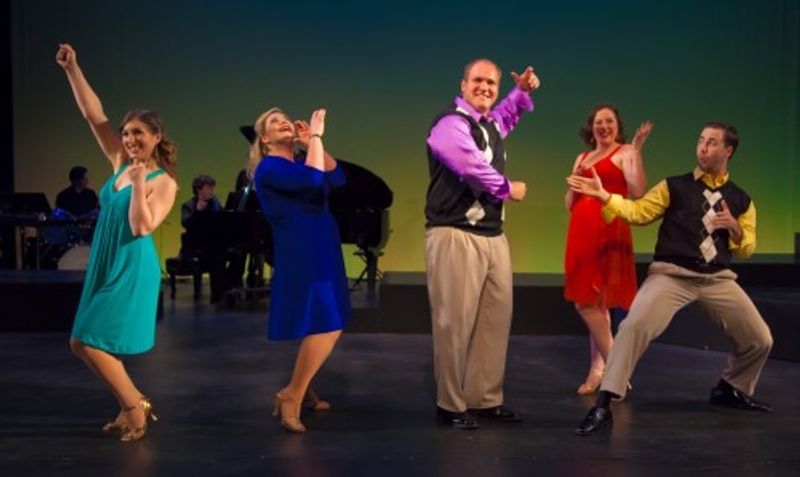
A Grand Night for Singing.
Photo by Jeff Malet.
What was your first professional job as a pianist/musical director?
When I was just out of college in 2012, I was hired as music director on one of the Washington Savoyards’ very last productions before they shuttered, A Grand Night for Singing. It was a fantastically talented cast, directed by Kurt Boehm who’s now the artistic director of Adventure Theatre MTC. But the Savoyards forgot to advertise the show in time, so for three weeks we performed this grand, lush cavalcade of Rodgers & Hammerstein masterpieces for about five patrons per show!
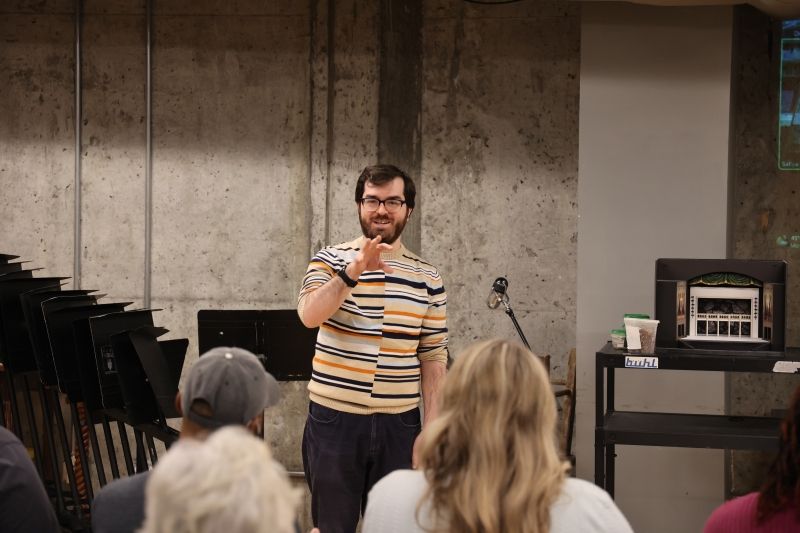
Ford's Theatre's production of Sister Act.
Photo by Rachel Flannery.
Can you please tell us how orchestration wise Ford’s Theatre’s production of Sister Act is different from other stagings of the show?
One of the great things about working at Ford’s is their long-standing relationship with Kim Scharnberg, an orchestrator your readers may know from his work on Jekyll and Hyde, Little Women, The Great Gatsby, and many, many more. Sister Act is my fourth time premiering a Kim Scharnberg orchestration (I’ll never forget my first time working with him, debuting his truly Herculean chamber arrangement of Into the Woods for Ford’s in 2018). Ford’s has a particularly tiny pit: we can fit eight players down there, and even with only eight, it’s tight real estate. Kim is an expert at figuring out how to make a formerly eighteen-piece orchestration sound organic when played by eight musicians, and we generally meet about a year in advance to hash out which instruments absolutely cannot be cut. For Sister Act we decided the 70s-inflected score needed to retain live brass and reeds, horns and saxes being so integral to much of the best of disco and soul.
You were the musical director for Little Shop of Horrors at Ford’s Theatre last season. Sister Act is your second show in a row where the music is written by Alan Menken. For your dream threepeat, what is the next show by Alan Menken that you would like to MD at Ford’s Theatre or elsewhere?
The Hunchback of Notre Dame, and it’s not even close. It’s one of my top dream shows, and unfortunately due to the financial realities of producing musical theater regionally, it feels like an impossible dream, even more so than my #1 pipe dream, Great Comet. Hunchback is ideally done with a large orchestra and (in addition to the full cast) a huge classical choir. What theater in DC has the space for such a production, let alone the budget? Maybe a college? Or maybe a concert production? One wonders whether the title is a big enough audience draw for anyone to make the investment. But that score is an absolute dream.
When not musical directing, you are also a composer. Was that something you thought would be part of your career path?
Always! I’ve known I wanted to be a composer since I handed one of my compositions over to my church choir in high school and saw it transformed by other people’s voices. There’s nothing like it. It wasn’t until college that I really got into the craft of conducting and music direction, so composition always came first. I do love conducting shows, but if I didn’t have bills to pay, I would be writing all the time. Getting notified that one of my five musicals (or my choral piece The Astronomer) is getting performed somewhere, always delights me far beyond the paltry royalties a part-time composer earns. And I always tell the artists the same thing after thanking them profusely: please send me a recording!
Why do you think Sister Act brings so much joy to an audience?
I’ll say the same thing I said when I was doing Anything Goes at Arena in 2018. The world is a very dark place right now, and people want a happy ending. I love Sweeney Todd and Ragtime as much as—nay, more than—the next guy, but sometimes, as Nicole Kidman says, we come to this place for magic. We want to see bad guys lose, watch Deloris save the church from getting torn down, and clap our hands to the music.
After Sister Act finishes its run, What does the rest of 2025 and into 2026 hold in store for you?
There’s a lot that I can’t talk about yet, but maybe I can be a little cryptic… I’ll be the rehearsal pianist on a world premiere from a composer I can’t wait to work with. Then, I’ll be back at Signature for a show I’ve wanted to do my whole life. Then, one of my own musicals that had its premiere in DC will be popping up again in a new and exciting form.
Special thanks to Ford's Theatre's Associate Director of Communications and Marketing Sam Zein for her assistance in coordinating this interview
Sister Act Logo designed by Gary Erskine.
Series graphic designed by JJ Kacynski.
|
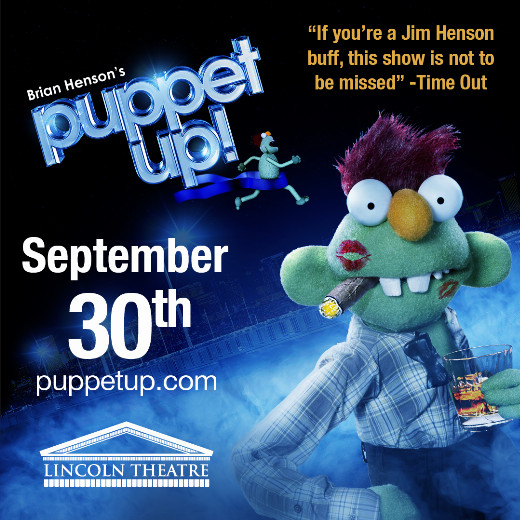
Brian Henson's Puppet Up! Lincoln Theatre (9/30-9/30) |
|
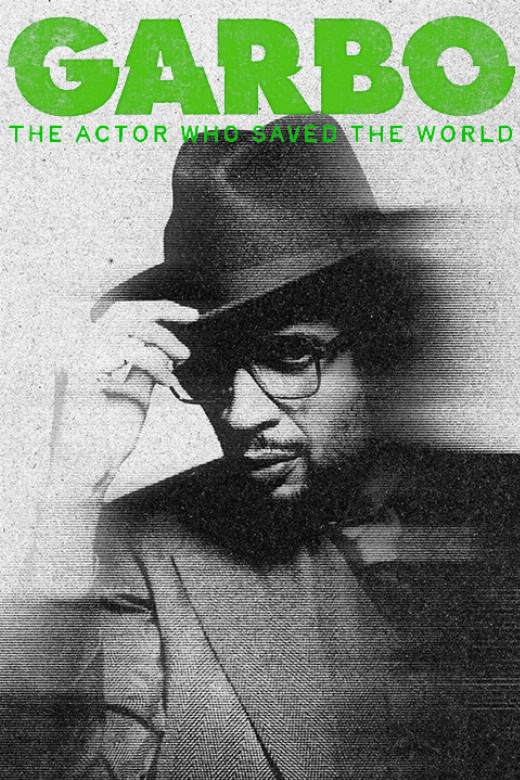
GARBO: EL ACTOR QUE SAVÓ AL MUNDO (Garbo: The Actor Who Saved The World) GALA Hispanic Theatre (9/03-9/27) |
|
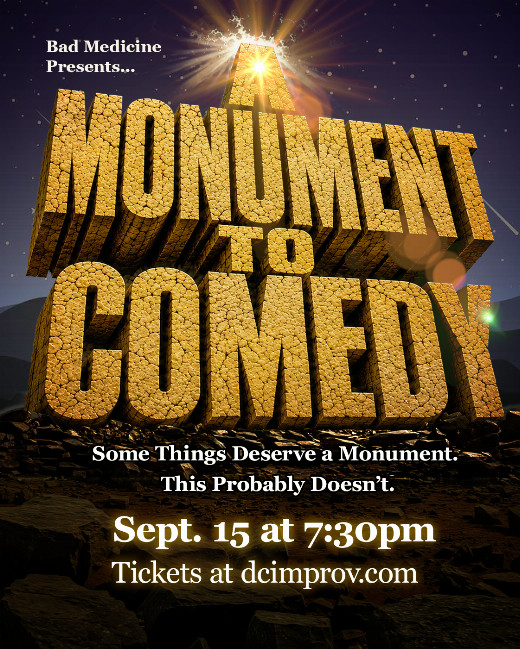
A Monument To Comedy DC Improv (9/15-9/15) |

|
Coming to America: An Immigrant Cabaret ExPats Theatre (9/30-10/18) |

|
Some Like It Hot Bernard Family Theatre, Olney Theatre Center (9/18-11/08) |
|
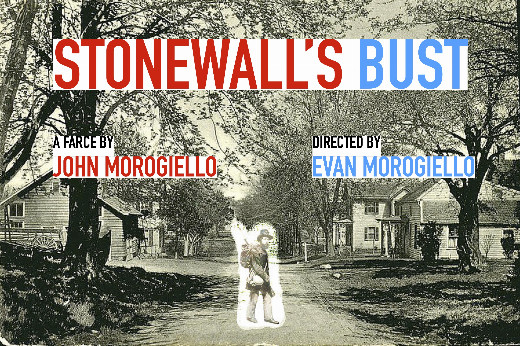
Stonewall's Bust The Writers Center (10/09-10/25) |
|
Million Dollar Quartet Olney Theatre Center (6/30-8/22) |
|
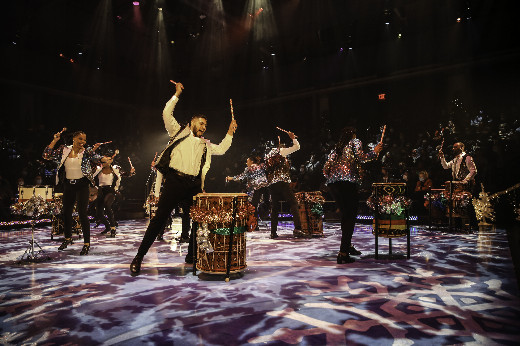
Step Afrika!'s Magical Musical Holiday Step Show Arena Stage at the Mead Center for American Theater (12/04-12/23) |
|
Hairspray Hylton Performing Arts Center (9/18-9/27) |
|
The 25th Annual Putnam County Spelling Bee Ford's Theatre (3/12-5/15) |
