


Review: Intense Performances Fuel A STREETCAR NAMED DESIRE at the Tennessee Williams Festival St. Louis
The MainStage Production at the Tennessee Williams Festival St. Louis Runs Through August 17, 2025 at The Grandel
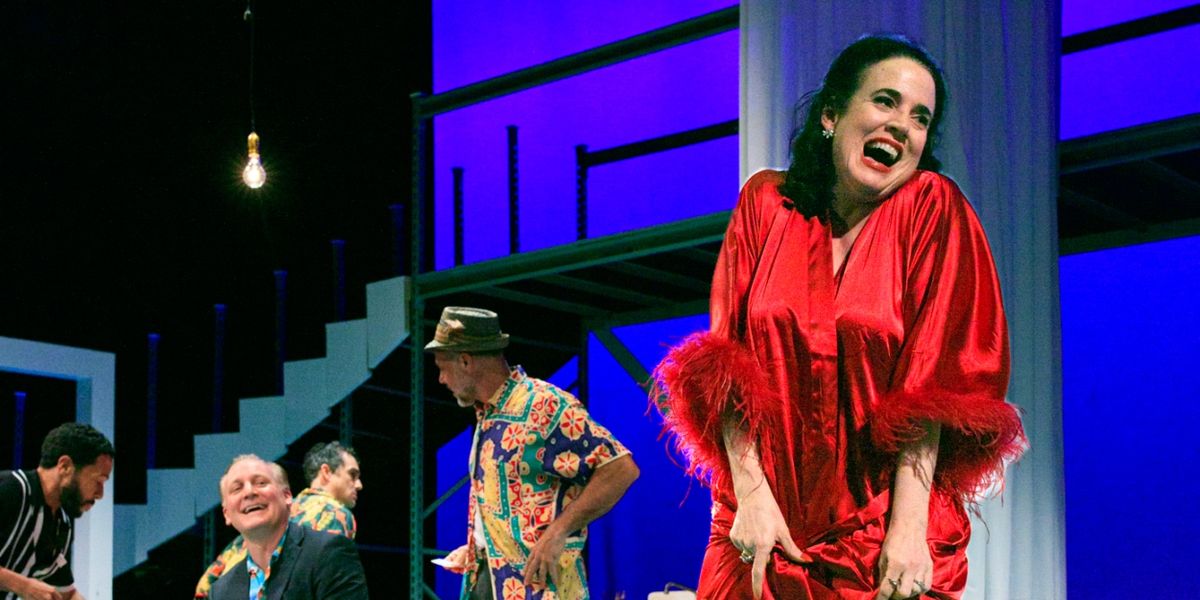
When I was a high schooler, A Streetcar Named Desire was assigned reading for Drama Class. Tennessee Williams' prose and indelible imagery painted unforgettable tragic characters. The fading Blanche, brutish Stanley, his battered wife Stella, and gullible Mitch all remained with me for decades despite never having seen the play or the film.
I did not see the acclaimed Tennessee Williams Festival St. Louis production from eight years ago. That award winning show is considered legendary among my peers in the St. Louis Theater Circle. It won seven Theater Circle Awards, including Best Production of a Drama, and is still being talked about almost a decade later.
This year’s festival production of A Streetcar Named Desire, directed by Michael James Reed, was the top pick on my Broadway World list of most anticipated shows of the summer. It was included it for several reasons: The Tennessee Williams Festival mainstage productions are consistently good, the cast includes a few of my favorite local actors, and it marks the first time I would have the chance to Blanche DuBois, Stanley and Stella Kowalski, and Harold “Mitch” Mitchell brought to life on stage.
I was eager to see this production of A Streetcar Named Desire, and it did not disappoint. I was captivated from start to finish by William’s elegantly poetic dialogue, Reed’s storytelling and staging, and the actors’ passionate portrayals of the characters who’ve remained with me since reading the script as teenage student studying drama.
Julliard trained Beth Bartley and stage, film, and TV actor Todd d’Amour star as Blanche and Stanley. Bartley’s fragile Blanche and d’Amour’s violently abusive Stanely battle for three hours in unforgiving portrayals as the vitriolic antihero and her malicious brother-in-law.
Bartley wraps her hateful jabs in William’s elegant words laced with a light southern drawl. The accent is less elongated Mississippi poly-syllabic stretched vowel, and more drunken Judy Garland. Perhaps it’s Bartley’s physical features, stage make-up, ataxic gate, and line-delivery choices that conjure images of an inebriated Garland playing Blanche DuBois, but the resemblance is striking.
Blanche comfortably resides in her created mental existence versus her actual reality. Bartley’s physical embodiment of Blanche’s mental instability expresses DuBois’ motivation and emotion. She’s desperately looking for a way out. Bartley’s convincing portrayal engenders undeserved sympathy for the emotionally vulnerable Blanche.
Todd d’Amour’s Stanley is a barbaric neanderthal. His strapping, muscular frame coupled with his raw physical embodiment of the verbally and physically abusive husband and brother-in-law gives Stanley a menacing and intimidating presence. He paints Stanley as dense but never dumb. His character is equally foreboding when eavesdropping on Blanche and Stella’s conversations. Stanley’s hostility and internalized rage are captured in d’Amour’s facial expressions and posturing.
d’Amour brings an unexpected simplicity to Stanley. He delivers his dialogue with the sound of a man who has a mouthful of marbles. It’s a Mark Ruffalo-esque mumble. The choice works. It adds to Stanley’s brawn as the thickheaded blue-collar worker, but occasionally, despite his fantastic projection, his garbled words are hard to hear.
Speaking of actors projecting, Credit Reed, and his sound designer Phillip Evans, for overcoming the sound curse in the Grandel Theatre. Reed’s actors projected with distinct clarity making the dialogue crystal clear. Evan’s sound design added to the French Quarter ambiance creating a staged reality inside the Kowalski‘s tiny studio apartment.
Isa Venere, with her late adolescent looks, initially seemed like too youthful of a casting choice for Stella. The age gap between Stella, Blanche, and Stanely appeared much greater than the five years that Williams intended. But her believable depiction of the abused wife quickly erased any casting doubts. Venere’s adroit performance, torn between her troubled sister and violent husband, equaled Bartely and d’Amour’s more ostentatious portrayals. She and d’Amour generate combustible sexual energy, creating a passion attachment that clouded her judgement about Stanley’s barbaric hostility.
Eric Dean White gives the standout performance as the affable, gullible, and likeable Mitch. White’s kind Mitch falls prey to Blanche’s self-aggrandizements. His connection feels very real. He’s the sweet and considerate antithesis of the monstrous Stanley. Once Mitch realizes he has been duped by the not entirely truthful Blanche, White shows a strength and resolve that is unforgiving. But his humane Mitch still shows sympathetic compassion for the mentally unraveled Blanche. White’s extraordinary performance buys empathy for the heartbroken Mitch. White is a wonderful actor.
St. Louis actors Emily Baker and Isaiah Di Lorenzo are fantastic as Stanley and Stella’s upstairs neighbors and landlords. Baker is a chameleonic actor who disappears into any role she takes on. She is completely unrecognize able as Eunice. Jeremiah King drops a memorable performance in a bit part as a young newspaper boy who is accosted by the disturbed Blanche. His uncomfortable physicality as the teen victim feels as unnerving as it should.
Patrick Huber’s cramped and bare bones set design of the Kowalski’s dingy dilapidated apartment feels crowded and run-down. Matthew McCarthy lighting compliments Reed’s blocking and action, supports the narrative, and establishes time of day. Shevaré Perry’s vintage costuming gives Blanche a flashy flamboyance and the others a working-class simplicity.
It is hard to say a Tennessee William’s play enjoyable or entertaining because his dramas are never uplifting. A Streetcar Named Desire tackles brutality, abuse, alcoholism, toxic masculinity, class conflict, rape, mental anguish, and nervous breakdown. Blanche and Stanley’s dramatic conflict leaves victims in its wake.
Reed and company present A Streetcar Named Desire with grand showmanship, attention grabbing storytelling, and intense performances. The Tennessee Williams Festival is an outstanding chance to see a superb production of Williams’ masterpiece.
A Streetcar Named Desire continues at The Grandel through August 17, 2025, as the mainstage event of the Tennessee Williams Festival St. Louis. Click the link below for more information about the festival and to purchase tickets for A Streetcar Named Desire.
PHOTO CREDIT: Suzy Gorman
Prefer BroadwayWorld in Google Search?

|
Joyful COCA - Catherine B. Berges Theatre (12/18-12/19) |
|
Terry Barber: Freddy Mercury Cabaret Kirkwood Performing Arts Center (9/05-9/05) |

|
Dawn Weber Kirkwood Performing Arts Center (10/06-10/06) |
|
Parsons Dance Touhill Performing Arts Center (4/10-4/10) |

|
Mamma Mia! Fox Theatre (3/30-4/04) |
|
Rocky Horror Picture Show Original Cast Spooktacular Tour with Barry Bostwick, Nell Campbell, and Patricia Quinn The Fabulous Fox Theatre (10/06-10/06) |
|
La traviata Opera Theatre of Saint Louis (5/29-6/27) |
|
|
Mamma Mia! The Fabulous Fox Theatre (3/30-4/04) |
|
Terry Barber: Best Of Broadway Kirkwood Performing Arts Center (9/06-9/06) |
|
Misery Gaslight (11/06-11/22) |
Reader Reviews
To post a comment, you must register and login.