


BWW Q&A: María Dueñas Talks Teatro Real Return to Carnegie Hall
Spanish violinist María Dueñas discusses her acclaimed international career and upcoming Carnegie Hall performance with Teatro Real.
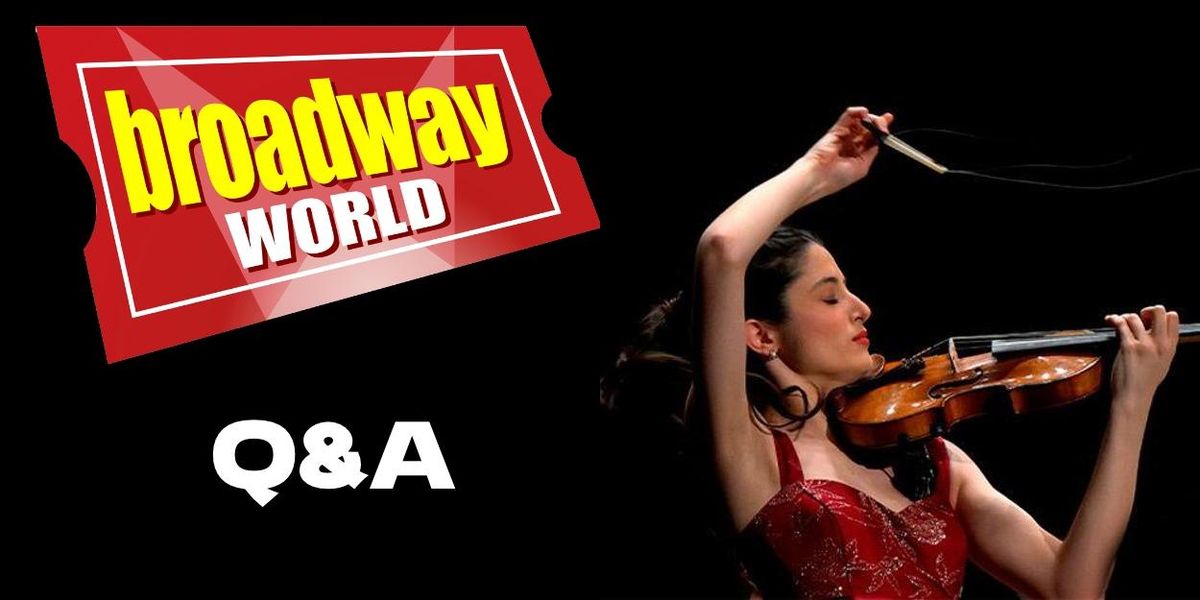
Teatro Real (Royal Opera of Madrid) returns to Carnegie Hall for the third time. The program features the Violin Concerto in D Major by Korngold, a composer who fled the Nazis and succeeded in Hollywood. The concerto is played by Spanish violinist María Dueñas with the Orchestra of Madrid’s Teatro Real.
This performance also marks the American debut of the Spanish soprano Saioa Hernández. She sings arias from Spanish zarzuelas and operas by Serrano, Penella, along with Falla’s La vida breve. David Afkham leads the Orchestra of the Teatro Real.
Spanish violinist María Dueñas beguiles audiences with the breathtaking array of colours she draws from her instrument. Her technical prowess, artistic maturity and bold interpretations have inspired rave reviews, captivated competition juries, and secured invitations to appear with many of the world’s leading orchestras and conductors. Since September 2022, María Dueñas has been under exclusive contract with the legendary Deutsche Grammophon and has been awarded the Opus-Klassik Prize for her debut album.
After winning a whole series of international violin competitions such as the Zhuhai International Mozart Competition 2017 and the Vladimir Spivakov International Violin Competition 2018, not only was she successful in the Menuhin Competition 2021, but also won first prize in the “Getting to Carnegie” Competition, the Grand Prix of the Viktor Tretyakov International Violin Competition and the Sponsorship Award of the Rheingau Music Festival. She was selected by BBC Radio 3 as one of the New Generation Artists 2021-23.
In previous seasons she gave her debut with the Chamber Orchestra of Europe under Herbert Blomstedt, the Pittsburgh Symphony Orchestra and Oslo Philharmonic under Manfred Honeck, the Philadelphia Orchestra and Orchestre Métropolitain de Montreal under Yannick Nézet-Séguin, the San Francisco Symphony and the Dresdner Philharmonie with Marek Janowski, the Staatskapelle Berlin with Alain Altinoglu and the Swedish Radio Symphony Orchestra under Daniel Harding, among others. Dueñas also made her debut with the Los Angeles Philharmonic and Gustavo Dudamel at the Hollywood Bowl in August 2021 and joined them again in May 2022 to give the world premiere of Gabriela Ortiz’s violin concerto “Altar de Cuerda,” of which she is the dedicatee, in sold-out concerts at Walt Disney Concert Hall, Carnegie Hall and Boston.
Forthcoming highlights in the 2024-2025 season include her return to the Philadelphia Orchestra with Yannick Nézet-Séguin and to the Pittsburgh Symphony Orchestra with Manfred Honeck, her debut with the Staatskapelle Dresden under Andrés Orozco-Estrada and with the Philharmonia Orchestra under Santtu-Matias Rouvali and Marin Alsop and a tour with pianist Alexander Malofeev with concerts in Carnegie Hall and Pierre Boulez Saal.
In celebration of the 90th birthday of the renowned conductor Zubin Mehta, tribute concerts will be held in Spain, featuring María Dueñas alongside the West-Eastern Divan Orchestra and the Maestro on the podium.
As a stipendiary of the Deutsche Stiftung Musikleben, María Dueñas plays the Nicolò Gagliano violin of 17?4 and the Stradivarius “Camposelice” (1710), on generous loan from the Nippon Music Foundation.
What drew you to the Concerto in D Major by Korngold for this performance?
The Korngold Concerto in D Major helds a special place in my heart. Its lush, cinematic harmonies and sweeping melodies are captivating, but what truly drew me to this piece is its emotional depth. Korngold wrote it after escaping the turmoil of Europe, and you can feel both his nostalgia for the old world and his hope for a new beginning. For me, performing this concerto at Carnegie Hall is a way to share that journey; a story of resilience, longing, and ultimately, triumph. I want the audience to feel as if they are stepping into a golden world of sound, where every note is imbued with hope and beauty.
How has working under the exclusive contract with Deutsche Grammophon impacted your approach to this project?
Signing with Deutsche Grammophon has been a dream come true, and it has profoundly shaped my artistic vision, as they trust me bringing my artistic ideas to life. The label’s legacy is built on artistic excellence and innovation, and that inspires me to go even deeper into the music.
How did winning the Opus-Klassik Prize for your debut album influence your preparation for this performance?
Winning the Opus-Klassik Prize for my debut album “Beethoven and Beyond” was both humbling and motivating. It affirmed that my interpretations could reach people on an emotional level but also made me realize how much I still want to grow. The album included my own composed cadenzas for the concerto and, later on, Beethoven´s legacy inspired me to compose a solo violin piece "Homage 1770," which is a heartfelt tribute to Beethoven. Creating and sharing these works felt like a powerful act of giving. As I prepare for every performance, I am eager to give something genuine to the audience, to trust my own artistic instinct, and to make every note a gift. Every concert is a new beginning and a chance to connect, to inspire and grow.
Can you share any unique aspects of the Concerto in D Major that you are excited to bring to life?
The Korngold violin concerto has magic cinematic quality; unsurprisingly, given Korngold’s background in film music. I am excited to show the concerto’s vibrant colors and dramatic contrasts, from the lyrical, almost operatic lines in the first movement to the playful, virtuosic finale. There is pure beauty and a sense of wonder combined with moments of intimacy, as if inviting the audience to experience the world through Korngold’s eyes. There are passages where the violin sings with a voice that is both vulnerable and heroic, and I look forward to bringing that duality to life on stage.
How does your experience of winning international violin competitions like the Zhuhai International Mozart Competition and the Vladimir Spivakov International Violin Competition shape your approach to the Korngold Concerto?
Competing internationally taught me discipline, resilience, and the importance of authenticity. Each competition was a journey of self-discovery; learning to trust my instincts and to communicate honestly through my instrument. With the Korngold Concerto, I draw on those experiences to balance precision with spontaneity, to remain open and vulnerable in performance.
Can you speak to the significance of performing at Carnegie Hall, especially with the Royal Opera of Madrid?
Carnegie Hall is a temple of music. Every time I perform here I feel commited to the place and the historic legacy of musical storytelling. This collaboration with The Royal Opera of Madrid is especially meaningful to me as a Spanish artist; it is a celebration of our culture on one of the world’s most iconic stages. I feel a profound sense of gratitude.
Can you share your thoughts on playing with the Madrid Symphony Orchestra?
We share a common language, not just Spanish, but the language of music, which allows us to take risks and explore new ideas together. Their support and artistry elevate my playing, and I am thrilled to bring our shared vision of the Korngold Concerto to the Carnegie Hall audience.
Why should audiences not miss this concert?
This concert is more than just a performance, it is a journey through hope, nostalgia, and joy. Performing Korngold’s Violin Concerto in D Major at Carnegie Hall is deeply symbolic for me, because, like Korngold, I am coming from Europe to the United States to share music that was born from both longing and hope. Korngold fled Austria and found a new voice in America, blending the old world’s lyricism with the vibrant spirit of his new home. In a way, my own journey to New York echoes his: traveling across continents to inspire, to connect, and to bring something personal and heartfelt to the stage. With the Orchestra del Teatro Real, we are not only honoring Korngold’s legacy but also celebrating the power of music to transcend borders and speak to the heart. I hope audiences will feel the excitement of this shared adventure, the richness of our Spanish heritage, and the universal message of resilience and renewal that Korngold’s music embodies. I can’t wait to share this unforgettable experience with you all at Carnegie Hall!
Recibe noticias de Broadway en WhatsApp
Recibe las últimas actualizaciones, noticias de última hora y cobertura exclusiva directamente en la aplicación.


|
90 MINUTOS Teatro Maravillas (5/26-9/29) |
|
The Last Five Years Espacio Alma (8/20-9/14) |
|
101 Dalmatas Gran Teatro CaixaBank Príncipe Pío (10/18-12/27) |
|
Mamma Mia! El Musical Teatre Tívoli (9/26-11/29) |