


Feature: THE WAITING PERIOD at The Marsh Berkeley Reaches Its 500th Performance
Brian Copeland's Life-Saving Solo Show Marks This Milestone During National Suicide Prevention Month
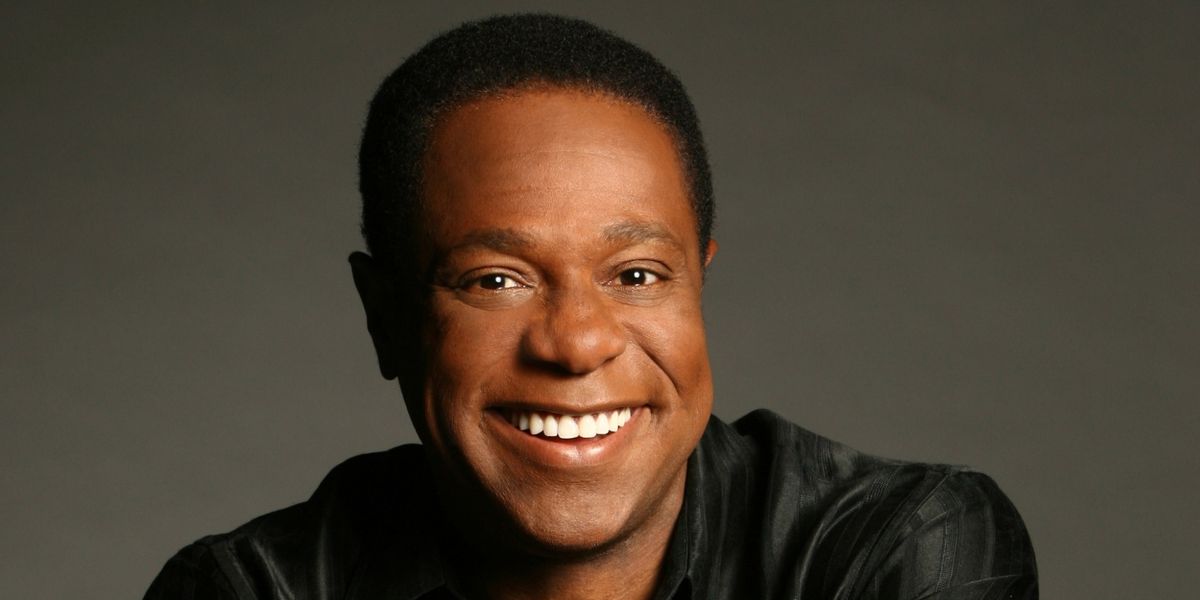
Brian Copeland could easily point to any number of impressive achievements from his multi-faceted career. As a standup comic, he’s opened for icons like Aretha Franklin and Smokey Robinson. His seminal theater piece Not a Genuine Black Man still reigns as the longest-running solo show in San Francisco theater history. For 5 years, he co-hosted KTVUs Mornings on 2, and for 27 years hosted his own radio program on KGO. Related to the latter, he will be inducted into the Bay Area Radio Hall of Fame next month, something of which he is particularly proud.
But – if you ask him “What is the most worthwhile thing you’ve ever done?” he answers without hesitation, “The Waiting Period,” because it has actually saved people’s lives. I spoke with him recently to learn more about this uniquely impactful solo theater piece, which will mark its 500th performance on September 20th at The Marsh Berkeley. As has become standard practice for The Waiting Period, tickets are free of charge. Based on his personal experience, the piece is an exploration of depression and suicidal ideation, its title referring to the state-mandated 10 ten days that must elapse between purchasing a gun and taking possession of it. For Copeland, those ten days were literally a lifesaver, and so he felt compelled to share his story.
Although he’d long struggled with depression, back in 2008 he was faced with an unimaginable chain of events that was more than he could cope with. Within a short time, the grandmother who’d raised him died of a stroke, his wife announced out of the blue that she wanted a divorce, and he got into a horrific accident that totaled his car and necessitated spinal cord surgery, putting him on his couch in a neck brace for three months popping Vicodin. Thoughts of suicide became inescapable so he purchased a TomCat, planning to use it to end his life. Against all odds, he managed to “white-knuckle it” through the waiting period while the most acute aspects of his depression lifted just enough to stop him from killing himself.
But, as Copeland says, “The thing about depression is it’s never cured – it’s better, it’s worse, it’s manageable, there are times when it’s absent - but it’s always a hair trigger away from something, from some catastrophe or some chemical imbalance.” Once the fog had lifted at least temporarily, he seriously started rethinking his experience as someone who believes in finding reasons for things. During that period, a young man within Copeland’s circle committed suicide at the age of fifteen and Robin Williams killed himself as well, although the complicating factor of Lewy Body Dementia had not been made public at that time.
Copeland took those incidents like a blow to the solar plexus and began to explore what he could personally do to help prevent such tragedies. He was encouraged to bring his own struggles to light by his publicist, who happened to have represented film icon Rock Hudson in 1985 when the actor announced to the world that he had AIDS, thereby removing some of the stigma from that disease. The publicist suggested to Copeland that by going public with his story he could do the same thing for depression and suicidal ideation. Copeland had received his mission.

(photo credit: Carla Befera)
Collaborating with the Bay Area’s guru of solo performance, David Ford, Copeland set out to “create a show about depression that wasn’t depressing,” making sure to include enough reality-based humor to draw audiences in and counterbalance the heaviness of the topic. As he puts it, “the comedy makes the drama much more impactful, and the drama makes the comedy funnier because it’s a release.” The Waiting Period opened at The Marsh in 2012 and became an instant sensation, winning awards and earning multiple extensions. After a year or so, Copeland realized he couldn’t keep performing the show on a regular basis because it required him relive some very dark and harrowing episodes. But he felt he could continue to do the show on an occasional basis, maybe twice a month or so, without seriously endangering his own mental health.
He also talked to Stephanie Weisman, artistic director of The Marsh, about making the show free of charge to audiences so that cost wouldn’t be a barrier to attending. Weisman readily agreed, and a GoFundMe campaign was set up to cover basic production costs like theater staffing. Copeland and his publicist then placed calls to various industry contacts and were stunned by the outpouring of support from celebrities like Glenn Close, Ed Asner and Lucie Arnaz, whose lives had been personally touched by depression and suicide. Fast forward to 2025, and Copeland is now embarking on the 500th performance of The Waiting Period on September 20th, timed to coincide with National Suicide Prevention Month.
Copeland remains committed to continuing to do the show because he knows the profound impact it’s had on the lives of so many people from the letters he’s received and follow-up conversations he’s had. Just one example: a woman planned to jump off the Golden Gate Bridge one Sunday morning and stopped off at her favorite café enroute to savor one last coffee and pastry before ending her life. She noticed the San Francisco Chronicle “pink” section lying on her table and thumbed through it while finishing her coffee. It happened to contain a brief article about The Waiting Period that noted a performance would be happening that very afternoon. She was intrigued enough to alter her plan - slightly. She decided to flip a coin and if it came up heads, she would proceed straight to the bridge; if it came up tails, she would go see Copeland’s show first. It came up tails, and so she went to see The Waiting Period, the core message of which is “If you’re thinking of doing some kind of harm to yourself, tell someone first.” When the play was over, she remained in her seat crying for another twenty minutes, then called her sister to tell her what she was thinking of doing, and her sister got her help.
Or there’s the story of a woman who struggled with depression and her husband always wondered why she couldn’t just lighten up and smell the roses. She basically dragged him to The Waiting Period, and afterwards he said to her, “That’s what you’ve been going through? I had no idea.” And that’s the thing with depression: it is so misunderstood. It’s not something that can be cured by just thinking happy thoughts. As Copeland says, “You know, we’re dealing with a disease, and yet people are ashamed of it. There’s such shame and stigma attached to it, and I want people to know they have nothing to be ashamed of, any more than if you had Lou Gehrig’s Disease or muscular dystrophy or cancer. You wouldn’t be ashamed of those afflictions. And the world, society, would be a lot more sympathetic.”
As a comedian and talk show host, i.e. someone who earns his living projecting amiability and cheerfulness, Copeland makes a perfect communicator for that message. If someone as seemingly light-hearted as him can suffer from depression, then it can truly happen to anyone. When he debuted The Waiting Period in 2012, some people were quite surprised to learn that he’d ever wanted to kill himself. And yet, what sticks with him most over the years is the number of people who’ve approached him after a performance and whispered in his ear that they, too, are “one of us,” as Copeland refers to those who experience acute depression. Some of them are people Copeland knows well and are in the public eye, people he says you would never guess struggled with the disease.
Toward the conclusion of our conversation, Copeland tells me, “If there’s nothing else at all worthwhile I’ve done, at least there are a couple of people walking around who might not be here.” I tell him that’s a statement most of us can’t make, myself included, and he responds, “You don’t know that. That’s the thing. I’m fortunate enough that I’m in a position where people are able to reach out and tell me. But you don’t know who you told to have a nice day to, who were planning on doing something and ended up not because of your kindness, you know, in tipping the barista and saying they did a good job one day when they thought they were worthless and were going to do something right after they got off work. There are stories like that, and those stories are real.”
(Header photo of Brian Copeland by Joan Marcus)
---
The Waiting Period will play its 500th performance 5:00pm, Saturday, September 20 at The Marsh Berkeley, 2120 Allston Way, Berkeley. Additional dates are soon to be announced. Thanks to the support of generous donors, general admission tickets are FREE. Supporters may donate $50/$100 for reserved seats, funds which make it possible for others to see the show at no cost. To order free tickets or reserve seats, please visit themarsh.org.

|
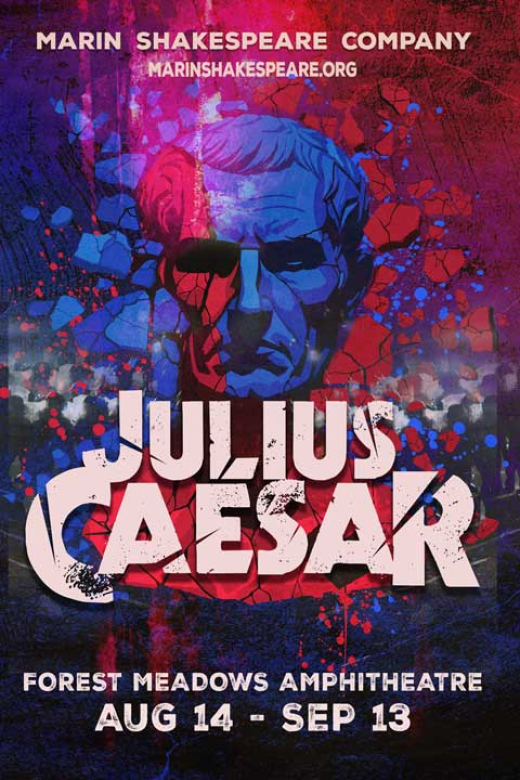
Julius Caesar Marin Shakespeare Company (8/14-9/13) |

|
Pickleball Hillbarn Theatre (8/20-9/13) |

|
THE GIRL OF THE GOLDEN WEST Terra Nova Theater (8/23-8/30) |

|
Eureka Day City Lights Theater Company (9/24-10/18) |
|
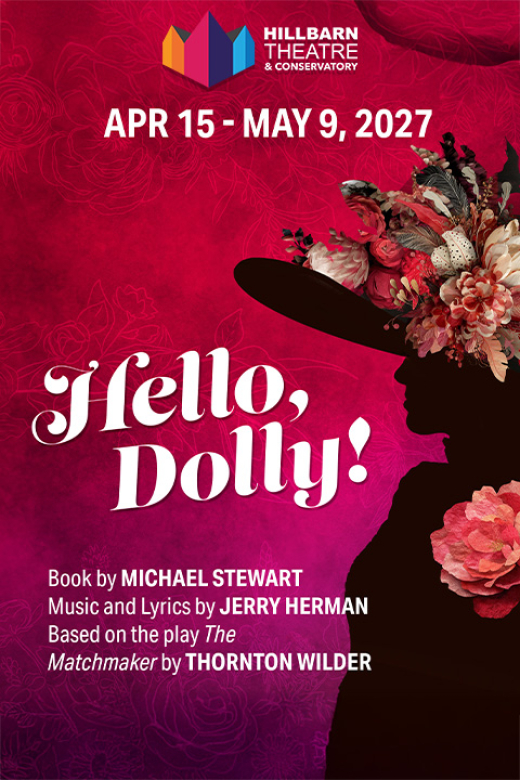
Hello, Dolly! Hillbarn Theatre (4/15-5/09) |
|
Gutenberg! The Musical! Hillbarn Theatre (10/08-11/01) |

|
The 1940s Radio Hour City Lights Theater Company (11/19-12/20) |

|
Hadestown (Non-Equity) Orpheum Theatre San Francisco (1/07-1/10) |
|
The Last Five Years by Jason Robert Brown Santa Cruz Shakespeare (9/11-10/03) |

|
Ride the Cyclone City Lights Theater Company (7/16-8/23) |