


Review: The NAC English Theatre's Presentation of the Epic MAHABHARATA: KARMA - PART 1
I implore you not to be put off by the fact that the play is in two parts. After you have seen Part 1, you will be waiting with baited breath to see the finale.

The curtain closed on Mahabharata: Karma - Part 1 The Life We Inherit to an uproar of applause. Upon exiting the theatre, the air was filled with loud, excited chatter, as is always the case at the National Arts Centre when the audience is deeply appreciative of what they have just seen.
I asked my partner what they thought, and they remarked, “That was like nothing I have ever seen before”. So, how to explain it?
When I was at university, I took a complementary class called “Ancient Religions of the Near East”. I made sure that I never missed a class; my professor was an amazing storyteller, and each class was utterly spellbinding. That class was the easiest A I ever got.
Mahabharata: Part 1 made me recall that experience. The narrator, and co-playwright, Miriam Fernandes, is also a gifted storyteller with a commanding presence and a way of connecting with the audience.
The story is divided into two parts. While, in theory, you could get tickets only to Part 1 The Life We Inherit or Part 2 The Life We Choose, you will really need to see both parts to get the full story and achieve the complete experience. For those who want an even more immersive experience, you can opt to see both parts on the same day and partake in an optional interlude that includes a traditional community meal.
Mahabharata was in development by co-creators and co-Artistic Directors of Why Not Theatre, Miriam Fernandes and Ravi Jain, for a decade. The play is based on an ancient Indian Sanskrit epic story, with major themes of love, brotherhood, revenge, war, and justice.
The tale begins with King Janamejaya, who is about to kill all the snakes in the kingdom to avenge the death of his father. A storyteller beseeches him not to and gathers everyone around the fire so that they can share the history of the king’s ancestors, the Pāndavas and the Kauravas, in the hopes of ending a cycle of vengeance. They ask, “when everyone believes they are right and their opponents wrong, how can one end a spiral of revenge?” And so, it begins.
The actors play multiple roles, given the large number of family members and the time period encompassed by the story. The audience is presented with a paper copy of the family tree to help keep it all straight, but the narrator does a great job with keeping us on track, repeating names to make sure everyone knows who’s who. The actors all give excellent performances of challenging characters: they are each flawed, yet sympathetic and simultaneously elicit disdain and pity.
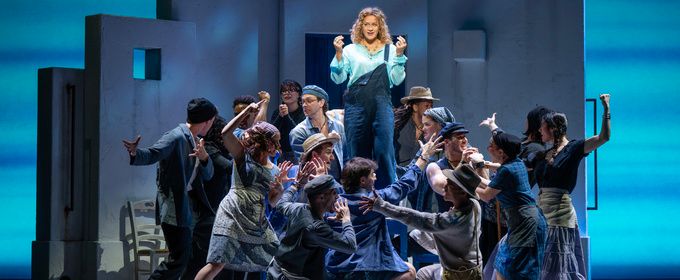
Although the story is an ancient one, Mahabharata is told here with a modern vibe, making it even easier to correlate with the wars currently ravaging the globe. The show combines the narrative with traditional dancing and choreography (Brandy Leary), as well as lighting effects (Kevin Lamotte) and projections (Hansa S. Kim) to create the atmosphere using minimal, but effective props (set design by Lorenzo Savoini). The costumes (Gillian Gallow) are dazzling swaths of colourful materials to immerse that help audience into the setting. A live band adds another level of authenticity to the performance.
The theatre had a number of empty seats; perhaps the thought of devoting five plus hours to a single show is daunting to some audience members. I implore you not to be put off by the fact that the play is in two parts. After you have seen Part 1, you will be waiting anxiously to see the finale. I know I am.
See the epic Mahabharata: Karma - Part 1 The Life We Inherit and Mahabharata: Dharma - Part 2 The Life We Choose at the National Arts Centre’s Babs Asper Theatre at various show times from now until May 24th. Click here for more information or click the link below to buy tickets.
|
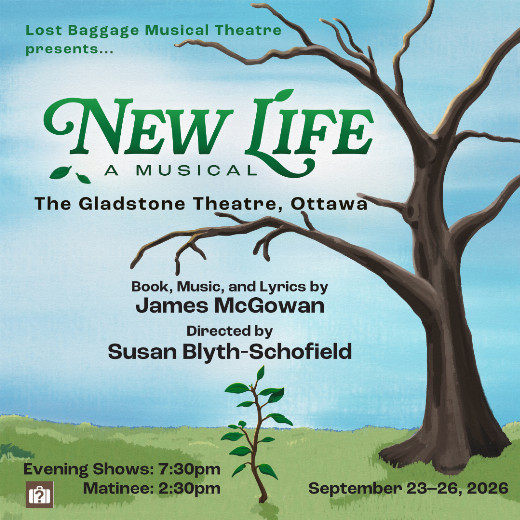
New Life The Gladstone Theatre (9/23-9/26) |
|
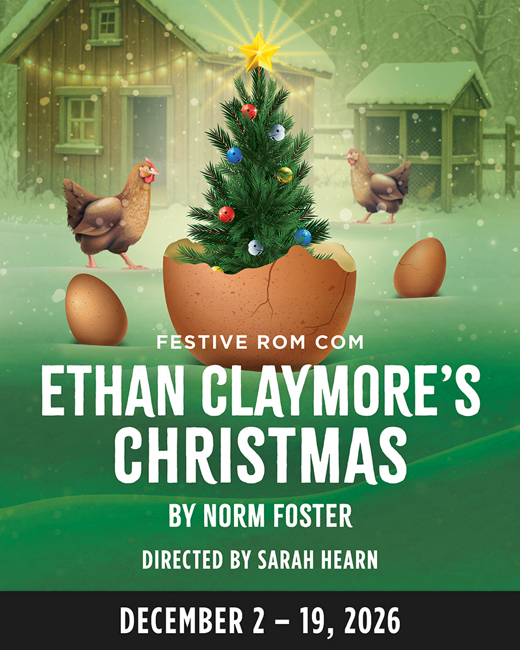
Ethan Claymore’s Christmas Ottawa Little Theatre (12/02-12/19) |
|
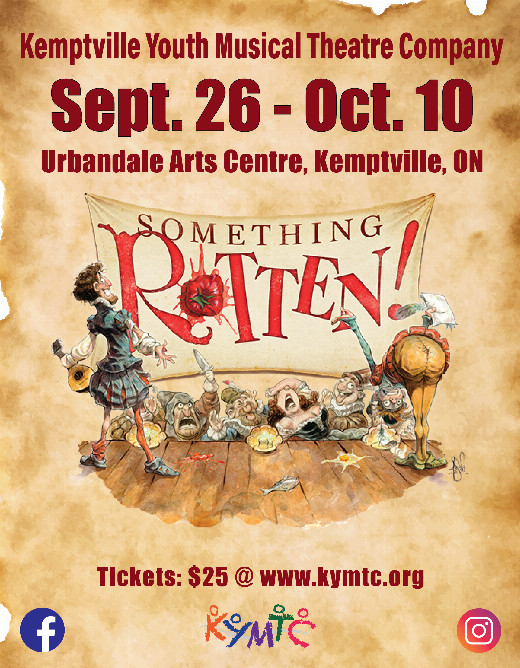
Something Rotten Urbandale Arts Centre (9/26-10/10) |

|
Fiddler On The Roof Tweed & Company Theatre (8/19-9/06) |

|
Murder For Two Tweed & Company Theatre (8/28-9/06) |

|
Menopause The Musical Algonquin Commons Theatre (10/20-10/20) |

|
Luke Bryan Canadian Tire Centre (8/27-8/27) |
|
The Great Gatsby National Arts Centre / Centre national des Arts (9/08-9/13) |
|
Menopause The Musical The Arena at Pickering Casino Resort (10/22-10/22) |
|
The Book of Mormon (Non-Equity) National Arts Centre (3/09-3/14) |
Reader Reviews
To post a comment, you must register and login.