


Featured

Dates: 9/12/2017
📍 Theatre: Dixon Place

161A Chrystie St
New York, NY 10002
Phone: 2122190736
Tickets: $15 in advance, $18 at the door, $12 students / seniors / ID NYC
There is a particular sound that Australian audiences seem to keep coming back for — the soft, dry slap of a card on green baize, the quiet shuffle, the held breath before a turn. Whether it arrives via Frank Loesser's score at Mrs Macquaries Point or in the smoky half-light of a basement cabaret in Fitzroy, the language of card-game drama has worked itself deep into the country's stagecraft. Productions built around blackjack, craps, poker, and the wider world of the gambler keep returning to Sydney and Melbourne with surprising regularity, and they keep selling out. The reasons run further than nostalgia for Damon Runyon and Sinatra-era Broadway. They sit somewhere closer to how Australians like their stories — wry, a little bit lawless, and full of people who think they have an angle.
It is worth understanding why the card table is such a useful stage device before considering where the appetite for it leads after the curtain falls. Because the appetite does lead somewhere. Audiences who spend three hours watching Sky Masterson roll dice in a sewer rarely walk out and forget the game exists. Some buy the cast album. Some rewatch the Brando film. A meaningful number quietly download a card-game app on the ferry home. The blackjack table, the craps layout, and the poker hand have all enjoyed long cinematic and theatrical afterlives precisely because they translate so well to performance — but the actual game, once an audience member is curious enough to seek it out, lives almost entirely on a screen now.
That migration is particularly pronounced in Australia, where the post-show economy has shifted from late-night bars and supper clubs to a more privatised, screen-first kind of entertainment. A recent Thesunpapers review of the Australian online blackjack landscape reports that the country's appetite for the game in 2026 is being met almost entirely by offshore-licensed platforms accepting AUD deposits via PayID, POLi, and credit card, with most operators offering free-play demo modes alongside real-money tables. That structural detail matters here because it explains the gap between the version of blackjack the theatre is staging — a smoke-filled, leather-jacketed, 1950s tableau — and the version audiences will actually encounter when they go looking for the game themselves. Understanding both versions is what makes the theatrical question worth asking: why does the stage version still work when the lived version has changed so completely?
A card game gives a director something almost no other stage device offers in the same compact form: a self-contained dramatic engine with built-in stakes, visible rules, and an in-built clock. The dealer is a metronome. The chips are an emotional ledger. Every player at the table is, by definition, in pursuit of something — money, of course, but more interestingly status, escape, or a way of telling themselves they are still in control of their own night. That is theatre.
Australian directors have leaned on this device for decades. The Sydney Theatre Company, the Melbourne Theatre Company, and Opera Australia have all programmed work in which the card table functions as more than scenery. Frank Loesser's Guys and Dolls, which Opera Australia mounted as the 2025 Handa Opera on Sydney Harbour production directed by Shaun Rennie, is the most visible recent example — a show that is fundamentally about the moral architecture of gambling in a city that pretends to disapprove of it. The production drew a strongly positive response from the BroadwayWorld review team, which praised Bobby Fox's Nathan Detroit and Cody Simpson's Sky Masterson for finding a balance between Runyon's broad comedy and a more recognisably modern emotional register.
What makes Guys and Dolls keep working — 75 years after it first opened on Broadway — is that the gambling is never really about the gambling. The show grew out of Damon Runyon's Prohibition-era Broadway nightlife reporting, which means its dramatic DNA is journalistic rather than romantic: it is about the way men talk to each other when there is a bet on the table, the way women try to extract a future from men who would rather keep rolling the dice, and the strange tenderness that emerges between people who have agreed to live by a set of risks. That is a much older theatrical tradition than musical comedy. You can trace it back through Mamet, through Chekhov, through the entire 19th-century European obsession with the gambling salon as a place where social masks slip.
Beyond Guys and Dolls, Australian audiences have had a steady supply of card-table drama across the past decade. The Sting — adapted variously for regional productions and rep companies — leans on its long-con architecture, with poker and racetrack scenes operating as the engine of the plot. Cabaret returns to Australian stages every few years and never loses its smoky table-side menace. Smaller works built around poker nights, two-up games, and underground card rooms surface regularly at venues like the Old Fitz Theatre in Woolloomooloo and La Mama in Carlton, often as part of new-writing seasons.
Even straight plays that are not "about" gambling tend to use card games as compression devices. A poker hand becomes a way to expose a marriage. A blackjack table becomes a way to show a man losing his composure in real time, in front of strangers, in a place that does not care about him. The card game gives the playwright permission to slow time down without slowing the action — which is a rare and useful trick.
Australian audiences seem unusually receptive to this device, and it is not hard to see why. Two-up is a legally protected Anzac Day tradition. The country's relationship with the punt is wired into its cultural memory at a level that is closer to ritual than recreation. When a director puts a card table on stage in Sydney or Melbourne, the audience already knows the choreography of the thing — the count, the lean-in, the small physical tells. They are not learning a new vocabulary. They are watching their own one performed back to them with the volume turned up.
Performing inside a card-game scene is harder than it looks, which is part of why these productions tend to attract serious musical-theatre talent rather than novelty casting. The actor has to do three things simultaneously: play the character, play the player, and play the play. They have to lose convincingly when the script says they lose, win convincingly when the script says they win, and sell the intervening moments — the hesitation, the second-guessing, the half-conscious adjustment of a sleeve — as if their character has not read the script at all.
Bobby Fox's much-discussed Nathan Detroit at Handa Opera worked because Fox understood that Detroit is, fundamentally, a man who has been losing his entire adult life and has made peace with it. The performance is in the posture. Similar craft was visible in the Melbourne Theatre Company's recent programming choices, where actors trained in the Bell Shakespeare tradition — used to delivering dense text under pressure — have been increasingly cast in roles that require this kind of compressed, table-bound physicality.
Audiences notice. A bad card-game scene is one of the easiest things in theatre to spot. The cards are held wrong, the eyes go to the wrong place, the rhythm of the hand is off. A good one feels like watching someone do something they have done a thousand times — which is, of course, exactly what acting is supposed to feel like at its best.
Here is the part that complicates the picture. The card table has migrated. The smoke-filled rooms of Runyon's Broadway, the brass-railed casinos of mid-century film noir, and the velvet-curtained gambling salons of European fiction are mostly gone, replaced by something the playwrights of 1950 could not have imagined: a piece of glass in the audience member's pocket. When the curtain comes down on Guys and Dolls and the audience walks back to the ferry terminal at Circular Quay, the person beside them is, statistically speaking, more likely to play their first hand of blackjack on a phone in bed than at any physical table.
That is not a value judgement. It is a structural fact about Australian entertainment in 2026, and it is one the theatre has not quite caught up with. A handful of recent works — including some development-stage pieces at the Hayes Theatre Co. in Sydney — have begun to engage with the screen-mediated version of the game, but the dominant theatrical image of the card table remains stubbornly, lovingly, anachronistic. Which is probably as it should be. Theatre is not obligated to keep pace with technology. It is obligated to keep pace with feeling, and the feeling of a card game — the held breath, the small public humiliation, the sudden grace of a good run — is the same whether the felt is real or rendered.
There is a temptation, when something migrates online, to assume its theatrical form has expired. Guys and Dolls, returning to one of the largest outdoor stages in the Southern Hemisphere in front of the Sydney skyline, is a useful corrective to that assumption. The reason audiences keep showing up to card-game drama is not that they cannot get the same content elsewhere. It is that they cannot get the same experience elsewhere. Live theatre offers something a phone screen cannot, which is the sensation of being in a room with other people who are also leaning forward.
For an Australian theatregoer in 2026, the card table on stage is doing two cultural jobs at once. It is preserving a particular kind of mid-20th-century theatrical grammar — the wisecrack, the close harmony, the elegant suit — that audiences clearly still want. And it is making an implicit argument about the difference between watching a game and playing one, between sharing a story with a thousand strangers and tapping a screen alone. Both have their place. The theatre is just better at insisting on its own.
Established in 1986, Dixon Place is a nonprofit institution dedicated to supporting visionary artists through the development and presentation of original works in the performing and literary arts. In a professional, compassionate environment, artists are inspired and encouraged to implement new ideas and new practices. Programming and curatorial policies support inclusivity and diversity regarding gender, race, sexual identity, age, disabilities, social class, and ethnicity. Committed to fostering social justice, DP’s foremost priorities are to serve as a safe haven for artists of all stripes and callings and to provide meaningful, culturally enriching experiences for audiences.



|
|
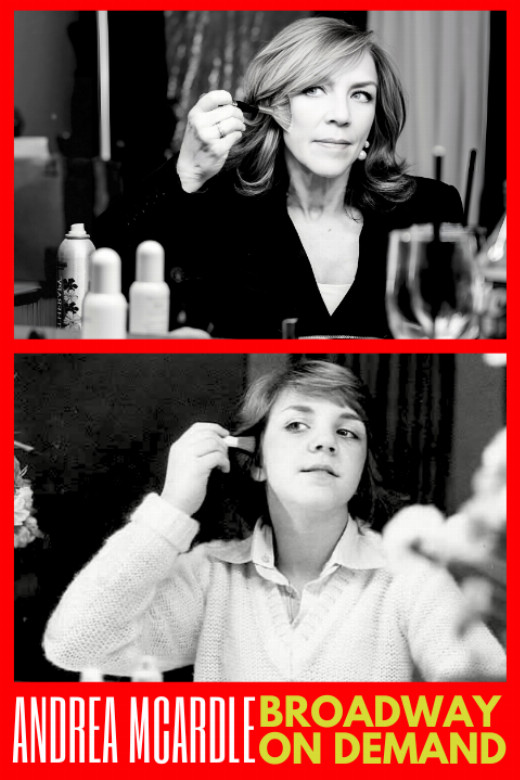
Andrea McArdle's Broadway On Deman The Laurie Beechman Theatre (10/10-10/10) |
|
|
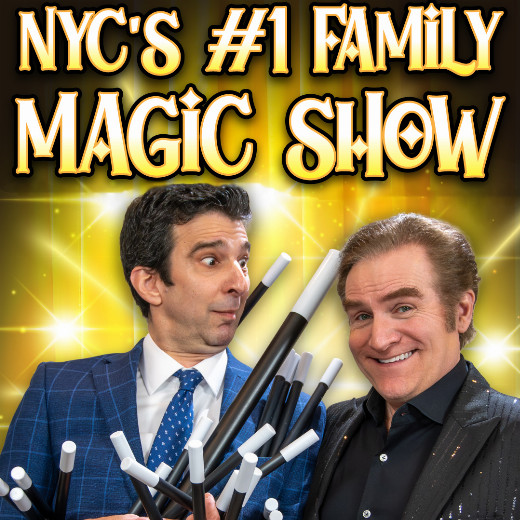
Broadway Magic Hour Broadway Magic Hour: Magic Show (7/25-1/02) |

|
Dominant Animals Teatro LATEA (10/02-10/04) |

|
Eileen Barnett: Back Again...For The Very First Time! The Laurie Beechman Theatre (10/06-10/06) |

|
Falling Into Now Greenroom42 (10/24-10/24) |

|
From America, With Love 28th Street Theatre (10/11-10/11) |

|
PANGEA: UNLEASHED KnJ Theater (10/10-10/11) |
|
|
Peribáñez y el Comendador de Ocaña Teatro Círculo (9/18-10/04) |
|
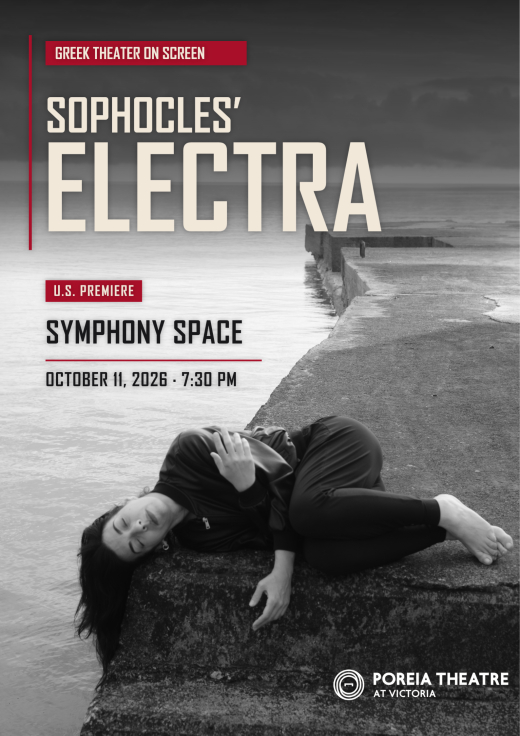
Sophocles' Electra Symphony Space (10/11-10/11) |
|
Sparks! Reverie Room (10/21-10/21) |
