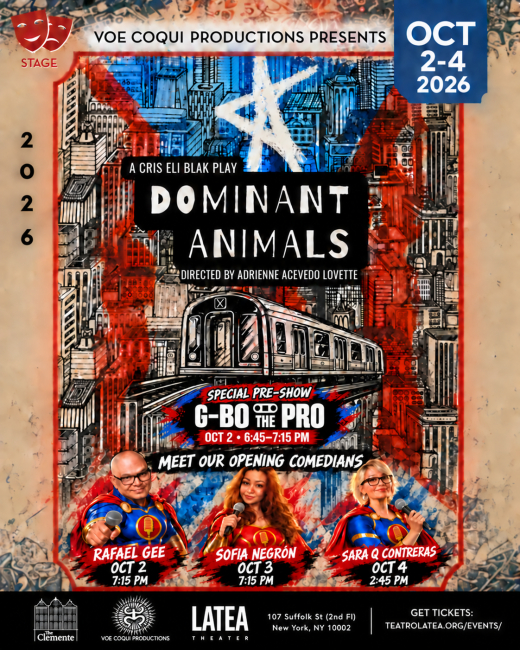
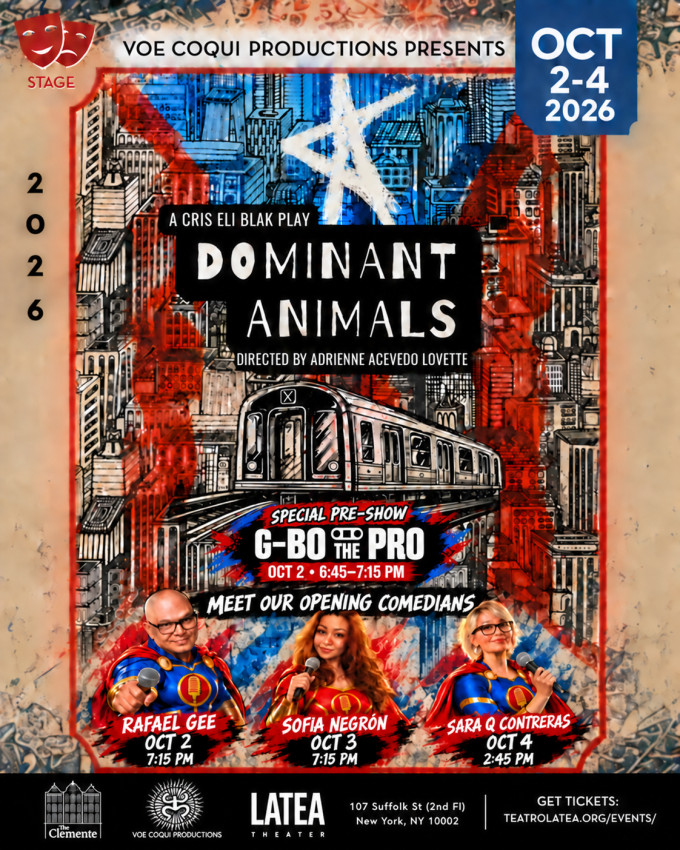
An exploration of the side effects of toxic masculinity on men of color and their families, 'Dominant Animals' focuses on Felix Burgos, a Puerto Rican man living in Queens, who is currently in anger management in an attempt to rectify his wrongs and better the personal relationships in his life, especially between himself and his daughter, now a social worker, and his son, freshly out of prison. When he feels his world start to cave in, Felix grows more conflicted on how to escape, and forgive, his past mistakes and mindset, revealing the aftershock of growing up in a culture that often confuses the definition of what it means to be a “real man.”
'Dominant Animals' examines the ways traditional expectations of masculinity can shape—and sometimes damage—families across generations. Its characters are challenged to reconsider what it means to be strong, particularly when strength has long been associated with control, anger, silence, and an unwillingness to show vulnerability. The play also explores the effects of incarceration on families, the difficult work of accepting responsibility, and the possibility of reconciliation after years of unresolved conflict.