




Featured

Dates: 4/25/2025 - 4/26/2025
📍 Theatre: Mark Morris Dance Center
New Chamber Ballet
3 Lafayette Avenue
Brooklyn, NY 11217
Phone: 9292223973
Choreographer Miro Magloire presents his New Chamber Ballet in his one-hour ballet "Well," inspired by the compositions of contemporary composer Anthony Cheung, April 25 & 26 at 7:30 PM. The five female dancers, en pointe, will be accompanied by music played live by Matthew Schultheis, piano, and Lauren Conroy, violin.
Ask any working theater professional in New York what they think about Boston, and the answer used to be a polite shrug. The Hub was the place you went for a regional credit, maybe a Loeb Drama Center production at Harvard, before making your way back to the city where the real careers happened. That assumption is fading. Over the past several years, Boston has built one of the most dynamic regional theater ecosystems on the East Coast, with the American Repertory Theater functioning as a Broadway feeder pipeline, the Huntington opening its renovated home with critical acclaim, and a thriving small and mid-size company scene that supports actors, directors, designers, and crew at sustainable levels that New York increasingly cannot match.
The result is a quiet but real migration. Theater professionals in their late twenties through their forties, the demographic that powers most working productions, are leaving Brooklyn, Queens, and the suburban commuter belt around New York for the Boston metropolitan area. Some are doing it for the lower cost of living. Some are doing it because the artistic opportunities here have genuinely caught up with the city's reputation. Some are doing it because the academic institutions in Boston offer the kind of stable adjunct teaching work that lets a theater career function without burning out. The reasons vary, but the trend is consistent enough that artistic directors at Boston-area companies have noticed the talent pipeline shift.
If you are weighing the move yourself, or just curious about why your colleagues seem to keep ending up at ART, here is what the Boston theater landscape actually looks like for professionals in 2026.
Boston's role as a pre-Broadway tryout city used to be historical. The Shubert Theatre, the Colonial, and other downtown houses hosted countless productions in the mid-twentieth century before they moved to New York. That tradition seemed to fade for a generation, with most Broadway-bound productions opting for direct-to-NYC openings or out-of-town tryouts at La Jolla, Chicago, or Washington. Then ART under Diane Paulus changed the conversation.
In the past decade and a half, productions including Pippin, Waitress, Jagged Little Pill, 1776, and most recently Macbeth in Stride have either originated at ART or had significant Cambridge runs before transferring to Broadway. The pattern has reestablished Boston as a city where major commercial productions get developed, refined, and tested. For working actors, this means meaningful Broadway-track opportunities exist in Boston without requiring relocation to New York.
The Huntington Theatre Company has built its own version of this pipeline, with productions transferring to Broadway, off-Broadway, and major regional houses. The Calderwood Pavilion home in the South End and the renovated Huntington Avenue Theatre give the company two distinct production environments. Meanwhile, the Boch Center continues to host major touring productions at the Wang Theatre and Shubert Theatre, providing the kind of large-house infrastructure that New York performers recognize from their own touring contracts.
Beyond the major houses, Boston supports a remarkably deep ecosystem of mid-size and small theaters that provide the kind of consistent work that defines a sustainable career.
ArtsEmerson, operating out of the Cutler Majestic Theatre and the Paramount Center, brings significant international and experimental work to Boston, with a programming slate that rivals the curatorial ambition of BAM in Brooklyn. SpeakEasy Stage Company, based at the Boston Center for the Arts, has produced regional premieres of major contemporary work for years. Company One Theatre has made a name commissioning new plays from emerging American playwrights. Lyric Stage Company of Boston offers reliable mid-size work in a beautiful downtown space. Bridge Repertory Theatre, the Front Porch Arts Collective, and Greater Boston Stage Company round out a scene that has more depth than most cities its size.
The cumulative effect is that Boston has enough work for serious theater professionals to actually book multiple roles or contracts each year, often without significant gaps. This is the difference that draws New York-based performers north. The math of working in New York increasingly does not function for actors in their early career stages. The math in Boston does, especially when you factor in the cost of living difference.
Cambridge deserves its own mention because it functions as a parallel universe of theater activity within the Boston metropolitan area. The American Repertory Theater is the obvious anchor, but the city also hosts the Loeb Drama Center, Sanders Theatre at Harvard, and the Hasty Pudding Theatricals, the oldest collegiate theatrical organization in the country.
The dense student population from Harvard, MIT, and the broader university ecosystem creates an audience for experimental and academic theater work that simply does not exist in most American cities. The same density creates opportunities for theater professionals who supplement performance work with teaching, directing student productions, or technical work for university productions. The economy of theater in Cambridge is genuinely different from the economy of theater in most of the country, and it supports a category of theater professional who would have a much harder time elsewhere.
The practical reality of moving to Cambridge specifically is its own logistical challenge. The city has narrow streets, tight parking, older walkup buildings dating from the early twentieth century, and a parking permit system that requires advance planning for any move involving a truck. Theater professionals relocating from out of state often underestimate this complexity. Working with professional movers in Cambridge who handle the parking permit applications and understand the building access constraints can save days of stress during what is already a demanding transition. The crews that work this market regularly know which streets accommodate which truck sizes, which buildings require Certificates of Insurance, and how to coordinate with property management at the new luxury developments around Kendall Square and the older walkups around Harvard.
For Equity actors specifically, Boston operates on a recognizable national audition cycle, with most major companies holding general auditions in late winter and early spring for the following season. The audition pool is competitive but significantly less brutal than New York open calls. Companies including ART, Huntington, ArtsEmerson, SpeakEasy, Lyric Stage, and Greater Boston Stage Company hold both Equity and non-union calls, with strong representation from local talent and increasing willingness to consider out-of-town candidates who have made the move or signaled they are ready to.
The non-Equity scene supports the kind of small-house work that lets early-career actors build credits while developing their craft. The intermediate space between non-Equity and full Equity productions, often through Special Appearance contracts and similar arrangements, gives mid-career actors flexibility that New York's more rigid contract structures do not always offer.
The result is that working actors in Boston can credibly build a season of three to five productions across multiple companies, with predictable cash flow and the ability to accept teaching or commercial work between contracts. The same actor in New York might book one or two productions at the same career level while spending the rest of the year auditioning, surviving on side work, and trying to maintain the energy that auditions require.
The cost of living difference between Boston and New York is real but smaller than people sometimes assume. Boston is the second most expensive city in the United States after New York, San Francisco, and the Bay Area markets. A one-bedroom apartment in a desirable Boston neighborhood costs roughly twenty to thirty percent less than the equivalent in Manhattan, but only ten to fifteen percent less than the outer boroughs that most working theater professionals actually live in.
Where the real difference appears is in space. The Brooklyn studio apartment that costs twenty-eight hundred dollars rents as a one-bedroom apartment with actual living space in Boston for slightly less. The Astoria one-bedroom that costs twenty-six hundred dollars rents as a two-bedroom in Cambridge or Somerville for similar money. For theater professionals who often have substantial costume archives, prop collections, books, and the accumulated material of a career working in physical performance, the space difference matters significantly. You can actually have a home office in Boston. You can store the things your work requires.
Healthcare access is another underestimated factor. Massachusetts has some of the best healthcare access in the country, and the substantial number of theater professionals who deal with chronic injuries, voice work demands, or mental health support find the system here easier to navigate than New York's increasingly stressed healthcare infrastructure.
Boston's theater workforce concentrates in a few specific neighborhoods that share certain characteristics: walkability, transit access, reasonable cost relative to the rest of the city, and proximity to either the major venues or the academic institutions that provide teaching work.
Cambridge is the obvious choice for ART-affiliated work, with neighborhoods around Inman Square, Central Square, and Cambridgeport offering the best combination of livability and transit access. Somerville, particularly Davis Square, Union Square, and the new transit-oriented developments along the Green Line Extension, draws younger theater professionals and emerging artists. Allston attracts performers who teach at Berklee College of Music or the Boston Conservatory. The South End, especially the blocks around the Boston Center for the Arts, supports performers who work primarily with SpeakEasy and the smaller companies based there. Jamaica Plain offers more affordable housing for performers willing to commute to performances downtown or in Cambridge.
The geographic distribution matters because Boston is a transit-oriented city in the way New York is. Most theater professionals do not own cars, and the ability to live within walking distance of either home base venues or the T system is a real consideration when choosing a neighborhood.
The actual logistics of relocating a theater career from New York to Boston tend to surprise people. Theater professionals typically have more belongings than the average renter: substantial wardrobes that include performance pieces, books that accumulate over years of role research, scripts and music libraries, technical equipment if they work in design or stage management, and often instruments. The compact New York apartment that holds all of this works because the building infrastructure is designed for moving. Boston buildings are different, with more older walkups, more brownstones with narrow doorways, and more triple-decker buildings in the surrounding neighborhoods that offer more affordable housing.
The Boston-area moving market reflects these realities. Working with experienced local Boston movers who understand the city's building stock can save substantial stress during a move that is already complicated by the cross-state coordination, lease end dates, and the academic calendar timing that often shapes theater workers' move schedules. Most companies serving the Boston market handle parking permit applications as part of standard service, which matters because the permit process in Boston, Cambridge, Somerville, and Brookline are all separate municipal systems with different lead times.
September first is the most concentrated moving day in the Boston metropolitan area, with an estimated seventy percent of regional leases ending and starting on the same date. For theater professionals whose new season auditions and rehearsal start dates often fall in late summer, planning the move three to four months in advance is the difference between starting your new contract on the right footing and starting it exhausted from a chaotic relocation.
Honest accounting of the trade-off requires acknowledging what you give up. New York remains the center of the American theater industry. The volume of opportunity, the density of working professionals, the proximity to commercial casting offices, the ability to be in the room for last-minute opportunities, and the cultural energy of Manhattan and Brooklyn during a hot show season are all real and difficult to replicate.
Performers who book primarily through commercial channels, who do significant on-camera work, or whose careers depend on being in the room for industry events face genuine challenges leaving New York. The four-hour Acela ride from Boston to New York is not a substitute for being a fifteen-minute subway ride from a casting office. Theater agents who consider themselves bicoastal between New York and Los Angeles do not necessarily consider themselves tri-coastal to include Boston, even if some Boston-based actors work with New York representation.
The actors who thrive after relocating to Boston tend to be those whose work centers on theater rather than commercial or on-camera opportunities, whose careers benefit from proximity to academic institutions, who value sustainable working conditions over the maximum possible career trajectory, or who have reached career stages where the New York grind has stopped serving their growth as artists.
If you are seriously considering the move, the practical preparation goes beyond just finding an apartment and booking movers. Establish your audition calendar by requesting headshot drops with the major Boston companies. Reach out to local Equity members through the audition rooms and rehearsal halls for honest conversations about what the working life actually looks like. Take a few trips to Boston specifically to see productions across different companies, not just ART, to understand the range of work happening here. Identify the neighborhoods where your daily routine would actually be sustainable.
When the decision is made and the move date is set, the logistical planning becomes its own project. The conversation with your moving company should happen at least six to eight weeks in advance for any move involving September first or early September arrival. Companies like Continental Moving in the Boston area, and equivalent reputable carriers in other markets, can provide written estimates for cross-state moves and confirm whether they have availability for your specific timeline. Knowing the actual cost of the move lets you plan the financial transition realistically, including the deposit and first-month rent costs that arrive simultaneously with the moving expenses.
The migration of theater professionals from New York to Boston is not a wholesale industry shift. New York remains the center. But the conversation about whether a sustainable theater career can exist outside that center has changed in the past five years, and Boston has emerged as one of the few American cities where the answer is genuinely yes. For the right artist at the right career stage, the move makes sense. For others, the calculation will keep them in New York. Either way, it is worth understanding what the Hub has become, because the version of Boston that existed in the cultural imagination ten years ago is not the version that exists on the ground in 2026.
The shows are happening here. The work is real. The question is whether your specific career belongs in this scene.





Where is Mark Morris Dance Center located?
What shows have played recently at Mark Morris Dance Center?
What shows are coming up next at Mark Morris Dance Center?
|
|
Marcel Lucont's Whine List Caveat (9/21-9/21) |
|
|
Broadway Magic Hour Broadway Magic Hour: Magic Show (7/25-1/02) |

|
Dominant Animals Teatro LATEA (10/02-10/04) |

|
Eileen Barnett: Back Again...For The Very First Time! The Laurie Beechman Theatre (10/06-10/06) |
|
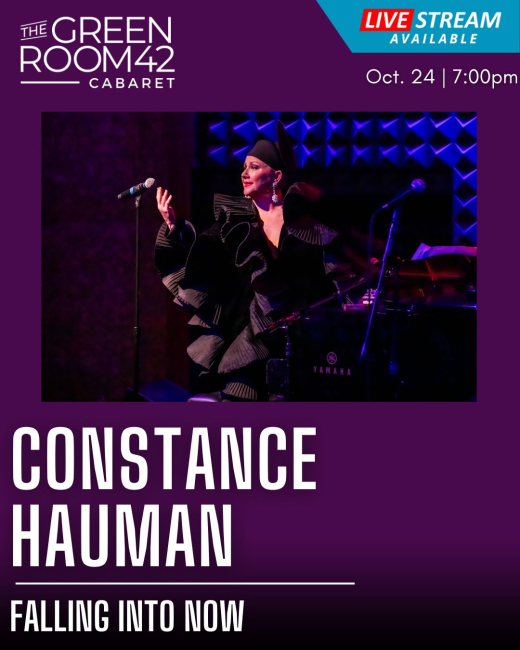
Falling Into Now Greenroom42 (10/24-10/24) |

|
Finishing School Hampton Theatre Company (10/15-11/01) |

|
From America, With Love 28th Street Theatre (10/11-10/11) |

|
PANGEA: UNLEASHED KnJ Theater (10/10-10/11) |
|
|
Peribáñez y el Comendador de Ocaña Teatro Círculo (9/18-10/04) |
|
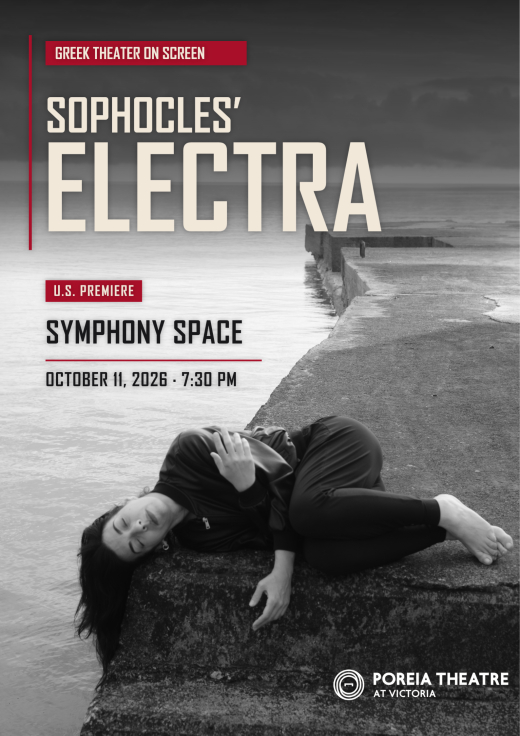
Sophocles' Electra Symphony Space (10/11-10/11) |
